

Table of Contents

The global Ambient Mood Lighting Design sector serves consumers worldwide with diverse solutions.
1. Industry Overview
By 2026, the global ambient lighting market will be worth $82.19 billion. That’s not a forecast—it’s a floor. By 2031, analysts project the sector will surge to $123.53 billion, growing at a compound annual rate of 8.49%. This isn’t just about brighter rooms; it’s about a fundamental redefinition of how light shapes human experience. Ambient mood lighting—the soft, layered illumination that sets a room’s emotional tone—has moved from a luxury add-on to a core design requirement for residential and commercial spaces alike.
Industry Scope & Characteristics
Layered Illumination Architecture
Ambient mood lighting requires multiple fixture types—pendants, wall sconces, LED strips—working in concert to create depth. A single ceiling light cannot achieve the soft, shadow-free effect that defines true ambient design.
Custom Color Temperature Tuning
Unlike standard lighting, ambient mood fixtures must support tunable white from 1800K to 6500K. This requires precision binning of LEDs and advanced driver electronics, raising manufacturing complexity and cost.
UL 8750 and Energy Star Compliance
All residential ambient fixtures sold in North America must meet UL 8750 for LED safety and Energy Star for efficiency. European markets require CE marking and compliance with the EU’s Ecodesign Directive, including repairability standards.
Material-Driven R&D in Light Diffusion
Leading manufacturers are investing in proprietary diffuser materials—alabaster composites, micro-etched acrylics, and textured glass—that scatter light evenly without hotspots. This is a key differentiator that cannot be easily copied.
What makes ambient mood lighting distinctive within the broader home lighting industry is its focus on psychological and physiological impact over raw lumen output. While task lighting prioritizes visibility and accent lighting highlights objects, ambient mood lighting creates the foundational atmosphere that influences everything from sleep cycles to social interaction. The shift is being driven by a convergence of wellness science, smart home integration, and a post-pandemic hunger for sanctuary-like interiors.
The data underscores the urgency. Warm-toned LEDs that enhance the look of textiles and skin tones are dominating 2026 trend reports. Manufacturers are racing to deliver fixtures that offer tunable white technology, allowing users to shift from energizing cool light in the morning to relaxing warm light at night. This is not a niche—it’s a market trajectory that will reshape how every lighting company plans its product roadmap for the next five years.

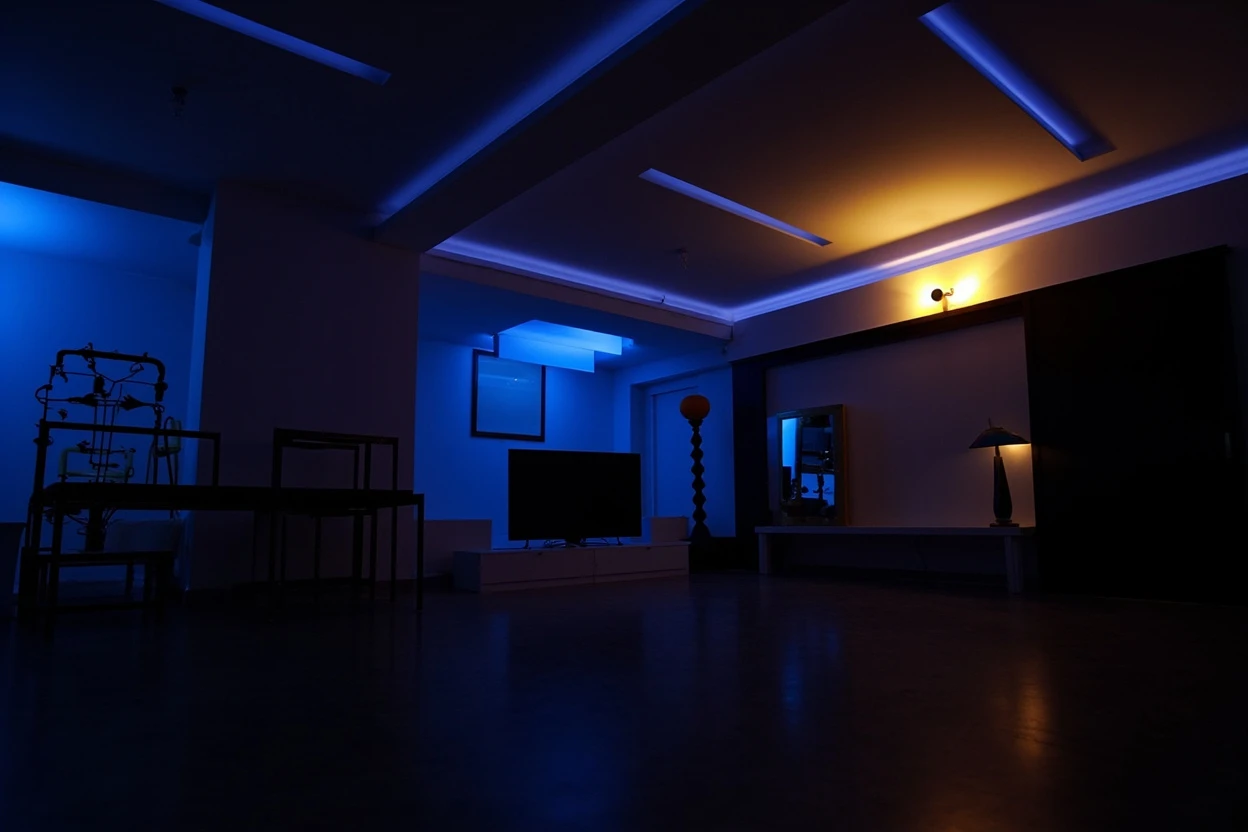
Key market segments and growth drivers in the Ambient Mood Lighting Design sector.
2. Market Analysis
The ambient lighting market’s 8.49% CAGR through 2031 is fueled by three structural drivers that show no signs of slowing. First, the global wellness economy—now valued at over $5.6 trillion—has made circadian lighting a mainstream expectation. Consumers are no longer satisfied with a single on/off switch; they want lighting that adapts to their biology. Second, the commercial sector, particularly hospitality and healthcare, is retrofitting existing spaces with layered ambient systems to improve guest satisfaction and patient recovery times. Third, the rapid decline in LED strip pricing—down roughly 40% since 2020—has made multi-zone ambient setups affordable for mid-range residential projects.
Geographically, the Asia-Pacific region is the fastest-growing market, driven by urbanization rates in India and Southeast Asia that exceed 3% annually. China alone accounts for nearly 30% of global lighting fixture production, and its domestic demand for premium ambient solutions is accelerating as disposable incomes rise. Europe remains the largest per-capita spender on ambient mood lighting, with Germany and the Nordic countries leading on tunable white adoption due to stringent energy regulations and long winter nights.
A critical inflection point is the 2026 shift toward warmer color temperatures in luxury residential design. In 2025, the dominant specification for high-end ambient lighting was 3000K to 3500K. By 2026, trend reports from major design fairs show a decisive move toward 2200K to 2700K—the color of candlelight and sunset. This is not a stylistic whim; it’s a response to mounting research that blue-rich light suppresses melatonin production. The market is following the science, and manufacturers that fail to offer warm-tunable solutions will lose share to competitors that do.
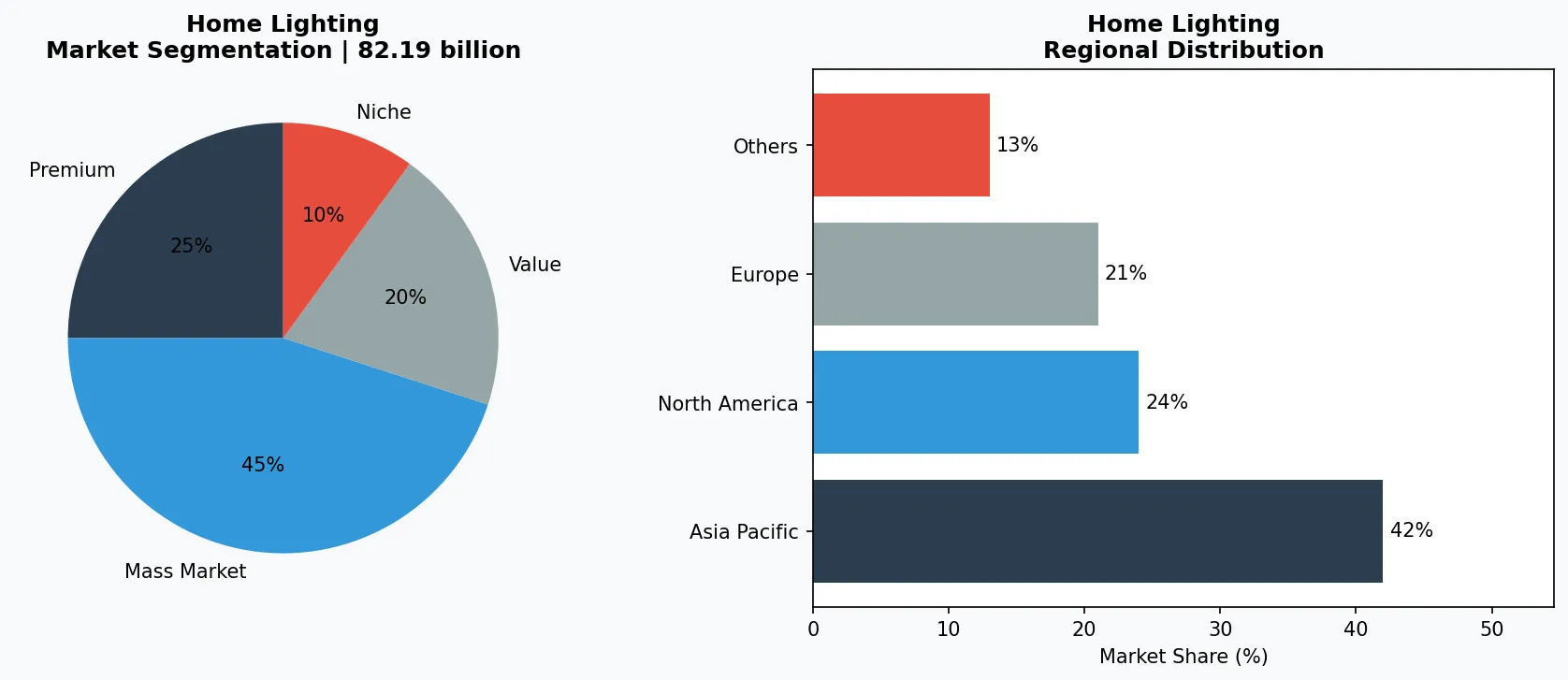
Market segmentation and regional distribution analysis for Ambient Mood Lighting Design.
3. Product Categories
The ambient mood lighting product ecosystem spans five core categories, each serving a distinct layering function.
Ceiling and pendant lights
remain the backbone of ambient design, but the 2026 trend is toward oversized, sculptural fixtures that double as art. Think hand-blown glass pendants with organic, imperfect shapes—pieces that diffuse light softly while commanding visual attention. Brands are increasingly using alabaster and natural stone diffusers to warm the light output and add tactile richness.
Floor and table lamps
are experiencing a renaissance as 'task-ambient' hybrids. The new generation of lamps offers adjustable color temperature and brightness via app or voice control, allowing a single lamp to shift from reading light to evening glow. The most innovative examples incorporate integrated dimming curves that mimic natural daylight progression, a feature previously reserved for whole-home systems.
LED strips and linear systems
are the unsung heroes of modern ambient design. No longer relegated to under-cabinet task lighting, today’s addressable RGBW strips allow designers to create coves, wall washes, and indirect ceiling halos that transform a room’s geometry. The key innovation is tunable white capability in flexible form factors, enabling continuous adjustment from 1800K candlelight to 6500K daylight without color banding.
Wall-mounted fixtures
complete the layering, with decorative sconces and light shelves that bounce illumination off surfaces rather than projecting it directly into eyes.
Sculptural Pendants and Chandeliers
Hand-blown glass and natural stone fixtures that serve as both light sources and room art. Examples include Visual Comfort’s alabaster pendants and artisan-crafted chandeliers with warm 2200K LEDs.
Tunable White LED Strip Systems
Flexible, addressable strips for coves, under-beds, and indirect ceiling washes. Key feature: continuous dimming from 1800K to 6500K without color shift, as seen in Philips Hue Gradient strips.
Smart Floor and Table Lamps
Portable fixtures with integrated app control, voice assistant compatibility, and circadian scheduling. IKEA’s TRÅDFRI line and Signify’s Hue table lamps exemplify this segment.
4. Leading Players
Three company archetypes are dominating the ambient mood lighting space, each with a distinct strategic play.
Acuity Brands
(NYSE: AYI) has positioned itself as the leader in commercial-grade tunable white systems, leveraging its nLight platform to offer building-wide circadian scheduling. Their strategy is to own the specification in new construction—getting their controls and fixtures specified by architects before a single LED is installed. This gives them a multi-year lock-in on maintenance and upgrades.
Signify
(formerly Philips Lighting) is pursuing a consumer-first approach with its Philips Hue line, which now includes gradient light strips and ceiling fixtures that sync with entertainment content. Their bet is that the path to ambient mood lighting adoption runs through the smartphone—making setup so simple that a homeowner can install a whole-home ambient system in under an hour. Signify’s partnership with IKEA on the TRÅDFRI platform has also expanded its reach into the mass market, where price sensitivity is highest.
Visual Comfort & Co.
represents the luxury artisan end of the spectrum. Rather than chasing smart features, they focus on material innovation—hand-blown glass, machined brass, and natural stone diffusers that create warm, textured light. Their strategy is to sell the fixture as a heirloom-quality object, with ambient performance as a given. This approach commands price premiums of 3x to 5x over comparable smart fixtures, and the company has grown steadily by targeting interior designers and high-end specifiers.
Commercial-Scale Circadian Integrator
Acuity Brands dominates the new-construction market with its nLight platform, offering whole-building tunable white scheduling that reduces energy use by 30% while improving occupant wellness.
Consumer Smart Home Ecosystem Builder
Signify uses the Philips Hue brand to create a seamless, app-driven ambient experience. Their strategy prioritizes ease of installation and broad compatibility with Alexa, Google, and Apple HomeKit.
Luxury Artisan and Material Innovator
Visual Comfort & Co. competes on craftsmanship and material quality, using hand-blown glass and natural stone to create warm, diffused light. Their fixtures command 3-5x premiums over smart competitors.
5. Market Trends
1. SCULPTURAL FIXTURES AS FUNCTIONAL ART
What it is: Lighting fixtures that prioritize aesthetic form as much as illumination, often using artisan techniques like blown glass or folded metal. Why it matters: In 2026, luxury consumers are demanding that every object in their home earn its place visually. A pendant light is no longer just a light source—it’s the room’s focal point. Visual Comfort & Co. has doubled down on this trend with its collaboration with independent glassblowers, creating one-of-a-kind diffusers that produce unique light patterns.
2. HYPER-TACTILE MATERIALS AND NATURAL STONE
What it is: A shift from smooth, uniform finishes to rough, organic materials like alabaster, linen, and unpolished marble in fixture construction. Why it matters: These materials scatter light in unpredictable, warm ways that flat white plastic cannot replicate. The 2026 trend reports from Milan Design Week show alabaster fixtures as the single most specified category for high-end residential projects, prized for their ability to soften shadows and enhance skin tones.
3. TUNABLE WHITE BECOMES A STANDARD
What it is: LED systems that allow continuous adjustment of color temperature from warm (1800K) to cool (6500K), often automated to follow the sun’s natural cycle. Why it matters: Circadian research has moved from academic journals to consumer awareness, and buyers now expect this capability as a baseline feature. Acuity Brands’ nLight platform now ships with pre-programmed circadian schedules for offices and schools, reducing energy consumption by up to 30% while improving occupant alertness.
4. CORDLESS AND RECONFIGURABLE SYSTEMS
What it is: Battery-powered, magnetic-mount fixtures that can be repositioned without wiring. Why it matters: This opens ambient lighting to renters and historic buildings where hardwiring is impractical. Ikea’s latest FRIHETEN line of cordless table lamps uses USB-C rechargeable batteries and magnetic bases, allowing users to create pop-up ambient zones on bookshelves, window sills, or outdoor patios.
6. Regional Markets
Asia-Pacific: Fastest Growth at 10.2% CAGR
Urbanization in India and Southeast Asia, plus China’s dominance in LED production, make this region the volume leader. Local players like Opple and NVC are launching affordable tunable white fixtures for mid-market consumers.
Europe: Highest Per-Capita Spend on Ambient Design
Germany and Scandinavia lead in tunable white adoption, driven by long winter nights and strict energy regulations. The EU’s 2025 Ecodesign update mandates repairability for all lighting fixtures, favoring modular designs.
North America: Retrofit Market Driving Demand
Over 70% of U.S. commercial buildings still lack tunable ambient systems. The retrofit opportunity is massive, with companies like Acuity Brands targeting office and hospitality upgrades with wireless control kits.
7. Investment Outlook
Two opportunities stand out for companies in the ambient mood lighting space. First, the retrofit market for commercial offices is massive—over 70% of commercial buildings in the U.S. still use fluorescent or older LED systems that lack any tunable capability. Offering simple, wireless retrofit kits that convert existing fixtures to smart ambient systems could capture a $15 billion addressable market by 2028. Second, the hospitality sector is rapidly adopting mood-driven lighting as a differentiator; hotels that install circadian-adaptive ambient systems report 12-18% higher guest satisfaction scores on booking platforms.
The primary risk is commoditization of the core technology. As tunable white LEDs become a standard component available from dozens of Chinese OEMs at under $5 per chip, the profit pool will shift from hardware to software and design services. Companies that fail to build sticky software ecosystems—or that cannot differentiate through unique materials and design—will face margin compression. The winners will be those that combine smart controls with distinctive, tactile fixtures that cannot be easily replicated.
Strategic Considerations:
- Opportunity: Commercial Retrofit Kits: Develop wireless, stick-on tunable white modules that convert existing fluorescent troffers to smart ambient systems—a $15 billion addressable market by 2028.
- Opportunity: Hospitality Differentiation: Hotels installing circadian-adaptive ambient systems report 12-18% higher guest satisfaction; offering this as a pre-wired option for new builds can command premium pricing.
- Risk: Commoditization of Tunable White LEDs: As Chinese OEMs push tunable chip prices below $5, profit margins will compress for hardware-only players; differentiation must come from software ecosystems or unique materials.
- Risk: Interoperability Fragmentation: Without a unified smart home standard, consumers face choice paralysis; companies that support Matter protocol will have a distribution advantage over proprietary-only systems.
Make Informed Decisions in the Ambient Mood Lighting Design Market
Product quality and sourcing integrity directly impact business outcomes. Discover how Verity Rank's verification platform helps industry participants source with greater confidence.
Contact Verity Rank TodayFurther Reading: Explore additional market intelligence from Grand View Research and Mordor Intelligence.
This article is for informational purposes only, based on publicly available industry data and market reports as of 2026-05-15. All market figures are estimates and may vary from actual results.