

Table of Contents

The global Anti-Fingerprint Coating Tech sector serves consumers worldwide with diverse solutions.
1. Industry Overview
A fingerprint smudge on a firefighter's visor isn't just annoying—it can mean the difference between spotting a hazard and missing it. That urgency is driving a quiet revolution in protective textiles, where anti-fingerprint coating tech is moving from consumer electronics into specialized fabrics and gear. By 2026, the global anti-fingerprint coating market will reach $1.05 billion, up from $0.98 billion in 2025, growing at a 6.9% CAGR.
Industry Scope & Characteristics
Nanoscale Barrier Technology
Anti-fingerprint coatings for protective textiles rely on nanoscale silane or fluoropolymer layers that reduce surface energy below 20 mN/m, causing oils to bead. This is distinct from conventional water-repellent finishes that only address aqueous liquids.
Multi-Stage Supply Chain
Manufacturing involves three distinct steps: chemical synthesis of coating precursors, application via dip/spray coating on fabric rolls, and lamination with protective backings. Each step requires specialized equipment and quality control for uniform thickness (typically 50-200 nm).
Compliance with Industry Standards
Products must meet ISO 22608 for oil repellency, ASTM F1506 for flame resistance when combined, and MIL-STD-810 for abrasion. Certification by independent labs such as SGS or UL is required for B2B contracts.
PFAS-Free Innovation Push
R&D focuses on bio-based alternatives to fluorinated coatings. A leading trend is the use of chitosan and cellulose nanocrystals to create oleophobic surfaces, with initial products achieving 80% oil repellency equivalent to traditional coatings in lab tests.
What distinguishes this coating technology within the protective textiles segment is its dual-action chemistry: it combines oleophobic (oil-repelling) and hydrophobic (water-repelling) properties to prevent sebum, sweat, and dirt from adhering to surfaces. Unlike standard protective finishes that focus solely on flame or chemical resistance, anti-fingerprint coatings add a layer that keeps high-touch areas—such as touchscreen gloves, safety eyewear, and equipment interfaces—clean and legible under demanding conditions.
The technology works by creating a nanoscale barrier that reduces surface energy, causing oils to bead up and readily wipe away. This is critical for protective textiles used in cleanrooms, healthcare, and automotive assembly, where contamination from fingerprints can compromise sterility or cause inspection failures. Moreover, the coatings are increasingly being integrated into multilayer fabric laminates, allowing protective suits to maintain breathability and flexibility while repelling smudges.
The distinctive value for the B2B protective textile buyer lies in extended product life and reduced maintenance costs. A garment that resists staining and smudging needs less frequent washing, which in turn preserves the integrity of flame-resistant or anti-static finishes. As the protective textile industry moves toward more intelligent, connected gear, anti-fingerprint coatings are becoming a baseline requirement for any surface that a technician or first responder touches repeatedly.
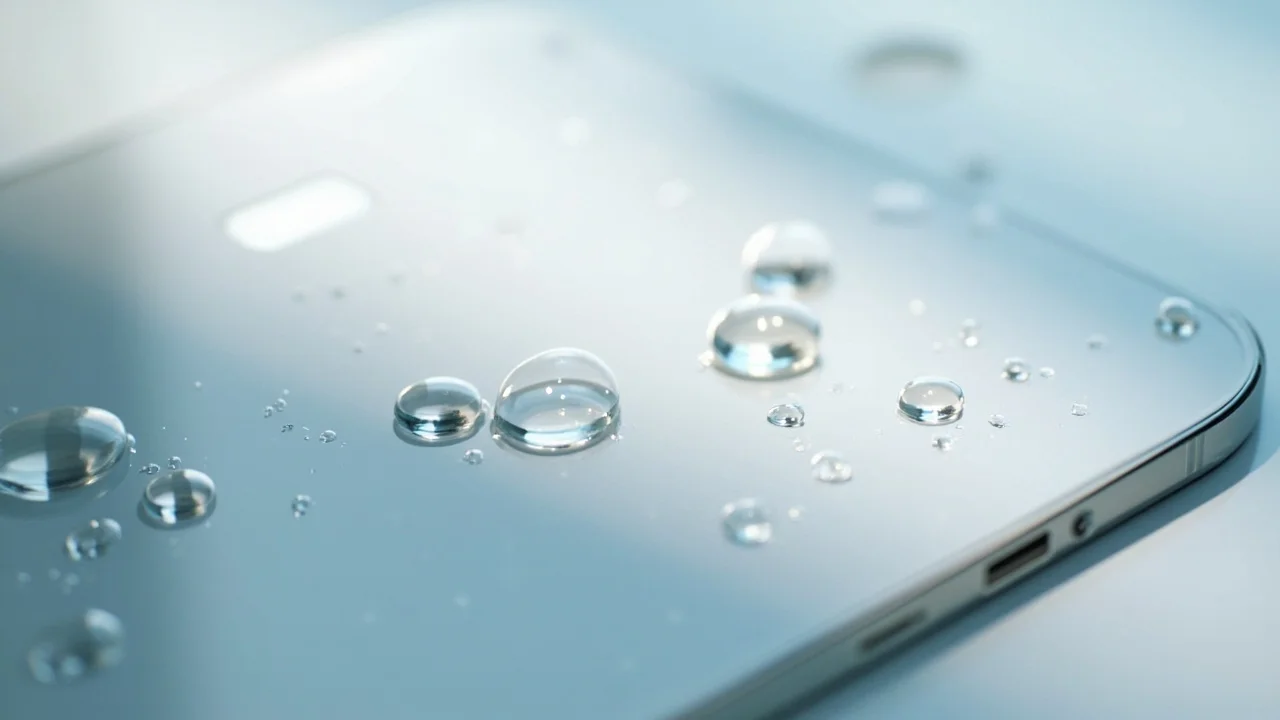
Key market segments and growth drivers in the Anti-Fingerprint Coating Tech sector.
2. Market Analysis
The anti-fingerprint coating market is accelerating on multiple fronts. According to the latest industry reports, the segment grew from $0.98 billion in 2025 to $1.05 billion in 2026, a 6.9% compound annual growth. Broader projections show the market reaching $1.81 billion by 2035 at a 6.0% CAGR, driven by demand across automotive, electronics, and protective textiles.
The automotive segment stands out as the fastest-growing vertical, with a projected CAGR of 23.2% from 2026 to 2033. This surge is fueled by the proliferation of touchscreens and soft-touch surfaces in vehicle interiors. For protective textile suppliers, this means opportunities in seat covers, steering wheel wraps, and floor mats that resist smudges from oily hands. Automakers are specifying anti-fingerprint finishes to maintain a premium appearance without daily cleaning.
A second powerful driver is the anti-reflective and anti-fingerprint coating convergence, which together are forecast to grow at a 10.4% CAGR from 2026 to 2033. This hybrid coating is essential for protective eyewear and helmet visors used by welders, chemical handlers, and military personnel. By reducing both glare and smudging, these coatings improve visibility and safety in high-glare environments.
The third driver is the expansion of cleanroom and healthcare protective textiles. With the global cleanroom garment market growing in tandem, fabric suppliers are adopting anti-fingerprint finishes to prevent lint and oil contamination from gloves and sleeves. Coatings that meet ISO Class 3-5 cleanroom standards are now a specification requirement for many semiconductor and pharmaceutical buyers. The combination of anti-static, flame-retardant, and anti-fingerprint properties in a single textile laminate is a rapidly growing niche.
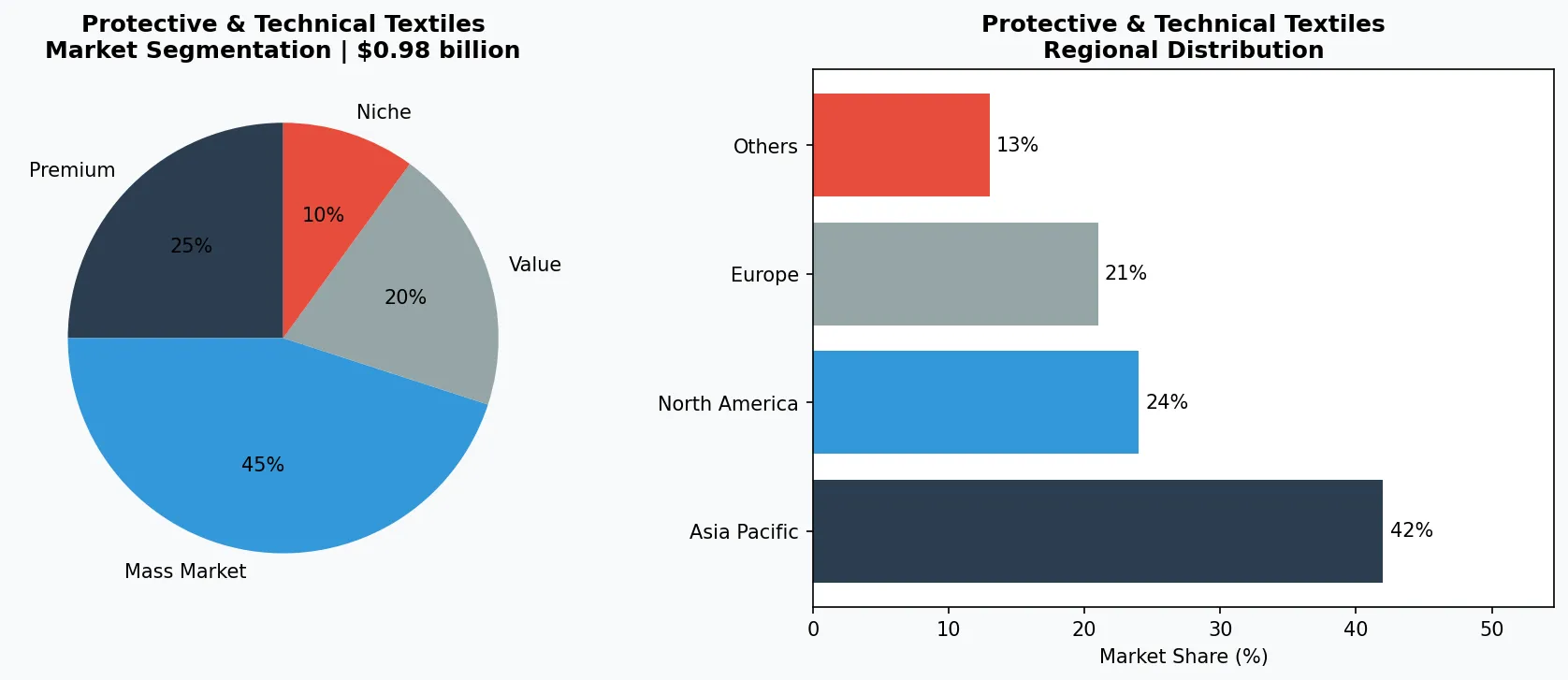
Market segmentation and regional distribution analysis for Anti-Fingerprint Coating Tech.
3. Product Categories
Oleophobic Finishes for Cleanroom Fabrics
These are molecular coatings applied to polyester or nylon woven fabrics used in cleanroom garments, wipes, and equipment covers. They prevent fingerprints and skin oils from transferring to sensitive surfaces. Example: a nano-silane finish that bonds permanently to fabric fibers, reducing oil adhesion by over 90% while maintaining air permeability per ISO 9237.
Anti-Smudge Visor and Eyewear Coatings
Applied to polycarbonate and glass visors on safety helmets, welding shields, and protective goggles, these coatings combine anti-scratch, anti-fog, and anti-fingerprint properties. They use fluoropolymer-based layers that can withstand repeated cleaning with acetone and isopropyl alcohol without degradation. Standard certifications include ANSI Z87.1 for impact resistance and MIL-PRF-32452 for optical clarity.
Touchscreen-Compatible Glove Coatings
These are applied to the fingertips of conductive gloves used by technicians in automotive assembly, logistics, and field service. The coating ensures that capacitive touchscreens register touches accurately while preventing smudge buildup that can interfere with sensitivity. Formulations often include a top layer of oleophobic polymer that resists sweat and oils, maintaining conductivity of the underlying copper or silver thread.
Cleanroom Garments and Wipes
Fabrics treated with a permanent oleophobic finish to prevent skin oils from contaminating sterile environments. Example: polyester cleanroom coveralls with anti-fingerprint coating meeting ISO Class 4 requirements.
Protective Eyewear and Visors
Polycarbonate lenses and shields coated with anti-smudge, anti-fog layers. Used in welding helmets, chemical splash goggles, and face shields for healthcare workers.
Touchscreen Gloves for Technical Applications
Knitted gloves with conductive fingertips plus an anti-fingerprint topcoat. Designed for automotive assembly lines where workers use tablets for work instructions and quality checks.
4. Leading Players
Major Chemical Coating Suppliers
These firms dominate the raw material side, offering proprietary fluorinated silane and sol-gel formulations to textile finishers. Their strategy is vertical integration: control over the precursor chemicals allows them to offer customized performance (e.g., UV stability, abrasion resistance) at scale. They invest heavily in R&D for cross-industry applications, adapting automotive-grade coatings for flexible textile substrates.
Specialized Textile Finishing Houses
These are contract coaters and laminators that own the application equipment—dip coating, spray coating, or vapor deposition—needed to apply anti-fingerprint layers onto rolls of fabric. Their competitive edge lies in process consistency and speed: they can coat 1-2 meters of fabric per minute with a defect rate below 0.5%. They serve as the crucial bridge between chemical suppliers and end-use manufacturers of protective apparel.
Nano-Tech Innovators
Smaller, R&D-driven companies focus on bio-based and sustainable anti-fingerprint coatings. Their differentiator is using plant-derived waxes or chitin derivatives to create oleophobic surfaces without PFAS chemistries. Although their market share remains below 5%, they are gaining traction with European protective textile buyers facing tightening PFAS regulations. Their coatings are typically applied via pad-dry-cure processes compatible with existing finishing lines.
Vertically Integrated Chemical Suppliers
These companies manufacture the active ingredients (fluorinated silanes, sol-gel precursors) in-house and offer custom formulations for textile coaters. Their advantage is cost control and proprietary IP for UV-curable coatings.
Specialist Textile Finishers
Mid-sized coaters that own dip-pad-dry lines and have established relationships with protective apparel brands. They differentiate through quick turnaround (48-hour sampling) and ability to coat fabrics up to 1.6m wide.
Nano-Coatings Startups
Agile firms focusing on application methods like chemical vapor deposition (CVD) for on-demand roll-to-roll coating. Their business model licenses equipment and chemistry to textile mills, reducing capital barriers.
5. Market Trends
1. PFAS-Free Formulations
Growing regulatory pressure (EPA, ECHA) is pushing coating developers to replace perfluorinated compounds in anti-fingerprint finishes. One leading chemical supplier has introduced a silicone-based alternative that maintains >120° water contact angle while passing OEKO-TEX ECO PASSPORT certification. Adoption is strongest in European cleanroom garments.
2. Self-Cleaning Textile Laminates
Multi-layer laminates that integrate anti-fingerprint topcoats with photocatalytic layers (e.g., titanium dioxide) can break down organic dirt under UV light. A Japanese textile mill now offers a fabric for outdoor protective covers that combines anti-smudge with self-cleaning, extending service intervals from monthly to quarterly.
3. Conductive-Smudge Resistance for Smart Textiles
As protective clothing integrates sensors and displays, the need for coatings that maintain both electrical conductivity and oleophobicity grows. A German R&D consortium demonstrated a graphene-based coating that retains 85% conductivity after 100 smudge cycles, enabling reliable touch interfaces on firefighter jackets.
6. Regional Markets
Asia-Pacific – Electronics Hub Driving Textile Demand
Countries like China, Taiwan, and South Korea produce 70% of cleanroom textiles. Local suppliers rapidly adopt anti-fingerprint coatings to meet semiconductor fab requirements. Price competition is intense, with margins below 15%.
North America – Automotive and Military Focus
The U.S. leads in automotive interior textile coatings, with a 23.2% CAGR. Military contracts specify MIL-PRF-32452 for anti-smudge visors. Suppliers must comply with Berry Amendment for domestic sourcing.
Europe – Early PFAS Ban Impact
EU REACH restrictions on perfluorocarboxylic acids force textile finishers to switch to silicone or bio-based alternatives. Germany and Switzerland are early adopters of PFAS-free anti-fingerprint coatings for hospital protective textiles.
7. Investment Outlook
Two opportunities stand out. First, automotive interior textiles: with a 23.2% CAGR, protective fabric suppliers should invest in roll-to-roll coating lines that can handle leather-look and suede-matte finishes for high-volume OEM contracts. Second, medical cleanrooms: the post-pandemic expansion of pharmaceutical manufacturing in Southeast Asia creates demand for anti-fingerprint cleanroom suits; suppliers that can certify to ISO 14644-1 Class 3 standards will capture premium pricing.
A concrete risk: durability trade-offs. Many current anti-fingerprint coatings lose efficacy after 20-30 industrial launderings. Protective textile buyers require 50+ wash cycles for flame-resistant gear. Coating chemists must improve crosslink density without stiffening the fabric, or risk losing the protective textile market to alternative smudge-masking finishes.
Strategic Considerations:
- Automotive Interior Textiles: With a 23.2% CAGR, protective fabric suppliers should develop anti-fingerprint coatings specifically for leather, suede, and knit seat covers. Partnering with automotive OEMs on color-matched finishes could secure long-term contracts.
- Medical Cleanroom Expansion: The post-pandemic surge in pharmaceutical manufacturing in Southeast Asia (Singapore, Malaysia) creates demand for anti-fingerprint cleanroom suits. Suppliers that certify to ISO 14644-1 Class 3 and offer 50+ wash durability will capture premium pricing.
- Durability Limitations: Most current coatings fail after 20-30 industrial launderings. Protective textile buyers require 50+ wash cycles for flame-resistant gear. Coating chemists must improve crosslink density without stiffening the fabric, or risk losing the protective textile market.
- PFAS Regulatory Phase-Out: Proposed bans on all perfluoroalkyl substances by 2027 in the EU may force reformulation costs of up to $500K per coating line. Early movers to PFAS-free solutions will have a 2-3 year competitive window.
Frequently Asked Questions
Make Informed Decisions in the Anti-Fingerprint Coating Tech Market
Product quality and sourcing integrity directly impact business outcomes. Discover how Verity Rank's verification platform helps industry participants source with greater confidence.
Contact Verity Rank TodayFurther Reading: Explore additional market intelligence from Grand View Research and Mordor Intelligence.
This article is for informational purposes only, based on publicly available industry data and market reports as of 2026-07-18. All market figures are estimates and may vary from actual results.