

Table of Contents

The global Baked Pastries Guide sector serves consumers worldwide with diverse solutions.
1. Industry Overview
What if the humble croissant could be a vehicle for gut health and high protein? The global baked pastries category, a dynamic segment within the broader Bakery Ingredients & Ready-to-Eat Snacks industry, is undergoing a profound transformation. No longer confined to the indulgent corner of the bakery aisle, pastries are being re-engineered to meet modern demands for nutrition, convenience, and multisensory experience. This category, distinct from standard bread or cookies, encompasses a diverse range of laminated, filled, and sweetened goods where artistry meets industrial scale.
Industry Scope & Characteristics
Broad Product Portfolio
Products span mooncakes, pineapple cakes, pastries, rice cakes, egg tarts, wife cakes, walnut pastries, serving diverse consumer needs from everyday essentials to premium specialized offerings.
Complex Global Supply Chains
Integrated international networks spanning multiple continents ensure year-round product availability across diverse markets.
Quality & Compliance Standards
Rigorous regulatory frameworks and quality certifications ensure product safety, consistency, and consumer trust worldwide.
Continuous Innovation
Heavy R&D investment drives formulation breakthroughs, processing technologies, and novel product development cycles.
The data underscores its economic weight. The global Cakes and Pastries Market alone is estimated at USD 160.65 billion in 2026 and is projected to surge to USD 233.21 billion by 2035, growing at a steady CAGR of 4.23%. This growth is not merely inflationary; it's driven by strategic innovation that positions pastries at the intersection of several mega-trends. As part of the wider Baked Goods market, which is anticipated to grow at a CAGR of 5.9% from 2026 to 2033, pastries are a critical growth vector.
Their distinctiveness lies in their versatility and premium perception. A pastry can be a handheld breakfast, an afternoon snack, or a dessert centerpiece. This functional ambiguity allows manufacturers to innovate across dayparts and consumer occasions, from protein-packed morning buns to miniature, decadent dessert bites designed for portion-controlled indulgence. The category's evolution is a direct response to the consumer's dual desire for pleasure and purpose in their snacks.
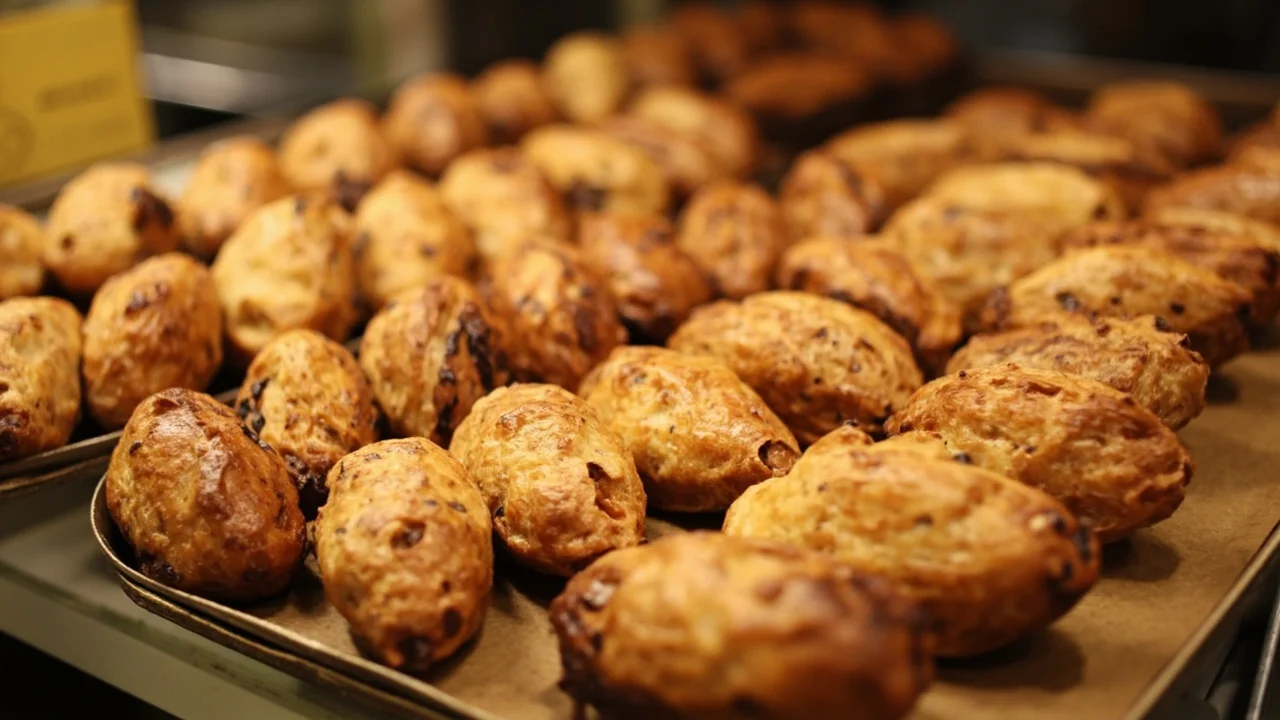
Industry application and market overview for Baked Pastries Guide.
2. Market Analysis
The baked pastries market is on a clear growth trajectory, fueled by both volume and value-added innovation. The projection from USD 160.65 billion in 2026 to USD 233.21 billion by 2035 represents a substantial expansion of nearly $73 billion in less than a decade. This growth is not uniform but is being driven by specific, powerful forces that are reshaping product development and marketing strategies.
The first major driver is the mainstreaming of functional ingredients. Protein is moving from a niche bodybuilding attribute to a standard expectation, even in indulgent categories. Consumers seek pastries that offer sustained energy, aligning with broader health and wellness goals. Secondly, the demand for premium, multisensory experiences is accelerating value growth. Consumers are willing to pay more for artisanal techniques, exotic flavors, and innovative texture contrasts that elevate the simple act of snacking into a moment of indulgence.
Finally, convenience and portion control remain perennial drivers, now expressed through sophisticated formats. The rise of single-serve, gourmet pastries and 'perfect portion' small bites caters to smaller households, on-the-go consumption, and guilt-free indulgence. This trifecta of drivers—functionality, premiumization, and smart convenience—ensures the market's growth is both resilient and profitable, moving beyond basic commodity flour-and-butter economics to a model driven by targeted innovation.
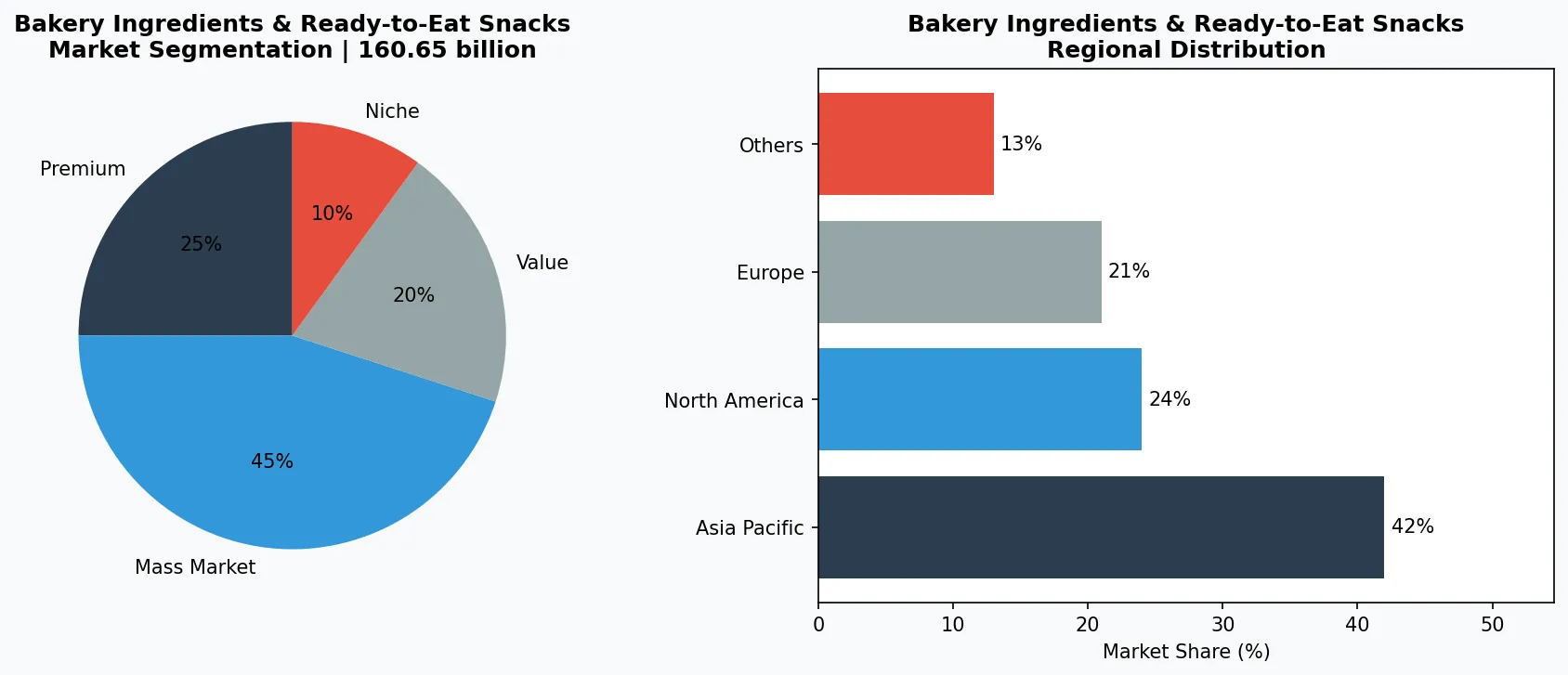
Market segmentation and regional distribution for Bakery Ingredients & Ready-to-Eat Snacks - Baked Pastries Guide.
3. Product Categories
The baked pastries category can be organized into several key product types, each with distinct characteristics and innovation lanes. Laminated Pastries, such as croissants, danishes, and puff pastry-based items, are defined by their layered, buttery texture. Innovation here focuses on fillings (e.g., matcha almond, savory spinach and feta) and dough fortification with alternative grains or proteins.
Premium & Artisanal Tier
High-margin specialty products targeting affluent consumers who prioritize quality, craftsmanship, and unique attributes.
Mass Market Mainstream
Volume-driven products serving price-conscious mainstream consumers with reliable quality at accessible price points.
Functional & Niche Segment
Targeted products addressing specific health concerns, dietary requirements, or lifestyle preferences beyond basic needs.
Filled and Enrobed Pastries include items like turnovers, hand pies, and eclairs. These products are characterized by a casing of dough or choux pastry enveloping a sweet or savory filling. This segment is ripe for flavor exploration and functional ingredient incorporation directly into fillings, such as adding fiber or probiotics to fruit compotes or custards.
Sweet Yeasted Pastries, such as brioche, cinnamon rolls, and babka, offer a softer, richer bite. This sub-category is a primary target for health-conscious reformulation, including the integration of sourdough techniques for perceived digestibility and wellness benefits, or the reduction of sugar while maintaining a tender crumb through enzyme technology.
4. Leading Players
Leading global food conglomerate Grupo Bimbo leverages its immense scale and distribution network to dominate the accessible, everyday pastry segment worldwide. Its strategy focuses on brand recognition, affordability, and wide availability in mass-market channels, often through acquisitions of local bakery brands to solidify market presence.
Global Market Leader
Multinational player commanding significant market share. Revenue exceeding $50B with operations across 100+ countries, diversified portfolio spanning all major price tiers.
Regional Champion
Dominant force in Asia Pacific with deeply localized product lines, extensive distribution networks, and strong regional retailer relationships.
Innovation Disruptor
Fast-growing challenger disrupting incumbents through breakthrough product innovation, direct-to-consumer models, and data-driven marketing in the bakery ingredients & ready-to-eat snacks space.
In contrast, Aryzta AG operates as a strategic supplier to foodservice and retail private labels, focusing on frozen par-baked and ready-to-bake pastry solutions. Their position is built on operational excellence, supply chain reliability, and providing customizable, industrial-scale doughs and bases that allow cafes, supermarkets, and restaurants to offer 'fresh-baked' quality with consistency and ease.
General Mills, through its Pillsbury and Lärabar divisions, targets the North American retail and at-home baking market. Its strategy capitalizes on brand trust and convenience, offering refrigerated doughs, baking mixes, and increasingly, better-for-you snack bars that blur the line between pastry and nutritional snack. They are actively engaged in trend-led innovation, particularly in protein enrichment and portion-controlled formats.
5. Market Trends
1. Protein Power
Protein Power — The integration of high-quality plant and dairy proteins into pastry formulations is transitioning from a niche health claim to a standard expectation. It matters because it aligns pastries with active lifestyles and satiety-focused snacking. Companies like General Mills are exploring this through protein-enriched baking mixes and breakfast pastries.
2. Texture Mashups
Texture Mashups — Creating excitement through contrasting textures—such as crunchy toppings on soft fillings, or layered crispness in a laminated item—drives premium perception and sensory engagement. This trend matters for differentiation in a crowded market, turning a simple pastry into a memorable experience. Artisan-inspired brands and premium café suppliers lead here.
3. Sourdough Wellness
Sourdough Wellness — The application of sourdough fermentation techniques beyond bread into pastries like brioche and croissants taps into the demand for gut-friendly, 'easier to digest,' and artisanal products. It matters as it adds a halo of craftsmanship and natural wellness to indulgent categories, a strategy being adopted by premium industrial bakers and fast-casual chains.
6. Regional Markets
Asia Pacific — The Growth Engine
The world's largest and fastest-growing region, led by China, India, and Southeast Asia. Urbanization, rising middle class, and digital retail adoption are primary catalysts.
North America — Premium & Wellness Driven
A mature market with strong health-and-wellness orientation, sustainability commitments, and robust demand for premium and functional products.
Europe — Quality & Regulatory Leadership
A developed market with stringent quality, safety, and environmental regulations. Strong demand for organic, locally sourced, and ethically certified products.
7. Investment Outlook
The outlook for the baked pastries category through 2026 and beyond is robust, defined by two concrete opportunities. First, the 'better-for-you' premiumization wave offers a chance to increase average unit revenue by integrating functional ingredients like protein, fiber, and probiotics without sacrificing indulgence. Second, there is significant white space in frozen and par-baked formats for foodservice and retail, enabling fresher, more sustainable supply chains and reducing waste for end sellers.
The primary risk is commodity volatility and supply chain fragility. The core inputs for pastries—wheat, butter, sugar, and specialty fats—are subject to intense price fluctuations and geopolitical disruption. Companies that fail to hedge effectively, diversify suppliers, or invest in cost-efficient, scalable alternative ingredient systems (e.g., drought-resistant grains) will see margins compress sharply, potentially stalling innovation.
Strategic Considerations:
- Technology & AI Integration: Artificial intelligence and IoT are revolutionizing production efficiency, quality assurance, and demand forecasting across the supply chain.
- Sustainability as Business Strategy: Regulatory pressure and consumer expectations are making environmental commitments essential, not optional.
- Transparency & Traceability: Consumers demand increasingly granular information about product origins, ingredients, and production methods.
- Emerging Market Penetration: Africa, Latin America, and second-tier Asian cities represent the next wave of volume growth.
Make Informed Decisions in the Baked Pastries Guide Market
Product quality and sourcing integrity directly impact business outcomes. Discover how Verity Rank's verification platform helps industry participants source with greater confidence.
Contact Verity Rank TodayFurther Reading: Explore additional market intelligence from Grand View Research and Mordor Intelligence.
This article is for informational purposes only, based on publicly available industry data and market reports as of 2026-04-23. All market figures are estimates and may vary from actual results.