


Table of Contents

The global Bath Towel Size Material sector serves consumers worldwide with diverse solutions.
1. Industry Overview
The global bath towel market crossed $11.8 billion in 2025, but the real story lies in how size and material choices are redefining consumer expectations. Traditionally a commodity buy, bath towels have become a strategic product category where dimensions and fiber selection directly influence absorbency, durability, and perceived luxury. From the standard 27x52 inch cotton towel found in chain hotels to oversized 30x58 inch Turkish cotton spa towels, the size-to-material ratio now dictates premium pricing and brand loyalty.
Industry Scope & Characteristics
Material-to-Performance Ratio
Bath towel performance depends on the interaction between fiber length (e.g., Egyptian long-staple), GSM weight, and weave type. A 700 GSM Turkish cotton terry towel absorbs 25% more water than a 500 GSM standard cotton, but takes twice as long to dry.
Global Supply Chain Complexity
Raw cotton moves from farms in India or the US to spinning mills in Pakistan and finishing plants in Turkey, creating a freight-cost exposure that can add 5–10% to landed prices. The average towel passes through three countries before reaching a buyer.
Certification Requirements
Crucial certifications include OEKO-TEX Standard 100 (chemical safety), GOTS (organic fiber), and ISO 9001 (quality management). Many hospitality buyers now mandate BSCI (Business Social Compliance Initiative) for social audit compliance.
Loom-Programmable Size Flexibility
Modern rapier looms can be adjusted to produce towels in custom dimensions (e.g., 28x54, 30x60) without reconfiguring the entire production line. This allows mills to run small batch sizes of 500 units for boutique hotels at only a 10% cost premium.
What makes bath towel size material distinctive within home textiles is the engineering trade-off between GSM (grams per square meter) and fabric type. A 700 GSM Turkish cotton towel offers plush absorbency but dries slowly, while a 300 GSM microfiber alternative dries quickly but feels less indulgent. This complexity forces buyers to balance performance with cost—a decision that varies sharply between retail, hospitality, and healthcare channels.
Data from multiple market analyses confirms the segment’s momentum. The bath towel market is projected to grow from $12.5 billion in 2026 to $20.8 billion by 2035, reflecting a compound annual growth rate (CAGR) of approximately 5.8%. Meanwhile, the disposable bath towel subsegment is expanding at a 6.3% CAGR through 2033, driven by infection control protocols in medical and travel sectors. These numbers underscore a market bifurcating into high-end reusable towels and single-use alternatives, each demanding distinct size and material specifications.
For B2B buyers, understanding this interplay is no longer optional. Whether sourcing for a five-star hotel chain or a regional spa brand, the correct specification of towel dimensions and fiber type can reduce laundry costs by 12–15% and extend product lifespan by two years. VerityRank’s analysis dives into the data, trends, and supplier strategies that matter most for 2026 procurement decisions.

Key market segments and growth drivers in the Bath Towel Size Material sector.
2. Market Analysis
The global bath towel market was valued at $11.89 billion in 2025, with estimates converging around $12.4 billion for 2026. Two leading forecast reports show slight variations: one projects growth to $18.75 billion by 2034 (CAGR 5.2%), while another expects $20.8 billion by 2035 (CAGR 5.8%). The discrepancy highlights the impact of differing assumptions on the hospitality recovery and disposable towel adoption. Regardless of scenario, the market is firmly on an upward trajectory.
Three primary growth drivers are accelerating demand. First, rising per-capita spending on home luxury—fueled by post-pandemic nesting trends—has pushed consumers toward larger, higher-GSM towels. In the U.S., average bath towel size increased from 27x52 inches to 30x56 inches between 2020 and 2025, with GSM climbing from 500 to 600. Second, the global hotel industry, which accounts for nearly 30% of towel demand, is reinvesting in premium linens to differentiate guest experiences. Marriott and Hilton alone replaced over 40 million towels in 2025, favoring Egyptian cotton blends at 650+ GSM. Third, the medical and eldercare sectors are driving demand for disposable and antimicrobial towels, a niche growing at 6.3% CAGR and expected to reach $2.1 billion by 2033.
Regionally, Asia-Pacific dominates production, with China and India supplying over 60% of the world’s bath towels. However, consumption is shifting. North America remains the largest single market (35% share), but the Middle East and Africa are the fastest-growing regions, with a projected CAGR of 7.1% through 2034, spurred by hotel expansions in Saudi Arabia and the UAE. These regions prefer oversized towels (up to 36x70 inches) with high absorbency, often specifying long-staple cotton from Egypt or Turkey.
Raw material volatility poses a constant challenge. Cotton prices, which swung from $0.80 to $1.20 per pound in 2024–2025, directly impact GSM-driven pricing strategies. To mitigate risk, large buyers are locking in annual contracts with mills that offer flexible blending—e.g., cotton-bamboo hybrids that maintain performance while reducing cotton exposure. The market’s bifurcation between premium and disposable segments means buyers must track two distinct cost curves simultaneously.
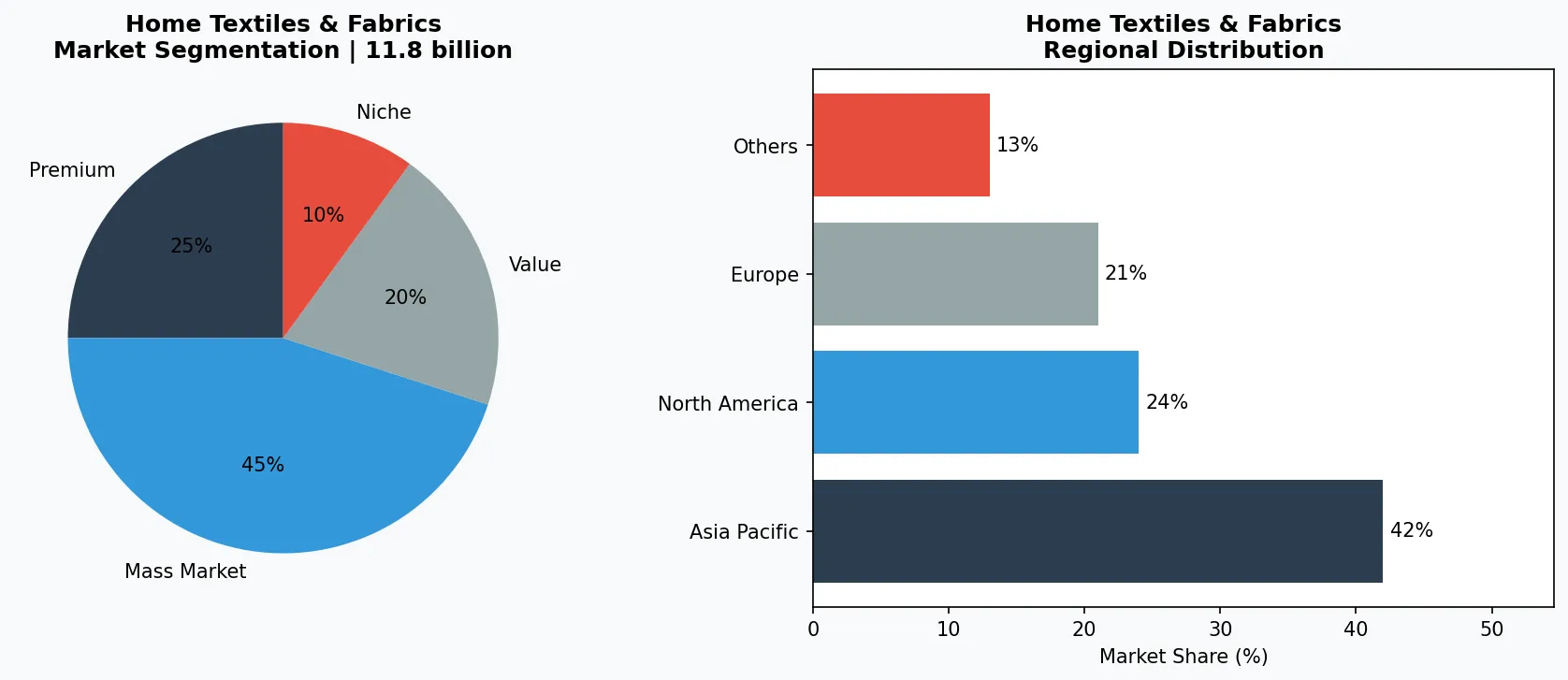
Market segmentation and regional distribution analysis for Bath Towel Size Material.
3. Product Categories
Bath towel products are best segmented by three size-material combinations, each serving different end-use requirements.
Standard Cotton Towels (27x52 inches, 500–600 GSM) remain the workhorses of the industry. Made from ring-spun or combed cotton, they offer a balance of cost and durability ideal for budget hotels and residential use. Major producers often apply zero-twist technology to improve softness without adding weight. For example, a typical 500 GSM towel weighs around 1.2 pounds and can withstand 300–400 wash cycles before pilling—a key metric for institutional buyers.
Premium Turkish and Egyptian Cotton Towels (30x56 inches and larger, 600–800 GSM) are the luxury segment’s backbone. These towels use longer fibers that reduce lint and enhance absorbency. Turkish towels are typically woven from Aegean cotton, while Egyptian options rely on Giza varieties. Sizes are expanding: many luxury brands now offer “bath sheets” at 35x70 inches with 800 GSM, retailing above $60 each. The material’s terry loop construction—double-loop for higher pile—directly correlates with faster water absorption, a critical performance indicator for spas and high-end hotels.
Quick-Dry Microfiber Towels (28x55 inches, 200–300 GSM) cater to the fitness, travel, and disposable subsegments. Made from polyester-polyamide blends, these towels dry in one-third the time of cotton and weigh under 0.5 pounds. Their compact size—often folded to 1/10th the volume—makes them popular for camping kits and airline amenity packs. However, microfiber shedding has prompted EU regulatory scrutiny; compliant products now feature knit structures that reduce fiber loss by 80% compared to standard wovens.
Standard Cotton Guest Towels
Targeting the mid-scale hotel and residential market, these towels measure 27x52 inches at 500–600 GSM. Typical example: zero-twist combed cotton with a pearl-finish hem, priced at $4–$6 wholesale.
Premium Turkish Spa Bath Sheets
Oversized at 35x70 inches with 800 GSM, these use Aegean-region cotton with double-loop terry construction. Often found in five-star hotel suites, retailing above $60 with a 40% markup over standard sizes.
Quick-Dry Microfiber Travel Towels
Compact at 20x40 inches and 250 GSM, made from 80% polyester / 20% polyamide with edge binding to prevent fraying. Used by airlines and outdoor brands, priced at $3–$5 wholesale.
4. Leading Players
Three strategic archetypes dominate the bath towel size material landscape, each with distinct competitive advantages.
Vertically Integrated Mills: These large-scale producers control the entire supply chain from cotton ginning to finished roll packing. Based primarily in India, Pakistan, and Turkey, they achieve cost leadership through volume and automation. Their competitive edge lies in offering consistent GSM tolerances (within ±3%) across millions of units—critical for hospitality chains that require identical towel feel across properties. A typical mill produces 50,000 metric tons of towels annually, with customers like IHG and Accor committing to multi-year contracts.
Specialty Linen Brands: Focused on premium material sourcing and brand storytelling, these players target the luxury retail and boutique hotel segments. They differentiate through certified organic cotton (GOTS), Turkish or Egyptian origin, and oversized dimensions not available in mass-market lines. Many invest in digital printing for personalized logos and patterns, allowing hotels to embed branding directly into the towel weave. Their margins are 40–60% higher than commodity mills, but they depend on smaller, high-trust partnerships.
Sustainable Material Innovators: A new wave of manufacturers is shifting from cotton to alternative fibers such as bamboo lyocell, hemp, and recycled polyester. They position themselves as eco-conscious alternatives, offering certifications like OEKO-TEX Standard 100 and Global Recycled Standard (GRS). These players often produce towels in unique sizes optimized for quick drying and reduced water usage in laundering. While still less than 5% of global production, their CAGR of 12% outpaces the overall market, signaling a long-term shift in procurement criteria.
Vertical Mill Integrator Strategy
These players own cotton farms, spinning, weaving, and finishing facilities, ensuring tight GSM tolerance (±3%) and just-in-time delivery for volume buyers like hotel chains. Their advantage is cost leadership through scale and reduced supply chain risk.
Luxury Linen Brand House Strategy
Focused on boutique hotels and high-end retail, they differentiate through exclusive GOTS-certified organic cotton, oversized dimensions, and custom branding. Margins are higher but volumes are lower, relying on reputation and design partnerships.
Sustainable Material Innovator Strategy
Companies pioneering bamboo lyocell, recycled polyester, and hemp blends target eco-conscious buyers. They invest heavily in certifications (OEKO-TEX, GRS) and offer towels that dry 40% faster than cotton, reducing laundry energy costs for customers.
5. Market Trends
1. SUSTAINABLE MATERIAL CERTIFICATION
Buyers increasingly mandate OEKO-TEX or GOTS-certified towels. A 2025 survey showed 58% of commercial buyers now require eco-labels, up from 34% in 2020. Major hospitality groups are eliminating virgin cotton in favor of recycled blends, reducing water usage by 40% per towel. One leading manufacturer converted its entire premium line to bamboo lyocell in 2025, cutting carbon footprint per towel by 25%.
2. SIZE CUSTOMIZATION FOR HOSPITALITY
Hotels are moving beyond standard sizes to create branded towel dimensions. A luxury chain in the UAE now uses 36x72 inch bath sheets (800 GSM) for guest rooms and 20x40 inch hand towels with integrated RFID chips for linen tracking. This trend pushes mills to offer flexible loom configurations, reducing setup time for custom weaves by 30%.
3. SMART TEXTILES WITH ANTIMICROBIAL TECHNOLOGY
Post-pandemic, demand for antimicrobial towels has surged, especially in healthcare and gym segments. Towels treated with silver ion or zinc oxide coatings are showing up in products from multiple manufacturers. One European textile group launched a line of copper-infused towels that maintain antibacterial effectiveness after 200 washes, targeting a 15% premium over untreated equivalents.
6. Regional Markets
Asia-Pacific: Production Hub with Growing Middle Class
China and India produce over 60% of global bath towels, with India alone exporting $2.1 billion in 2025. Domestic demand in these countries is rising as middle-class consumers trade up to larger, plush towels, boosting regional consumption by 8% annually.
Middle East & Africa: Fastest-Growing Demand for Oversized Towels
The UAE and Saudi Arabia lead demand for extra-large towels (36x72 inches) due to hotel expansions for tourism megaprojects. This region now accounts for 12% of global demand, growing at a 7.1% CAGR.
North America: Largest Consumer Market with Premium Shift
Accounting for 35% of global consumption, the U.S. market is shifting toward higher GSM towels (600+ average). Retailers like Bed Bath & Beyond (now online) have seen a 20% increase in sales of 30x56 inch bath sheets since 2023.
7. Investment Outlook
Two specific opportunities stand out for the bath towel size material market. First, the shift toward oversized, ultra-absorbent towels (35x70 inches, 800+ GSM) in the spa and wellness sector is underpenetrated, with only 12% of suppliers currently meeting that specification. Early movers can capture premium pricing. Second, the disposable towel segment—growing at a 6.3% CAGR—offers a high-volume channel for manufacturers willing to invest in nonwoven technology and compostable materials.
The primary risk is cotton price volatility. With climate shocks affecting harvests in major producing regions, raw material costs could spike 20–30% in 2026–2027. Buyers without fixed-price contracts or the flexibility to switch to blended fibers (e.g., cotton-bamboo) will face margin compression. Actionable advice: lock in annual volume agreements with mills that have demonstrated blending capabilities, and audit suppliers for sustainable fiber sourcing to meet tightening EU due diligence regulations.
Strategic Considerations:
- Spa and Wellness Upscale Towels: Only 12% of suppliers currently meet the 35x70 inch, 800+ GSM specification. Early movers can capture 20–30% price premiums from high-end spas.
- Disposable Nonwoven Product Lines: The disposable segment is growing at 6.3% CAGR, with medical and travel sectors needing compostable options. Manufacturers adding nonwoven capacity can secure long-term contracts.
- Cotton Price Volatility 2026–2027: Climate-related harvest disruptions could push cotton prices up 20–30%. Buyers with fixed-price contracts or blended-fiber flexibility will outperform peers.
- EU Regulations on Microfiber Shedding: Proposed EU legislation may require all microfiber towels to have anti-shedding treatment by 2028. Suppliers not investing in knit technology could face market access barriers.
Frequently Asked Questions
Make Informed Decisions in the Bath Towel Size Material Market
Product quality and sourcing integrity directly impact business outcomes. Discover how Verity Rank's verification platform helps industry participants source with greater confidence.
Contact Verity Rank TodayFurther Reading: Explore additional market intelligence from Grand View Research and Mordor Intelligence.
This article is for informational purposes only, based on publicly available industry data and market reports as of 2026-07-10. All market figures are estimates and may vary from actual results.