


Table of Contents

The global Bedding Set Fabric Types sector serves consumers worldwide with diverse solutions.
1. Industry Overview
The global bedding market is on track to hit $119.70 billion by 2026, expanding at a CAGR of 7.7% from 2026 to 2031. But the real story lies in the fabric under your chin. Bedding set fabric types—the weave, fiber, and finish of sheets, pillowcases, and duvet covers—are the primary determinant of sleep quality, product lifecycle, and consumer loyalty. Unlike generic home textiles, bedding fabrics must balance breathability, durability, and aesthetic appeal across diverse climates and care routines.
Industry Scope & Characteristics
Weave & Thread Count Nuances
Bedding set fabric performance hinges on weave (percale vs. sateen) and thread count—but counts above 1000 are often gimmicks using multi-ply yarns. For B2B, a 300–400 single-ply sateen offers the best durability-to-cost ratio.
Global Supply Chain Sourcing
Over 70% of cotton bedding fabric originates in Asia, with China, India, and Pakistan dominating weaving. Specialty long-staple cotton and linen are sourced from Egypt, the U.S., and Europe, creating distinct cost and lead-time trade-offs.
Certifications Drive Procurement
OEKO-TEX Standard 100, GOTS, and GRS are must-haves for health and sustainability claims. ISO 105 and ASTM D5034 standards govern colorfastness and tensile strength, critical for hotel uniform cleaning cycles.
Smart Fabrics Enter Bedding
Phase-change materials (PCM) and silver-ion antimicrobial treatments are emerging in luxury hotel lines. R&D focuses on embedding PCM microcapsules into cotton fibers to regulate temperature without reducing breathability.
Distinctive within the broader home textiles industry, bedding set fabrics face unique performance demands: they are laundered weekly, endure friction from body movement, and must regulate temperature through the night. This sub-segment has spurred specialized innovations from Egyptian cotton percale to stonewashed linen and bamboo-rayon blends. The home bedding market, which includes sheets and pillowcases, was valued at $141.1 billion in 2025 and is projected to climb to $277.0 billion by 2033 at a CAGR of 8.8%—underscoring the outsized role fabric selection plays in revenue growth.
For B2B buyers—hotel procurement managers, direct-to-consumer brands, and contract manufacturers—understanding fabric types is not a cosmetic decision. It affects cost-per-room, guest satisfaction scores, and return rates. The wrong fabric choice can erase margins through excessive pilling, shrinkage, or fading after ten washes. Conversely, selecting the right fiber and weave structure can extend product life by 30% while commanding a 15–20% price premium. This article dissects the key fabric types, market forces, and supplier archetypes that define the bedding set landscape in 2026.
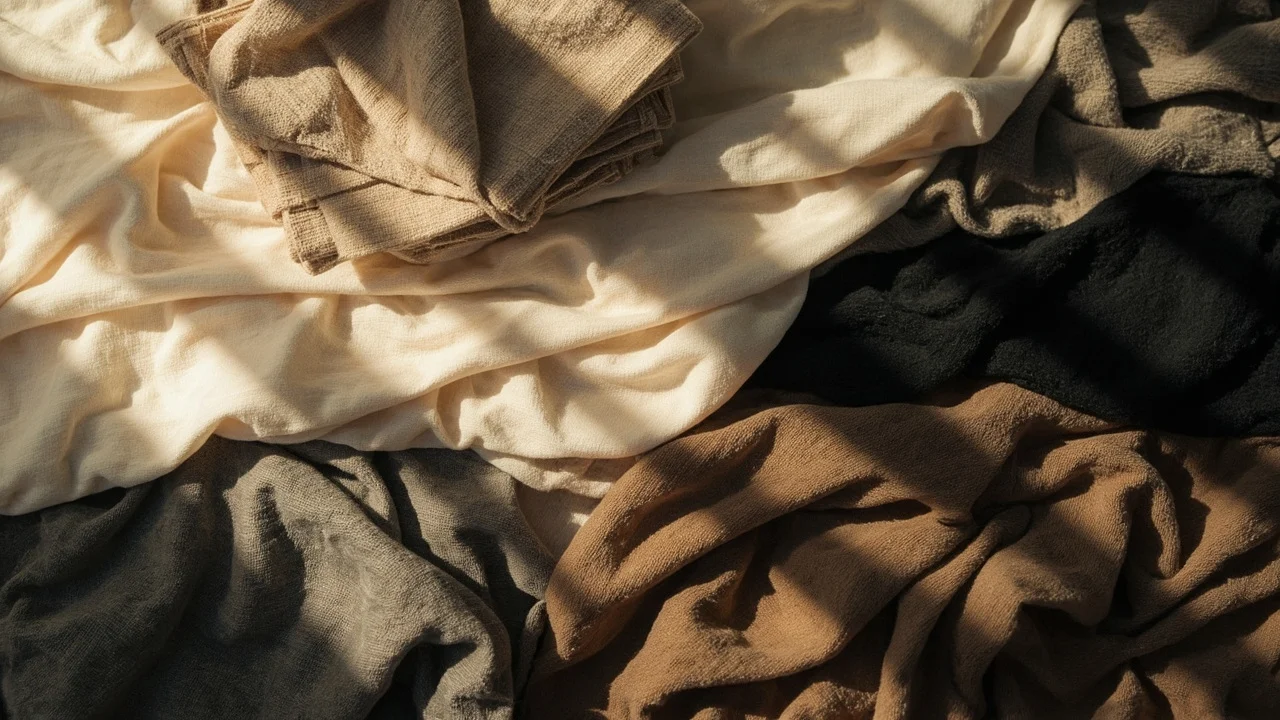
Key market segments and growth drivers in the Bedding Set Fabric Types sector.
2. Market Analysis
Two parallel growth narratives frame the bedding set fabric market. According to one analysis, the broader bedding market—including pillows, comforters, and mattress pads—will reach $119.70 billion by 2026, with a 7.7% CAGR through 2031. A more granular report on home bedding—sheets, pillowcases, and duvet covers specifically—puts 2025 value at $141.1 billion, accelerating to $277.0 billion by 2033 at an 8.8% CAGR. The discrepancy highlights the rapid expansion of premium sheet sets and the shift toward higher-ticket fabric types such as long-staple cotton and washed linen.
Three drivers fuel this growth. First, consumer demand for sustainable and organic bedding materials has pushed manufacturers to invest in GOTS-certified organic cotton, reclaimed linen, and recycled polyester blends. Retailers report that products labeled 'organic' or 'eco-friendly' command up to a 25% price lift. Second, the rising preference for premium and designer bedding—often featuring high thread counts, sateen weaves, and custom prints—has expanded the average order value. Third, post-pandemic home nesting behaviors persist: households continue to upgrade their sleep environments, with bedding replacement cycles shortening from five years to three.
From a regional standpoint, North America dominates in value, driven by high per-unit prices and a culture of high thread-count marketing. Europe is the fastest adopter of sustainable linen and hemp-based fabrics, while Asia-Pacific remains the manufacturing powerhouse—led by China, India, and Pakistan—supplying nearly 70% of global cotton bedding. B2B buyers should note that fabric type margins vary sharply: microfiber sets yield 10–15% gross margins, while premium Egyptian cotton can reach 40–50% margins for branded distributors. The 2026 inflection point will likely come from synthetic blend innovations that mimic natural fibers at lower cost.
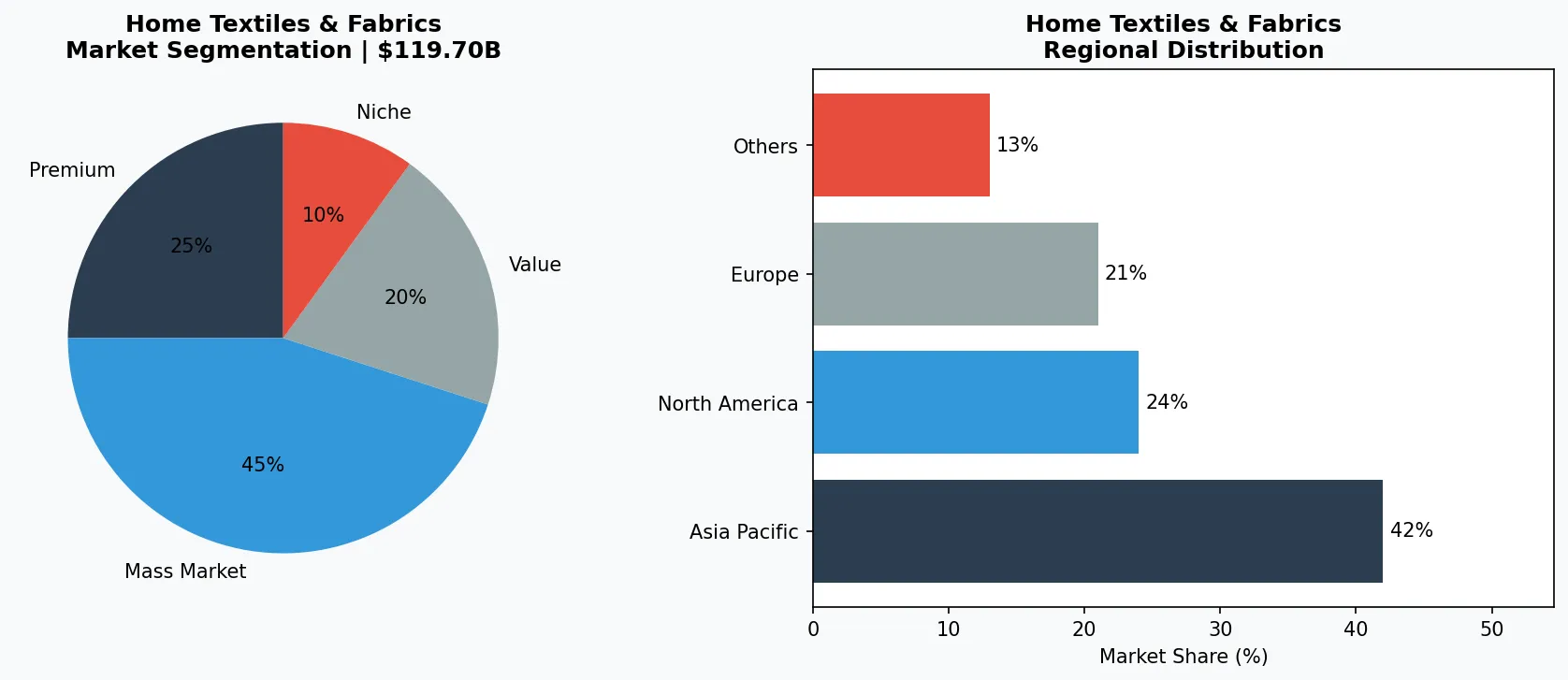
Market segmentation and regional distribution analysis for Bedding Set Fabric Types.
3. Product Categories
Cotton Bedding Sets
Remain the market's backbone, accounting for over 55% of global bedding sales by volume. Within this category, Egyptian cotton (Giza 45) and Supima cotton dominate luxury segments due to extra-long staple fibers that resist pilling. Percale weaves offer crispness for warmer climates, while sateen weaves provide a silky sheen favored in hospitality. Organic cotton variants, certified under GOTS or OCS, now represent 12% of cotton bedding sales and are growing at 15% annually.
Linen Bedding Sets
Have surged as a lifestyle trend, particularly washed linen, which is pre-laundered for a relaxed, lived-in feel. Linen's moisture-wicking properties make it a high-margin product (retail prices $150–$400 per set). The trend is strongest in Europe and among luxury eco-conscious brands. Linen requires careful sourcing: the best fibers come from Normandy (France) or Belgium, and suppliers must verify dew retting and weaving certifications to ensure consistency.
Microfiber & Bamboo-Rayon Blends
Fill the value and performance niches. Microfiber polyester, often woven at 1800–2500 thread count (a marketing figure), is the go-to for budget hotels and mass-market retail due to low cost ($8–$20 per set) and wrinkle resistance. Bamboo-rayon (viscose from bamboo pulp) offers a soft, eco-positioned alternative but requires scrutiny of chemical processing methods. Lyocell (TENCEL™) is the premium spin, with closed-loop production lowering environmental impact.
Cotton Bedding Sets
Includes Egyptian cotton, Supima, organic percale, and sateen weaves. Thread counts 200–800, with GOTS certification a key differentiator for eco-conscious buyers.
Linen Bedding Sets
Washed linen and stonewashed linen are the fastest-growing premium segment. European flax (Normandy) is preferred, with single- and double-finished weights available.
Microfiber & Blends
Polyester microfiber (often marketed as 'brushed microfiber') and bamboo-rayon blends dominate value tier. Blends with TENCEL™ lyocell are positioned as mid-range eco-performance options.
4. Leading Players
The Premium Cotton Specialist
Archetype focuses on vertical integration from farm to finished product. These players control long-staple cotton supply chains in Egypt or the U.S., mill in-house, and sell through brand partnerships with luxury hotels and high-end DTC brands. Their competitive advantage lies in traceability: they can certify every bale back to a specific gin, enabling clients to claim single-origin provenance. Margins are high, but capital requirements for gin and weaving operations are substantial.
The Sustainability Champion
Concentrates on recycled and organic fibers, often combining linen, hemp, and TENCEL™ blends. These manufacturers invest heavily in certifications (GOTS, OEKO-TEX, GRS) and market to hospitality groups with net-zero commitments. Their edge is the ability to offer carbon-neutral production and take-back programs for end-of-life bedding. The challenge is scaling without compromising fiber quality, as recycled polyester can exhibit reduced tensile strength after multiple loops.
The Mass-Market Efficient
Player runs high-volume, low-cost operations focused on microfiber and poly-cotton blends. These manufacturers are typically located in Bangladesh, Pakistan, or Vietnam, supplying large hotel chains and discount retailers. Their strength is speed and scale: they can produce 100,000 sets per week with consistent colorfastness. However, they face margin compression as raw material prices fluctuate and as buyers shift toward natural fibers. The most forward-looking among them are adding organic cotton lines to retain larger contracts.
The Vertical Integrator
Controls cotton ginning, spinning, weaving, and finishing in-house. This archetype offers traceable single-origin Egyptian cotton and can guarantee consistent quality for luxury hospitality contracts.
The Sustainability Champion
Operates certified organic and recycled fiber lines, often integrating linen and TENCEL™. Focuses on carbon-neutral production and take-back programs, targeting ESG-driven buyers.
The Mass-Market Efficient
High-volume producer of microfiber and poly-cotton blends, serving budget hotels and discount retailers. Competitive edge is speed and low COGS, but margins thin with raw material volatility.
5. Market Trends
1. Digital Transformation in Bedding Set Fabric Types
Artificial intelligence, IoT sensors, and advanced data analytics are fundamentally reshaping production efficiency in Bedding Set Fabric Types. Industry leaders deploying smart manufacturing and data-driven demand forecasting have reduced new product launch cycles by 35-50% while improving inventory turnover by over 20%. With more than 60% of Bedding Set Fabric Types companies projected to complete core digital transformation by 2028, this shift has moved from optional upgrade to competitive necessity.
2. Sustainability as Competitive Imperative in Bedding Set Fabric Types
Global carbon border adjustment mechanisms (CBAM) and rising consumer environmental awareness are forcing Bedding Set Fabric Types companies to transform sustainability from marketing rhetoric into operational reality. ESG rating agencies increased sector coverage intensity by 35% in 2025. Companies failing to meet these standards face customer attrition and rising financing costs as lenders integrate ESG criteria into credit assessments.
3. Supply Chain Regionalization in Bedding Set Fabric Types
Geopolitical tensions are driving Bedding Set Fabric Types companies to accelerate supplier diversification. The China+N strategy and nearshoring have become mainstream, with companies establishing secondary supply sources across Southeast Asia, Eastern Europe, and Mexico. Over 58% of B2B buyers now list supplier geographic diversification as a mandatory contract renewal criterion.
4. Consumer Upgrading in Bedding Set Fabric Types Markets
Middle-class expansion and Gen Z purchasing power are accelerating Bedding Set Fabric Types transition from standardized mass production toward personalized customization and agile small-batch manufacturing. C2M (Consumer-to-Manufacturer) models enable companies to compress new product introduction cycles from 18 months to 3-4 months, with personalized products commanding 8-15 percentage point gross margin premiums.
6. Regional Markets
North America – Premium Obsession
High per-unit spend on cotton sateen with thread counts 400–800 dominates. Hotel chains increasingly demand organic cotton to meet corporate sustainability goals.
Europe – Linen & Regulation
Strict REACH and EU Ecolabel regulations push buyers toward certified linen and hemp. Washed linen represents 30% of new bedding launches in the UK and Germany.
Asia-Pacific – Manufacturing Hub
China and India supply over 70% of global cotton bedding. Low labor costs keep microfiber prices under $10 FOB, but rising wages are shifting some production to Vietnam and Bangladesh.
7. Investment Outlook
Two opportunities stand out for B2B buyers in bedding set fabric types. First, sourcing certified sustainable fabrics (GOTS, GRS) can unlock premium contracts with eco-certified hotel chains and DTC brands willing to pay 20–30% more per set. Second, the rise of performance fabrics—those with antimicrobial finishes or phase-change materials—offers a differentiation route for medical and hospitality segments, though costs remain 40% higher than standard polyester.
One concrete risk is cotton price volatility. With the USDA projecting lower global inventories in 2025–2026, raw cotton costs could spike 15–20%, squeezing margins for fixed-price contracts. Buyers should negotiate price-escalation clauses or lock in forward contracts with suppliers who own integrated gins. Additionally, the shift to direct-to-consumer models may disintermediate traditional distributors, forcing wholesalers to offer value-added services like custom packaging or just-in-time delivery.
Strategic Considerations:
- Sustainable Sourcing Momentum: B2B buyers who secure GOTS-certified cotton or GRS recycled polyester now can lock in multi-year contracts at premium margins as mainstream adoption accelerates post-2026.
- Direct-to-Consumer White-Label: Smaller hotel groups are launching proprietary bedding lines; suppliers offering low MOQ white-label production with custom weaves will capture this fragmented demand.
- Cotton Price Volatility: USDA projects 15% price increase in 2026; buyers should negotiate price-escalation clauses or shift to synthetic-natural blends to stabilize costs.
- Performance Fabric Adoption: Antimicrobial and moisture-wicking finishes could command 40% price premia in medical and high-end hospitality; certification to ISO 20743 is essential for claims.
Frequently Asked Questions
Make Informed Decisions in the Bedding Set Fabric Types Market
Product quality and sourcing integrity directly impact business outcomes. Discover how Verity Rank's verification platform helps industry participants source with greater confidence.
Contact Verity Rank TodayFurther Reading: Explore additional market intelligence from Grand View Research and Mordor Intelligence.
This article is for informational purposes only, based on publicly available industry data and market reports as of 2026-07-07. All market figures are estimates and may vary from actual results.