

Table of Contents

The global Cat Grooming Products sector serves consumers worldwide with diverse solutions.
1. Industry Overview
By 2026, the global pet grooming services market alone will hit USD 7.75 billion — and cat grooming products are the unsung engine driving that growth. While pet furniture often conjures images of luxury cat trees and orthopedic beds, the real repeat-revenue workhorses are the shampoos, brushes, and trimming tools that owners buy every few weeks. These economy and mid-range consumables account for 63.7% of all grooming purchases, a statistic that reveals a fundamental truth: cat grooming is not a luxury upgrade but a routine necessity.
Industry Scope & Characteristics
High Repeat-Purchase Ratio
Unlike cat trees or beds, grooming products like de-shedding brushes and shampoos are purchased every 4-8 weeks, creating predictable recurring revenue for retailers and manufacturers.
Dual Supply Chain: Consumables + Durables
Grooming products require separate manufacturing lines for liquids (shampoos, sprays) and hard goods (brushes, clippers), complicating inventory management but enabling cross-category bundling.
Safety and Hypoallergenic Certifications
Products must comply with FDA or EU cosmetic regulations for pet-contact materials; certifications like 'phthalate-free' and 'tear-free' are becoming minimum requirements for major retailers.
Ergonomic and Quiet Motor R&D
Innovation focuses on reducing noise and vibration in clippers and brushes — silent motor technology from Wahl and anti-static brush bristles from FURminator are leading examples.
What makes cat grooming products distinctive within the broader pet furniture industry is their hybrid nature. They sit at the intersection of consumables (shampoos, wipes) and durables (brushes, clippers), creating a dual revenue stream for manufacturers and retailers. Unlike a cat tree that might last five years, a bottle of de-shedding shampoo gets replaced every two months. This frequency drives a market that, according to recent data, was valued at $14.69 billion in 2024 and is projected to reach $24.82 billion by 2033 — a compound annual growth rate of 6.0%.
The sub-topic also challenges the traditional 'furniture' label. A grooming station with a non-slip mat and integrated brush holder is functionally a piece of pet care furniture, yet it lives in the grooming aisle. This blurring of categories is exactly why Verity Rank tracks it as a distinct segment: it forces B2B buyers to think beyond static furniture and into the high-margin, high-frequency world of grooming consumables. For suppliers, the message is clear: the next billion-dollar opportunity in pet furniture isn't a bigger cat tree — it's the brush that comes with it.
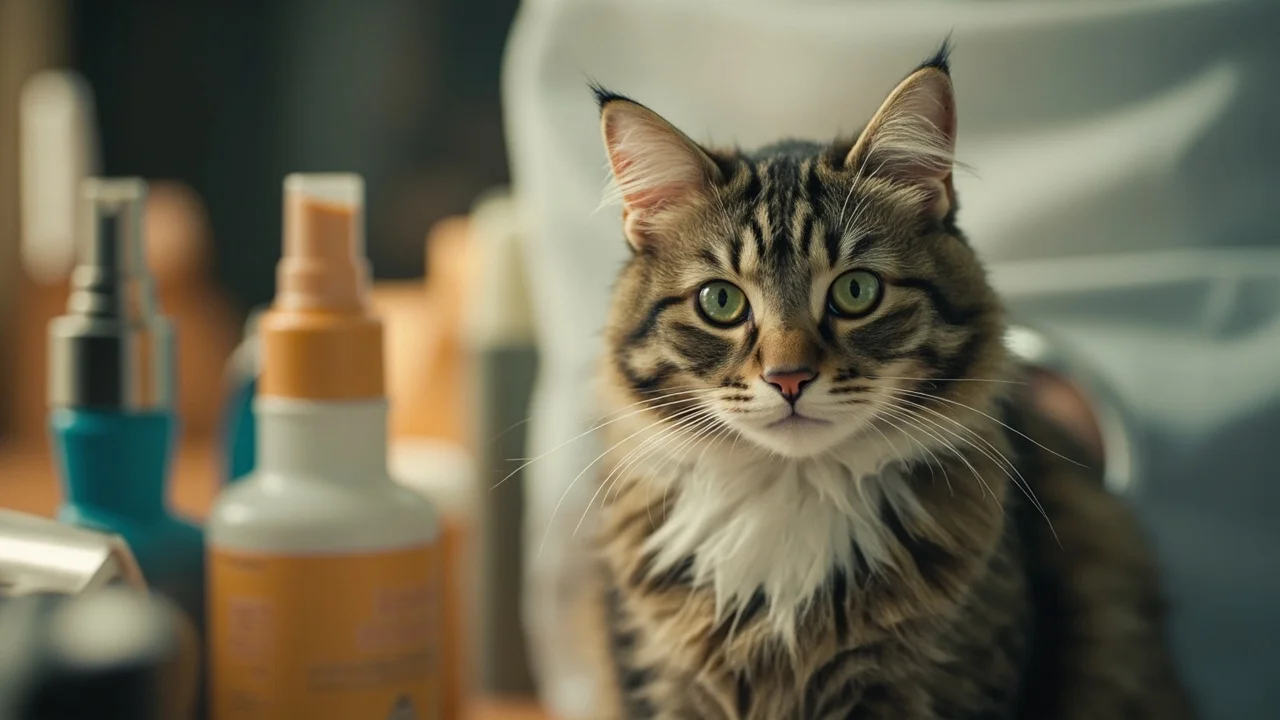
Key market segments and growth drivers in the Cat Grooming Products sector.
2. Market Analysis
The numbers are impossible to ignore. The global pet grooming products market stood at $14.69 billion in 2024. By 2025, it is expected to advance to $7.25 billion for services alone, with a combined product-and-services ecosystem projected to reach USD 19.5 billion by 2026. Looking further out, analysts forecast the total pet grooming market could nearly triple to USD 46.7 billion by 2036 — a CAGR of roughly 5.5% from 2023 to 2030. These figures, drawn from multiple independent research firms, paint a picture of sustained, decade-long expansion.
Three growth drivers explain this trajectory. First, the humanization of pets: owners increasingly treat cats as family members, demanding premium grooming products that mirror human-grade ingredients. Second, the rise of multi-cat households — a trend accelerated by remote work — has multiplied per-home demand for grooming tools. Third, e-commerce penetration has collapsed distribution barriers, allowing niche grooming brands to reach national audiences without traditional retail shelf space.
Yet the most striking insight is the dominance of economy and mid-range products. Despite the buzz around luxury grooming gadgets, 63.7% of purchases fall into the routine, repeat-use category. This suggests that B2B buyers should prioritize volume and supply chain efficiency over premium positioning. The real margin lies not in a $200 grooming wand but in the $8 de-shedding brush that sells 10,000 units a month.
Geographically, North America remains the largest market, but Asia-Pacific is the fastest-growing region, driven by rising disposable incomes and pet adoption in China and India. For global suppliers, this means dual-track strategies: maintaining quality for mature markets while offering affordable, functional products for emerging ones. The market is not monolithic, and the winners will be those who segment their grooming lines by region, not just by price point.
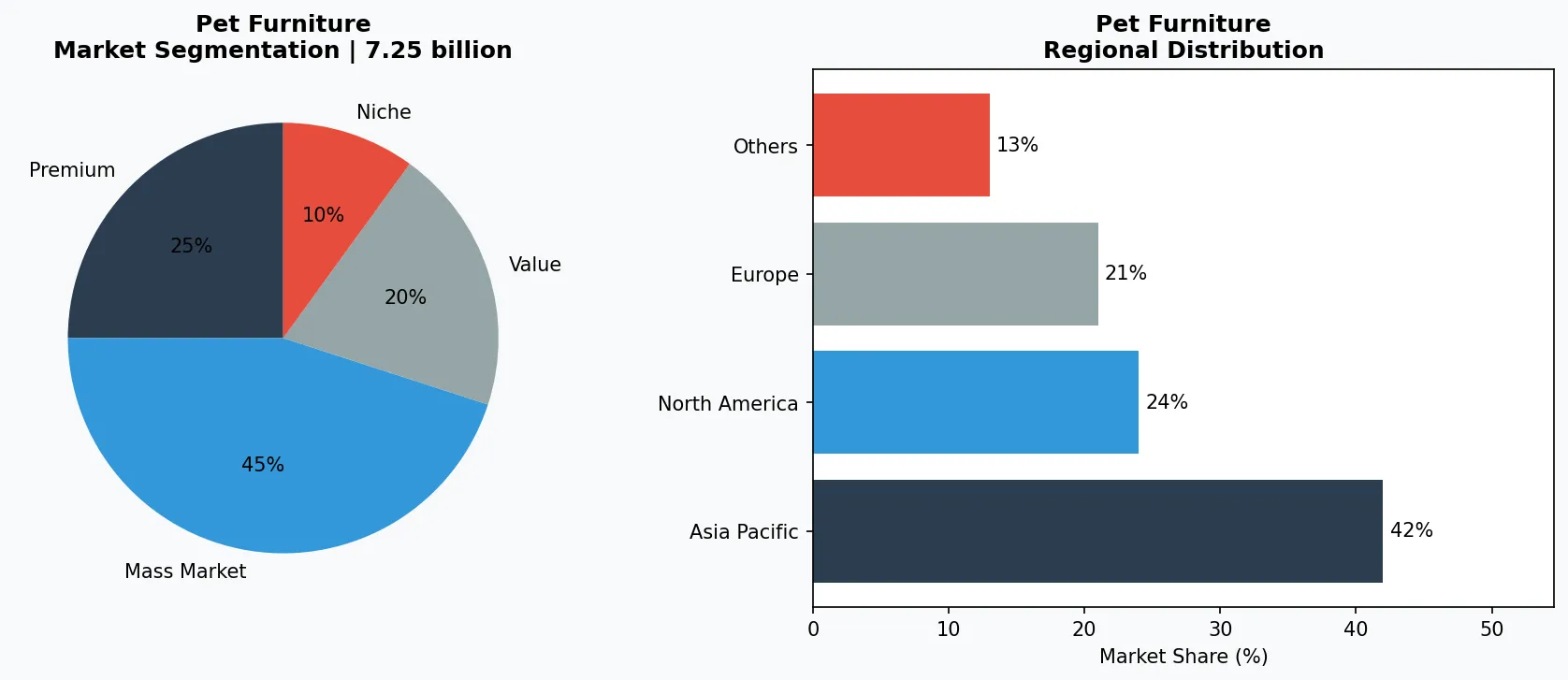
Market segmentation and regional distribution analysis for Cat Grooming Products.
3. Product Categories
Cat grooming products fall into three distinct sub-categories, each with its own demand drivers and supply chain characteristics.
De-shedding and Brushing Tools
dominate the category, accounting for the largest share of repeat purchases. Products like the FURminator de-shedding tool and Hertzko self-cleaning slicker brush have become household names. These tools address the most common cat owner pain point: shedding. Their success lies in visible, immediate results — a pile of removed undercoat — which drives word-of-mouth and repeat buying. For manufacturers, the key is ergonomic handles and easy-clean mechanisms that reduce friction for the user.
Grooming Wipes and Sprays
represent the fastest-growing consumable segment. Waterless shampoos, deodorizing wipes, and coat-conditioning sprays appeal to owners of cats that hate traditional baths. Brands like Burt's Bees for Pets and Vet's Best have capitalized on this trend with natural, plant-based formulas. The product challenge here is formulation stability and packaging that prevents drying out — a non-negotiable for repeat purchases.
Nail and Coat Trimming Tools
complete the trio. While less frequent in purchase cycle, they command higher unit prices. Products such as the Millers Forge nail clipper and the Wahl Professional Animal Clipper kit demonstrate that precision and safety (e.g., cordless operation, quiet motors) are the primary differentiators. The opportunity for B2B buyers is to bundle these with consumables — a 'grooming starter kit' that combines a brush, wipes, and clippers at a slight discount to encourage cross-category adoption.
De-shedding & Brushing Tools
Includes undercoat rakes, slicker brushes, and grooming gloves. Key examples: FURminator de-shedding tool, Hertzko self-cleaning slicker brush.
Waterless & Wipe-Based Cleaners
Foaming shampoos, deodorizing wipes, and coat sprays that require no rinsing. Key examples: Burt's Bees for Pets waterless shampoo, Vet's Best cat wipes.
Nail & Coat Trimming Kits
Cordless clippers, nail grinders, and safety scissors designed for at-home use. Key examples: Millers Forge nail clipper, Wahl Professional Animal Clipper.
4. Leading Players
While no single company monopolizes cat grooming products, several archetypes define the competitive landscape.
The Consumables Powerhouse: Spectrum Brands (FURminator)
. Spectrum Brands has built a dominant position through the FURminator brand, which is effectively the Kleenex of de-shedding tools. Their strategy is twofold: first, patent-protected blade technology that creates a genuine performance moat; second, aggressive retail placement in both pet specialty and big-box stores. For competitors, the lesson is that IP and distribution density are harder to replicate than product features.
The Natural/Niche Disruptor: Burt's Bees for Pets
. Leveraging the parent company's heritage in natural personal care, this line has carved out a premium position in grooming wipes and shampoos. Their strategy targets health-conscious millennial and Gen Z owners who read ingredient labels. By avoiding parabens, sulfates, and artificial fragrances, they command 30-40% price premiums over mainstream brands. The risk is that 'natural' becomes table stakes rather than a differentiator as more entrants flood the segment.
The Value Innovator: Hertzko
. Hertzko has succeeded by focusing on the economy and mid-range segment that accounts for 63.7% of purchases. Their self-cleaning slicker brush is a textbook example of functional innovation at an accessible price point (typically under $15). The strategy is simple: identify the most common grooming pain point (messy brush cleanup), solve it with a mechanical innovation, and price it for mass adoption. This positions Hertzko as the go-to brand for first-time cat owners and budget-conscious households.
The Professional-Grade Player: Wahl
. Wahl brings its barber-tool heritage to pet grooming, offering cordless clippers and trimmers that appeal to serious owners and groomers. Their strategy leverages existing manufacturing scale and distribution channels for human grooming tools, creating cost advantages that pure-play pet brands cannot match. The trade-off is that their products can feel over-engineered for casual users, limiting their total addressable market.
The IP-Protected Innovator (Spectrum Brands/FURminator)
Uses patented blade technology and broad retail distribution to maintain a premium position in de-shedding tools, despite higher price points.
The Natural Ingredient Specialist (Burt's Bees for Pets)
Leverages parent brand equity in natural personal care to command 30-40% price premiums on grooming wipes and shampoos targeting health-conscious owners.
The Value-Focused Problem Solver (Hertzko)
Dominates the economy segment by solving a single pain point (messy brush cleanup) with an innovative mechanical design at under $15 retail.
5. Market Trends
1. Wellness-as-a-Service
Subscription models for grooming tools and pet-safe shampoos are converting one-time furniture buyers into recurring revenue streams by bundling replacement brushes and nail trimmers with monthly delivery.
2. Human-Grade Materials
Owners are demanding non-toxic, food-grade silicone and organic cotton for grooming surfaces, pushing B2B suppliers to reformulate their raw material sourcing for cat trees and grooming tables.
3. Dual-Function Furniture
Grooming stations that double as cat condos or hidden litter boxes are trending, as space-conscious urban pet owners seek furniture that serves both hygiene and enrichment without sacrificing square footage.
4. Eco-Conscious Production
Biodegradable bamboo frames and recycled polyester upholstery are becoming table stakes for B2B buyers, driven by corporate sustainability pledges and end-consumer preference for carbon-neutral pet care products.
6. Regional Markets
North America: Mature Market with Premium Bias
Highest per-capita spending on grooming products; demand is driven by humanization trends and multi-cat households, favoring natural and smart grooming devices.
Asia-Pacific: Fastest-Growing Region for Economy Products
Rising pet adoption in China and India fuels demand for affordable, functional grooming tools; local manufacturers are gaining share with low-cost de-shedding brushes.
Europe: Regulatory-Driven Market for Sustainability
Strict EU chemical regulations and consumer demand for biodegradable packaging force brands to reformulate; Burt's Bees for Pets and Wahl have adapted with sustainable packaging lines.
7. Investment Outlook
Two opportunities stand out for B2B buyers in the cat grooming products space. First, the 'grooming station' concept — integrating a non-slip mat, brush holder, and treat dispenser into a single furniture piece — could capture the 63.7% of economy buyers who want functional convenience without premium pricing. Second, private-label grooming consumables for pet furniture retailers offer margin expansion: a branded brush sold alongside a cat tree yields 20-30% higher margins than unbranded alternatives.
The primary risk is commoditization. As the market grows at 6.0% CAGR, new entrants will flood the economy segment, compressing margins. The antidote is differentiation through bundling, subscription models, or proprietary formulations — not price competition. Buyers should prioritize suppliers who invest in R&D (e.g., hypoallergenic coatings, ergonomic handles) over those who simply replicate existing products at lower cost.
Strategic Considerations:
- Grooming Station Furniture Integration: Bundling a grooming mat, brush holder, and treat dispenser into a single furniture piece could capture economy buyers seeking functional convenience.
- Private-Label Grooming Consumables for Retailers: Pet furniture retailers can boost margins 20-30% by offering branded grooming wipes and brushes alongside cat trees and beds.
- Risk: Commoditization of Economy Segment: As 63.7% of purchases are economy/mid-range, new entrants will compress margins; differentiation via bundling or proprietary formulations is critical.
- Opportunity: Subscription Grooming Kits: Monthly delivery of consumables (wipes, shampoo refills) creates predictable revenue; early movers can lock in customer loyalty before competition scales.
Make Informed Decisions in the Cat Grooming Products Market
Product quality and sourcing integrity directly impact business outcomes. Discover how Verity Rank's verification platform helps industry participants source with greater confidence.
Contact Verity Rank TodayFurther Reading: Explore additional market intelligence from Grand View Research and Mordor Intelligence.
This article is for informational purposes only, based on publicly available industry data and market reports as of 2026-05-22. All market figures are estimates and may vary from actual results.