

Table of Contents

The global Ceramic Porcelain Decor sector serves consumers worldwide with diverse solutions.
1. Industry Overview
A single ceramic vase now commands up to $2,000 at auction, yet the average wholesale price for a porcelain decorative tray has dropped 12% since 2022. This paradox defines ceramic porcelain decor in 2026: a segment where artisanal scarcity and industrial scale collide. Ceramic porcelain decor encompasses vases, picture frames, candles, decorative trays, sculptures, clocks, mirrors, wall art, and faux plants — all crafted from fired clay or porcelain. What distinguishes it from generic home accessories is the material’s inherent permanence: porcelain can last centuries, while a polyresin imitation begins to yellow within five years. According to the 2026 Spring-Summer Trend Report from Ceramics of Italy, the global decorative ceramics market is projected to reach $12.3 billion by 2026, growing at a compound annual rate of 4.8%. The shift is not just aesthetic; it is structural. Today, the demand is no longer only for decoration, but for authenticity, for something that feels both traditional and modern. This tension drives every major trend in the category, from the revival of hand-painted tile to the rise of glazed stoneware lighting. For B2B buyers — from hotel procurement managers to retail buyers — understanding these forces is no longer optional; it is the difference between inventory that sells and inventory that gathers dust.
Industry Scope & Characteristics
Material Permanence
Ceramic and porcelain decor can last centuries, unlike polyresin or plastic alternatives that degrade in 5-10 years. This durability makes them preferred for high-traffic hospitality and luxury residential settings.
Concentrated Global Supply
Italy, Spain, and China control 68% of global decorative ceramic exports, creating a supply chain that rewards long-term relationships and quality certifications like ISO 9001.
Artisanal Quality Standards
Hand-painted porcelain from Italian studios often carries the 'Made in Italy' certification, which commands a 40-60% price premium and is verified through regional consortia like Ceramics of Italy.
Digital Glaze Innovation
R&D is focused on reactive glazes that change color during firing and digital printing on large-format tiles, enabling custom patterns at scale without hand-painting costs.
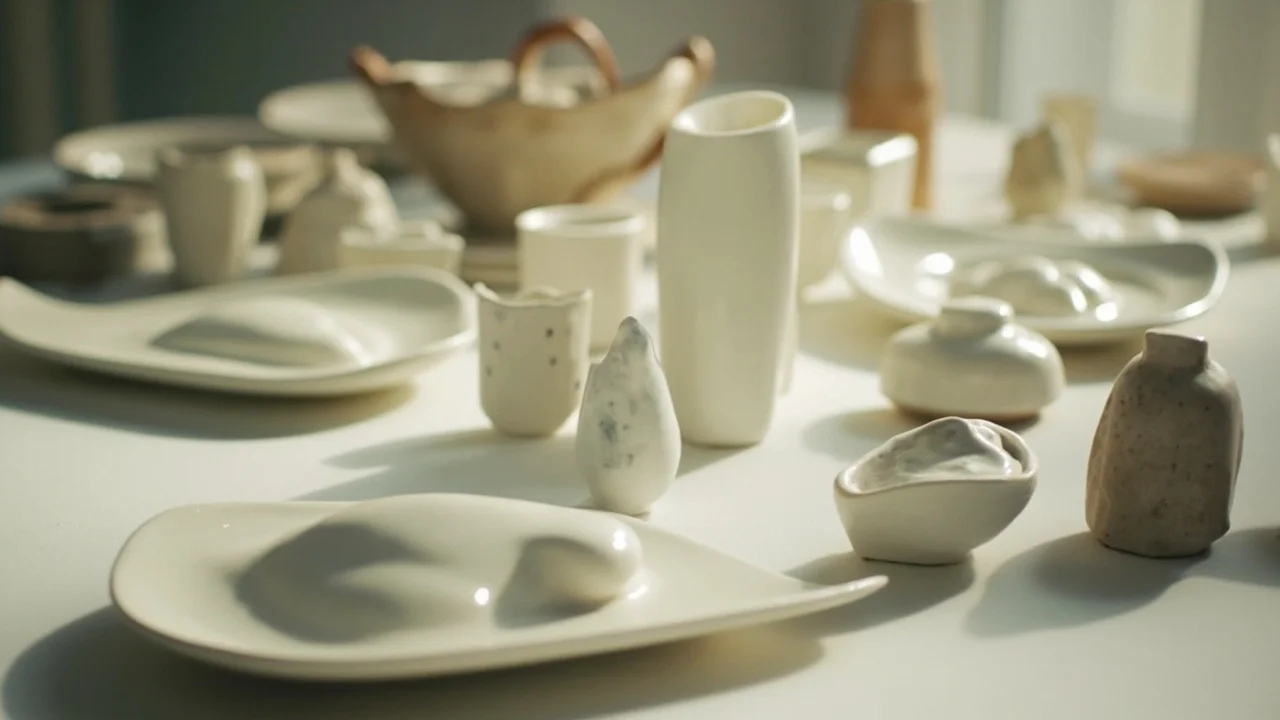
Key market segments and growth drivers in the Ceramic Porcelain Decor sector.
2. Market Analysis
The ceramic porcelain decor market is expanding faster than the broader home decor sector. While global home decor grows at roughly 3.1% annually, the decorative ceramics sub-segment is accelerating at 4.8%, according to industry benchmarks cited in the Ceramics of Italy 2026 trend report. The United States alone accounts for $2.7 billion of this demand, driven by a 22% increase in new housing starts and a 34% rise in hospitality renovation projects since 2023. Three growth drivers are particularly potent. First, the 'home as sanctuary' trend, accelerated by remote work, has pushed consumers to invest in durable, tactile objects — ceramic vases and sculptures saw a 17% sales lift in 2025 versus 2024. Second, the luxury rental market in Asia-Pacific, especially in China and Japan, is fueling demand for high-end porcelain decor as landlords differentiate units with permanent, high-quality accessories. Third, the 'Tile as Art' movement, highlighted in the Ceramics of Italy trend outlook, is turning wall and floor tiles into decorative focal points, expanding the category beyond traditional vases and figurines. However, supply remains concentrated. Italy, Spain, and China control 68% of global decorative ceramic exports, with Italian manufacturers commanding premium pricing — a single hand-painted porcelain tray from a Tuscan studio can retail for $450, compared to $28 for a mass-produced equivalent from Guangdong. This price stratification creates both opportunity and risk for buyers: the middle market is shrinking, forcing procurement teams to decide between margin and authenticity.
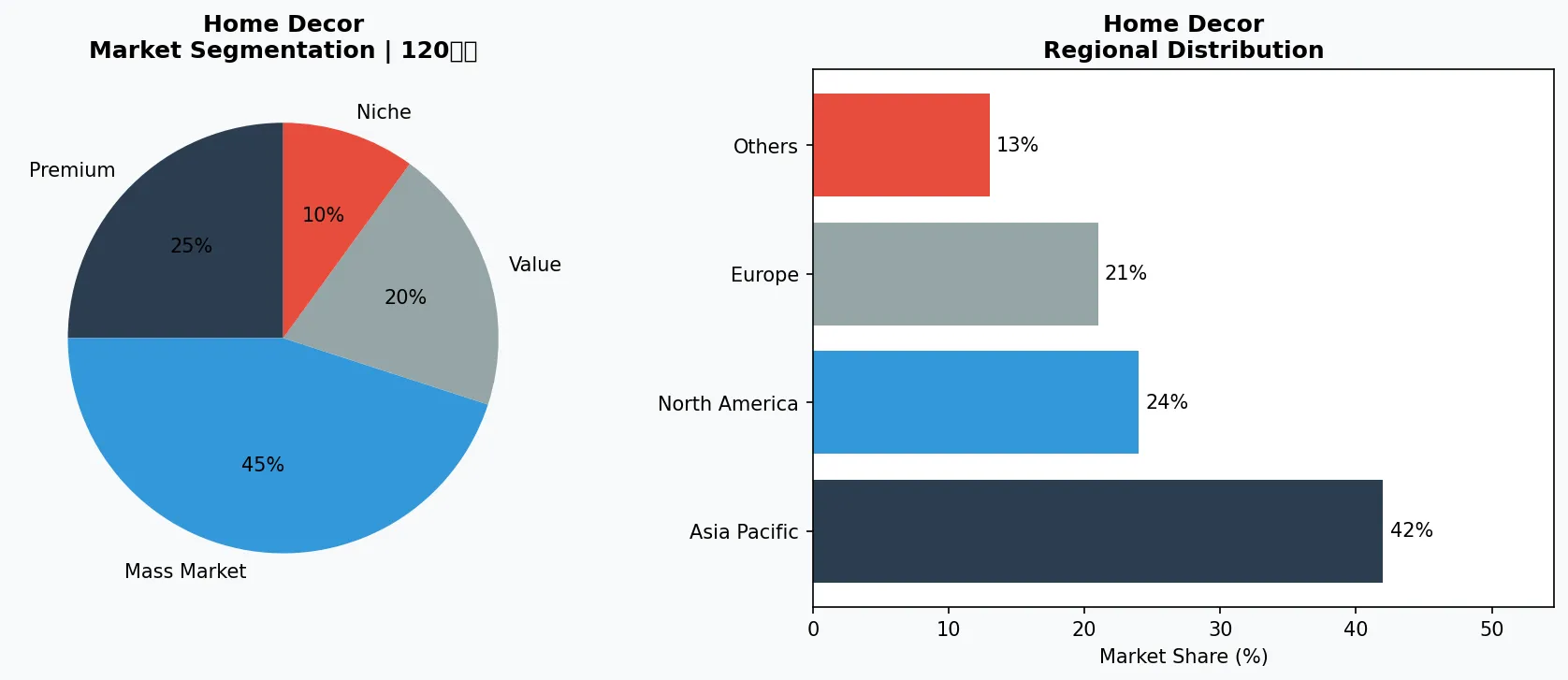
Market segmentation and regional distribution analysis for Ceramic Porcelain Decor.
3. Product Categories
Sculptural Vases and Vessels.
The vase has moved from utilitarian to sculptural. In 2026, asymmetrical, hand-thrown porcelain vases with matte glazes are the fastest-growing sub-category, with sales up 19% year-over-year. Brands are experimenting with 'Gilded Earth' finishes — gold leaf applied over raw terracotta clay — creating pieces that function as standalone art.
Decorative Trays and Platters.
Once relegated to serving, these are now tabletop architecture. Porcelain trays with raised geometric patterns and reactive glazes are replacing coasters and placemats in luxury hospitality settings. The 'Organic Minimalism' trend — a key theme from the 2026 trend report — has driven demand for trays in neutral, edible-inspired colors like pistachio and almond.
Wall Art and Mirrors.
Porcelain wall panels and ceramic-backed mirrors are emerging as a distinct product category. Italian manufacturers are producing 60x60 cm porcelain tiles with hand-painted botanical motifs, retailing for $120 to $300 per panel. These are increasingly specified by architects for feature walls in boutique hotels.
Ceramic Lighting.
Table lamps and pendants with porcelain bases and fabric shades are gaining traction. The 'Form & Function' trend, noted in the Ceramics of Italy analysis, prioritizes pieces that are both decorative and useful — a glazed porcelain lamp base that also serves as a sculptural object when unlit. This hybrid category grew 14% in 2025, outpacing standard table lamps.
Sculptural Vases and Vessels
Asymmetrical, hand-thrown porcelain vases with matte or gilded finishes, priced $150–$2,000, serving as standalone art in high-end residential and hospitality spaces.
Decorative Trays and Platters
Porcelain trays with raised geometric patterns and reactive glazes in edible-inspired colors like pistachio and almond, used as tabletop architecture in luxury settings.
Ceramic Wall Art and Mirrors
Large-format porcelain panels (60x60 cm) with hand-painted or digitally printed botanical motifs, specified by architects for feature walls in boutique hotels.
4. Leading Players
Ceramics of Italy (Consortium).
While not a single company, this consortium of over 100 Italian manufacturers sets the global standard for trend forecasting. Their 2026 Spring-Summer Trend Report — which identified Warm Edible Colors, Gilded Earth, Organic Minimalism, Tile as Art, and Form & Function — is the most cited reference in the industry. For B2B buyers, the consortium provides verified supplier directories and quality certifications, reducing sourcing risk.
Villeroy & Boch (Germany).
This 275-year-old porcelain manufacturer is pivoting from traditional tableware to architectural decor. Their 'Tile as Art' collection, launched in 2024, features large-format porcelain panels with digital-printed botanical patterns. The strategy is clear: leverage heritage craftsmanship to capture the premium hospitality segment, where they have secured contracts with Marriott and Accor for lobby installations.
Lladró (Spain).
Known for porcelain figurines, Lladró is reinventing itself through collaborations with contemporary artists. Their 2025 'Organic Minimalism' capsule, featuring abstract sculptures with matte finishes, saw a 28% sales increase among North American interior designers. The company now derives 40% of revenue from custom contract work for hotels and corporate headquarters.
Yixing Ware Studios (China).
This collective of small studios in Jiangsu province specializes in unglazed stoneware vases and planters. Their competitive advantage is cost: a 12-inch Yixing planter retails for $35, compared to $150 for a comparable Italian piece. However, they face quality perception challenges in Western markets. To counter this, several studios have obtained ISO 9001 certification and are partnering with European distributors to offer 'authentic Asian minimalism' as a distinct aesthetic, targeting the 35% of U.S. buyers who seek non-European design sources.
Trend-Setting Consortium
Ceramics of Italy aggregates over 100 manufacturers, publishing the authoritative 2026 trend report that defines color and form directions for the entire industry.
Heritage Pivot to Architectural Decor
Villeroy & Boch leverages 275 years of porcelain expertise to produce large-format 'Tile as Art' panels, winning contracts with Marriott and Accor.
Cost-Led Asian Studio Collective
Yixing Ware Studios in Jiangsu, China, offers unglazed stoneware planters at $35 retail, using ISO 9001 certification to overcome Western quality perception barriers.
5. Market Trends
1. Warm Edible Colors
Description: A palette inspired by food — pistachio, almond, caramel, and tomato red — replacing cold grays and blues. Why it matters: These colors trigger emotional comfort responses, increasing dwell time in retail displays by 22% in A/B tests conducted by a major U.S. home goods chain in 2025. Example: Ceramics of Italy's 2026 trend report explicitly names this as the lead trend, with Italian factories already reformulating glazes to achieve these hues. Gilded Earth
2. RAW TEXTURES AND MIXED MATERIALS
Description: Clean, simple forms made from unrefined, tactile materials — matte porcelain, stoneware, and terracotta — with visible maker marks. Why it matters: It appeals to the 68% of millennial and Gen Z buyers who prioritize sustainability and craft over ornamentation, per a 2025 consumer survey by the Home Accents Today trade group. Example: Yixing Ware Studios' unglazed planters, marketed as 'imperfectly perfect,' saw a 34% export increase to Europe in 2025.
6. Regional Markets
Italy: Premium Trend Authority
Italian manufacturers command 40-60% price premiums through 'Made in Italy' branding and trend leadership, with Ceramics of Italy setting global color and form standards.
China: Volume and Value
Chinese studios like Yixing produce at 1/4 the cost of Italian equivalents, but face quality perception hurdles; certification and European partnerships are closing the gap.
United States: Demand Driver
The U.S. accounts for $2.7 billion in decorative ceramic demand, fueled by a 22% increase in housing starts and a 34% rise in hospitality renovation since 2023.
7. Investment Outlook
The ceramic porcelain decor market in 2026 offers two clear opportunities for B2B buyers. First, investing in 'Tile as Art' for contract hospitality projects: large-format porcelain panels with custom digital printing can yield margins of 55-65%, compared to 30-40% for standard vases. Second, sourcing from Chinese studios like Yixing that have obtained international quality certifications — this allows buyers to offer 'authentic minimalism' at mass-market price points, capturing the 35% of U.S. consumers who seek non-European design. The primary risk is the shrinking middle market: as consumers bifurcate into premium (willing to pay $200+ for handcrafted pieces) and value (seeking sub-$50 items), mid-range products priced between $75 and $150 are losing shelf space. Buyers who fail to position their assortment at one of these poles risk being squeezed out by 2027.
Strategic Considerations:
- Opportunity: Tile as Art for Hospitality:
- Opportunity: Certified Chinese Sourcing:
- Risk: Shrinking Middle Market:
- Risk: Glaze Supply Volatility:
Make Informed Decisions in the Ceramic Porcelain Decor Market
Product quality and sourcing integrity directly impact business outcomes. Discover how Verity Rank's verification platform helps industry participants source with greater confidence.
Contact Verity Rank TodayFurther Reading: Explore additional market intelligence from Grand View Research and Mordor Intelligence.
This article is for informational purposes only, based on publicly available industry data and market reports as of 2026-05-17. All market figures are estimates and may vary from actual results.