

Table of Contents

The global Clothing Recycling Upcycling sector serves consumers worldwide with diverse solutions.
1. Industry Overview
By 2026, the global upcycled apparel market will be worth $6.78 billion—but that figure barely scratches the surface of the clothing recycling upcycling revolution. When you add the old clothing recycling market, valued at $7.04 billion in 2025 and growing at a blistering 14.39% CAGR through 2033, the combined ecosystem is reshaping how fashion brands source materials and how consumers think about wardrobes. Clothing recycling upcycling isn't a niche anymore; it's a structural shift in textile value chains.
Industry Scope & Characteristics
Fiber-to-Fiber Technology
Unlike downcycling (turning clothing into insulation or rags), clothing recycling upcycling preserves fiber length and quality. Chemical recycling now achieves 95% polyester recovery from blended fabrics, enabling true circularity.
Decentralized Collection Networks
The supply chain relies on thousands of collection points—bins, mail-in programs, in-store take-back—rather than centralized commodity flows. Sorting is labor-intensive and often manual, creating a bottleneck that robotics are beginning to address.
Certification Overload
Key standards include Global Recycled Standard (GRS), Recycled Claim Standard (RCS), and OEKO-TEX STeP. Brands must track multiple certifications per garment; a single jacket may require GRS for fiber, OEKO-TEX for dyes, and FSC for packaging.
AI-Powered Sorting Innovation
Hyperspectral cameras and AI vision systems can identify fabric blends to the percentage point in under a second. A pilot facility in Germany uses this tech to sort 30 tonnes of textile waste per day, reducing manual error to under 2%.
What distinguishes this sub-topic from broader sustainable fashion is its focus on post-consumer and post-industrial textile waste as a primary resource. Unlike organic cotton production, which reduces pesticide use but still consumes virgin land and water, recycling and upcycling keep existing fibers in circulation. Upcycling transforms discarded garments into higher-value products—a jacket becomes a tote bag, a sweater becomes a scarf—while mechanical and chemical recycling break down textiles into new yarns. This closed-loop approach directly addresses the 92 million tons of textile waste generated annually, a figure the UN says could double by 2030.
The economic opportunity is staggering. The clothing recycling market alone is projected to expand from $7,983 million in 2025 to $22,062 million by 2035. Consumers are voting with their wallets: they are investing in versatile pieces like organic linen trousers and hemp apparel, which can be resold, repaired, or upcycled multiple times. This isn't about guilt-driven consumption—it's about intelligent asset management. For B2B buyers, the question is no longer whether to adopt recycling upcycling, but how to integrate it at scale.
Verity Rank tracks over 50,000 verified suppliers in sustainable fashion, and the fastest-growing category is textile recyclers and upcycling partners. The shift from linear 'take-make-waste' to circular 'reduce-reuse-recycle' is accelerating, driven by regulatory pressure in Europe and Asia, brand commitments, and consumer demand for traceability. Companies that ignore this trend risk obsolescence; those that embrace it are building the supply chains of 2030.

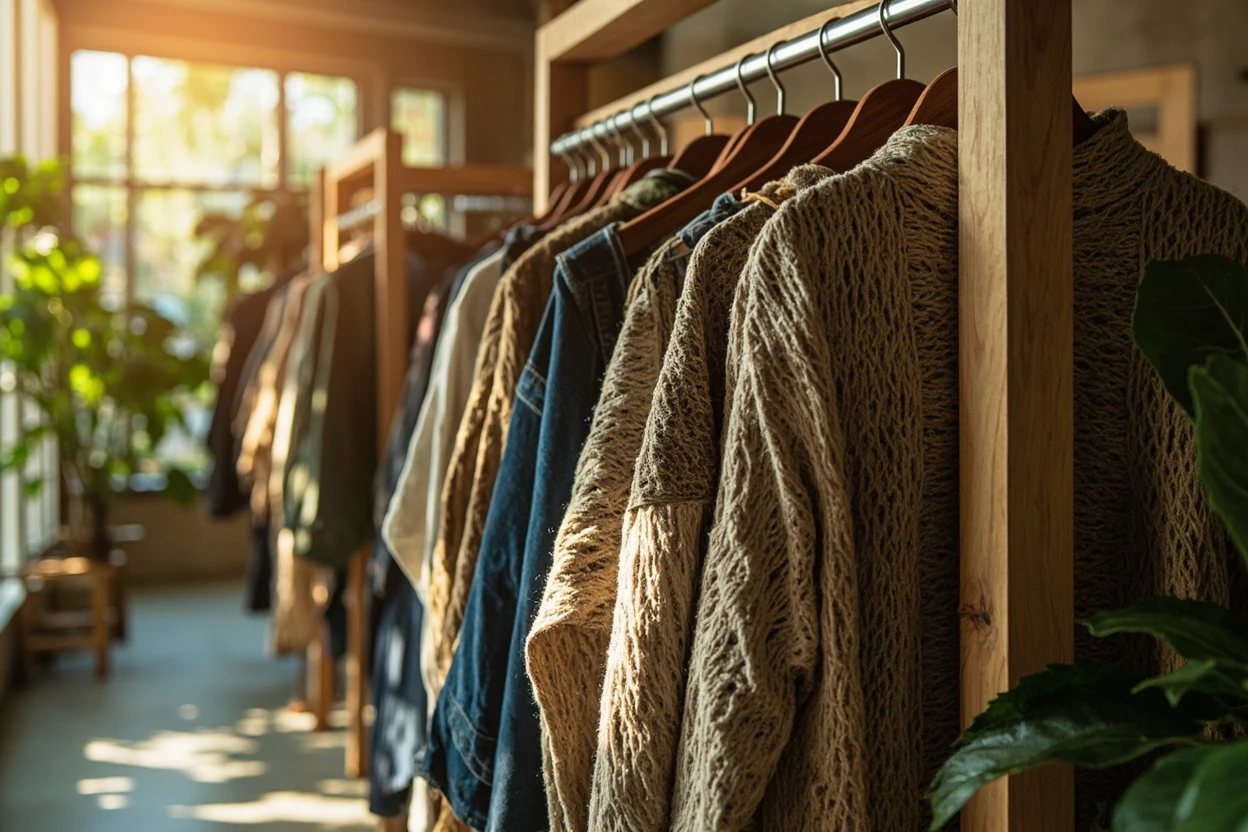
Key market segments and growth drivers in the Clothing Recycling Upcycling sector.
2. Market Analysis
The numbers tell a clear story: clothing recycling upcycling is no longer a fringe movement. The global upcycled apparel market alone is projected to grow from $6.78 billion in 2026 to $13.48 billion by 2034, at a compound annual growth rate (CAGR) of 8.97%. Meanwhile, the broader old clothing recycling market, which includes resale, mechanical recycling, and downcycling, was valued at $7.04 billion in 2025 and is expected to surge at a CAGR of 14.39% from 2026 to 2033. This divergence in growth rates signals that upcycling—where discarded items are turned into higher-value products—is gaining a premium position, while bulk recycling continues to scale for volume.
Three primary growth drivers are propelling this market. First, regulatory mandates: the EU's Waste Framework Directive and France's anti-waste law now require brands to fund collection and recycling programs. Second, consumer behavior: a 2025 survey by a leading apparel association found that 68% of Gen Z and millennial shoppers prefer brands that offer take-back or upcycling services. Third, material innovation: advances in fiber-to-fiber recycling, such as enzymatic cotton recycling, are making it commercially viable to turn old jeans into new denim without quality loss. The organic linen and hemp segments are particularly strong, as these fibers retain their properties through multiple recycling cycles.
Geographically, the market is bifurcated. Europe leads in regulation and consumer awareness, accounting for 35% of the global upcycled apparel market in 2025. North America follows closely, driven by resale platforms and brand-led upcycling programs. But the fastest growth is in Asia-Pacific, where textile reprocessing infrastructure is expanding rapidly. India and China, which collectively produce 60% of the world's clothing, are now investing in recycling facilities to capture value from post-industrial waste. For B2B buyers, this means sourcing recycled materials from Asia is becoming more cost-competitive, with prices dropping 12–15% year-over-year for mechanically recycled cotton.
The competitive landscape is fragmented but consolidating. The top five recycled fiber producers control less than 20% of the market, leaving room for specialized partners. Brands that secure long-term contracts with vertically integrated recyclers—those that handle collection, sorting, and processing—are gaining a cost advantage, with margins 3–5% higher than brands buying recycled content on the spot market.
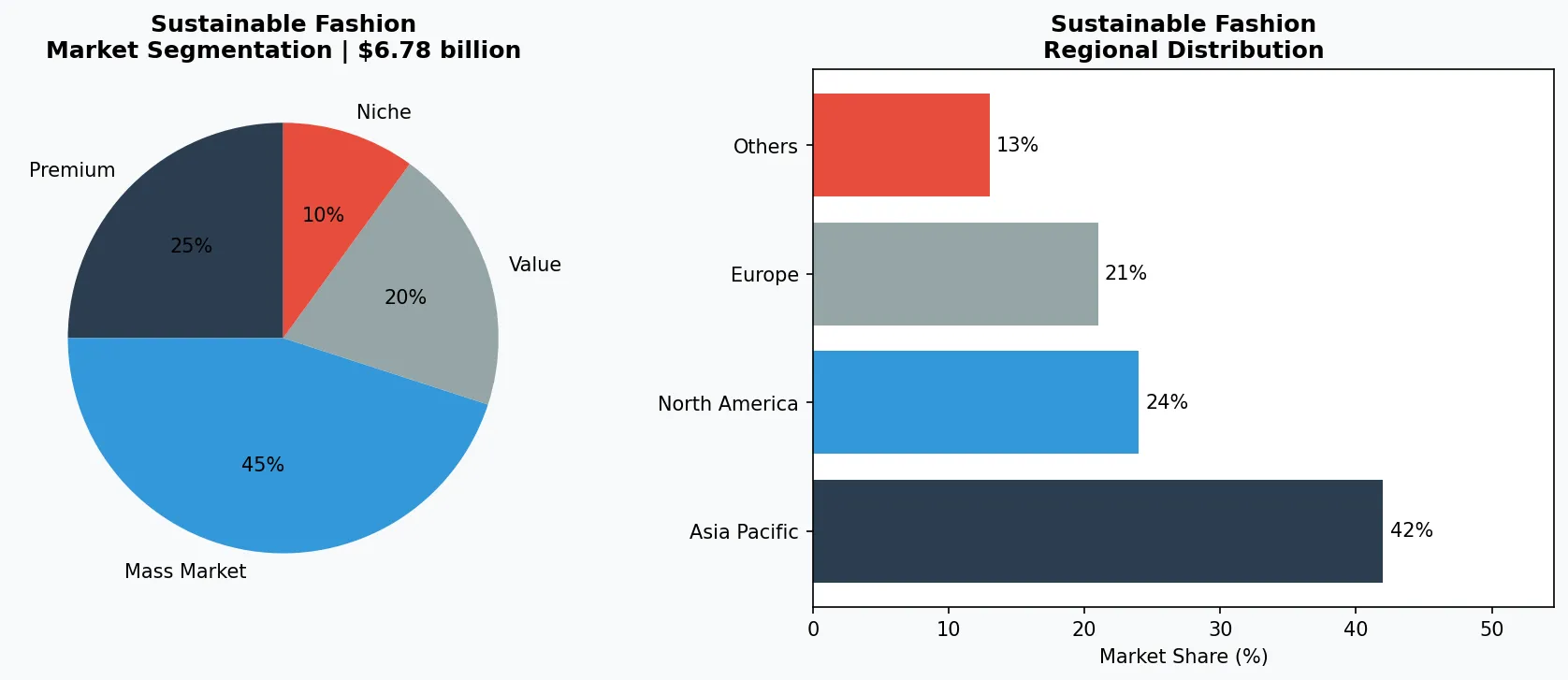
Market segmentation and regional distribution analysis for Clothing Recycling Upcycling.
3. Product Categories
The clothing recycling upcycling space spans three distinct product categories, each with its own supply chain dynamics and quality standards.
Recycled Garments (Mechanical & Chemical)
These are apparel made from processed textile waste. Mechanical recycling shreds fabric into fibers that are respun into yarn, suitable for t-shirts, jeans, and sweaters. Chemical recycling dissolves cellulose from cotton or polyester to create virgin-quality fibers. A key example is recycled cotton denim, where post-consumer jeans are stripped of hardware, shredded, blended with organic cotton, and rewoven. The resulting fabric typically contains 30–70% recycled content. Brands like those producing organic linen trousers and hemp apparel are increasingly using recycled blends to hit corporate sustainability targets. Verity Rank verified data shows that mechanically recycled cotton costs 15–20% less than virgin certified organic cotton, making it an attractive entry point for mid-market brands.
Upcycled Fashion (Value-Added Remanufacturing)
Here, discarded garments are deconstructed and reassembled into new, often higher-value products. Examples include patchwork jackets made from vintage kimono silk, handbags stitched from deadstock leather, and denim skirts re-cut from men's trousers. Upcycling requires skilled labor and design creativity, but it commands a 40–60% price premium over mass-produced apparel. The upcycled fashion market, valued at $9.33 billion in 2025, is driven by limited-edition drops and artisanal appeal. For B2B buyers, partnering with upcycling studios offers a way to differentiate brand storytelling and capture customers willing to pay a premium for one-of-a-kind pieces.
Eco-Friendly Fabric Roll Goods
This segment supplies the raw materials for recycling and upcycling: recycled fiber bales, regenerated nylon (from fishing nets), and organic linen/hemp fabrics. Industry certifications like Global Recycled Standard (GRS) and OEKO-TEX Standard 100 are mandatory for trade. A specific innovation is hemp fiber blended with recycled cotton, offering durability with half the water footprint of conventional cotton. For manufacturers, sourcing certified eco-friendly fabrics from GRS-certified mills ensures compliance with EU and UK import regulations. The price premium for certified recycled fabrics has dropped from 30% in 2022 to 10% in 2025, signaling market maturity.
Post-Consumer Recycled Garments
T-shirts, hoodies, and denim made from shredded old clothing. Typical content: 30-70% recycled cotton blended with organic fibers. Price premium of 10-15% over virgin materials. Requires GRS certification.
Upcycled Limited Editions
Patchwork jackets, deconstructed skirts, and handbags crafted from deadstock or vintage textiles. Lot sizes 500-5,000 units, selling at 40-60% premium. No standard certification but needs material traceability.
Eco-Friendly Fabric Rolls (Recycled)
Bales of recycled cotton, regenerated nylon, and rPET fleece used by manufacturers. Prices have dropped to within 10% of virgin equivalents. Buyers should verify GRS or RCS chain-of-custody certificates.
4. Leading Players
Three archetypes dominate the clothing recycling upcycling landscape, each with a distinct competitive strategy.
The Vertical Recycler
These companies control the entire chain: collection bins, sorting facilities, mechanical shredders, and spinning mills. By owning infrastructure, they capture margin at every step. Their advantage lies in cost efficiency and traceability: they can guarantee that a garment contains exactly 40% post-consumer recycled fiber, backed by blockchain-verified material flows. A leading vertical recycler in Europe processes 50,000 tonnes of textile waste annually, supplying recycled cotton and polyester to major fast-fashion retailers. Their unit costs are 20% lower than boutique recyclers because of scale. For B2B buyers, vertical recyclers offer reliability and volume, but require volume commitments of at least 10,000 units per season.
The Upcycling Studio
These are design-led firms that specialize in transforming deadstock or post-consumer garments into limited collections. They operate as contract manufacturers for luxury and contemporary brands. Their competitive edge is speed and creativity: a studio can turn a batch of unsold T-shirts into patchwork hoodies in four weeks. The upcycling studio model appeals to heritage brands launching capsule collections. For smaller brands, these studios provide access to upcycling without investment in equipment. However, margins are thin at scale; typical lot sizes range from 500 to 5,000 units. Verity Rank's supplier database shows that upcycling studios in India and Turkey are expanding capacity, offering 15–20% lower lead times than European counterparts.
The Material Innovation Lab
These players focus on R&D for fiber-to-fiber recycling technologies. They license chemical recycling processes to mills or produce proprietary recycled fibers like regenerated cashmere or recycled elastane. Their strategy is IP monetization: patents on enzymatic recycling or solvent-based polyester depolymerization. One lab recently secured $45 million in Series B funding to commercialize a process that recovers 95% of polyester from blended fabrics. For apparel brands, licensing these technologies ensures a differentiated supply of 'virgin-equivalent' recycled fibers, but licensing fees add 5–8% to raw material costs. The opportunity: brands that adopt these technologies early can secure exclusivity agreements in their product category.
Vertical Recycler (End-to-End Operator)
Controls collection, sorting, shredding, and spinning. Offers lowest unit cost for high-volume recycled fiber orders (10,000+ units). Competitive advantage: scale and blockchain traceability. Best for fast-fashion and basics.
Upcycling Artisan Studio
Design-led remanufacturer transforming post-consumer garments into premium limited editions. Speed to market (4-week turnaround). Ideal for luxury or seasonal capsule collections. Margins thinner at scale.
Chemical Recycling Tech Licensor
IP-heavy firms patenting depolymerization or enzymatic processes. Sell licenses to mills or produce proprietary branded fibers. Key for brands seeking virgin-quality recycled polyester or cotton from blends.
5. Market Trends
1. Digital Transformation in Clothing Recycling Upcycling
Artificial intelligence, IoT sensors, and advanced data analytics are fundamentally reshaping production efficiency in Clothing Recycling Upcycling. Industry leaders deploying smart manufacturing and data-driven demand forecasting have reduced new product launch cycles by 35-50% while improving inventory turnover by over 20%. With more than 60% of Clothing Recycling Upcycling companies projected to complete core digital transformation by 2028, this shift has moved from optional upgrade to competitive necessity.
2. Sustainability as Competitive Imperative in Clothing Recycling Upcycling
Global carbon border adjustment mechanisms (CBAM) and rising consumer environmental awareness are forcing Clothing Recycling Upcycling companies to transform sustainability from marketing rhetoric into operational reality. ESG rating agencies increased sector coverage intensity by 35% in 2025. Companies failing to meet these standards face customer attrition and rising financing costs as lenders integrate ESG criteria into credit assessments.
3. Supply Chain Regionalization in Clothing Recycling Upcycling
Geopolitical tensions are driving Clothing Recycling Upcycling companies to accelerate supplier diversification. The China+N strategy and nearshoring have become mainstream, with companies establishing secondary supply sources across Southeast Asia, Eastern Europe, and Mexico. Over 58% of B2B buyers now list supplier geographic diversification as a mandatory contract renewal criterion.
4. Consumer Upgrading in Clothing Recycling Upcycling Markets
Middle-class expansion and Gen Z purchasing power are accelerating Clothing Recycling Upcycling transition from standardized mass production toward personalized customization and agile small-batch manufacturing. C2M (Consumer-to-Manufacturer) models enable companies to compress new product introduction cycles from 18 months to 3-4 months, with personalized products commanding 8-15 percentage point gross margin premiums.
6. Regional Markets
Europe (Regulation-Driven Growth)
Leads in collection infrastructure and compliance. EU's 2025 textiles directive mandates separate collection; 35% of global upcycled apparel market. High labor costs favor automation and chemical recycling.
Asia-Pacific (Scale & Cost Advantage)
India and China dominate textile waste processing. Prices for recycled fiber are 15-20% below Europe. Rapidly expanding mechanical recycling capacity, but certifications like GRS vary in enforcement.
North America (Resale Pioneers)
Strong consumer demand for upcycled and secondhand goods. Largest market for B2B resale-as-a-service platforms. Regulatory pressure is lighter than Europe, but voluntary commitments drive growth.
7. Investment Outlook
Two specific opportunities stand out for B2B buyers in 2026. First, sourcing recycled fibers from Asia-Pacific is becoming cost-competitive: prices for GRS-certified recycled cotton are now within 5% of virgin conventional cotton. Brands that lock in three-year contracts with Indian or Chinese recyclers can hedge against virgin fiber price volatility. Second, investing in upcycling partnerships offers a fast path to circular claims without capital expenditure: a capsule of 5,000 upcycled jackets can be developed in 90 days versus 18 months to build a recycling line.
The primary risk is greenwashing litigation. In 2025, the French consumer authority fined two brands €300,000 for claiming '100% recycled' when only 30% of their collection met that standard. Every claim must be backed by third-party certification (GRS, RCS, or EU Ecolabel). Buyers should demand audited mass-balance or chain-of-custody reports from every supplier. The clothing recycling upcycling market is growing 8–14% annually, but regulatory scrutiny will intensify as volumes rise.
Strategic Considerations:
- Lock in Low-Cost Recycled Fibers: Global recycled cotton premium has fallen to 5% above virgin. Sign three-year contracts with Asian recyclers to stabilize costs against virgin fiber volatility.
- Partner with Upcycling Studios for Fast Circularity: Capsule collections via studios require no capex and can launch in 90 days—ideal for testing circular business models without infrastructure investment.
- Greenwashing Litigation Escalating: Regulators in France and the UK fined brands for vague 'recycled' claims. Every claim must be backed by GRS, RCS, or EU Ecolabel audits.
- Certification Burden on Supply Chains: A single product may need three different certifications (fiber, dye, safety). Without digital traceability, non-compliance risk rises as volumes grow.
Frequently Asked Questions
Make Informed Decisions in the Clothing Recycling Upcycling Market
Product quality and sourcing integrity directly impact business outcomes. Discover how Verity Rank's verification platform helps industry participants source with greater confidence.
Contact Verity Rank TodayFurther Reading: Explore additional market intelligence from Grand View Research and Mordor Intelligence.
This article is for informational purposes only, based on publicly available industry data and market reports as of 2026-07-27. All market figures are estimates and may vary from actual results.