

Table of Contents
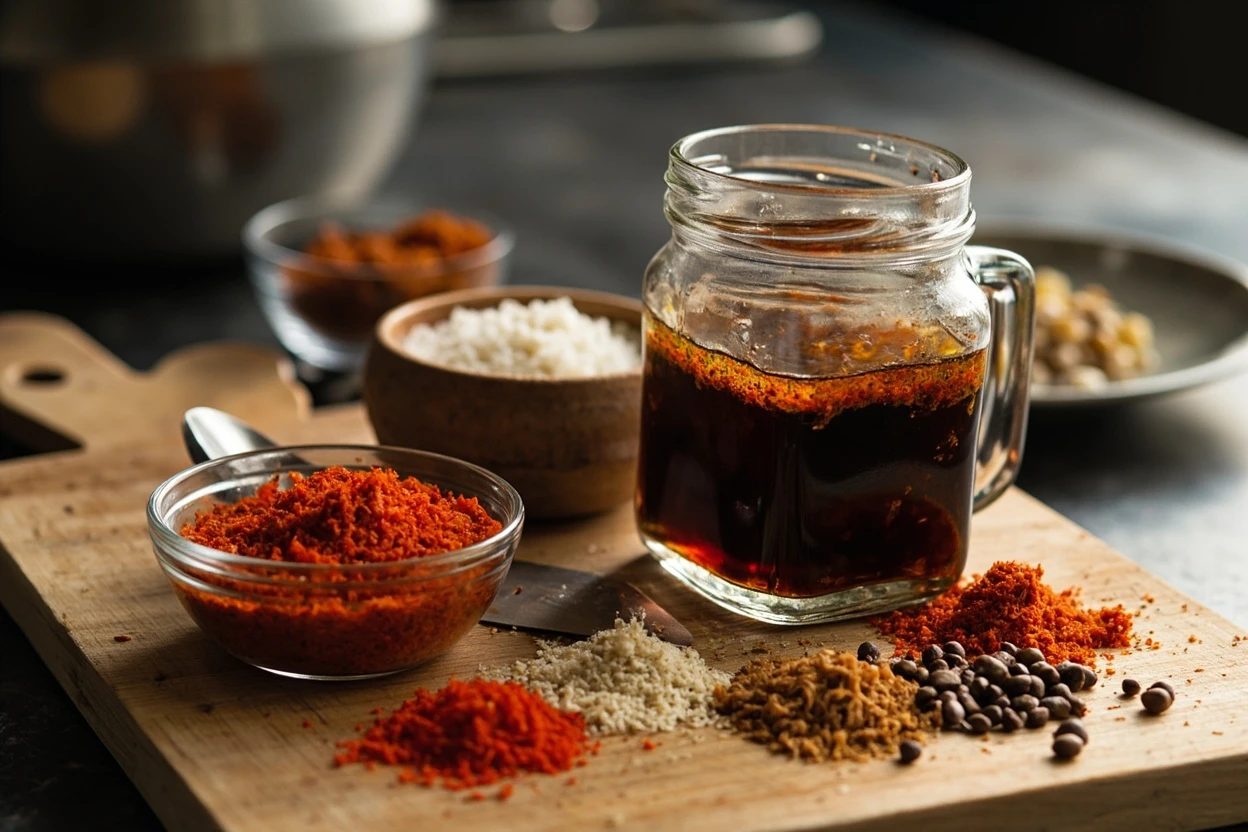
The global Compound Seasoning Sauces sector serves consumers worldwide with diverse solutions.
1. Industry Overview
What if a single bottle could replace an entire spice rack? That's the promise and power of compound seasoning sauces, the high-growth engine within the broader USD 46.9 billion global seasoning market. Distinct from single-ingredient spices, these are pre-blended, ready-to-use liquid or paste formulations designed to deliver complex, authentic flavors instantly. Think of them as the culinary equivalent of a software update: they simplify cooking, ensure consistency, and unlock restaurant-grade taste for home cooks and food manufacturers alike. This segment, which includes foundational products like oyster sauce, premium soy sauce blends, and cooking wine marinades, is carving out a significant niche by solving for convenience without sacrificing depth.
Industry Scope & Characteristics
Broad Product Portfolio
Products span black pepper, white pepper, chili powder, Sichuan pepper, cumin, turmeric, curry powder, cinnamon, star anise, serving diverse consumer needs from everyday essentials to premium specialized offerings.
Complex Global Supply Chains
Integrated international networks spanning multiple continents ensure year-round product availability across diverse markets.
Quality & Compliance Standards
Rigorous regulatory frameworks and quality certifications ensure product safety, consistency, and consumer trust worldwide.
Continuous Innovation
Heavy R&D investment drives formulation breakthroughs, processing technologies, and novel product development cycles.
The appeal is both economic and experiential. For busy consumers, these sauces reduce meal prep time and the risk of failed recipes. For food service operators and industrial food producers, they guarantee batch-to-batch flavor uniformity, a critical factor in brand integrity. The data underscores their strategic importance: while the global seasoning market is set to scale to USD 81.3 billion, the compound sauce sub-segment is on its own accelerated trajectory. Estimated at USD 4.2 billion in 2024, its growth is outpacing the broader category, signaling a fundamental shift in how flavor is sourced and applied across the food chain.
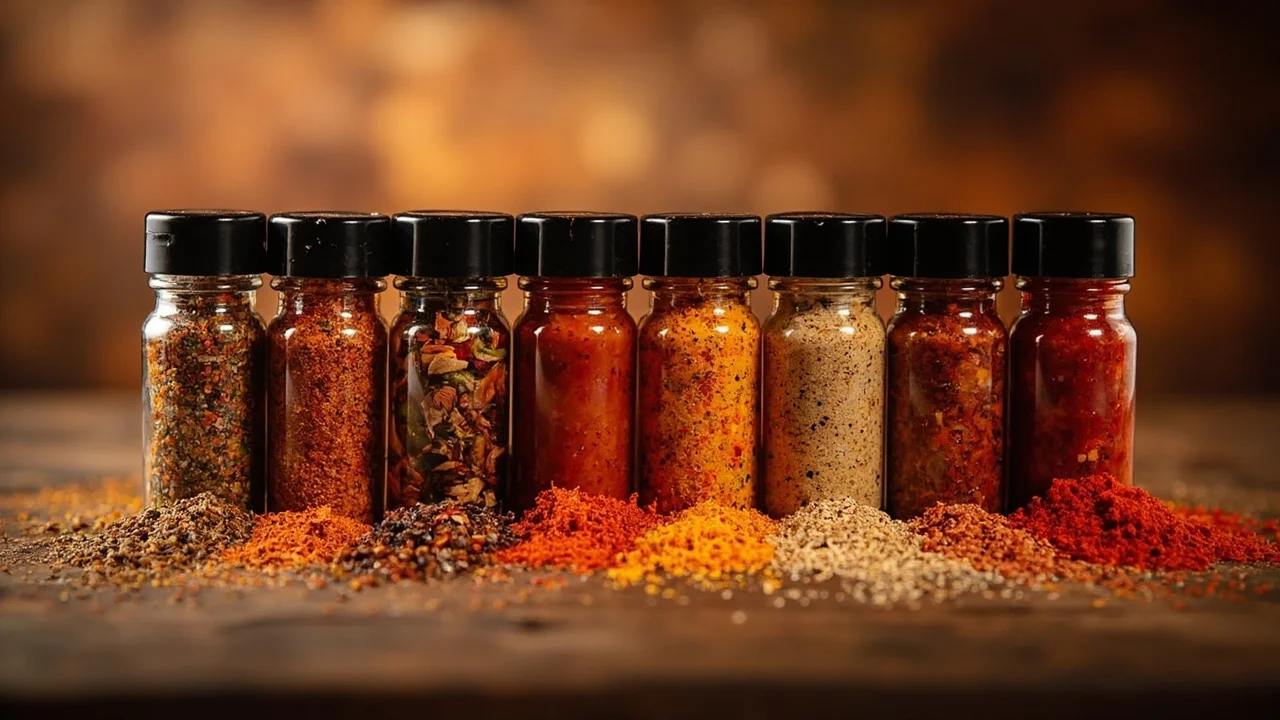
Industry application and market overview for Compound Seasoning Sauces.
2. Market Analysis
The compound seasoning sauce market represents a concentrated pocket of robust growth. Valued at an estimated USD 4.2 billion in 2024, it is projected to expand to USD 6.8 billion by 2033, reflecting a compound annual growth rate (CAGR) of 5.5% from 2026 onward. This growth is not merely incremental; it signifies a sustained reallocation of spending within the flavor ingredients space. Analysts point to a forecasted CAGR of 6.7% from 2023-2026 for specific market findings, highlighting the segment's dynamic early-stage expansion.
Three primary drivers are fueling this ascent. First, the globalization of cuisine has created insatiable demand for authentic, yet accessible, ethnic flavors—a demand perfectly met by expertly blended sauces. Second, the post-pandemic emphasis on home cooking, coupled with rising restaurant costs, has made kitchen efficiency paramount. Consumers seek professional results without professional training. Third, and perhaps most significantly, the industrial food sector's relentless pursuit of operational efficiency and product consistency makes compound sauces an indispensable ingredient. They reduce R&D overhead, streamline supply chains for multiple raw spices, and minimize production errors. This B2B adoption is a major, often overlooked, pillar of the market's foundation.
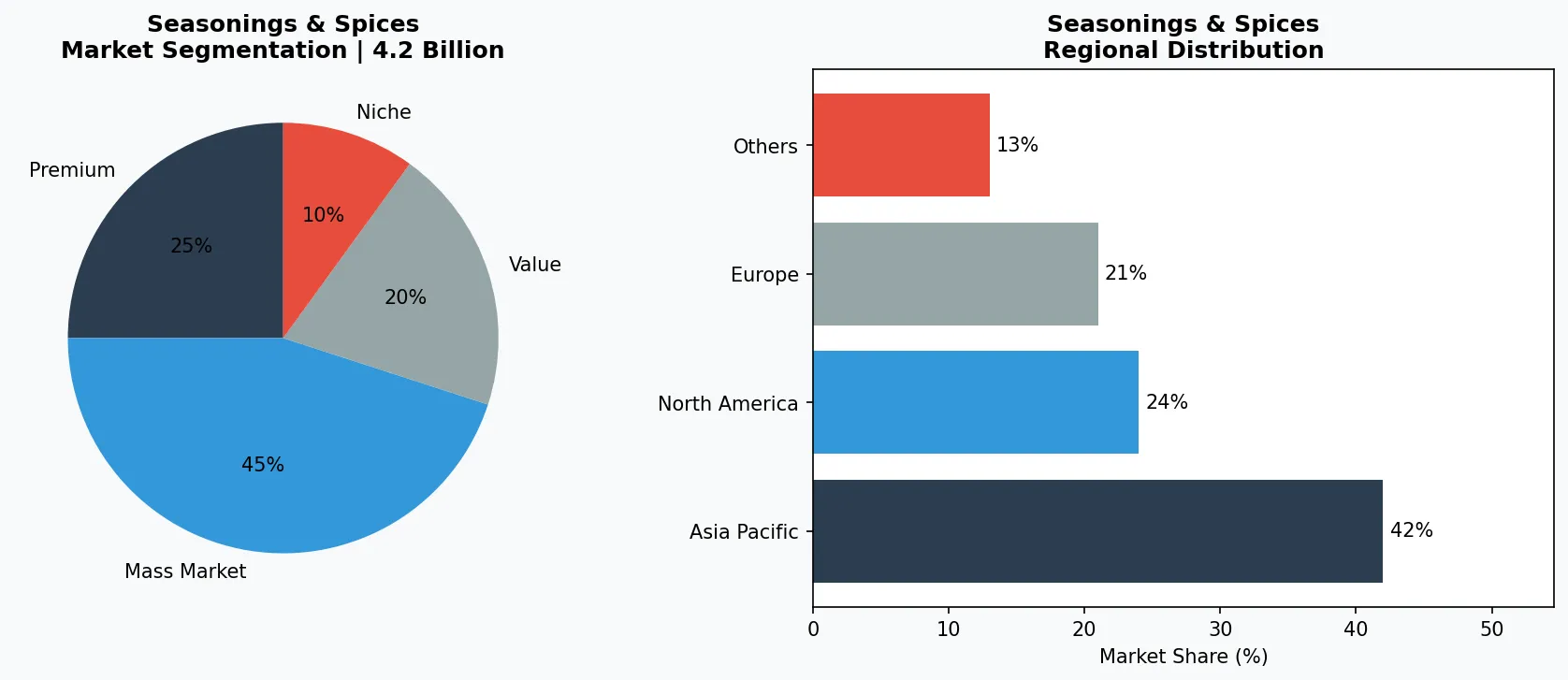
Market segmentation and regional distribution for Seasonings & Spices - Compound Seasoning Sauces.
3. Product Categories
The product landscape within compound seasoning sauces can be organized into three core categories, each serving distinct culinary functions. The first is **Foundational Savory Bases**, which form the backbone of countless dishes. This includes dark and light soy sauce blends, oyster sauce, and seasoned cooking wine. These are not mere commodities but engineered products, like premium soy sauces blended with mushroom or seafood extracts for enhanced umami.
Premium & Artisanal Tier
High-margin specialty products targeting affluent consumers who prioritize quality, craftsmanship, and unique attributes.
Mass Market Mainstream
Volume-driven products serving price-conscious mainstream consumers with reliable quality at accessible price points.
Functional & Niche Segment
Targeted products addressing specific health concerns, dietary requirements, or lifestyle preferences beyond basic needs.
The second category is **Regional & Cuisine-Specific Blends**. These are the workhorses of flavor authenticity, such as pre-mixed sauces for Sichuan mapo tofu, Thai curry pastes (red, green, yellow), or Korean bulgogi marinade. They encapsulate complex regional spice profiles—chili, Sichuan pepper, garlic, ginger—into a single, foolproof application.
The third group is **Functional Cooking Aids**, designed for specific techniques or dietary trends. This includes thick, glaze-ready sauces for stir-fries, concentrated broth pastes for soups and stews, and newer, cleaner-label blends catering to the 'protein-first' and home meat processing trends, offering marinades with simple ingredients and no added sugars or preservatives.
4. Leading Players
The competitive field features established giants and agile specialists. **Lee Kum Kee**, a Hong Kong-based leader, has built a formidable position by owning the oyster sauce category and aggressively expanding its portfolio of premium, cuisine-specific sauce blends (e.g., Sriracha Mayo, Black Bean Garlic Sauce). Their strategy hinges on brand trust, deep retail penetration, and marketing that bridges traditional and modern cooking.
Global Market Leader
Multinational player commanding significant market share. Revenue exceeding $50B with operations across 100+ countries, diversified portfolio spanning all major price tiers.
Regional Champion
Dominant force in Asia Pacific with deeply localized product lines, extensive distribution networks, and strong regional retailer relationships.
Innovation Disruptor
Fast-growing challenger disrupting incumbents through breakthrough product innovation, direct-to-consumer models, and data-driven marketing in the seasonings & spices space.
**Kikkoman**, the global soy sauce titan, leverages its unparalleled distribution network and reputation for quality. Its strategy in the compound space involves line extensions of its core product, such as teriyaki marinades, ponzu citrus sauce, and gluten-free soy sauce blends, effectively capturing consumers trading up from basic soy sauce to more versatile, value-added products.
**McCormick & Company**, through its global footprint and acquisitions in Asia, competes by applying its expertise in flavor science and consumer insights to the compound sauce segment. Their strategy focuses on creating fusion products and health-conscious blends that appeal to Western palates while incorporating authentic Asian flavors, often targeting the 'budget-friendly, DIY cooking' trend with easy-to-use meal starters.
5. Market Trends
1. Protein-First Eating
Protein-First Eating — The shift towards diets centered on high-quality protein sources is driving demand for compound sauces that function as marinades, glazes, and finishing sauces specifically for meat, poultry, and plant-based proteins. This matters as it opens a premium, application-specific product tier. Companies like Lee Kum Kee are responding with targeted marinade lines for grilling and home meat processing.
2. Budget-Friendly DIY Cooking
Budget-Friendly DIY Cooking — Economic pressures are encouraging more home cooking and 'home meat processing,' where consumers buy whole cuts to portion themselves. This creates a need for affordable, restaurant-quality flavor solutions that elevate simple ingredients. This trend directly supports the value proposition of compound sauces, as seen in McCormick's 'Grill Mates' and similar marinating ranges that promise gourmet results.
3. Clean-Label & Health-Conscious Formulation
Clean-Label & Health-Conscious Formulation — Consumers are scrutinizing ingredient lists, demanding natural flavors, reduced sodium, and no artificial additives. This forces R&D innovation within the segment, moving beyond just flavor to include health attributes. Kikkoman's development of reduced-sodium soy sauce blends and organic lines is a direct play to capture this health-aware, yet flavor-seeking, demographic.
6. Regional Markets
Asia Pacific — The Growth Engine
The world's largest and fastest-growing region, led by China, India, and Southeast Asia. Urbanization, rising middle class, and digital retail adoption are primary catalysts.
North America — Premium & Wellness Driven
A mature market with strong health-and-wellness orientation, sustainability commitments, and robust demand for premium and functional products.
Europe — Quality & Regulatory Leadership
A developed market with stringent quality, safety, and environmental regulations. Strong demand for organic, locally sourced, and ethically certified products.
7. Investment Outlook
Two specific opportunities stand out. First, the integration of compound sauces into meal kit and prepared food supply chains offers a massive B2B growth vector, as these providers require consistent, shelf-stable flavor systems. Second, the 'home chef' premiumization trend allows for the launch of small-batch, artisan, or hyper-regional sauce blends sold via direct-to-consumer channels, capturing high margins and building brand stories.
The primary concrete risk is input cost volatility and supply chain fragility. Many compound sauces rely on agricultural commodities (soybeans, wheat, sugarcane, chilies) and seafood derivatives (for oyster sauce). Climate change, geopolitical tensions, and ocean health can cause severe price fluctuations and sourcing disruptions, squeezing margins and threatening the consistent quality that defines the category's value.
Strategic Considerations:
- Technology & AI Integration: Artificial intelligence and IoT are revolutionizing production efficiency, quality assurance, and demand forecasting across the supply chain.
- Sustainability as Business Strategy: Regulatory pressure and consumer expectations are making environmental commitments essential, not optional.
- Transparency & Traceability: Consumers demand increasingly granular information about product origins, ingredients, and production methods.
- Emerging Market Penetration: Africa, Latin America, and second-tier Asian cities represent the next wave of volume growth.
Make Informed Decisions in the Compound Seasoning Sauces Market
Product quality and sourcing integrity directly impact business outcomes. Discover how Verity Rank's verification platform helps industry participants source with greater confidence.
Contact Verity Rank TodayFurther Reading: Explore additional market intelligence from Grand View Research and Mordor Intelligence.
This article is for informational purposes only, based on publicly available industry data and market reports as of 2026-04-22. All market figures are estimates and may vary from actual results.