

Table of Contents

The global Custom Dress Shirt Made to Measure sector serves consumers worldwide with diverse solutions.
1. Industry Overview
What happens when a garment as standardized as the dress shirt meets a market growing at over 10% annually? You get a $70.78 billion custom made clothes industry by 2026, where the made-to-measure dress shirt segment is emerging as a key driver. Unlike off-the-rack shirts, custom dress shirts are built from a specific set of body measurements—shoulder slope, arm length, neck circumference—collected either via a physical tailor or a digital body-scanning app. This sub-topic sits at the intersection of traditional sartorial craftsmanship and modern supply chain flexibility, offering B2B buyers everything from single-piece prototypes for personal wardrobes to bulk corporate uniforms with consistent sizing. The Dress Shirts Fabric Market alone is projected to expand at a CAGR of 14.6% through 2033, indicating soaring demand for premium cottons, wrinkle-resistant blends, and sustainable materials. For global procurement managers, understanding the nuances of made-to-measure shirt production—from fabric sourcing to fit guarantees—is no longer optional; it is a competitive imperative.
Industry Scope & Characteristics
Precision Fit Technology
Custom dress shirts rely on 15-20 body measurements (neck, shoulder slope, sleeve length, etc.) captured via 3D scanners or manual tape. Digital pattern-making software adjusts for individual posture, reducing alterations.
Small-Batch Production Model
Unlike mass-produced apparel, made-to-measure shirts are cut one at a time or in very small lots (1-50 units). This allows for fabric variety but requires flexible manufacturing cells and skilled labor.
Fabric Certification Standards
Common certifications include Oeko-Tex Standard 100 (no harmful chemicals) and ISO 9001 (quality management). B2B buyers often mandate these to ensure durability and safety for employee wear.
AI-Driven Body Measurement Interpretation
Innovation focuses on converting 2D photos into 3D avatars with high accuracy. Some platforms now achieve <2mm deviation from manual measurements, enabling remote ordering without a tailor.
What sets custom dress shirt made-to-measure apart within the broader Custom & Group Apparel industry is its emphasis on individual body geometry versus generic sizing charts. While group apparel (e.g., team jerseys, school uniforms) relies on standardized sizes for cost efficiency, bespoke and corporate wear demands precision. A single misaligned collar or too-short sleeve can undermine a client relationship or a brand image. That is why leading manufacturers are investing in 3D body scanning and AI-driven pattern adjustment, reducing return rates to below 2% in some cases, compared to 20-30% for ready-to-wear shirts. This precision also enables rapid scaling: a company ordering 500 custom dress shirts for an executive team can expect identical fit across all wearers, provided measurement protocols are standardized.
The market momentum is undeniable. The Custom Made Clothes Market, valued at $57.1 billion in 2025, is forecast to reach $156.4 billion by 2035, a CAGR of 10.6%. Concurrently, the broader Custom Apparel Market is expected to add $2.87 billion in revenue from 2026 to 2030, growing at 9.0% CAGR. Within this landscape, the custom dress shirt segment captures a disproportionate share because of its higher per-unit value and repeat-purchase behavior—once a client’s measurements are stored, reordering a new shirt becomes frictionless. For B2B buyers, this translates to predictable procurement cycles and the ability to offer employees or clients a premium, branded experience.
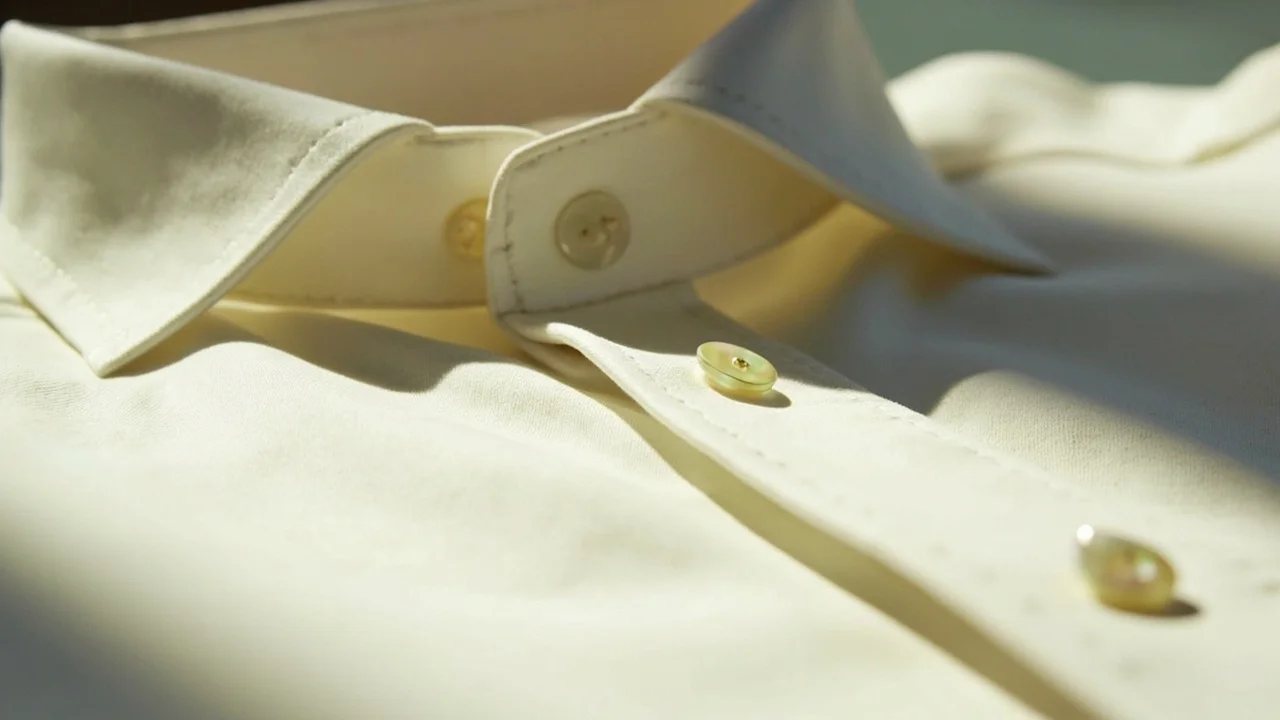
Key market segments and growth drivers in the Custom Dress Shirt Made to Measure sector.
2. Market Analysis
The custom dress shirt made-to-measure market is not an isolated niche; it is a high-growth segment fueled by two macro trends: the rise of personalized corporate gifting and the shift to remote work, which has increased demand for versatile, well-fitting dress shirts that can transition from video calls to in-person meetings. The Dress Shirts Fabric Market, which supplies the raw material for this segment, is expected to grow at a robust 14.6% CAGR from 2026 to 2033. This growth is driven by increasing consumer preference for premium fabrics like Egyptian cotton and performance blends that offer stain resistance and moisture wicking—features highly valued by corporate buyers who want longevity from their uniform investments.
Three key growth drivers stand out. First, technological adoption: digital measurement apps and AI fit algorithms are lowering the barrier to entry for manufacturers, enabling them to process thousands of unique measurements without human error. Second, sustainability pressures: made-to-measure production drastically reduces fabric waste—up to 15% less compared to mass production—appealing to companies with net-zero commitments. Third, the corporate apparel segment itself is expanding: as businesses rebrand or standardize employee attire, they increasingly opt for custom dress shirts with embroidered logos and signature details, driving order volumes.
Regional dynamics further amplify the market. North America and Europe account for over 60% of global demand, but Asia-Pacific is the fastest-growing manufacturing hub, with countries like India and Vietnam investing in automated cutting and sewing lines specifically for made-to-measure orders. The Custom Made Clothes Market’s projected growth to $179.49 billion by 2035 at a 10.9% CAGR underscores that this is a long-term structural shift, not a pandemic-era blip. B2B buyers sourcing custom dress shirts should expect lead times of 2-4 weeks for single-piece orders and 6-8 weeks for bulk corporate runs, depending on fabric availability and embroidery complexity.
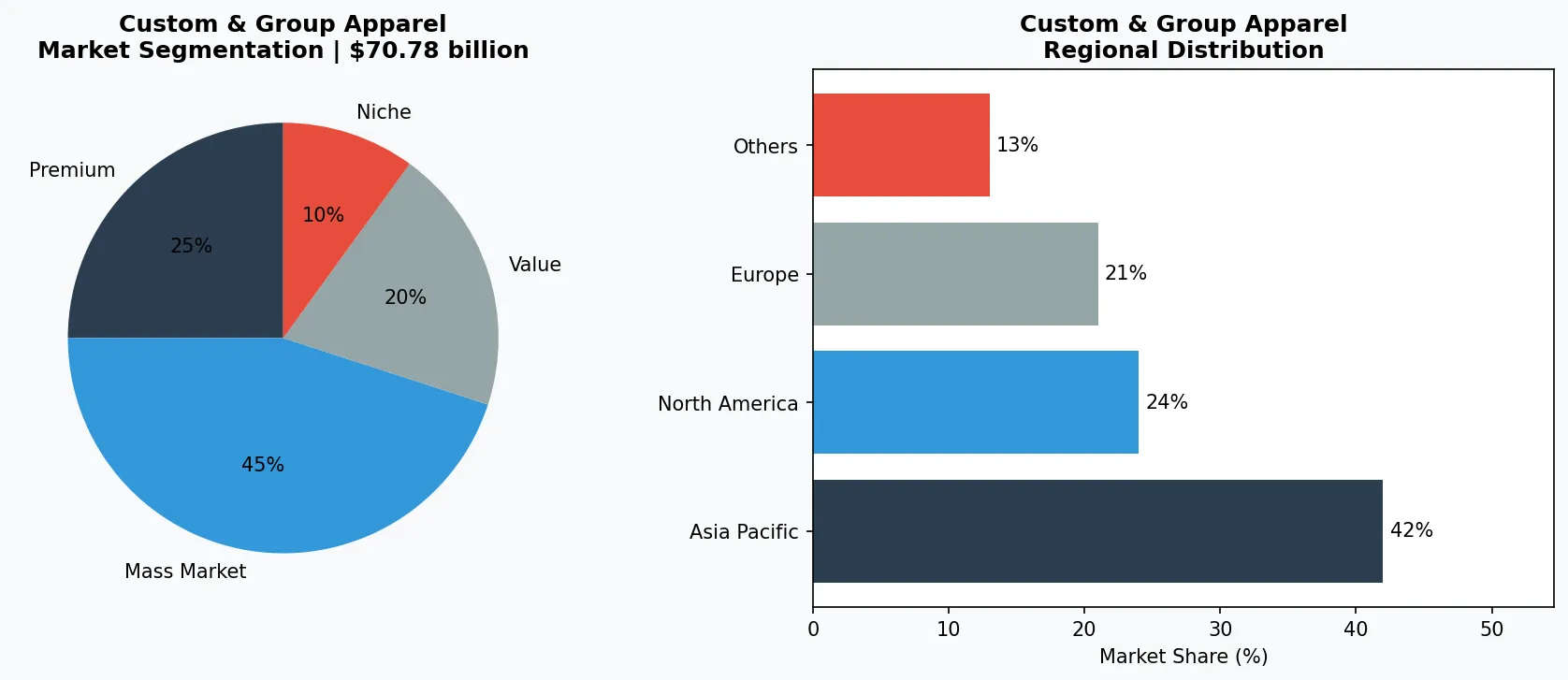
Market segmentation and regional distribution analysis for Custom Dress Shirt Made to Measure.
3. Product Categories
Custom dress shirt made-to-measure products can be grouped into three distinct sub-categories based on end-use and customization depth.
Corporate Uniform Dress Shirts
These are bulk orders designed for organizations—executive teams, hospitality staff, or sales forces—requiring identical fit and branding. Typical features include a preset collar style (e.g., spread or button-down), one or two fabric choices from a curated library, and left-chest embroidery for company logos. Manufacturers archive each employee’s measurements to enable rapid reorders. Example: a tech company ordering 200 shirts for its C-suite in a wrinkle-resistant cotton-poly blend with a subtle brand monogram on the cuff.
Bespoke Individual Dress Shirts
Targeted at professionals who need a perfect fit for a single-use occasion (e.g., wedding, keynote speech) or as a wardrobe staple. These shirts offer full customization: collar shape, cuff style (barrel or French), placket details, button material (mother-of-pearl, corozo), and even side gussets. Fabric selection is extensive, ranging from 100s two-ply Egyptian cotton to linen-cotton blends. Example: a lawyer ordering a custom white shirt with a cutaway collar, monogrammed initials on the left cuff, and removable collar stays.
Performance & Tech-Infused Dress Shirts
A growing segment where made-to-measure meets functionality. These shirts incorporate stretch fabrics, moisture-wicking finishes, anti-odor treatments, and even UV protection—features critical for field sales representatives or outdoor events. The fit remains custom, but the fabric engineering adds a premium. Example: a logistics firm ordering custom-fitted shirts with four-way stretch and hidden microfiber cleaning patches for traveling executives.
Fabric Customization Segment
Buyers select from curated swatch books of broadcloth, twill, oxford, or pinpoint weaves. Example: a corporate client choosing a wrinkle-resistant stretch twill for daily wear.
Fit & Style Customization Segment
All options are selectable: collar (spread, button-down, band), cuff (barrel, French, convertible), placket (standard, hidden, pleated), and back (plain, box pleat, side pleats). Example: a CEO preferring a cutaway collar and monogrammed French cuffs.
Branding & Embellishment Segment
Features like embroidered logos, contrast stitching, custom buttons, and inner neck labels. Example: a hotel chain ordering shirts with a small logo on the left chest and a discreet brand name on the inner collar.
4. Leading Players
The made-to-measure dress shirt market features three archetypes of players, each with distinct strategies.
Digital-First Custom Shirt Platforms
These companies operate entirely online, using proprietary body measurement algorithms and a network of partner factories. They capture measurements via smartphone-generated photos or a series of guided questions, then produce shirts in small batches. Their competitive advantage lies in data accumulation: every order improves their fit model, reducing alteration costs. They typically target individual professionals and smaller corporate orders (10-50 shirts). Their strategy emphasizes convenience, fast turnaround (10-14 days), and a generous return policy.
Heritage Bespoke Ateliers
These are old-world tailoring houses that have digitized their measurement process but still rely on hand-finishing for high-end orders. They cater to C-suite executives and luxury brands requiring ultra-premium fabrics (e.g., Thomas Mason, Albini) and hand-sewn buttonholes. Their value proposition is exclusivity and longevity—a single shirt can last a decade with proper care. They compete on quality, not speed, with lead times of 4-6 weeks per shirt. Corporate buyers seeking a status-symbol uniform often partner with these ateliers for limited-edition runs.
Corporate Bulk Customization Manufacturers
These are large-scale garment factories that have retooled production lines to handle made-to-measure workflows. They use automated cutting and individual barcoding to manage thousands of unique orders from multiple corporate clients simultaneously. Their key advantage is cost efficiency at scale: per-shirt costs can be as low as $35-$50 for orders exceeding 500 units, compared to $150+ for bespoke. They offer ERP integration for bulk invoicing and inventory management, making them ideal for global companies with numerous employee locations. Their strategy revolves around standardization of measurements across geographies and rigorous quality control (ISO 9001 certified).
Digital-First Customization Platforms
These companies leverage a mobile app or website for self-measurement, bypassing the need for in-person tailors. Their competitive advantage is data-driven fit algorithms and fast turnaround, targeting individual professionals and small corporate orders.
Heritage Bespoke Ateliers
Traditional tailoring houses that combine hand-craftsmanship with digital pattern storage. They focus on ultra-premium fabrics and personalized service, serving high-end corporate clients seeking status-symbol uniforms with lead times of 4-6 weeks.
Bulk Corporate Uniform Manufacturers
Large-scale factories that have retooled for made-to-measure workflows, using automated cutting and barcoding systems. They offer cost efficiency at volume (500+ units), ERP integration, and ISO 9001 certifications, ideal for global companies.
5. Market Trends
1. TREND 1: AI-Powered Virtual Fitting
Artificial intelligence is now used to predict how a fabric will drape across different body shapes before a single cut is made. Companies deploy AI to recommend collar sizes, suggest fabric stretch, and simulate button placement. Why it matters: it reduces sample-making costs by up to 40% and accelerates the order-to-production cycle. A leading digital platform reported a 30% drop in returns after implementing AI fit checks.
2. TREND 2: Sustainable & Traceable Fabrics
B2B buyers increasingly demand fabric certifications such as Oeko-Tex Standard 100, GOTS (organic cotton), or BCI (Better Cotton Initiative). The Dress Shirts Fabric Market’s 14.6% CAGR is partly driven by eco-conscious corporate procurement policies. Why it matters: companies can market their custom dress shirts as part of a sustainability pledge, enhancing brand image. Several manufacturers now offer blockchain-enabled fabric tracking from field to finished shirt.
3. TREND 3: On-Demand Manufacturing & Localized Production
Instead of holding inventory, manufacturers are shifting to production-on-demand using digital printing and automated cutting. This reduces waste and allows for hyper-local fulfillment (e.g., a US corporate order produced in a US facility). Why it matters: shorter lead times (as low as 5 days for standard fabrics) and lower carbon footprint. Some platforms now operate micro-factories in major cities, enabling last-mile customization.
4. TREND 4: Hybrid Subscription Models
Corporate buyers can now set up recurring custom dress shirt subscriptions for employees, where each quarter a new shirt is automatically reordered based on stored measurements. Why it matters: predictable revenue for manufacturers and hassle-free replenishment for buyers. A pilot program in the UK saw 70% retention rates for executive subscription plans.
6. Regional Markets
North America – High Demand, Short Lead Times
Largest market for custom dress shirts, driven by corporate culture and premiumization. Buyers expect 10-14 day production and often demand fabric certifications like Oeko-Tex. Near-shoring to Mexico or US factories is growing.
Europe – Heritage & Sustainability Focus
Strong tradition of tailoring in Italy and UK. B2B buyers prioritize sustainable fabrics (GOTS certified) and artisanal quality. EU regulations on chemical use (REACH) influence fabric sourcing choices.
Asia-Pacific – Manufacturing Hub & Emerging Demand
Countries like India, Vietnam, and China dominate production of custom dress shirts due to lower labor costs and advanced cutting technology. Domestic corporate wear demand is also rising, especially in China and South Korea.
7. Investment Outlook
Two specific opportunities define the near-term horizon for custom dress shirt made-to-measure. First, the integration of body-scanning kiosks in airports and corporate lobbies: this could open a new channel for B2B clients to onboard employees instantly, capturing 50+ measurements in under 30 seconds. Second, the rise of ‘smart’ shirts with integrated RFID tags for inventory tracking—a game-changer for large corporate uniform programs that need to manage distribution across multiple sites.
The key risk is fabric price volatility. With the Dress Shirts Fabric Market growing at 14.6% CAGR, raw material costs—especially for premium Egyptian cotton and performance synthetics—could spike unexpectedly, squeezing margins for manufacturers and buyers alike. Companies that lock in long-term fabric contracts or diversify into blend options will be better positioned. Another emerging risk is data privacy: storing thousands of body measurements creates liability; a data breach could expose sensitive biometric information. B2B buyers must ensure their suppliers comply with GDPR or CCPA standards for measurement data storage.
Strategic Considerations:
- Remote Body Scanning Kiosks: Deploying scanning kiosks in corporate offices or airports can streamline onboarding for bulk orders, capturing 50+ measurements in seconds and reducing manual errors.
- Subscription-Based Corporate Uniforms: Recurring shirt subscriptions for employees offer predictable revenue for manufacturers and hassle-free replenishment for buyers, with pilot programs showing 70% retention.
- Fabric Price Volatility: With the Dress Shirts Fabric Market growing at 14.6% CAGR, raw material costs (especially premium cotton) may spike; buyers should negotiate long-term contracts or adopt blends.
- Data Privacy Compliance: Storing biometric body measurements creates GDPR/CCPA liability. B2B buyers must vet suppliers' data security protocols and ensure written consent from employees.
Frequently Asked Questions
Make Informed Decisions in the Custom Dress Shirt Made to Measure Market
Product quality and sourcing integrity directly impact business outcomes. Discover how Verity Rank's verification platform helps industry participants source with greater confidence.
Contact Verity Rank TodayFurther Reading: Explore additional market intelligence from Grand View Research and Mordor Intelligence.
This article is for informational purposes only, based on publicly available industry data and market reports as of 2026-07-19. All market figures are estimates and may vary from actual results.