

Table of Contents

The global Early Learning Table sector serves consumers worldwide with diverse solutions.
1. Industry Overview
What if the most undervalued piece of furniture in a child's room is the one that teaches them how to sit, focus, and create? The early learning table is not merely a smaller desk—it is a specialized platform designed for children aged 18 months to 5 years, distinct from standard children's desks by its lower height, rounded edges, and integrated activity surfaces. Unlike a homework station, these tables prioritize sensory play, motor skill development, and social interaction. In 2026, the global Early Childhood Education Market—which directly fuels demand for early learning furniture—was valued at $337.4 billion, according to one report, while another pegged it at $304.4 billion. This niche within kids furniture is growing because parents increasingly view the home environment as the first classroom. The early learning table sits at the intersection of education and interior design, a category that commands premium pricing—often 30% to 50% more than a standard play table—because it promises developmental returns. Brands are now engineering tables with adjustable heights, reversible tops for art and building blocks, and even embedded digital screens. The distinction from generic children's desks is clear: early learning tables are purpose-built for unstructured, guided learning, a concept that resonates deeply with millennial parents who spend over $500 annually per child on educational products.
Industry Scope & Characteristics
Developmental Design Focus
Early learning tables are distinct from generic play tables because they incorporate child-development principles: specific heights (46-52 cm), rounded corners, and surfaces that encourage fine motor skills. The 'sensory bin' integration is a unique product feature not found in standard children's desks.
Safety-Centric Supply Chain
Manufacturing requires strict adherence to ASTM F963 and EN 71 standards for lead, phthalates, and sharp edges. Most production is concentrated in China, but EU and US regulations are pushing for onshoring of final assembly to reduce compliance risk.
Eco-Certification as Barrier to Entry
GREENGUARD Gold and FSC certification are becoming non-negotiable for premium brands. Obtaining these certifications adds 6-12 months to product development and costs $15,000-$30,000 per product line, creating a moat for established players.
Modularity and Convertibility R&D
Innovation is focused on tables that convert from play surface to desk to art easel. Patents are being filed for reversible tops with magnetic surfaces and integrated storage. The R&D race is about reducing the number of parts while increasing functionality.
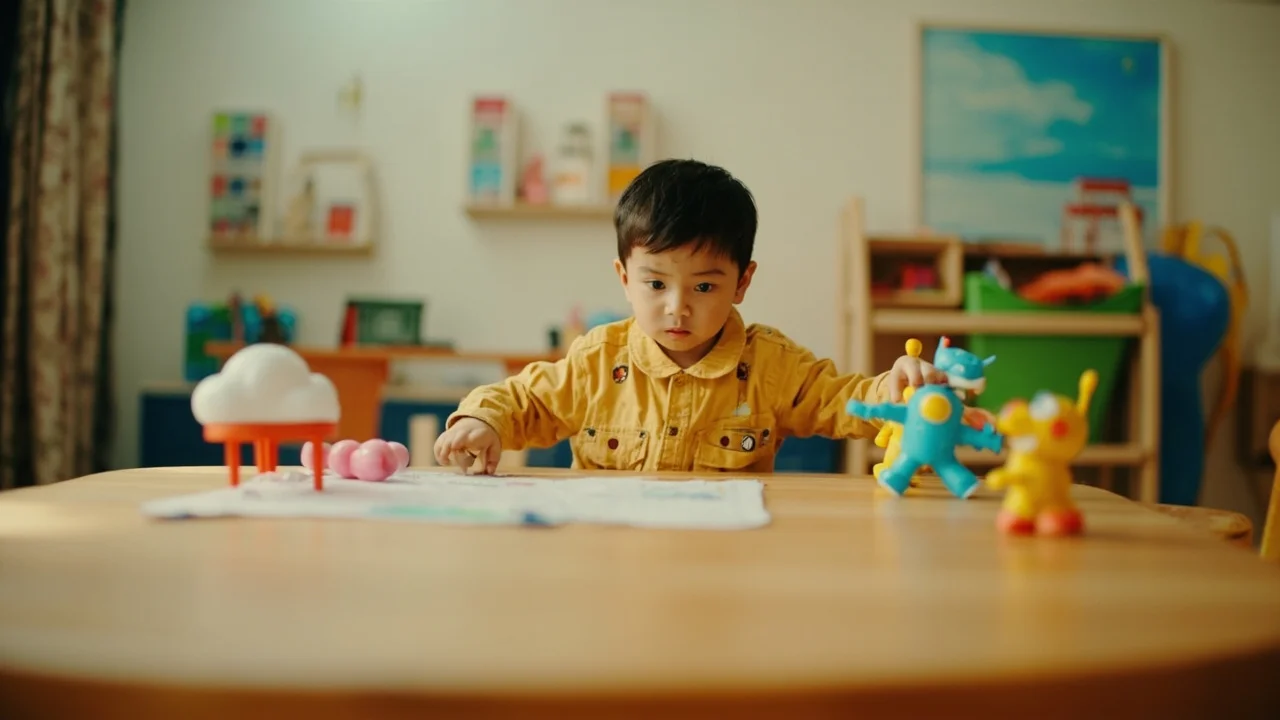
Key market segments and growth drivers in the Early Learning Table sector.
2. Market Analysis
The numbers are staggering and slightly conflicting, but the trajectory is undeniable. The Early Childhood Education Market, a key driver for early learning tables, was valued at $250 billion in 2024 and is projected to grow to $415 billion by 2033, a CAGR of roughly 5.8%. Another analysis puts the market at $337.4 billion in 2026, expanding to $482.07 billion by 2030 at a 9.3% CAGR. A third, more aggressive forecast estimates the market will hit $37.17 billion by 2035, growing at a 12.22% CAGR from 2025. These variations reflect different scopes—some include only formal childcare, others encompass all early childhood products and services. For the early learning table sub-segment, the growth driver is clear: the U.S. child care market alone is expected to grow from $67.93 billion in 2026 to $99.23 billion by 2035 (4.3% CAGR). As childcare costs rise, more families invest in home-based learning environments. The biggest growth accelerators include the global push for STEM education starting at age three, rising disposable incomes in Asia-Pacific, and a 2025 regulatory trend in the EU mandating ergonomic furniture in preschools. For manufacturers, this means the addressable market for early learning tables is no longer just affluent Western households—it is expanding into public institutions and emerging economies where preschool enrollment rates are climbing by 6% annually. The key insight: the early learning table market is growing faster than the broader kids furniture segment because it is tied to education budgets, not just discretionary home spending.
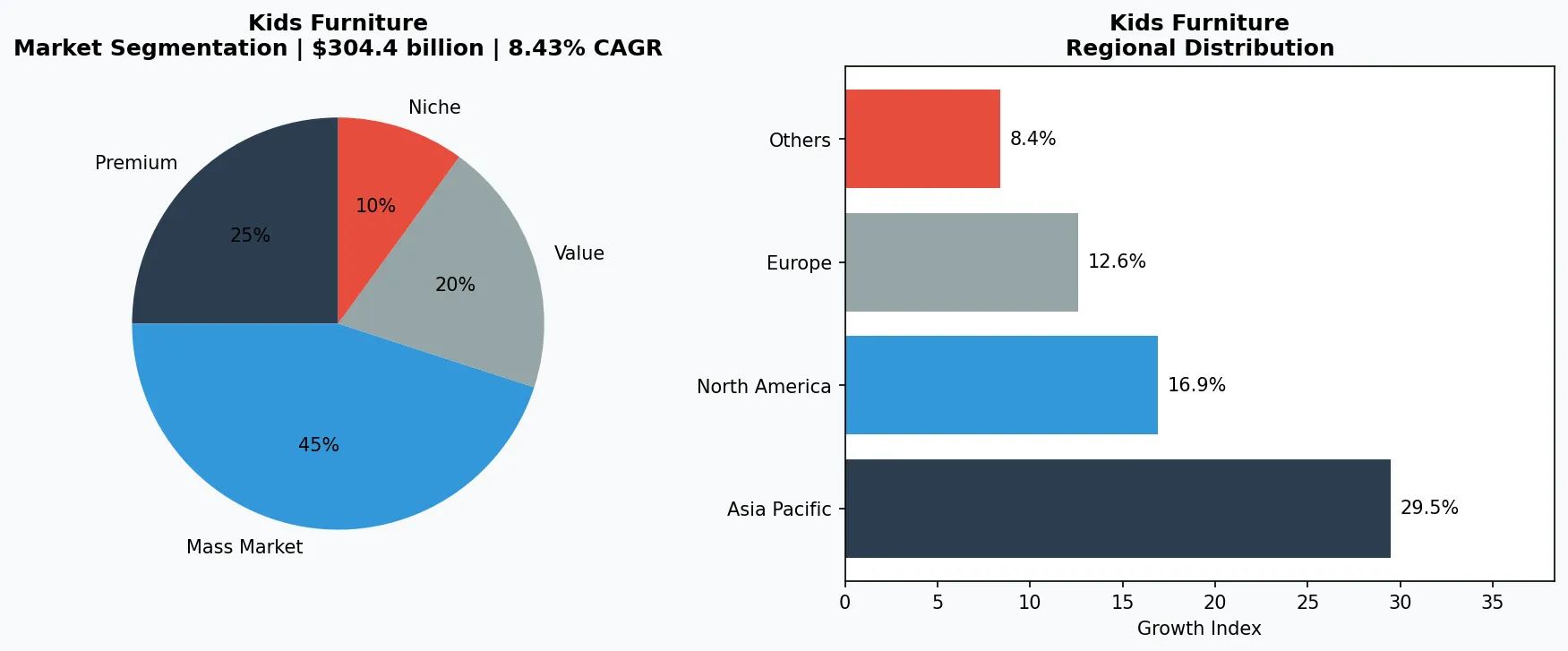
Market segmentation and regional distribution analysis for Early Learning Table.
3. Product Categories
The early learning table category breaks into three distinct product types. First, the Multi-Activity Station—typically a rectangular table with a reversible top (one side for drawing, the other for building blocks) and built-in storage bins. Examples include the 'Convertible Activity Table' by brands like KidKraft, which features a race track surface on one side and a farm scene on the other. Second, the Adjustable Height Learning Desk—a more ergonomic design that grows with the child, often with a tilting desktop and a separate chair. IKEA's FLISAT line is a benchmark here, with its pine wood table that adjusts from 46cm to 52cm in height, targeting the 18-month to 4-year range. Third, the Sensory Play Table—designed for wet or dry sensory activities like sand, water, or rice play. These often have a shallow basin top and a drain plug. The 'Sensory Table' by Step2 is a classic example, featuring a plastic tub lid that converts to a flat surface. A fourth, emerging segment is the Digital Learning Table—integrating a tablet holder or a built-in touchscreen. While still niche (less than 5% of the market), this segment is growing as edtech companies like Osmo partner with furniture makers to create seamless play-learning experiences. Materials vary widely: solid wood dominates the premium tier (retail $150-$400), while MDF and plastic rule the mass market ($40-$100). The critical differentiator is safety certification—tables must meet ASTM F963 or EN 71 standards for lead, phthalates, and edge sharpness.
Multi-Activity Stations
Rectangular tables with reversible tops (e.g., race track on one side, farm scene on the other) and built-in storage bins. Examples include KidKraft's 'Deluxe Activity Table' and Step2's 'Art Desk.'
Adjustable Height Learning Desks
Ergonomic tables with tilting desktops and separate chairs, designed to grow with the child. IKEA's FLISAT line (adjustable 46-52 cm) and Stokke's 'Table & Chairs Step' (beechwood, four height settings) are market benchmarks.
Sensory Play Tables
Tables with shallow basin tops for sand, water, or rice play, often with drain plugs. Step2's 'Sensory Table' is a classic example, featuring a plastic tub lid that converts to a flat surface for other activities.
4. Leading Players
Three archetypes dominate the early learning table landscape. First, the Scandinavian Design Specialists—companies like Stokke and IKEA. Stokke's 'Table & Chairs Step' set, made from beechwood, exemplifies the premium approach: minimalist design, adjustable height, and a focus on longevity (the table converts into a desk for older children). IKEA's FLISAT series, by contrast, captures the mass-premium segment with modular, affordable options (starting at $29.99 for the table). Their strategy is to embed early learning furniture into their broader children's room ecosystem, driving cross-sell. Second, the Educational Toy Conglomerates—firms like LeapFrog and VTech. While primarily known for electronics, they license their IP to furniture manufacturers. LeapFrog's partnership with Delta Children produced the 'LeapFrog Activity Table,' a plastic unit with a built-in touchscreen and learning games. Their competitive advantage is brand trust with parents seeking educational value, but their products often lack the durability of wood furniture. Third, the Direct-to-Consumer (DTC) Disruptors—startups like Sprout Kids and Guidecraft. Sprout Kids, for instance, offers a 'Convertible Table & Chair Set' made from sustainable birch plywood, with a non-toxic finish. Their strategy is transparency: they publish all material sourcing and safety test results online, winning over eco-conscious millennial parents. Guidecraft, a 50-year-old company, has reinvented itself with the 'Classroom Table' line, targeting both home and institutional buyers. The key battleground is certification: brands that can claim GREENGUARD Gold or FSC certification command a 20% price premium.
Scandinavian Design Specialists
Companies like Stokke and IKEA dominate with minimalist, adjustable-height tables made from sustainable materials. Their competitive advantage is brand trust and cross-selling within a broader kids furniture ecosystem.
Educational Toy Conglomerates
LeapFrog and VTech license their IP to furniture manufacturers, creating plastic tables with built-in touchscreens and learning games. Their edge is parent trust in educational content, but they lag in durability and aesthetics.
Direct-to-Consumer Disruptors
Startups like Sprout Kids and Guidecraft offer transparent sourcing (FSC-certified birch, non-toxic finishes) and sell directly online. Their strategy is sustainability and safety transparency, commanding a 20% price premium.
5. Market Trends
1. ERGONOMIC ADAPTABILITY
The rise of adjustable-height early learning tables is driven by research showing that static furniture can hinder posture development. Brands like Stokke now offer tables with four height settings (46cm to 58cm) to accommodate growth from toddler to kindergarten. This trend matters because parents are willing to pay $300+ for a table that lasts 4-6 years, reducing per-year cost. IKEA's FLISAT line has responded by adding a simple screw-based adjustment mechanism, making it accessible at a $49 price point. SUSTAINABLE MATERIALS
2. SUSTAINABLE MATERIALS
By 2025, 68% of parents in a global survey said they would pay more for furniture made from certified sustainable wood. Early learning tables are shifting from plastic to bamboo and FSC-certified birch. Guidecraft now uses 100% FSC-certified rubberwood for its \'Classroom Table\' series, and Sprout Kids offers a \'Plant a Tree\' program with each table purchase. This trend is not just marketing; it\'s a supply chain shift as Chinese manufacturers (who produce 70% of the world\'s kids furniture) face EU deforestation regulations.
The 'smart table' segment is growing at 14% CAGR, with products like the 'Osmo Genius Table' that uses a reflective mirror and iPad to turn the physical tabletop into a digital learning surface. LeapFrog's activity tables now include Bluetooth connectivity for progress tracking. This trend raises questions about screen time, but manufacturers argue that these tables encourage active rather than passive engagement. MULTI-FUNCTIONALITY
3. MULTI-FUNCTIONAL LEARNING STATIONS
The modern early learning table must serve as a desk, art station, snack table, and storage unit. KidKraft's 'Deluxe Activity Table' includes a built-in easel, storage cubbies, and a reversible top. This trend reflects smaller living spaces—urban parents need furniture that does double duty.
6. Regional Markets
North America: Premium & Institutional
The U.S. child care market ($67.93B in 2026) drives demand for both home and classroom tables. Parents prioritize ergonomics and digital integration, while preschool chains buy in bulk for compliance with ASTM standards.
Europe: Regulatory & Sustainability Leaders
The EU's 2025 Toy Safety Directive and deforestation regulations push manufacturers toward FSC-certified wood and digital compliance. Scandinavia leads in design innovation, with IKEA and Stokke setting global trends.
Asia-Pacific: Volume Growth Engine
Rising preschool enrollment (6% annual growth) and middle-class expansion fuel demand for affordable, stackable tables. China produces 70% of global kids furniture, but local brands are emerging with lower-cost alternatives.
7. Investment Outlook
Two opportunities stand out. First, the institutional market: as governments in India and China mandate preschool education, the demand for bulk early learning tables is set to explode. Manufacturers who can offer certified, stackable, and durable tables for classrooms at $80-$120 per unit will capture a $2 billion institutional sub-market by 2028. Second, the subscription model: companies like 'Lovevery' have proven that parents will pay $120/month for a play kit; applying this to furniture—renting an adjustable table with quarterly accessory swaps—could generate recurring revenue. The primary risk is regulatory fragmentation: the EU's 2025 Toy Safety Directive now classifies any learning table with digital components as an 'electronic toy,' requiring CE marking and radio equipment compliance. This could add 15-20% to R&D costs for smart tables. Additionally, the looming US-China tariff war (with furniture tariffs potentially rising to 25% in 2026) threatens to squeeze margins for import-dependent brands. The winners will be those who localize production in Mexico or Vietnam, or those who pivot to higher-margin, design-driven products that justify premium pricing.
Strategic Considerations:
- Institutional Market Opportunity:
- Subscription Model Risk:
- Regulatory Fragmentation Threat:
- Tariff-Driven Supply Chain Shift:
Make Informed Decisions in the Early Learning Table Market
Product quality and sourcing integrity directly impact business outcomes. Discover how Verity Rank's verification platform helps industry participants source with greater confidence.
Contact Verity Rank TodayFurther Reading: Explore additional market intelligence from Grand View Research and Mordor Intelligence.
This article is for informational purposes only, based on publicly available industry data and market reports as of 2026-05-19. All market figures are estimates and may vary from actual results.