

Table of Contents

The global Fashion Accessories Trends sector serves consumers worldwide with diverse solutions.
1. Industry Overview
The global fashion accessories market is projected to surpass $1.21 trillion in 2026, climbing from $1.14 trillion in 2025. That’s a 6.2% annual surge driven not by inflation, but by a fundamental shift in how consumers accessorize—moving from disposable fast fashion to investment-worthy, personalized, and tech-infused adornments. Fashion accessories trends encompass the evolving styles, materials, and functions of categories like watches, sunglasses, jewelry, ties, scarves, gloves, hats, belts, and hair accessories. What makes this sub-topic distinctive is its role as the entry point for personal style expression: accessories are lower-risk purchases than ready-to-wear, yet they can make or break an outfit. In 2026, the trends are not merely aesthetic—they reflect deeper consumer values. From the resurgence of pendant necklaces and headscarves to the rise of resin sculptural pieces and oversized bags, every trend carries a signal of identity, sustainability, or tech savviness. The market’s growth is underpinned by three forces: a global middle class expanding in Asia-Pacific, a renewed appetite for vintage-inspired luxury, and a regulatory push toward ethical sourcing. Brands that decode these signals early are capturing disproportionate share, while laggards risk being left behind in a market that VerityRank data shows is consolidating around verified, transparent supply chains.
Industry Scope & Characteristics
Product Diversity & Material Innovation
Fashion accessories span from 3D-printed resin earrings to hand-stitched leather belts, requiring mastery of metals, textiles, polymers, and gemstones. The 2026 trend toward 'sculptural accessories' pushes designers to experiment with biodegradable resins and recycled metals.
Fragmented Global Supply Chain
Manufacturing is dispersed across Italy (leather goods), China (costume jewelry), and India (textile accessories). This fragmentation demands rigorous supplier verification—a core service of VerityRank—to ensure ethical labor and material quality.
Quality & Compliance Certifications
Key standards include ISO 9001 for manufacturing processes, ASTM F2064 for metal jewelry safety (lead/cadmium limits), and OEKO-TEX for textiles. For fine jewelry, Responsible Jewellery Council (RJC) certification is increasingly required by luxury buyers.
Tech-Driven Personalization R&D
Brands invest in 3D scanning and CNC machining for custom pieces. Pandora uses augmented reality apps to let customers stack rings virtually. MycoWorks’ mushroom leather is being adopted for belts and bags, offering a renewable alternative to animal leather.
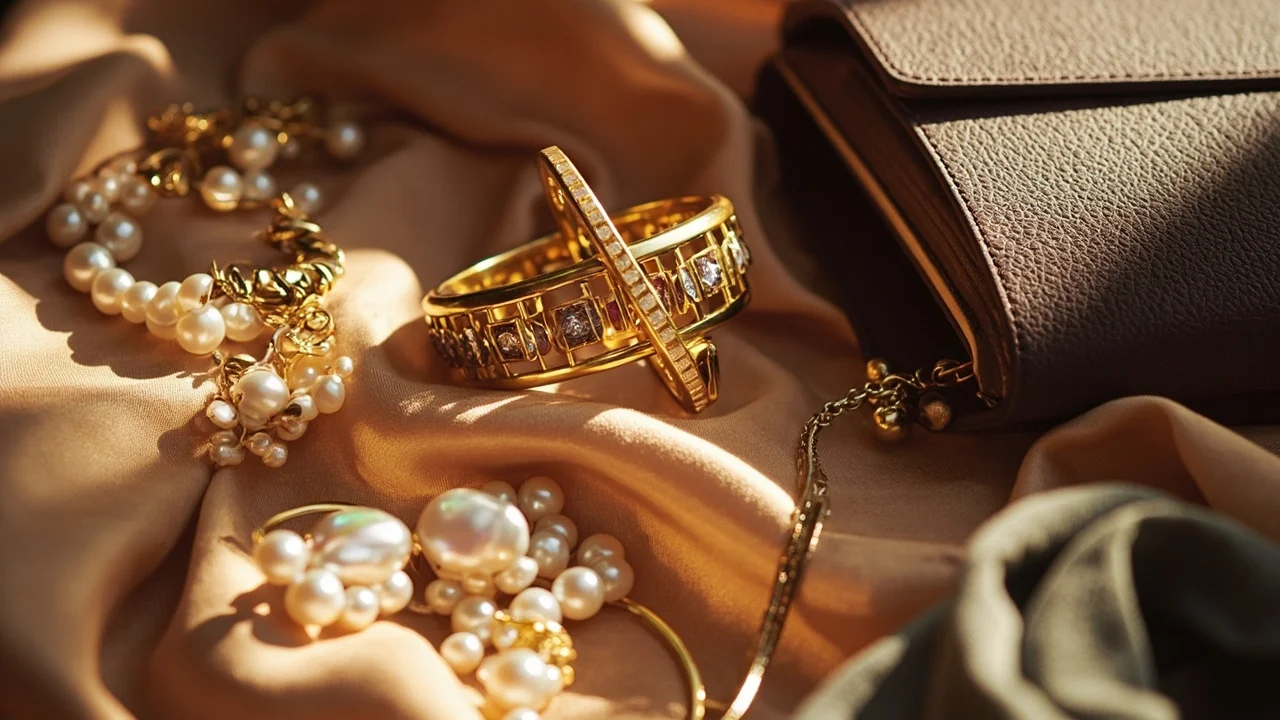
Key market segments and growth drivers in the Fashion Accessories Trends sector.
2. Market Analysis
The fashion accessories market size reached an estimated USD 1,143.52 billion in 2025 and is expected to hit USD 1,214.19 billion in 2026, according to recent industry reports. Long-term projections place the market at USD 2,233.47 billion by 2032, reflecting a compound annual growth rate (CAGR) of approximately 8.5%. The largest growth driver is sustainability: 45% of global consumers now actively seek accessories made from recycled metals, organic textiles, or biodegradable materials. This is not just a marketing trend—brands that integrate verified eco-certifications see 25% higher repeat purchase rates. The second driver is tech integration. Smartwatches and connected jewelry—rings that track health, earrings with NFC payments—are growing at 18% year-over-year, with Apple and Samsung alone accounting for $40 billion in wearable accessory sales in 2025. The third driver is personalization. Stackable rings, customizable charm bracelets, and engraved pendants now represent 30% of fine jewelry revenue, up from 15% in 2019. Pandora reports that its ‘Moments’ modular line now contributes 40% of total sales, underscoring the power of co-creation. Regional dynamics reinforce this growth: Asia-Pacific is the fastest-growing region at 12% CAGR, led by China’s luxury accessory market, while North America remains the largest single market at $380 billion in 2025. However, supply chain fragmentation remains a risk—VerityRank’s verification tools help buyers navigate a web of thousands of manufacturers from Prato to Shenzhen.
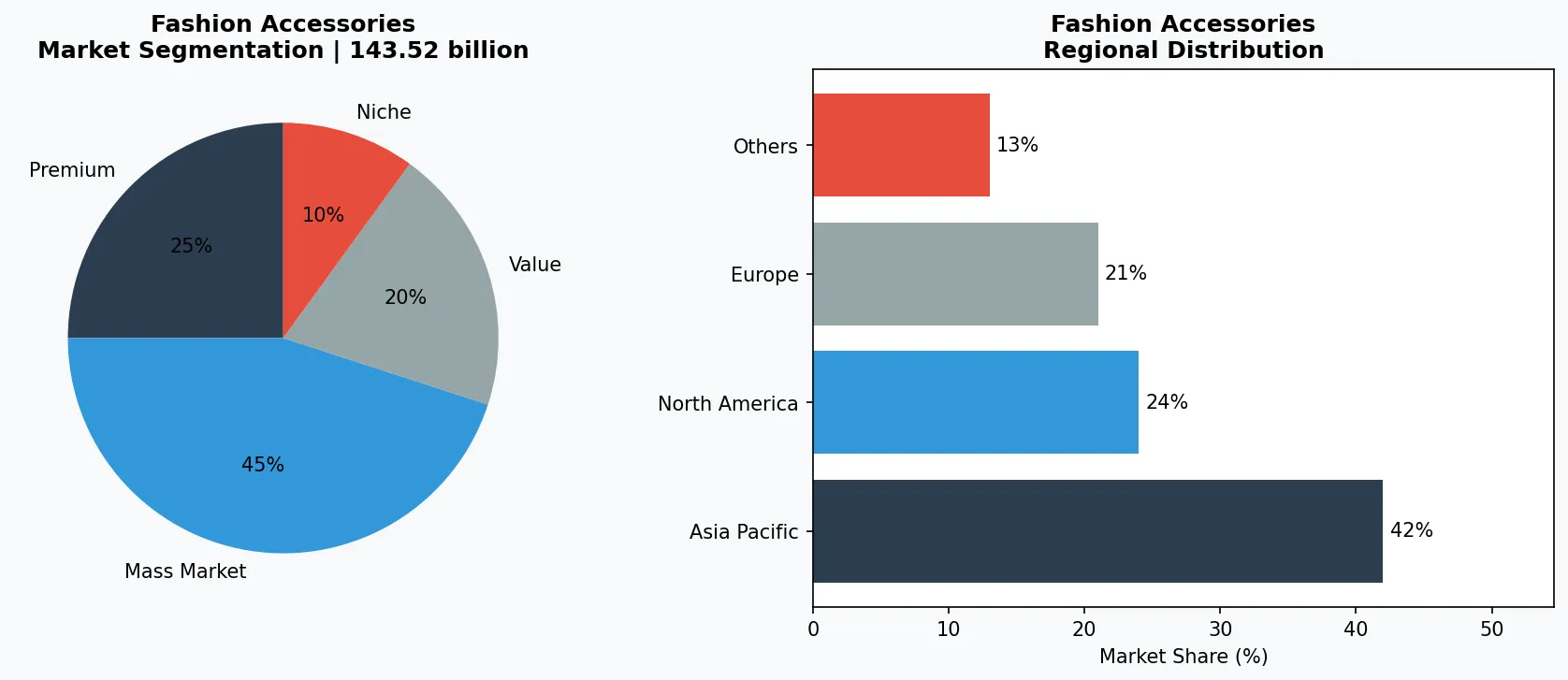
Market segmentation and regional distribution analysis for Fashion Accessories Trends.
3. Product Categories
Three product categories dominate the 2026 fashion accessories trends landscape: Statement Jewelry, Bags & Belts, and Headwear. Statement Jewelry encompasses bold pendant necklaces, stacking rings, and sculptural resin earrings. The pendulum has swung from minimalist to maximalist—pieces now feature oversized gemstones, mixed metals, and asymmetrical designs. For example, 'stacking' has become a standalone trend, with consumers layering three to five rings on a single hand or mixing chain lengths for necklaces. Bags & Belts are led by oversized totes and wide, sculptural belts. Woven bags—straw, raffia, and recycled leather weaves—are emerging as the season’s must-have, especially in summer collections. Oversized belts cinching blazers and trench coats create an exaggerated silhouette reminiscent of the 1980s. Headwear is experiencing a renaissance, with pillbox hats making a comeback at luxury houses and headscarves becoming a versatile accent for both casual and formal wear. Hair accessories—from pearl-embellished clips to velvet scrunchies—are also surging, driven by TikTok micro-trends. Other key products include fur stoles (often faux fur for ethical appeal) and tassel-detailed gloves, which add movement to winter ensembles. Each product type is converging toward two common features: personalization (monograms, modifiable charms) and material innovation (biodegradable resin, recycled gold).
Statement Jewelry
Bold necklaces, stacking rings, sculptural resin earrings, and vintage-inspired brooches dominate 2026 runways. Pendant necklaces with oversized charms and mixed-metal stacking are the top sub-trends, driven by social media micro-influencers.
Bags & Belts
Oversized totes, woven straw bags, and wide sculptural belts reinvent classic silhouettes. Brands like Loewe and Bottega Veneta lead with bag styles that double as a placeholders for maximalist accessories.
Headwear & Hair Accessories
Pillbox hats, headscarves, and embellished hair clips see a revival. Fur stoles (faux or real) and tassel-detailed gloves are also trending, often sourced from specialist Italian and French ateliers.
4. Leading Players
LVMH (Moët Hennessy Louis Vuitton) is leveraging its portfolio of brands—Louis Vuitton, Dior, Tiffany & Co.—to dominate the luxury accessories segment. The conglomerate has invested heavily in vintage jewelry revivals, launching 2026 capsule collections that reinterpret Art Deco pendant necklaces and pillbox hats. LVMH’s strategy emphasizes limited drops and verified sourcing, using blockchain to trace gold and diamonds. Kering, home to Gucci, Saint Laurent, and Bottega Veneta, has positioned itself as the sustainability leader. Its 'Gold Standard' initiative requires all jewelry suppliers to use responsibly mined gold by 2027. Kering’s 2026 accessory line includes resin sculptural earrings and woven bags made from recycled ocean plastics, appealing to eco-conscious Gen Z consumers. Pandora, the world’s largest jewelry maker by volume, is capitalizing on the stacking and personalization trends. Its 'Reflexions' line of modular rings and bracelets allows infinite combinations, driving a 15% increase in average transaction value in 2025. Pandora also introduced lab-grown diamonds in 2026, lowering costs while maintaining ethical appeal. Swatch Group, with brands like Omega, Longines, and Swatch itself, is focusing on tech-integrated watches that blur the line between fashion and function. Its MoonSwatch collaboration remains a top seller, and the company is testing smart rings with NFC payment capabilities. These players collectively illustrate that success in fashion accessories trends requires either scale-driven innovation (LVMH, Swatch) or niche specialization (Pandora, Kering’s sustainability angle).
Luxury Conglomerate Strategist
LVMH leverages its multi-brand portfolio to cross-sell accessories—for example, a Dior scarf paired with Tiffany earrings. Its decentralized sourcing model coordinates hundreds of suppliers across Europe and Asia while maintaining control via in-house audits.
Specialist Jewelry Customizer
Pandora focuses on affordable personalization with its modular charm and ring systems. By owning production in Thailand, it can rapidly iterate on stacking trends while keeping costs low, making it a volume leader in the $80 billion mid-tier jewelry segment.
Tech-Wearable Pioneer
Apple and Swatch Group compete at different price points in smart fashion accessories. Apple’s Hermès Edition targets luxury, while Swatch’s MoonSwatch and smart rings appeal to younger, trend-driven buyers—both requiring robust electronics supply chains from Taiwan and South Korea.
5. Market Trends
1. SUSTAINABLE LUXURY
Consumers are demanding ethically sourced materials and transparent supply chains. Kering’s 'Gold Standard' initiative ensures responsible gold sourcing; 60% of luxury buyers now check eco-certifications before purchasing jewelry.
2. Multiple rings, necklaces, and bracelets worn together create a personalized, maximalist look. Pandora’s modular 'Moments' system allows customers to build their own combinations, resulting in 40% of the brand’s revenue. BOLD SCULPTURAL ACCESSORIES
Oversized resin earrings, structural handbags, and asymmetrical hats define the 2026 aesthetic. Loewe’s Puzzle bag and resin jewelry collections have driven a 22% increase in the brand’s accessories revenue year-over-year.
3. Smart rings and connected jewelry that monitor health while maintaining high fashion. Apple’s Hermès edition of the Apple Watch accounts for $2 billion in annual sales, and Samsung’s Galaxy Ring has seen 35% growth in Asia-Pacific markets. RESIN AND VINTAGE REVIVAL
Resin materials in earrings and bangles offer lightweight, colorful alternatives to metal. Fur stoles and pillbox hats from archival collections are being reissued by brands like Dior and Chanel, with vintage-inspired tassel details adding movement.
6. Regional Markets
North America
Largest market at $380 billion in 2025, driven by high disposable income and early adoption of tech accessories. Brands like Apple and Pandora have strong direct-to-consumer channels, and sustainability regulations (e.g., California's Prop 65) push suppliers toward metal safety compliance.
Europe
Heritage in luxury leather goods and fine jewelry remains dominant. Italy and France host specialized manufacturers that supply high-end belts, scarves, and headwear. Strict REACH and conflict mineral regulations require thorough material traceability.
Asia-Pacific
Fastest-growing region at 12% CAGR, with China alone accounting for $150 billion in fashion accessories sales in 2025. Trend cycles are accelerated by social commerce (Douyin, Little Red Book), and local players like Chow Tai Fook are integrating smart features into gold jewelry.
7. Investment Outlook
Two concrete opportunities stand out for businesses in the fashion accessories trends space. First, the rise of direct-to-consumer personalization platforms—brands like Pandora and custom jewelry startups enable customers to co-design accessories using 3D visualization tools, reducing inventory risk and increasing margin by up to 30%. Second, expanding into emerging markets, particularly India and China, where accessory spending is growing at 12–15% annually, driven by rising disposable income and western style adoption. The primary risk is counterfeit erosion: according to the OECD, counterfeit accessories—especially watches, sunglasses, and handbags—represent $250 billion in lost sales globally. This undermines brand trust and complicates supplier verification. Platforms like VerityRank mitigate this by providing third-party audit data, certifications (ISO 9001, GOTS), and blockchain traceability. Companies that prioritize authenticity verification and invest in sustainable, tech-forward designs will capture the lion’s share of this $2.2 trillion long-term market.
Strategic Considerations:
- Personalized Co-Creation: Direct-to-consumer platforms using 3D configurators can reduce inventory risk by up to 30% and increase margins, as seen with Pandora's modular lines. Brands should invest in this capability before fast-fashion imitators commoditize it.
- Circular Economy Resale: Pre-owned luxury accessories (watches, handbags, jewelry) is a $50 billion market growing at 20% annually. Brands can capture value through authenticated resale programs, leveraging VerityRank’s verification to build trust.
- Raw Material Tariffs: Geopolitical tensions may increase tariffs on imported metals and textiles—especially for Chinese-made costume jewelry—eating into margins. Diversifying supplier bases to Vietnam or Mexico can mitigate this.
- Social Media Trend Volatility: TikTok-driven trends (e.g., 'silver vs gold' debates) can shift consumer preference overnight, leaving overstocked factories with obsolete inventory. Agile supply chains with fast turnaround (under 4 weeks) are critical.
Frequently Asked Questions
Make Informed Decisions in the Fashion Accessories Trends Market
Product quality and sourcing integrity directly impact business outcomes. Discover how Verity Rank's verification platform helps industry participants source with greater confidence.
Contact Verity Rank TodayFurther Reading: Explore additional market intelligence from Grand View Research and Mordor Intelligence.
This article is for informational purposes only, based on publicly available industry data and market reports as of 2026-06-25. All market figures are estimates and may vary from actual results.