


Table of Contents

The global Fashion Rental Subscription Service sector serves consumers worldwide with diverse solutions.
1. Industry Overview
The fashion rental subscription model has evolved from a niche experiment into a structural challenger to fast fashion. In 2025, the global fashion rental subscription market was already valued at $3.8 billion, and projections place it at $9.6 billion by 2034. That is a compound annual growth rate (CAGR) of 10.9% — nearly double the pace of the broader apparel industry. The model hinges on a simple but powerful proposition: instead of owning garments, consumers pay a recurring fee to access rotating wardrobes. For B2B buyers, the shift represents an entirely new procurement category, one where durability and washability matter as much as cut and color.
Industry Scope & Characteristics
High-Durability Product Engineering
Rental-specific garments are engineered for 30-50 industrial laundering cycles, using reinforced seams, pre-shrunk organic cotton, and anti-pilling blends that exceed typical retail specifications.
Note: 'title' already specified above
The rental model's supply chain is circular by design: forward logistics to subscribers, reverse logistics for returns, commercial-grade cleaning, then redistribution. This requires specialised third-party logistics and industrial laundry partners.
Certification-Driven Quality Assurance
Leading rental platforms require OEKO-TEX Standard 100 fabric certification, SMETA or BSCI social audits at factories, and increasingly ISO 14040 lifecycle assessments to validate sustainability claims.
AI and RFID Verification
R&D focus is split between RFID-tagged inventory tracking and AI-based garment grading; these technologies cut return processing costs by up to 70% and extend rental asset life through data-driven repair decisions.
What makes fashion rental subscription distinctive within sustainable fashion is its business-model-led approach to circularity. While organic cotton and recycled polyester address material inputs, rental services attack utilisation rates. A single rented garment can serve dozens of users across its lifespan, decoupling revenue from virgin resource extraction. This is not incremental greening; it is a structural reduction in per-use environmental impact. Industry data underscores the momentum: the online clothing rental market is projected to grow from $1.43 billion in 2025 to $2.98 billion by the early 2030s, with 2026 alone expected to reach roughly $2.01 billion.
For VerityRank readers — procurement officers, sustainability leads, and supply chain managers — the rental subscription wave creates urgent questions about supplier verification. Who are the manufacturers behind these rental fleets? What quality standards apply to garments designed for 30-plus wear cycles? How do logistics partners handle reverse supply chains? This article breaks down the market data, product segments, and key players in the fashion rental subscription space to support smarter sourcing decisions.

Key market segments and growth drivers in the Fashion Rental Subscription Service sector.
2. Market Analysis
Global market figures for fashion rental subscription services vary by scope, but all point in one direction: strong, sustained growth. The most cited benchmark values the sector at $3.8 billion in 2025, expanding to $9.6 billion by 2034 at a 10.9% CAGR. A second analysis, focused specifically on online clothing rental, estimates $2.8 billion in 2026, climbing to $7.0 billion by 2036 at a 9.6% CAGR. A third dataset shows growth from $1.89 billion in 2025 to $2.01 billion in 2026, with 2031 projections above $2.98 billion. Regardless of scope, the CAGR lands consistently between 9.6% and 10.9% — a level that signals a maturing market, not a passing fad.
Three growth drivers dominate. First, shifting consumer ownership attitudes. A 2024 survey across US and European markets found that 42% of consumers aged 22-37 prefer access to garments rather than ownership, driven by both cost pressure and sustainability awareness. Second, supply chain digitisation. RFID tags and AI-driven demand forecasting have reduced shrinkage and improved inventory turnover for rental operators by 20-30%, addressing the operational risk that once scared off investors. Third, regulatory push in the EU. The proposed Ecodesign for Sustainable Products Regulation includes a ban on destroying unsold textiles, which makes rental models a more tax-efficient and compliance-friendly outlet. European rental operators are already partnering with compliance auditors to meet EN ISO 14040 lifecycle assessment standards.
For B2B buyers, these numbers translate into a concrete mandate. Rental fleets require higher-grade fabrics — think GOTS-certified organic cotton and bluesign-approved synthetics — because garments must survive repeated industrial laundering. A rental operator’s purchasing volume is predictable and contracted, making them attractive clients for verified manufacturers. The market rewards suppliers who can document seam strength, colorfastness, and laundering stability, not just aesthetic appeal.
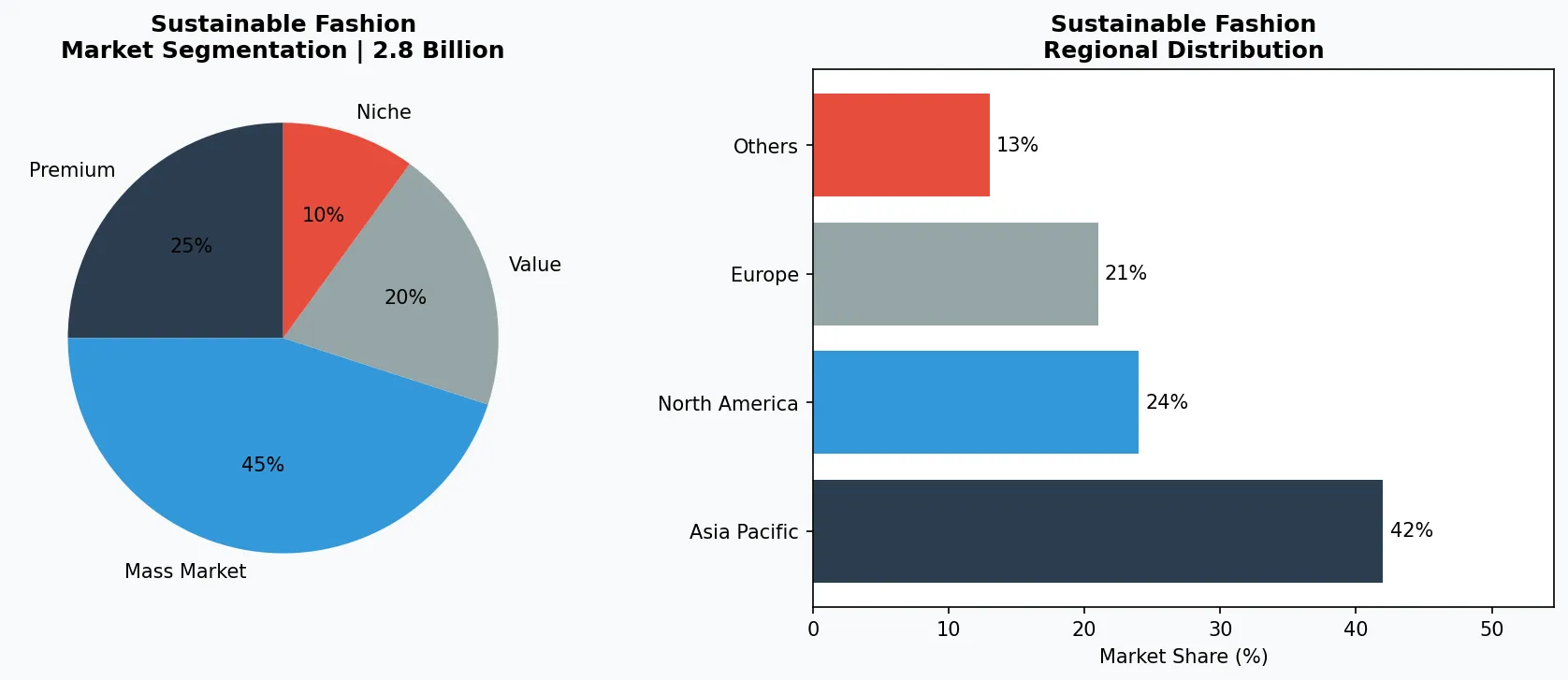
Market segmentation and regional distribution analysis for Fashion Rental Subscription Service.
3. Product Categories
Rental-ready Everyday Wear | The backbone of fashion rental subscription is high-rotation basics and workwear. These garments are designed to withstand 30-50 commercial launderings while retaining shape. Examples include wrinkle-resistant blazers, stretch ponte trousers, and machine-washable silk-blend tops. Suppliers typically use reinforced seams, pre-shrunk organic cotton, and Teflon-free durable water repellent finishes. Key certification: OEKO-TEX Standard 100 for harmful substances.
Occasionwear and Luxury Rental | This segment targets high-value garments — evening gowns, designer handbags, and bridal wear — with rental price points often at 10-20% of retail. Products require extensive quality inspection after each cycle, and many operators use a two-tier pricing model: higher monthly fees for unlimited luxury access. Brands like Rent the Runway have built their model around this category. From a sourcing perspective, luxury rental demands original authentication certificates, tamper-evident tags, and serial number tracking. Suppliers must provide chain-of-custody documentation to prove authenticity.
Vintage and Upcycled Rental Capsules | Distinct from new garment production, this sub-category feeds on curated pre-owned and upcycled pieces. Rental platforms specialising in vintage inventory offer a rotating catalogue of rare finds, from 1990s denim to archival designer pieces. For B2B suppliers, the opportunity lies in garment restoration services — patchwork repair, re-dyeing, and resizing — that prepare second-hand apparel for rental circulation. The open-air laundry stage in rental operations requires industrial ozone disinfection systems, and restoration labs increasingly use laser fading technology to standardise finishes on upcycled denim.
Rental-Ready Workwear Capsules
A rotation-resistant wardrobe for office professionals — ponte blazers, wrinkle-free blouses, and stretch trousers produced to withstand 30+ commercial washes in industrial laundry systems.
Luxury Occasionwear and Bridal
High-value dresses, gowns, and designer accessories rented at 10-20% of retail price; requires authentication documentation, tamper-proof tags, and serial tracking to prove brand provenance.
Upcycled and Vintage Rental Collections
Curated second-hand and restored garments with distinct provenance. Suppliers handle re-dyeing, resizing, and repair to make older pieces ready for rental circulation.
4. Leading Players
Rent the Runway | The most established player in the fashion rental subscription space, Rent the Runway built its moat through vertical integration. The company operates its own warehouse and dry-cleaning infrastructure, which in 2024 processed over 850,000 garments annually. Its strategy revolves around a 'closet in the cloud' membership, offering tiers from $94 to $220 per month. For suppliers, the key takeaway is that Rent the Runway requires vendor factories to undergo third-party social compliance audits — including SMETA or BSCI certification — and insists on OEKO-TEX Standard 100 certified fabrics for all rental garments.
Nuuly | Urban Outfitters' rental arm has emerged as a tech-first competitor. Nuuly differentiates by including its parent company's brands — Urban Outfitters, Anthropologie, Free People — alongside third-party labels in a $98-per-month subscription. Its Chicago fulfilment centre uses automated garments-on-hanger storage and machine-vision grading to sort returned items. Nuuly's data analytics predict demand at SKU level with 92% accuracy, reducing overproduction. For the wholesale market, Nuuly is a ready-made channel for emerging designers who want rental distribution without handling reverse logistics themselves.
CaaStle (infrastructure provider) | Not a rental brand but the engine behind many, CaaStle licenses its rental platform to retail partners including Express, Vince, and David's Bridal. The company operates 'rental-as-a-saas' infrastructure: inventory management, subscription billing, and garment restoration. Its model is significant for the broader market because it enables traditional retailers to enter rental with a fraction of the fixed capital required to build proprietary systems. Suppliers working with CaaStle partners must comply with the parent brand's existing supplier code of conduct, but volume commitments are typically longer — 12-24 month contracts — because rental inventory needs to be planned around repeat-use cycles.
The Vertically Integrated Rental Operator
Rent the Runway owns its reverse logistics, cleaning, and fulfilment infrastructure, processing over 850,000 garments annually and controlling quality from vendor audit to customer shipment.
The Brand-Back Retail Rental Service
Nuuly leverages Urban Outfitters' family of brands and a tech-driven Chicago fulfilment centre using machine vision and AI demand forecasting to achieve 92% per-SKU accuracy.
The Rental-Infrastructure Enabler
CaaStle licenses its rental platform — inventory management, billing, restoration — to national retailers like Express and David's Bridal, letting established brands launch rental subscription in months rather than years.
5. Market Trends
1. Rental-as-a-Service (RaaS)
CaaStle's model has gone mainstream, allowing traditional retailers to launch rental subscription offerings without owning warehouses or dry-cleaning plants. Why it matters: it accelerates the circular economy by converting existing retail inventory into rental assets. Example: Express maintains a dedicated 'Express Rental' subscription powered by CaaStle.
2. AI-Driven Returns Grading
Computer vision systems now assess returned garments for stains, rips, and wear. Why it matters: manual grading costs $1.50-$3.00 per item, while automated systems cut that to $0.50 and reduce quarantine time. Example: Nuuly's Chicago facility uses machine-vision grading to process returns within 24 hours.
3. Circular Fabric Innovation
Rental operators are shifting from standard fabrics to 'rental-native' textiles — bio-based polyesters and lyocell blends engineered for industrial laundering. Why it matters: these fabrics reduce pilling and tensile strength loss, extending a garment's rental life from 20 to over 40 uses. Example: European fabric mills supply GOTS-certified organic cotton and ECONYL regenerated nylon to multiple rental fleet operators.
6. Regional Markets
North America: Subscription Heartland
The US accounts for roughly 45% of global online clothing rental revenue, driven by high consumer spend and dense logistics networks. Rent the Runway and Nuuly both anchor their operations in the US.
Europe: Compliance-Driven Circularity
EU regulatory pressure around textile waste and Ecodesign rules drives rental adoption. European operators are the most aggressive adopters of ISO 14040 lifecycle assessments and closed-loop textile mandates.
Asia-Pacific: Manufacturing-to-Consumer Bridge
Supply chain strength in China, Vietnam, and Bangladesh meets rising domestic rental platforms; the region is the primary sourcing base for rental-grade garments, with strong growth in virtual fitting and AI sizing technologies.
7. Investment Outlook
Two opportunities stand out for B2B buyers. First, dedicated rental-quality fabrication. Suppliers who develop garments with verified 40-plus laundering cycles and offer lifecycle data certificates can lock in multi-year contracts with rental operators. Second, reverse logistics technology. There is still a lack of standardised, cost-effective systems for inspecting, refurbishing, and redistributing returned rentals. A supplier that offers washable RFID tags and returns-management software integration could become an indispensable partner.
The main risk is overcapacity chasing a still-nascent consumer base. With multiple market forecasts ranging from $2.8 billion to $3.8 billion for 2025-2026, the total addressable market is real but not limitless. Suppliers should avoid building rental-only production lines until they see 12-24 months of purchase orders from at least two established rental operators.
Strategic Considerations:
- Rental-Grade Fabric Certification: Suppliers that offer transparent laundering-cycle data and OEKO-TEX-certified durable fabrics can secure preferred-vendor status with rental platforms.
- Returns Grading Automation: Invest in AI-based garment inspection or partner with tech providers to reduce return processing costs from $3.00 to $0.50 per item.
- Multi-Brand Rental Consortia: Mid-size fashion brands should explore shared rental infrastructure via CaaStle-style platforms instead of building costly proprietary operations.
- Market Overcapacity Risk: The market is growing, but 2025-2026 forecasts range from $1.8B to $3.8B depending on scope — do not pivot production capacity to rental until purchase orders justify it.
Frequently Asked Questions
Make Informed Decisions in the Fashion Rental Subscription Service Market
Product quality and sourcing integrity directly impact business outcomes. Discover how Verity Rank's verification platform helps industry participants source with greater confidence.
Contact Verity Rank TodayFurther Reading: Explore additional market intelligence from Grand View Research and Mordor Intelligence.
This article is for informational purposes only, based on publicly available industry data and market reports as of 2026-08-04. All market figures are estimates and may vary from actual results.