

Table of Contents

The global Floor Lamp Styles & Placement sector serves consumers worldwide with diverse solutions.
1. Industry Overview
By 2033, the global floor lamp market is projected to hit $5.4 billion, growing at a 4.7% CAGR from $3.9 billion in 2026. That is not a slow burn—it is a structural shift in how consumers and commercial buyers treat floor lamps. No longer relegated to a corner as an afterthought, floor lamps have become focal points of interior design, blending utility with deliberate aesthetic intent. The sub-topic of floor lamp styles and placement has emerged as a critical decision point for buyers, because a poorly placed lamp—even a beautiful one—can ruin a room's balance. Conversely, a well-styled floor lamp placed at the intersection of function and form can anchor an entire lighting scheme.
Industry Scope & Characteristics
Design-Driven Product Differentiation
Floor lamps in 2026 are evaluated as much for their sculptural form as for their light output. Premium models feature organic silhouettes and tactile finishes like brushed brass and matte ceramic, turning them into focal points.
Globalized Supply Chain with Regional Assembly
Many top brands maintain design and primary production in Europe (Italy, Netherlands) but operate secondary assembly plants in Vietnam or China to serve Asian markets cost-effectively.
Multi-Region Compliance Requirements
Floor lamps sold across North America, Europe, and Asia must meet UL, CE, and CCC certifications simultaneously, adding complexity to sourcing. Smart lamps also require GDPR and CCPA data privacy compliance.
Modular and Smart Technology Integration
R&D is focused on modular designs that allow arm length, shade color, and base weight customization, plus IoT connectivity for voice/app control and circadian rhythm programming.
What makes this sub-topic distinctive within the broader home lighting industry is the convergence of material innovation and spatial psychology. The 2026 floor lamp market is not just about lumens or wattage; it is about brushed brass finishes, matte ceramic textures, and organic silhouettes that turn a lamp into sculpture. Placement is equally strategic: the trend toward 'layering' light—mixing sconces, table lamps, pendants, and picture lights—has elevated the floor lamp from a standalone source to a key player in a multi-source ecosystem. Buyers now ask not just 'which lamp?' but 'where does it sit in the room's light hierarchy?'
For B2B buyers sourcing floor lamps for hospitality, retail, or residential projects, the stakes are high. A single misplaced floor lamp can undermine an entire lighting plan, while a well-chosen style—like a sculptural piece with fluid silhouettes—can command premium pricing. Verity Rank's verification tools help buyers confirm that suppliers meet both aesthetic and compliance standards, ensuring that the lamp not only looks right but performs reliably for years.
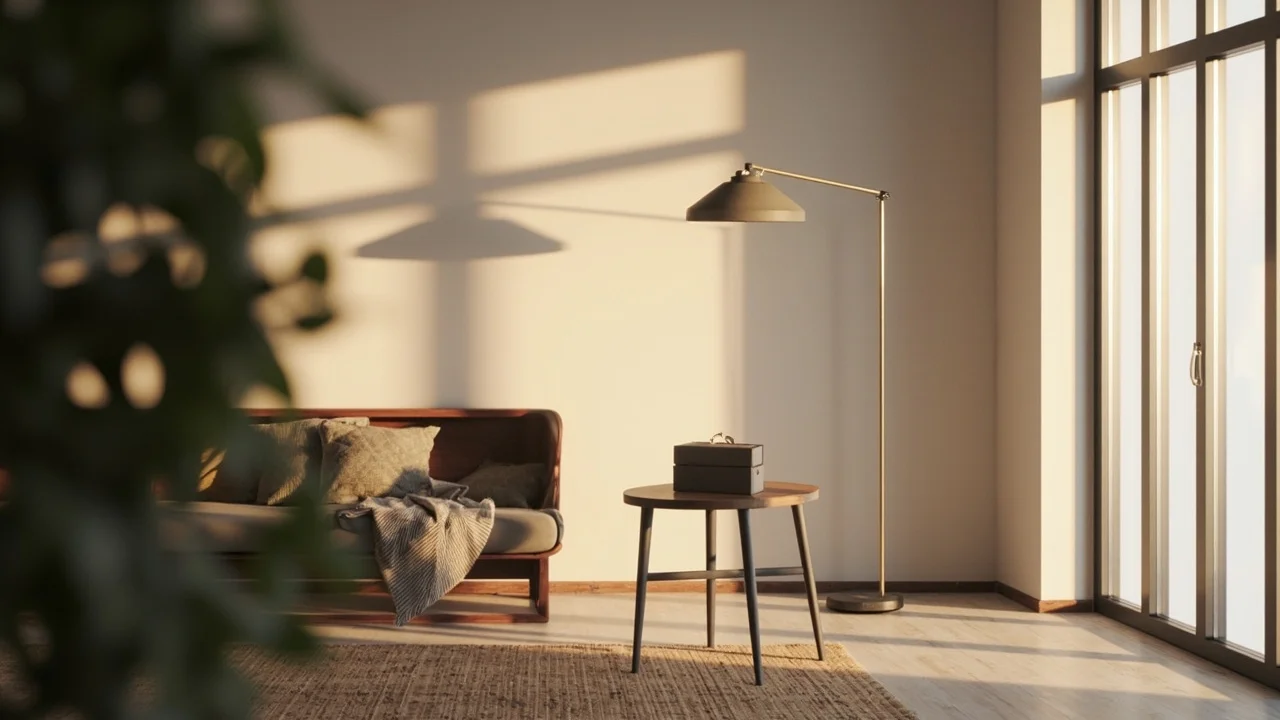
Key market segments and growth drivers in the Floor Lamp Styles & Placement sector.
2. Market Analysis
The floor lamp market is undergoing a measured but meaningful expansion. According to recent industry analysis, the sector is anticipated to grow at a CAGR of 8% from 2026 to 2033, though a more conservative projection from a separate report puts the figure at 4.7%—from $3.9 billion in 2026 to $5.4 billion by 2033. The variance reflects differing scope definitions, but both trajectories confirm a clear upward trend. The market is segmented by light source (LED, halogen, fluorescent/CFL), material (metal, wood, plastic, glass, textile), price range (mass, premium, luxury), application (commercial, household, industrial), and distribution channel (online vs. offline).
Three key growth drivers stand out. First, LED floor lamps dominate the light-source segment, accounting for over 60% of new product launches in 2025 due to their energy efficiency and design flexibility. Second, the premium and luxury price tiers are expanding faster than mass-market, driven by demand for sculptural, artisanal pieces in high-end hospitality and residential projects. Third, the online distribution channel is growing at a 12% annual clip, as B2B buyers increasingly use digital platforms to compare styles, verify supplier credentials, and order samples before committing to bulk purchases.
Household applications remain the largest end-use segment at roughly 55% of revenue in 2026, but commercial applications—particularly in boutique hotels, co-working spaces, and retail showrooms—are gaining share. These commercial buyers prioritize placement versatility and durability, often specifying floor lamps that can be easily repositioned to accommodate changing layouts. The industrial segment, while smaller, is seeing demand for task-oriented floor lamps with adjustable arms and high-lumen outputs.
Geographically, North America and Europe together represent about 60% of the market, but Asia-Pacific is the fastest-growing region, with a CAGR of 6.5% through 2033. China's domestic lighting manufacturers are increasingly targeting export markets with mid-priced LED floor lamps that combine modern aesthetics with competitive pricing. For B2B buyers, this means more options—but also a greater need for supplier verification to ensure quality and compliance with regional standards.
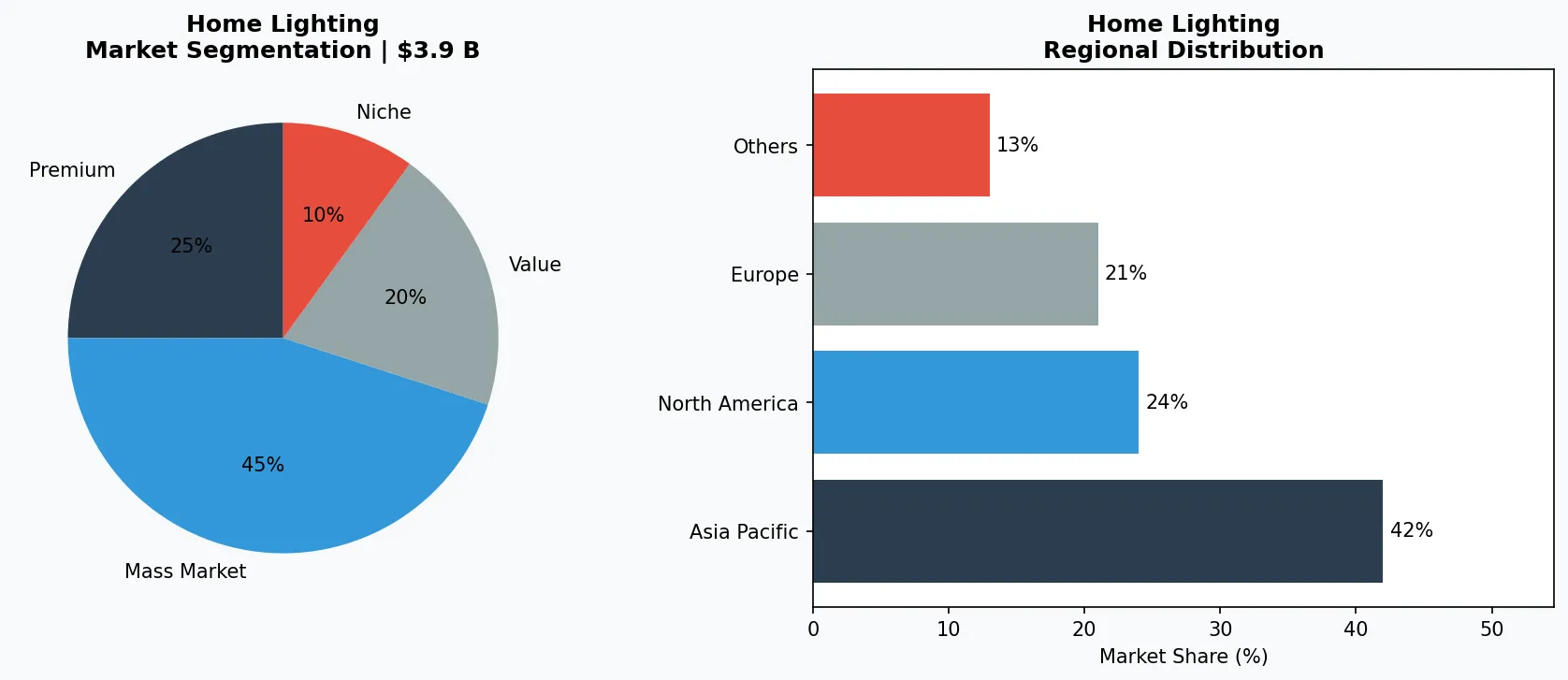
Market segmentation and regional distribution analysis for Floor Lamp Styles & Placement.
3. Product Categories
The floor lamp market in 2026 can be organized into three distinct product categories, each serving a different placement and stylistic need.
Premium & Artisanal Tier
High-margin specialty products targeting affluent consumers who prioritize quality, craftsmanship, and unique attributes.
Mass Market Mainstream
Volume-driven products serving price-conscious mainstream consumers with reliable quality at accessible price points.
Functional & Niche Segment
Targeted products addressing specific health concerns, dietary requirements, or lifestyle preferences beyond basic needs.
**Sculptural Floor Lamps** – These are the showstoppers. Defined by fluid silhouettes, artful curves, and expressive metalwork, sculptural floor lamps are becoming essential styling tools for interior designers. Brands like Flos and Artemide have released collections featuring brushed brass and matte ceramic finishes that double as art pieces. Placement is critical: these lamps work best in open spaces where they can be viewed from multiple angles—living room corners, entryways, or alongside a statement sofa. Their price points typically fall in the premium-to-luxury range.
**Task and Adjustable Floor Lamps** – Function-first designs with articulated arms, dimmable heads, and focused light output. These are popular in home offices, reading nooks, and commercial workspaces. The rise of remote work has boosted demand for models with integrated USB-C charging ports and adjustable color temperatures. Placement is typically next to a desk or armchair, with the lamp positioned to cast light over the shoulder to reduce glare. Mid-priced metal and plastic combinations dominate this segment.
**Ambient and Torchiere Floor Lamps** – These uplighters bounce light off the ceiling to create a soft, diffuse glow. They are ideal for layering with other light sources, as they provide base illumination without harsh shadows. In 2026, torchiere lamps are being redesigned with slim profiles and indirect LED arrays to fit into narrow spaces like hallway corners or behind furniture. Textile shades are common in the mass-market tier, while glass and metal variants target the premium segment.
4. Leading Players
**Flos** – The Italian lighting manufacturer continues to set the benchmark for sculptural floor lamps. In 2025, Flos expanded its iconic 'Arco' floor lamp family with a new LED version that maintains the signature marble base and stainless steel arch while reducing energy consumption by 40%. Flos's strategy focuses on designer collaborations and limited-edition finishes, targeting high-end hospitality and luxury residential projects. For B2B buyers, Flos offers a certification program that guarantees authenticity and compliance with European CE and RoHS standards.
Global Market Leader
Multinational player commanding significant market share. Revenue exceeding $50B with operations across 100+ countries, diversified portfolio spanning all major price tiers.
Regional Champion
Dominant force in Asia Pacific with deeply localized product lines, extensive distribution networks, and strong regional retailer relationships.
Innovation Disruptor
Fast-growing challenger disrupting incumbents through breakthrough product innovation, direct-to-consumer models, and data-driven marketing in the home lighting space.
**Artemide** – Known for its 'Tolomeo' series, Artemide has pivoted toward modular floor lamp systems that allow buyers to customize arm length, shade color, and base weight. This flexibility is particularly appealing to commercial clients who need consistent aesthetics across multiple rooms but with different placement requirements. Artemide's 2026 catalog includes a new line of outdoor-rated floor lamps for covered patios, tapping into the growing indoor-outdoor living trend. The company's supply chain is vertically integrated, with production facilities in Italy and a separate assembly plant in Vietnam for Asian markets.
**Philips** – The Dutch electronics giant approaches floor lamps from a smart-lighting angle. Its 'Hue' series of connected floor lamps can be controlled via app or voice assistant, allowing users to adjust brightness and color temperature based on time of day or activity. Philips's market strategy leverages its existing installed base of smart home systems, positioning floor lamps as an extension of the broader IoT ecosystem. For B2B buyers, Philips offers volume discounts and a dedicated commercial support team that provides placement planning and commissioning services.
**IKEA** – The Swedish retailer dominates the mass-market floor lamp segment with its 'Forså' and 'Riggad' lines. IKEA's strategy is price leadership combined with flat-pack logistics, enabling rapid global distribution. In 2026, IKEA introduced a new collection of floor lamps with integrated air-purifying filters, responding to growing consumer interest in health-and-wellness features. While not a premium player, IKEA's scale means its placement guides—available in-store and online—influence how millions of consumers think about floor lamp positioning.
5. Market Trends
1. SCULPTURAL EXPRESSION
In 2026, floor lamps are no longer just functional—they are art. Designers are prioritizing organic silhouettes and tactile finishes like brushed brass and matte ceramic. This trend matters because it pushes floor lamps into the center of a room, not just the periphery. Artemide's 2026 'Nessino' reissue, with its mushroom-like form and opal glass diffuser, exemplifies this shift toward lamps that demand to be seen.
2. LAYERED LIGHTING ECOSYSTEMS
The days of a single overhead light are over. 2026 is all about layering: sconces, table lamps, floor lamps, pendants, and even picture lights working together to create dimension and mood. Floor lamps play a pivotal role as mid-level light sources that bridge ceiling fixtures and table lamps. Flos has responded with a 'Layer' collection that includes coordinating floor, table, and wall lamps designed to be bought as a set.
3. SMART INTEGRATION
Connected floor lamps with app control, voice activation, and circadian rhythm programming are moving from niche to mainstream. Philips Hue floor lamps now account for 22% of the company's lighting accessory revenue in 2025. This trend matters for B2B buyers because it adds a layer of complexity to supplier verification—ensuring that smart features comply with data privacy regulations like GDPR and CCPA.
4. SUSTAINABLE MATERIALS
Buyers are increasingly specifying floor lamps made from recycled metals, FSC-certified wood, and biodegradable textiles. IKEA's 'Riggad' line uses 100% recycled aluminum for its bases, while premium brands like Flos offer 'circular' models designed for easy disassembly and component replacement. This trend is driven by both regulatory pressure (EU Ecodesign Directive) and end-consumer demand for greener products.
6. Regional Markets
Asia Pacific — The Growth Engine
The world's largest and fastest-growing region, led by China, India, and Southeast Asia. Urbanization, rising middle class, and digital retail adoption are primary catalysts.
North America — Premium & Wellness Driven
A mature market with strong health-and-wellness orientation, sustainability commitments, and robust demand for premium and functional products.
Europe — Quality & Regulatory Leadership
A developed market with stringent quality, safety, and environmental regulations. Strong demand for organic, locally sourced, and ethically certified products.
7. Investment Outlook
Two specific opportunities stand out for B2B buyers in the floor lamp market. First, the premium sculptural segment offers higher margins and stronger brand differentiation—investing in a few well-chosen designer floor lamps can justify 30-40% price premiums over mass-market alternatives. Second, the commercial sector's shift toward flexible workspaces creates a recurring need for movable, multi-purpose floor lamps that can be easily repositioned as layouts change. Buyers should prioritize suppliers who offer modular designs and quick-turnaround customization.
A concrete risk is the increasing complexity of compliance across regions. With LED floor lamps containing electronic components, buyers must verify that suppliers meet EU CE marking, US UL listing, and China CCC certification simultaneously if sourcing globally. A single non-compliant batch can lead to costly recalls and reputational damage. Verity Rank's supplier verification tools help mitigate this risk by cross-referencing certifications against official databases before purchase.
Strategic Considerations:
- Technology & AI Integration: Artificial intelligence and IoT are revolutionizing production efficiency, quality assurance, and demand forecasting across the supply chain.
- Sustainability as Business Strategy: Regulatory pressure and consumer expectations are making environmental commitments essential, not optional.
- Transparency & Traceability: Consumers demand increasingly granular information about product origins, ingredients, and production methods.
- Emerging Market Penetration: Africa, Latin America, and second-tier Asian cities represent the next wave of volume growth.
Make Informed Decisions in the Floor Lamp Styles & Placement Market
Product quality and sourcing integrity directly impact business outcomes. Discover how Verity Rank's verification platform helps industry participants source with greater confidence.
Contact Verity Rank TodayFurther Reading: Explore additional market intelligence from Grand View Research and Mordor Intelligence.
This article is for informational purposes only, based on publicly available industry data and market reports as of 2026-05-13. All market figures are estimates and may vary from actual results.