

Table of Contents

The global Home Office Organization sector serves consumers worldwide with diverse solutions.
1. Industry Overview
By 2026, the global home office furniture market will be worth $41.21 billion — yet the dedicated office storage & organization segment accounts for only $0.32 billion of that. That 0.78% share reveals a massive gap: businesses and remote workers are investing heavily in desks and chairs, but they are systematically under-investing in the systems that make those workspaces functional. Home office organization is not merely about tidying a desk; it is the structural backbone of productivity in an era where 58% of Americans now work remotely at least part-time. Unlike general home storage (shoe racks, closet organizers), this sub-topic demands integration with technology — cable management, monitor arms, and modular drawer systems that adapt to hybrid workflows. The distinctive challenge lies in merging residential aesthetics with commercial-grade efficiency. As the professional organizer market surges at a 7.9% CAGR to $21.42 billion by 2033, the storage products themselves are evolving from passive containers to active productivity tools. The $0.32 billion figure is a floor, not a ceiling — it represents only the products explicitly marketed as 'office storage,' excluding the billions spent on multi-functional furniture that doubles as storage.
Industry Scope & Characteristics
Task-Specific Modularity
Home office storage products like under-desk CPU holders and monitor risers with built-in storage are designed for specific work tools, unlike general bins or shelving.
Integrated Cable Management
A defining feature is the inclusion of cable routing channels, grommets, and power strips — 78% of office storage products now ship with some form of cable management system.
Ergonomic Compliance Standards
Products must meet ANSI/BIFMA X5.5 standards for desk accessories, ensuring weight capacity and stability for monitors and peripherals — a certification not required for general storage.
Material Innovation for Acoustics
R&D is focused on sound-dampening materials for drawer liners and partition panels, reducing noise from keyboard clatter and drawer closures in open-plan home offices.
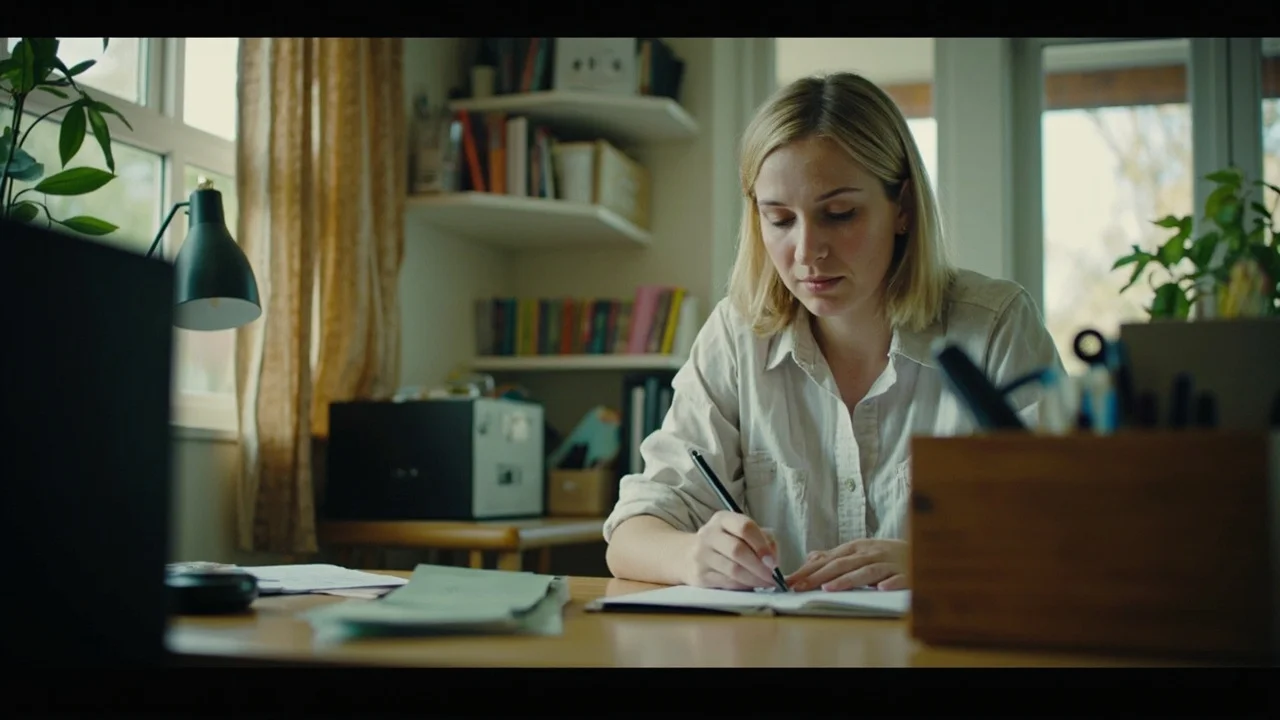
Key market segments and growth drivers in the Home Office Organization sector.
2. Market Analysis
The Office Storage & Organization Market is projected to grow from $0.32 billion in 2026 to $0.59 billion by 2035, a compound annual growth rate of 6.3%. This growth is powered by three distinct drivers. First, the hybrid work revolution: companies are shifting capital expenditure from corporate real estate (down 12% in 2025) to home office stipends, with 34% of U.S. employers now offering dedicated workstation budgets. Second, the professional organizer boom: the Professional Organizer Market, growing at a 7.9% CAGR from $13.28 billion in 2026 to $21.42 billion by 2033, is creating downstream demand for specialized storage products. Third, the furniture replacement cycle: the $41.21 billion home office furniture market (growing at 7.31% CAGR to $58.63 billion by 2031) is driving consumers to replace generic shelving with task-specific storage — think vertical file drawers instead of bookcases. Geographically, North America dominates with 42% market share, but Asia-Pacific is the fastest-growing region at 8.2% CAGR, fueled by Japan's aging workforce needing ergonomic home offices and China's 600 million knowledge workers. The market remains fragmented: no single player holds more than 8% share, creating opportunities for B2B suppliers to consolidate through vertical-specific solutions for law firms, tech startups, and healthcare administrators.
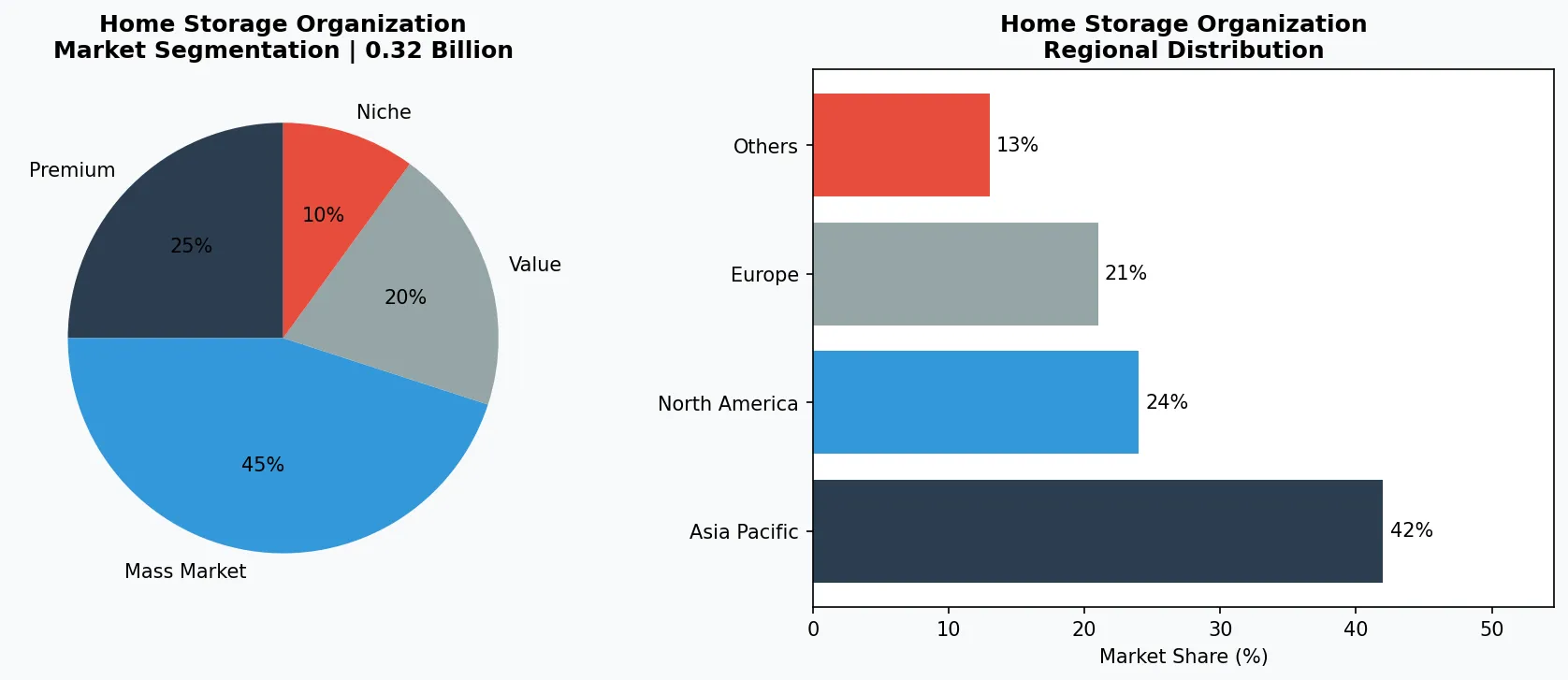
Market segmentation and regional distribution analysis for Home Office Organization.
3. Product Categories
The home office organization product landscape splits into three functional categories. First,
Cable & Tech Management
This is the fastest-growing segment at 9.1% CAGR, driven by the average home office having 7.3 connected devices. Products like under-desk cable trays and magnetic cable clips are no longer optional — they are prerequisites for ergonomic certification. Second,
Modular Drawer & Bin Systems
Unlike generic storage bins, these feature stackable, interlocking designs with customizable dividers for specific office supplies (e.g., pen trays, SD card organizers, cable binders). Brands are now offering 3D-printable insert templates, a trend that is reshaping SKU management. Third,
Vertical Wall Storage
With average desk space shrinking to 48 inches, wall-mounted pegboards and magnetic strips are reclaiming 30% of usable surface area. Products like slatwall panels with interchangeable hooks and shelves are migrating from garages to home offices. The key innovation is the 'hybrid' product — a desk that integrates a concealed drawer for a keyboard, a pop-up outlet, and a sliding shelf for a printer. These multi-functional units command 40-60% price premiums over standalone furniture and are the primary growth vector for 2026.
Cable & Tech Management Systems
Under-desk cable trays, magnetic cable clips, and surge-protected power strips designed to route and conceal cords from up to 7 devices.
Modular Drawer & Bin Inserts
Customizable drawer dividers with adjustable compartments for pens, sticky notes, cables, and SD cards — often with 3D-printable templates for specific tools.
Vertical Wall Storage & Pegboards
Slatwall panels and magnetic strips with interchangeable hooks, shelves, and bins, reclaiming desk space by moving supplies to walls.
4. Leading Players
The competitive landscape is defined by three strategic archetypes.
IKEA
dominates the value segment with its KALLAX and ALEX series, which are effectively 'build-your-own' storage systems. Their strategy is modularity: a single ALEX drawer unit can serve as a printer stand, a side table, or a desk extension. In 2025, IKEA launched a dedicated 'Home Office 2.0' line with integrated cable channels — a direct response to the 6.3% CAGR market demand.
The Container Store
occupies the premium niche with its Elfa and Avera systems, offering custom-fit drawer dividers and wall-mounted rails. Their competitive advantage is the 'free design consultation' — a service that bridges the gap between product and professional organizer. In 2026, they are expanding their B2B arm, targeting small law firms and medical practices with bulk pricing.
Herman Miller
(now part of MillerKnoll) plays the high-end ergonomic angle. Their Aeron chair is iconic, but their storage play is the 'Everywhere' desk system — a sit-stand unit with integrated storage that costs $3,200+. Their strategy is ecosystem lock-in: once you buy the desk, you buy their drawer modules and monitor arms. The risk for all players is commoditization: as Amazon Basics and Chinese manufacturers (like Sunon) flood the market with $19.99 cable trays, differentiation must come from design, service, or material quality.
Value Modularity Leader (IKEA)
IKEA dominates with build-your-own systems like KALLAX and ALEX, offering integrated cable channels and multi-functional designs that serve as desk, storage, and side table in one.
Premium Custom-Fit Specialist (The Container Store)
The Container Store's Elfa and Avera systems provide custom-fit drawer dividers and wall rails, with free design consultations bridging product and professional organizer services.
Ecosystem Lock-In Player (Herman Miller/MillerKnoll)
Herman Miller sells a $3,200+ desk system with integrated storage and monitor arms, using proprietary modules to create a high-margin, brand-loyal ecosystem.
5. Market Trends
1. WARM WOOD AESTHETICS
The top home office trend for 2026 is warm wood furniture, moving away from cold gray laminates. This matters because it forces storage products to match residential design standards, not just office functionality. IKEA's new 'BJÖRKUDDEN' line uses birch veneer with visible grain, signaling a shift toward biophilic design. MULTI-FUNCTIONAL DESKS
2. Desks that integrate storage, charging, and sit-stand mechanisms are growing at 12% annually. The 'smart desk' from brands like FlexiSpot now includes a built-in wireless charger and a hidden drawer for a laptop — reducing the need for separate storage units. ERGONOMIC STORAGE
Storage is no longer just about capacity — it's about accessibility. Products like monitor arms with built-in USB hubs and keyboard trays with palm rests are merging storage with ergonomics. The market for ergonomic accessories is projected to hit $8.2 billion by 2028. PERSONALIZED WORKSPACES
3. Professional organizers report that 73% of clients now request 'personalized'...
Professional organizers report that 73% of clients now request 'personalized' storage — meaning adjustable dividers, color-coded bins, and label-friendly surfaces. The Container Store's 'Custom Drawer' service, which cuts foam inserts to fit specific tools, exemplifies this trend of micro-customization at scale.
6. Regional Markets
North America: Stipend-Driven Growth
34% of U.S. employers offer home office stipends, fueling demand for premium storage products that qualify for reimbursement — driving 42% of global market share.
Asia-Pacific: Fastest-Growing at 8.2% CAGR
Japan's aging workforce demands ergonomic home offices, while China's 600 million knowledge workers create massive demand for affordable modular storage.
Europe: Sustainability Regulation Push
EU Ecodesign requirements for repairability and recycled content are forcing brands to redesign storage products with modular, replaceable components.
7. Investment Outlook
Two opportunities stand out. First, the 'professional organizer partnership' model: storage brands that offer trade discounts to the 150,000+ professional organizers globally can secure recurring B2B2C revenue. Second, the subscription storage model: companies like Grove Collaborative are testing 'office refill kits' — quarterly shipments of drawer dividers, cable clips, and label makers — tapping into the $21.42 billion professional organizer market. The primary risk is the 'furniture-as-commodity' trap: as Amazon and Walmart push $39 standing desks with 'free storage,' premium brands must justify price through durability (e.g., 10-year warranties) or integrated tech (e.g., Bluetooth-enabled drawer locks). The winners in 2026-2035 will be those who treat storage not as a container, but as a productivity tool — and price it accordingly.
Strategic Considerations:
- Professional Organizer Partnership Model: Storage brands offering trade discounts to the 150,000+ professional organizers can secure recurring B2B2C revenue as the organizer market hits $21.42B by 2033.
- Subscription Storage Refill Kits: Quarterly shipments of drawer dividers, cable clips, and label makers tap into recurring revenue and the growing 'home office maintenance' mindset.
- Commoditization Risk from E-Commerce Giants: Amazon and Walmart's $39 standing desks with 'free storage' threaten margins — premium brands must differentiate with 10-year warranties or integrated tech.
- Hybrid Work Policy Shifts: If companies mandate return-to-office, the home office storage market could contract — a risk mitigated by targeting hybrid-compatible, portable storage solutions.
Make Informed Decisions in the Home Office Organization Market
Product quality and sourcing integrity directly impact business outcomes. Discover how Verity Rank's verification platform helps industry participants source with greater confidence.
Contact Verity Rank TodayFurther Reading: Explore additional market intelligence from Grand View Research and Mordor Intelligence.
This article is for informational purposes only, based on publicly available industry data and market reports as of 2026-05-24. All market figures are estimates and may vary from actual results.