

Table of Contents

The global Kids Room Storage Design sector serves consumers worldwide with diverse solutions.
1. Industry Overview
What happens when a child's bedroom becomes a battleground of scattered toys, overflowing closets, and mismatched bins? The answer lies in the explosive growth of kids room storage design—a niche that has evolved from simple plastic totes to a sophisticated, multi-billion-dollar market segment. According to recent data, the global kids storage furniture market is projected to reach $96.93 billion by 2033, up from $20.68 billion in 2025, representing a staggering compound annual growth rate (CAGR) of 21.3%. This is not a mere uptick; it signals a fundamental shift in how parents, designers, and manufacturers approach children's spaces. Unlike generic home storage, kids room storage design must balance durability, safety, aesthetics, and adaptability as children grow from toddlers to teenagers. The demand is driven by smaller living spaces, dual-income households seeking efficiency, and a cultural pivot toward minimalism and organization. Key products—closet organizers, toy storage bins, drawer dividers, hanging organizers, and wall shelves—are now being reimagined with child-friendly materials, modular systems, and integrated technology. The distinctive challenge? Creating systems that are both functional for parents and engaging for kids, while meeting rigorous safety standards for materials like wood, metal, and recycled plastics. As the market accelerates, the winners will be those who master this delicate balance between playful design and serious utility.
Industry Scope & Characteristics
Child-Safe Materials and Finishes
Kids storage products must meet strict safety standards like ASTM F963 (US) or EN 71 (EU). Non-toxic, water-based paints and rounded corners are standard. Products like IKEA's KALLAX use edge banding to prevent splinters.
Modularity and Adaptability
Unlike adult storage, kids' needs change every 2-3 years. Successful products use adjustable shelves, interchangeable bins, and convertible designs (e.g., crib-to-desk). KidKraft's activity tables transform from play surface to desk.
Low-Tech Durability
Kids storage must withstand rough use. Manufacturers use dovetail joints, solid wood backs, and reinforced bottoms. Pottery Barn Kids' storage benches are tested for up to 300 lbs of dynamic load.
Playful Aesthetics with Longevity
Design must appeal to both children and parents. Neutral bases with colorful, interchangeable bin inserts (like IKEA's TROFAST) allow personalization without full replacement. This reduces churn and appeals to eco-buyers.
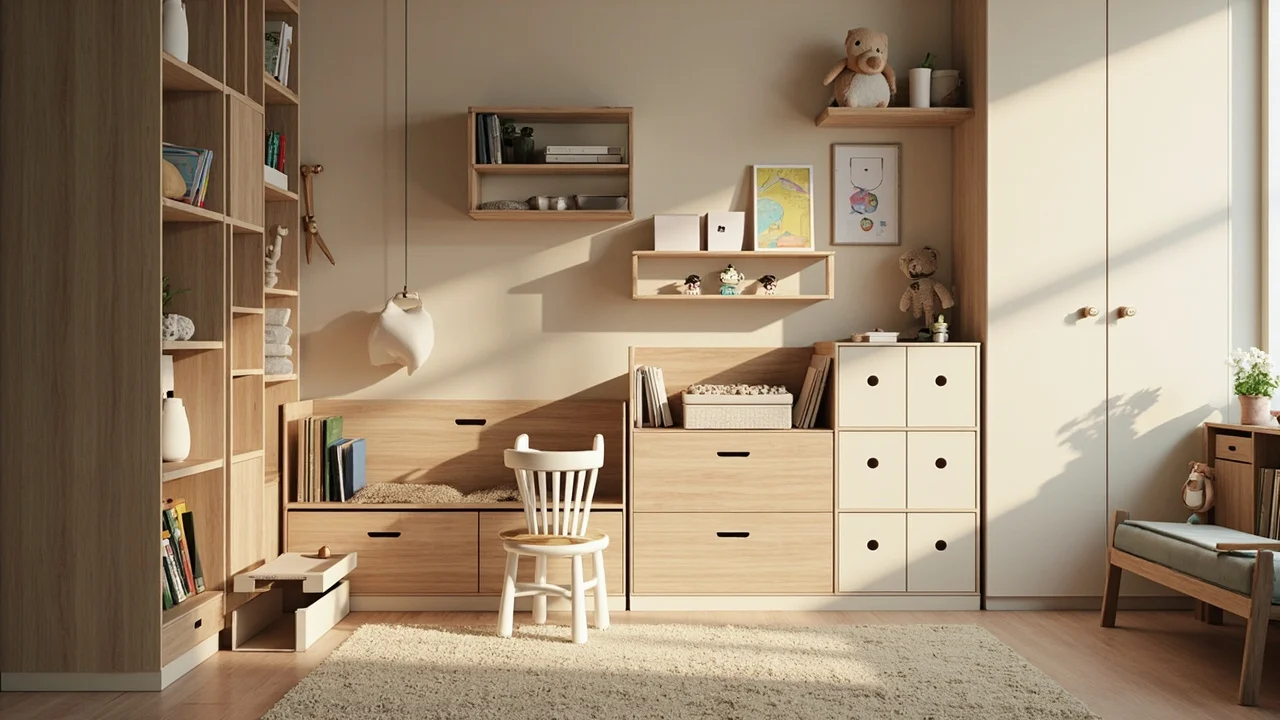
Key market segments and growth drivers in the Kids Room Storage Design sector.
2. Market Analysis
The numbers are impossible to ignore. The kids storage furniture market, valued at $32.71 billion in 2022, is expanding to $55.13 billion by 2032 at a CAGR of 5.41%, according to one analysis. But more aggressive forecasts project a CAGR between 19% and 22% through 2026, driven by a surge in multifunctional and sustainable products. The global kids furniture market itself is set to grow from $34.69 billion in 2026 to $94.68 billion by 2034, at a CAGR of 13.37%. What is fueling this? Three dominant drivers: First, urbanization and smaller homes. As families migrate to cities, square footage shrinks, making efficient storage non-negotiable. Second, the rise of eco-conscious parenting. A 2025 survey indicates that 68% of parents under 40 prioritize sustainable materials—like FSC-certified wood or recycled plastics—when buying storage for children. Third, the 'Marie Kondo effect' has permeated parenting, with a cultural push toward decluttering and teaching children organizational habits early. The market is segmented by product type (cabinets, bookshelves, toy organizers, dressers, chests, storage benches), material (wood, metal, plastic, fabric, recycled materials), style (modern, traditional, Scandinavian, bohemian, themed), and age group (toddlers 0-3, preschoolers 3-5, school-age 6-12, teenagers 13-18). The mid-range price tier ($100-$300) captures the largest share, but premium products ($300+) are growing fastest as brands like Pottery Barn Kids and KidKraft push high-design, customizable options. Regionally, North America and Europe lead in per-capita spending, but Asia Pacific is the fastest-growing market, with China and India seeing double-digit annual growth due to rising middle-class incomes and Western-style home organization trends.
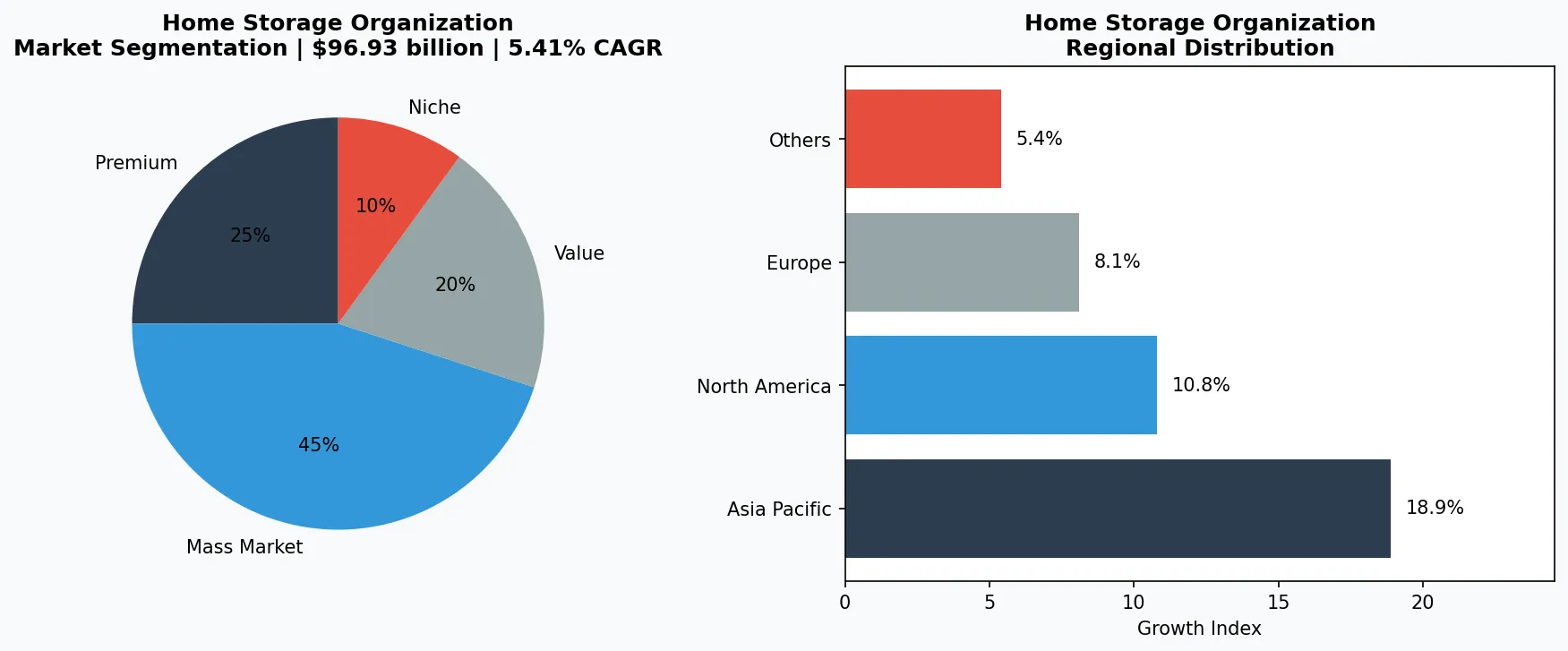
Market segmentation and regional distribution analysis for Kids Room Storage Design.
3. Product Categories
Kids room storage design breaks down into three distinct product categories, each addressing a specific need.
1. Modular Closet Systems
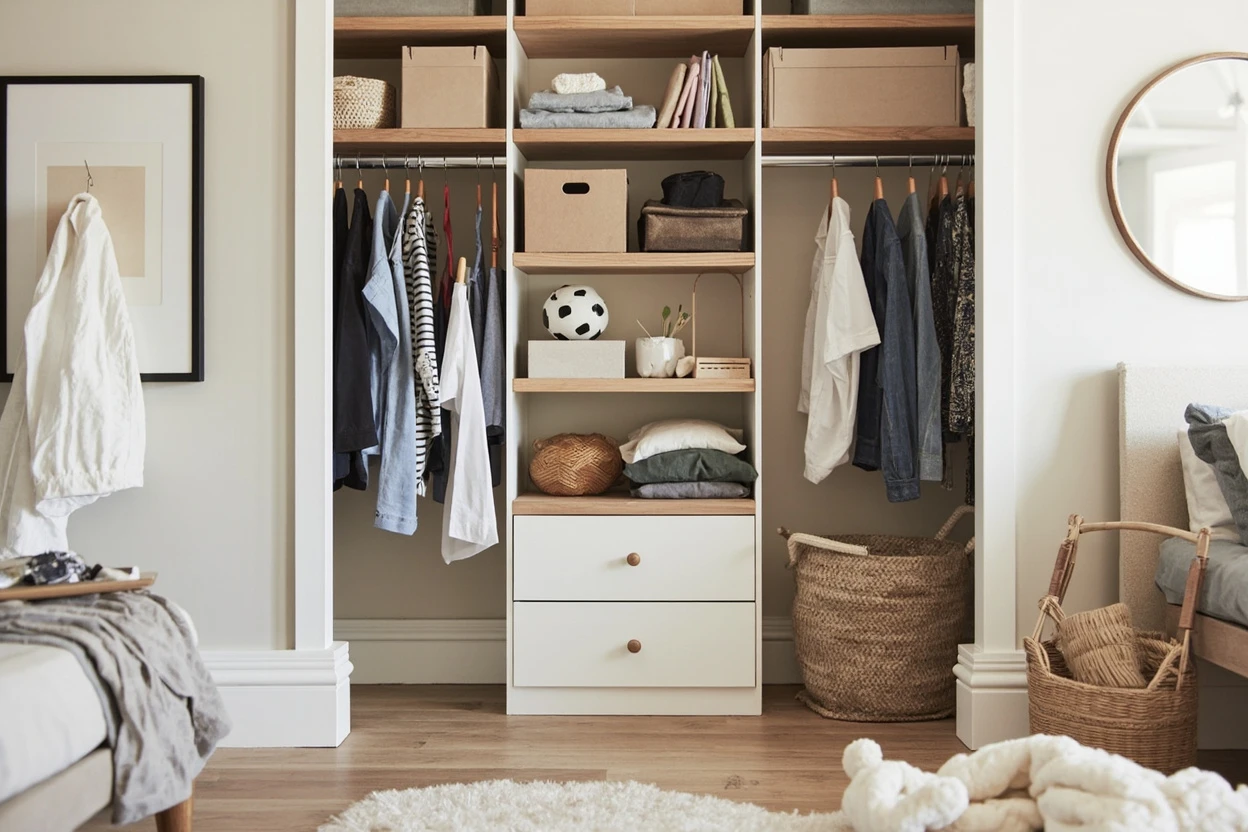
These are the backbone of modern kids' rooms. Brands like IKEA's PAX and ELVARLI systems allow parents to configure hanging rods, shelves, and drawers that adapt as children grow. For example, a toddler's closet might feature low hanging rods and bin shelves, while a teenager's uses high-density drawer units. The trend is toward open, visible storage that encourages kids to put things away without adult help.
2. Toy Storage Units
This is the fastest-growing sub-segment, driven by the sheer volume of toys in modern households. Products like KidKraft's large bookcase with storage bins or Pottery Barn Kids' Anywhere Chair with built-in pocket storage combine seating with organization. Key features include rounded corners, non-toxic finishes, and bins that are easy for small hands to pull out. Themed units—like castle-shaped shelves or car-shaped cubbies—add play value while serving a storage function.
3. Wall-Mounted and Vertical Solutions
As floor space becomes premium, walls are the new frontier. Products like IKEA's SKÅDIS pegboard system or Etsy-sourced custom wall shelves allow for flexible, clutter-free storage. Drawer dividers from brands like mDesign and simplehuman keep smaller items—socks, art supplies, hair accessories—from becoming chaos. Hanging organizers for doors and closet rods maximize every inch. The innovation here is in materials: bamboo and recycled plastics are replacing traditional particleboard, appealing to eco-minded buyers.
Modular Closet Systems
Customizable units with adjustable rods, shelves, and drawers. Examples: IKEA PAX, California Closets for Kids. Key features: low-height hanging for toddlers, pull-down rods for small reach.
Toy Storage Units
Combination shelving and bin systems designed for easy child access. Examples: KidKraft Large Bookcase with Bins, Pottery Barn Kids' Anywhere Chair with storage. Often themed (castles, cars) to encourage use.
Vertical and Wall-Mounted Storage
Pegboards, wall shelves, and hanging organizers that maximize vertical space. Examples: IKEA SKÅDIS, mDesign wall-mounted bins. Ideal for small rooms; often made of bamboo or recycled plastics.
4. Leading Players
Three key players dominate the kids room storage design landscape, each with a distinct strategy.
IKEA (Sweden)
The global behemoth leverages its flat-pack, modular approach to dominate the mid-range market. Its KALLAX shelf system, originally designed for books, has become a de facto toy storage solution worldwide due to its versatility and low cost ($39-$99). IKEA's 2025 sustainability push—using 100% renewable or recycled materials by 2030—resonates with eco-conscious parents. Their competitive advantage is scale: they can offer design-forward storage at prices competitors struggle to match.
Pottery Barn Kids (USA)
Targeting the premium segment, Pottery Barn Kids focuses on customizable, heirloom-quality pieces. Their 'PBteen' line for older kids includes sophisticated closet systems with built-in lighting and charging stations. Their strategy is 'design longevity'—products that transition from nursery to college dorm. With an average price point of $300-$800 for a complete storage system, they capture the high-end market where parents prioritize aesthetics over cost. Their online room planner tool is a key differentiator, allowing virtual design before purchase.
KidKraft (USA)
Specializing in wooden toy storage and play furniture, KidKraft occupies the 'playful functional' niche. Their large activity tables with storage bins and bookcase-toybox hybrids are bestsellers. KidKraft's strategy is 'themed integration'—their storage units double as play elements (e.g., a pirate ship bookshelf or a farmhouse-style hutch). They are also early adopters of sustainable materials, using rubberwood from managed forests. Their challenge is competing on price with IKEA, but they maintain loyalty through unique designs that appeal to children’s imaginations.
Flat-Pack Modular Giant
IKEA dominates the mid-range with scalable, affordable systems like KALLAX and TROFAST. Their advantage is global distribution and sustainable material sourcing (100% renewable/recycled by 2030).
Premium Customization Leader
Pottery Barn Kids targets high-end buyers with customizable, heirloom-quality storage. Their 'Design Your Own' closet system and PBteen line offer sophisticated designs that grow with the child.
Playful Functional Specialist
KidKraft focuses on wooden storage that doubles as play furniture. Their themed units (pirate ships, farmhouses) and use of rubberwood from managed forests differentiate them from generic competitors.
5. Market Trends
1. Sustainability Focus
Eco-conscious parents are driving demand for storage solutions made from recycled materials and sustainably sourced wood, with brands increasingly offering modular systems that can grow with the child to reduce waste.
2. Multifunctional Modularity
The rise of compact urban living has accelerated adoption of convertible storage units that double as play surfaces, seating, or room dividers, allowing retailers to market a single system for toy, book, and clothing organization.
3. Digital Design Integration
Augmented reality (AR) apps are becoming a standard B2B sales tool, enabling retailers and interior designers to virtually place customizable storage configurations into a child’s room before purchase, reducing return rates and improving customer satisfaction.
4. Subscription and Refill Models
A growing trend among B2B wholesalers is offering tiered subscription kits for rotating seasonal storage bins and label systems, ensuring recurring revenue while helping parents maintain organization as toy collections and clothing sizes change.
6. Regional Markets
North America: Premium and Safety-First
The US and Canada lead in per-capita spending on kids storage, driven by strict safety regulations (CPSC) and high demand for sustainable, customizable products. The average spend per child on storage is $150-$300 annually.
Europe: Eco-Conscious and Minimalist
Scandinavian countries set trends with minimalist, gender-neutral designs. Germany and France enforce strict chemical safety laws (REACH). IKEA and local brands like Oeuf dominate with bamboo and recycled materials.
Asia Pacific: Fastest Growth, Value-Driven
China and India see 15-20% annual growth in kids storage, fueled by urbanization and rising middle-class incomes. Local manufacturers like Goodbaby International offer affordable modular systems, while global brands face price competition.
7. Investment Outlook
The kids room storage design market presents two clear opportunities for B2B buyers and suppliers. First, the **'grow-with-me' modular system** is underpenetrated. Developing storage that easily reconfigures from toddler toy bins to teen wardrobe systems—without requiring new purchases—can capture the premium mid-range market. Second, **subscription-based storage kits** are an untapped model. Companies could offer quarterly bin swaps based on age (e.g., baby toys out, art supplies in), reducing waste and ensuring recurring revenue. The primary risk is **supply chain volatility for sustainable materials**. Bamboo and recycled plastics face price spikes and availability issues, especially as global demand surges. Manufacturers must diversify sourcing or risk margin erosion. The winners in 2026-2033 will be those who combine design flexibility with material transparency—and who can scale production without compromising on safety or aesthetics.
Strategic Considerations:
- Opportunity: Grow-With-Me Modular Systems: Develop storage that reconfigures from toddler toy bins to teen wardrobes without new purchases—capturing the mid-range premium market and reducing waste.
- Opportunity: Subscription Storage Kits: Offer quarterly bin swaps based on age (e.g., baby toys out, art supplies in) for recurring revenue and reduced consumer clutter.
- Risk: Sustainable Material Supply Volatility: Bamboo and recycled plastics face price spikes and shortages; manufacturers must diversify sourcing or risk margin erosion.
- Risk: Safety Regulation Fragmentation: Different safety standards across regions (ASTM vs. EN) increase compliance costs; brands must design for the strictest market to avoid costly redesigns.
Make Informed Decisions in the Kids Room Storage Design Market
Product quality and sourcing integrity directly impact business outcomes. Discover how Verity Rank's verification platform helps industry participants source with greater confidence.
Contact Verity Rank TodayFurther Reading: Explore additional market intelligence from Grand View Research and Mordor Intelligence.
This article is for informational purposes only, based on publicly available industry data and market reports as of 2026-05-24. All market figures are estimates and may vary from actual results.