

Table of Contents

The global Kids Storage Unit Solutions sector serves consumers worldwide with diverse solutions.
1. Industry Overview
What if the fastest-growing segment in children's furniture isn't a bed or a desk, but the humble storage unit? In 2025, the global kids storage furniture market hit $18.4 billion, and by 2033 it is projected to reach $93.5 billion—a compound annual growth rate of 22.6% from 2026 onward. That surge is not accidental. It reflects a fundamental shift in how parents and institutions view children's spaces: not just as places to sleep and study, but as environments that must manage an explosion of toys, books, and clothing while encouraging independence. Kids storage unit solutions have evolved from simple plastic bins into a design-driven category that blends safety, modularity, and aesthetic appeal. Unlike generic adult storage, these units must meet strict safety standards (rounded corners, anti-tip mechanisms, non-toxic finishes) while accommodating the changing needs of growing children. The category spans toy storage systems, low-height bookshelves, customizable wardrobes, and multi-functional units that combine seating, shelving, and play surfaces. For B2B buyers—retailers, school procurement officers, and hospitality managers—understanding this market's trajectory is critical. The U.S. segment alone was valued at $1.90 billion in 2023 and is expanding at a 19.7% CAGR through 2030, driven by dual-income households and rising awareness of early childhood organization. This is not a niche; it is a structural growth story.
Industry Scope & Characteristics
Child-Specific Safety Engineering
Kids storage units must incorporate anti-tip mechanisms, rounded edges, and non-toxic finishes per ASTM F2057 and CPSC guidelines, differentiating them from general furniture.
Modular and Adaptive Design
Products like IKEA's TROFAST allow height-adjustable shelving and interchangeable bins, enabling the same unit to serve a toddler's toy storage and a pre-teen's book collection.
Compliance-Driven Sourcing
All kids storage units sold in North America must meet CPSIA lead and phthalate limits; European buyers require EN 71 certification. B2B sourcing must prioritize certified factories.
Material Innovation for Durability
R&D focuses on lightweight yet strong materials like polypropylene blends for bins and laminated MDF for frames, balancing cost, safety, and ease of cleaning.
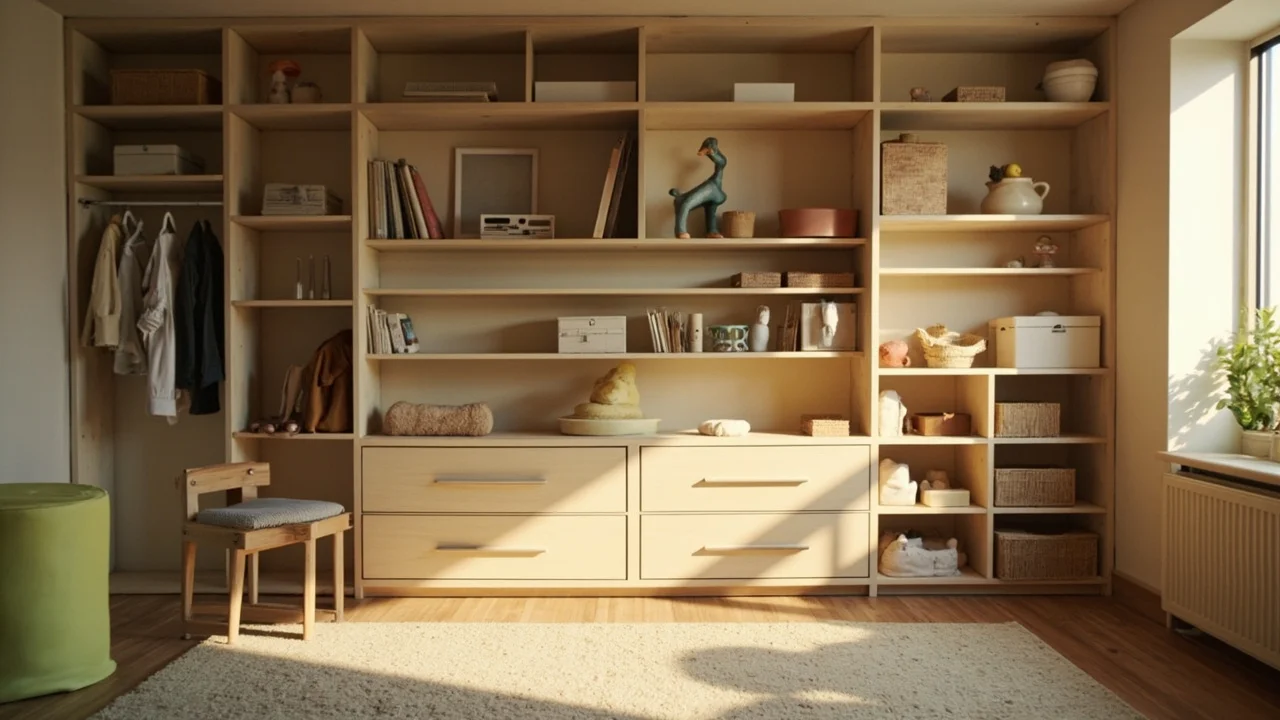
Key market segments and growth drivers in the Kids Storage Unit Solutions sector.
2. Market Analysis
The numbers tell a compelling story. The kids storage furniture market was valued at $32.71 billion globally in 2022, with a forecast CAGR of 5.41%. But more recent data—reflecting post-pandemic demand shifts—shows acceleration. By 2025 the market reached $18.4 billion, and projections from 2026 through 2033 indicate a 22.6% CAGR, culminating in a $93.5 billion valuation. What is driving this? Three forces dominate. First, the post-pandemic surge in self-storage demand—as families downsized living spaces and migrated—created a parallel need for compact, efficient children's storage. According to Extra Space Storage, occupancy rates in self-storage facilities hit record highs in 2023, signaling that space constraints are permanent for many households. Second, the normalization of remote and hybrid work has kept children at home longer, increasing the need for organized play and study areas. Third, the rise of 'Montessori-inspired' and 'minimalist' parenting philosophies has pushed demand for open, accessible storage that children can use independently. Regionally, North America leads in per-capita spending, but Asia-Pacific shows the fastest growth, driven by urbanization in China and India where apartment living demands space-saving solutions. The U.S. market's 19.7% CAGR through 2030 underscores that even mature markets are re-accelerating. For manufacturers and distributors, the takeaway is clear: capacity investments made now will capture a decade-long expansion cycle.
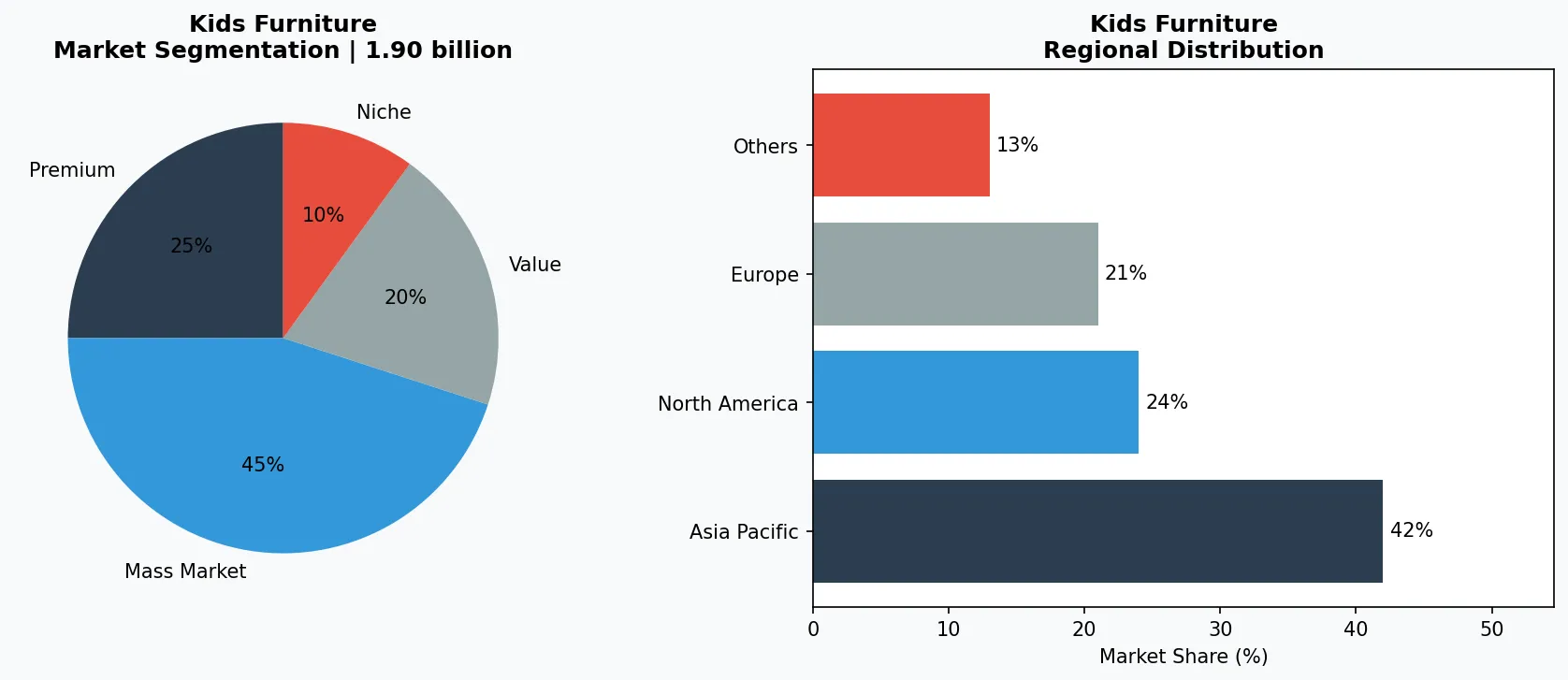
Market segmentation and regional distribution analysis for Kids Storage Unit Solutions.
3. Product Categories
The kids storage unit market breaks into three dominant product types, each with distinct supply chain and design requirements. First, toy storage systems—the largest sub-segment by volume. These include low-profile bins, cubby shelves, and multi-compartment units designed for easy child access. IKEA's TROFAST system remains a benchmark, combining wooden frames with plastic bins in child-safe dimensions. Second, bookshelves and book ledges for children's rooms. Unlike adult bookshelves, these prioritize stability and low height; brands like Pottery Barn Kids offer wall-anchored ledges that display book covers forward to encourage reading. Third, children's wardrobes and dressers—a segment undergoing rapid innovation. Manufacturers are integrating adjustable hanging rods, anti-slam drawers, and modular configurations that adapt as children age. A standout example is the Stuva wardrobe series from IKEA, which allows parents to reconfigure interior fittings without tools. Each product type faces unique regulatory hurdles: toy storage must pass ASTM F963 for lead and phthalates; wardrobes require anti-tip hardware compliance per CPSC guidelines. For B2B buyers, sourcing from certified suppliers is non-negotiable—a single compliance failure can erase years of brand equity.
Toy Storage Systems
Low-profile bins and cubbies designed for child access, e.g., IKEA TROFAST, with removable plastic bins in multiple colors.
Children's Bookshelves and Ledges
Wall-anchored, forward-facing book displays like Pottery Barn Kids' Book Ledge, encouraging reading while preventing tip-overs.
Modular Wardrobes and Dressers
Adjustable internal fittings and anti-slam drawers, exemplified by IKEA STUVA, allowing reconfiguration as children grow.
4. Leading Players
Three archetypes dominate the kids storage unit landscape, each with a distinct competitive strategy. First, IKEA—the scale-driven modularist. With its global supply chain and flat-pack model, IKEA captures the mass-market through affordability and design consistency. Its TROFAST and STUVA lines are among the most widely distributed kids storage products worldwide, and the company's investment in sustainable materials (by 2030, all products will use only renewable or recycled materials) gives it an edge with eco-conscious buyers. Second, Pottery Barn Kids—the premium lifestyle brand. Targeting higher-income households, Pottery Barn Kids offers storage units that match its bedding and decor lines, creating a cohesive room aesthetic. Its 'PBteen' sub-brand extends the strategy to older children. The company's competitive moat lies in its direct-to-consumer model and robust trade program for interior designers, making it a go-to for luxury renovations. Third, KidKraft—the specialty play-and-store innovator. Once known for wooden play kitchens, KidKraft has pivoted to storage units that double as play surfaces, such as benches with hidden compartments and bookshelf-playhouse hybrids. The company's strategy focuses on dual functionality, which commands higher per-unit margins. For B2B buyers, the choice between these players hinges on volume vs. customization: IKEA for cost efficiency, Pottery Barn for brand cachet, KidKraft for novelty.
Scale-Driven Modularist
IKEA leverages global flat-pack supply chains and design consistency to offer affordable, adaptable kids storage like TROFAST and STUVA.
Premium Lifestyle Integrator
Pottery Barn Kids bundles storage with bedding and decor, targeting high-income households through DTC and trade programs.
Play-and-Store Innovator
KidKraft creates storage units that double as play surfaces (benches with hidden compartments), commanding higher margins through novelty.
5. Market Trends
1. Multi-Functional Furniture
Description: Parents increasingly demand storage units that serve multiple purposes—a bookshelf that becomes a desk, a toy bin that doubles as a seat. This trend reduces furniture footprint in small apartments and extends product lifespan. IKEA's KALLAX series, originally a simple shelving unit, is now marketed with add-on inserts for drawers, doors, and basket bins, transforming it into a customizable storage ecosystem. Sustainable Materials and Circular Design
2. SUSTAINABLE AND NON-TOXIC MATERIALS
Regulatory pressure and consumer preference are pushing manufacturers toward FSC-certified wood, recycled plastics, and water-based finishes. The EU's Ecodesign Directive is tightening requirements for furniture repairability and recyclability. KidKraft now offers a 'take-back' program for worn units, refurbishing and reselling them. Smart Storage with IoT Integration
Description: While nascent, a few premium brands are embedding simple sensors into storage units—for example, a wardrobe that tracks which clothes are worn most frequently via RFID tags. This appeals to tech-forward parents and aligns with the broader smart-home trend. Pottery Barn Kids has piloted a 'connected closet' concept with LED lighting and inventory tracking. For now, cost remains a barrier, but as sensor prices drop, expect wider adoption by 2028.
6. Regional Markets
North America: Compliance-First Market
Strict CPSC and ASTM standards drive demand for certified products; the U.S. market is growing at 19.7% CAGR through 2030.
Asia-Pacific: Urbanization-Driven Demand
Rapid apartment living in China and India fuels need for space-saving, modular storage; the region shows the fastest CAGR globally.
Europe: Sustainability Leaders
EU Ecodesign directives push for repairable, recyclable furniture; Scandinavian brands lead in FSC-certified wood products.
7. Investment Outlook
Two opportunities stand out for businesses in the kids storage unit space. First, the institutional channel—schools, daycare centers, and pediatric clinics—remains underserved. These buyers need durable, easy-to-clean storage that meets commercial safety standards, and they purchase in bulk. Suppliers who develop a B2B-specific product line (e.g., anti-microbial surfaces, reinforced joinery) can capture recurring contracts. Second, the rental housing market: as more families rent, demand for non-permanent, modular storage that can move between homes will grow. One concrete risk: rising raw material costs, particularly for engineered wood and petrochemical-based plastics, could compress margins. The 2024-2025 lumber price volatility already squeezed smaller manufacturers. Buyers should lock in contracts with suppliers who have diversified sourcing or vertical integration. The market's trajectory is clear—those who plan for scale and compliance today will dominate by 2033.
Strategic Considerations:
- Institutional Channel Opportunity: Schools and daycare centers need bulk, durable, anti-microbial storage; suppliers with B2B lines can secure multi-year contracts.
- Rental Housing Modular Demand: Growing renter populations require non-permanent, portable storage units that adapt to different room sizes.
- Raw Material Cost Risk: Volatile lumber and plastic prices could compress margins; buyers should contract with vertically integrated suppliers.
- Smart Storage Early Adoption: IoT-integrated units (e.g., Pottery Barn's connected closet) remain niche but will scale as sensor costs drop post-2028.
Make Informed Decisions in the Kids Storage Unit Solutions Market
Product quality and sourcing integrity directly impact business outcomes. Discover how Verity Rank's verification platform helps industry participants source with greater confidence.
Contact Verity Rank TodayFurther Reading: Explore additional market intelligence from Grand View Research and Mordor Intelligence.
This article is for informational purposes only, based on publicly available industry data and market reports as of 2026-05-19. All market figures are estimates and may vary from actual results.