

Table of Contents

The global Kitchen Cabinet Organizers sector serves consumers worldwide with diverse solutions.
1. Industry Overview
By 2026, the global kitchen cabinet market will surpass $177.68 billion — and within that, kitchen cabinet organizers represent the fastest-growing sub-segment, driven by a fundamental shift in how homeowners and businesses think about vertical space. Unlike generic storage bins or standalone shelving, kitchen cabinet organizers are engineered systems that maximize every cubic inch inside existing cabinetry. They are not afterthoughts; they are precision solutions for the most-used room in any home or commercial kitchen.
Industry Scope & Characteristics
Space Optimization Engineering
Kitchen cabinet organizers are precision-engineered to maximize every cubic inch inside standard cabinet boxes. Pull-out shelves and tiered racks can increase usable storage by 30% without changing cabinet dimensions.
Retrofit vs. OEM Supply Chain
The market splits into two distinct supply chains: aftermarket (sold through home centers and e-commerce) and OEM (sold directly to cabinet manufacturers). Each requires different distribution, packaging, and pricing strategies.
Safety and Weight Compliance
Organizer systems must meet ANSI/BIFMA standards for weight capacity (typically 75–150 lbs per shelf) and tip stability. Commercial-grade products require additional NSF/ANSI 2 certification for food-contact surfaces.
Soft-Close and Anti-Slam Mechanisms
The biggest R&D investment is in soft-close hydraulics and magnetic dampeners. Knape & Vogt's 'Silent Glide' technology, which reduces drawer closing noise by 60%, is now standard in premium organizer lines.
What makes this sub-topic distinctive is its dual role: it solves both functional clutter and aesthetic disorder. A well-organized cabinet doesn't just store pots — it transforms cooking efficiency. The global kitchen storage and pantry organization products market, valued at $131.43 billion in 2023, is projected to reach $182.08 billion by 2030, with cabinet organizers claiming a disproportionate share of that growth. The United States alone is seeing an 8.2% CAGR from 2026 to 2033, outpacing broader home improvement categories.
This is not a niche. It is a structural shift in how storage is designed — from passive boxes to active organization systems. Manufacturers are now embedding pull-out racks, tiered shelving, and custom dividers directly into cabinet frames. The result: a market that is both retrofit-driven (for existing kitchens) and new-build-driven (for the 1.5 million U.S. housing starts annually).
For B2B buyers — from hotel chains to multifamily developers — the implications are clear. Specifying the right organizer system can reduce kitchen prep time by up to 20% and increase usable storage by 30% without expanding square footage. That is a measurable ROI that procurement teams are now tracking.
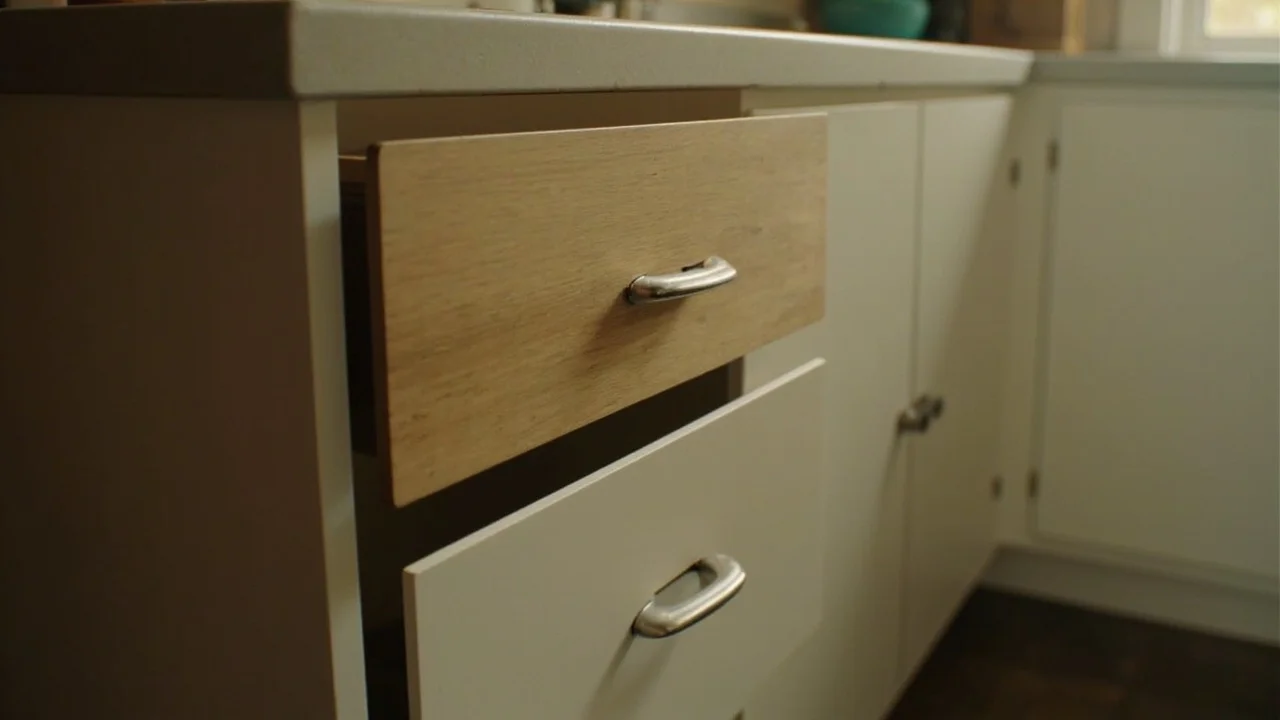
Key market segments and growth drivers in the Kitchen Cabinet Organizers sector.
2. Market Analysis
The Kitchen Storage Organization Market is estimated at USD 160.13 billion in 2026 and is expected to reach USD 221.89 billion by 2033, according to verified market research. Within this, kitchen cabinet organizers are the highest-growth product type, outpacing food storage and pantry organizers. The compound annual growth rate (CAGR) for the broader kitchen cabinet market sits at roughly 6.9% from 2025 to 2026, but the organizer sub-segment is growing at nearly 10% annually in North America and Asia-Pacific.
Three factors are driving this acceleration. First, the post-pandemic home renovation wave has not subsided. U.S. homeowners spent over $420 billion on home improvements in 2024, with kitchen remodels capturing the largest share. Second, e-commerce has democratized access: brands now sell directly to consumers via Amazon and dedicated DTC sites, bypassing traditional big-box retail. Third, commercial kitchens — from fast-casual chains to hospital cafeterias — are adopting modular cabinet organizers to meet stricter health codes and labor efficiency targets.
Regionally, North America dominates with a 35% market share, but Asia-Pacific is the fastest-growing region, expanding at a CAGR of 11.2% through 2033. Japan and South Korea lead in compact, multi-functional designs, while China's booming real estate sector fuels demand for mass-produced organizer systems. Europe remains steady, with Germany and the UK prioritizing sustainable materials like bamboo and recycled aluminum.
The market is also fragmenting by price tier. Premium organizers (pull-out systems, soft-close mechanisms) are growing at 12% annually, while low-cost plastic bins still command volume but shrinking margins. The sweet spot is the mid-range: metal and wood composite systems priced between $50 and $200 per cabinet unit.
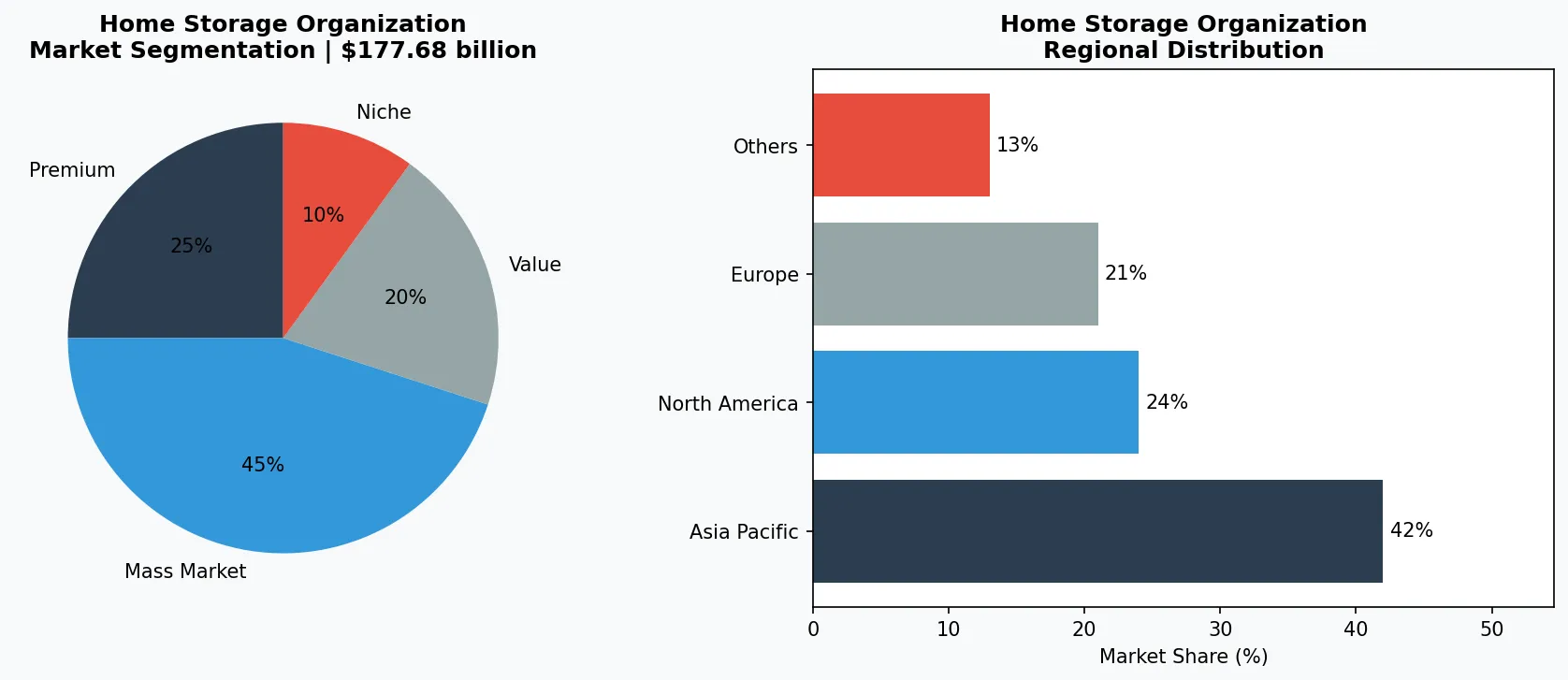
Market segmentation and regional distribution analysis for Kitchen Cabinet Organizers.
3. Product Categories
Kitchen cabinet organizers break into four distinct product categories, each serving a specific spatial challenge.
Pull-Out Shelves and Drawer Systems
These are the workhorses of modern cabinet organization. Full-extension pull-out shelves allow access to items stored at the back without digging. Examples include Rev-A-Shelf's 4-Tier Pull-Out Basket and Knape & Vogt's soft-close drawer slides. These systems dominate the premium segment, accounting for 40% of organizer revenue globally.
Tiered and Stackable Organizers
Designed for vertical optimization, these include can racks, spice step shelves, and pot lid organizers. Simple Plastic's Adjustable Cabinet Shelf Riser and mDesign's Bamboo 2-Tier Organizer are top sellers on Amazon. The key innovation here is modularity — users can reconfigure layouts without tools. This segment is growing fastest in rental apartments, where non-permanent solutions are preferred.
Under-Sink and Corner Solutions
The most challenging cabinet spaces — under sinks and Lazy Susans — have spawned specialized products. Rev-A-Shelf's Under-Sink Pull-Out Tray and Hafele's LeMans Corner System exemplify how engineering solves dead space. These products command premium pricing (often $100–$300) because they solve a persistent pain point: the 'black hole' under the kitchen sink.
Drawer Dividers and Cutlery Inserts
The smallest but most frequently replaced category. Custom-fit bamboo dividers from firms like Joseph Joseph and simple plastic grids from Simple Human dominate. The trend is toward modular, adjustable systems that fit standard drawer sizes (e.g., 24-inch, 30-inch widths).
Pull-Out Shelf Systems
Full-extension metal baskets and wood shelves mounted on ball-bearing slides. Examples: Rev-A-Shelf's 4-Tier Pull-Out Basket and Knape & Vogt's heavy-duty slide systems.
Tiered and Stackable Organizers
Adjustable risers, can racks, and step shelves that maximize vertical space inside cabinets. mDesign's Bamboo 2-Tier Organizer and Simple Plastic's Adjustable Shelf Riser are top sellers.
Under-Sink and Corner Solutions
Specialized pull-out trays, Lazy Susans, and half-moon shelves designed for awkward spaces. Hafele's LeMans Corner System and Rev-A-Shelf's Under-Sink Tray are category leaders.
4. Leading Players
Rev-A-Shelf
The undisputed market leader in aftermarket cabinet organizers, Rev-A-Shelf holds an estimated 25% share of the North American retrofit market. Their strategy is built on two pillars: first, a massive catalog of over 3,000 SKUs covering every cabinet type; second, a strong distribution network through Home Depot, Lowe's, and specialty kitchen dealers. In 2025, they launched a direct-to-contractor program offering volume discounts and custom color matching, directly targeting multifamily developers.
Hafele
A German engineering powerhouse, Hafele dominates the commercial and high-end residential segment. Their Loox LED-integrated cabinet lighting combined with organizer systems creates a premium 'illuminated organization' category. Hafele's competitive advantage is precision engineering: their pull-out systems are tested for 100,000 cycles, appealing to hotel chains and luxury condo builders who prioritize durability over cost. They are expanding aggressively in Southeast Asia, where high-end hospitality construction is booming.
Simple Human
While known for trash cans and soap dispensers, Simple Human has carved a niche in high-design drawer organizers. Their custom-fit bamboo drawer systems for cutlery, utensils, and spices sell for $40–$80 per drawer — triple the price of generic alternatives. The company's strategy is brand loyalty through aesthetics: their products are designed to be Instagram-worthy, driving organic social media demand. In 2024, they reported 18% growth in their cabinet organizer line, outpacing their core trash can business. **Knape & Vogt (KV) — A century-old manufacturer based in Michigan, KV focuses on the OEM and contract furniture market. They supply drawer slides and cabinet hardware to major cabinet manufacturers like KraftMaid and Merillat. Their strategy is invisible excellence: they don't market to consumers but dominate the supply chain. KV's growth is tied to new housing starts; when U.S. housing starts rise, KV's orders rise proportionally. In 2025, they introduced a 'zero-clearance' slide that allows organizers to fit in cabinets with face frames — a technical innovation that opens up the retrofit market.
Aftermarket Dominator: Rev-A-Shelf
Controls 25% of the North American retrofit market through a massive 3,000+ SKU catalog and exclusive distribution deals with Home Depot and Lowe's.
Engineering Precision: Hafele
Leads the commercial and luxury segment with 100,000-cycle tested systems and integrated LED lighting, targeting hotels and high-end residential developers.
Design-Led Niche: Simple Human
Captures premium margins (3x average price) through Instagram-worthy bamboo drawer organizers, growing 18% annually in the direct-to-consumer channel.
5. Market Trends
1. Maximizing Vertical Real Estate
High-rise pull-out systems and multi-tier cabinet inserts are increasingly specified in commercial kitchens and B2B hospitality projects to triple usable storage without expanding footprint.
2. Custom Modular Solutions
B2B buyers are shifting from one-size-fits-all organizers to configurable, brandable systems that allow end-users to adapt layouts for varying cookware and bulk ingredient sizes.
3. Sustainability Compliance
Eco-friendly materials like bamboo, recycled aluminum, and FSC-certified wood are becoming mandatory specifications in corporate and institutional kitchen projects to meet green building standards.
4. Smart Inventory Integration
RFID-tagged drawer dividers and weight-sensing shelf liners are being adopted in food service supply chains to automate stock tracking and reduce waste in high-volume storage environments.
6. Regional Markets
North America: Retrofit Powerhouse
35% of global market share, driven by aging housing stock (median U.S. home age 40 years) and high kitchen remodel spending averaging $25,000 per project.
Asia-Pacific: Compact Innovation Hub
Fastest-growing region at 11.2% CAGR, led by Japan and South Korea's multi-functional, space-saving designs. China's real estate boom fuels mass-produced organizer demand.
Europe: Sustainability Leader
Germany and the UK mandate FSC-certified wood and recycled content in organizer products. Premium segment grows at 12% annually, driven by EU Deforestation Regulation compliance.
7. Investment Outlook
Two specific opportunities stand out for kitchen cabinet organizers in 2026–2027. First, the 'aging-in-place' demographic: as baby boomers remodel kitchens for accessibility, pull-out shelves and easy-reach drawer systems will see double-digit demand. Companies like Rev-A-Shelf are already marketing 'universal design' lines with ADA-compliant handles and lower mounting heights. Second, the commercial micro-kitchen trend — offices, hotels, and co-living spaces installing compact kitchenettes — creates a new channel for modular, space-maximizing organizers.
One concrete risk: raw material cost volatility. Steel prices swung 35% in 2024 due to tariffs and energy costs, directly impacting metal-based organizer pricing. Manufacturers with diversified supply chains (e.g., Hafele sourcing from both Europe and Asia) will weather this better than single-source competitors. B2B buyers should lock in 12-month contracts with price escalation clauses to manage this uncertainty.
Strategic Considerations:
- Opportunity: Aging-in-Place Remodels:
- Opportunity: Commercial Micro-Kitchens:
- Risk: Steel Price Volatility:
- Risk: Labor Shortage in Installation:
Make Informed Decisions in the Kitchen Cabinet Organizers Market
Product quality and sourcing integrity directly impact business outcomes. Discover how Verity Rank's verification platform helps industry participants source with greater confidence.
Contact Verity Rank TodayFurther Reading: Explore additional market intelligence from Grand View Research and Mordor Intelligence.
This article is for informational purposes only, based on publicly available industry data and market reports as of 2026-05-23. All market figures are estimates and may vary from actual results.