


Table of Contents

The global Leather Belt Accessory Guide sector serves consumers worldwide with diverse solutions.
1. Industry Overview
The leather belt is no longer a mere utility piece. In 2026, the global leather belts market reached $8.59 billion and is projected to surge to $14.45 billion by 2033 — a compound annual growth rate (CAGR) of 7.7% that outpaces many other fashion accessory categories. This growth is fueled by a fundamental shift: belts have become hero pieces that shape an outfit, not just finish it. Animal prints, rich leather textures, woven details, and oversized statement hardware are turning this once-backstage accessory into the star of the show. For B2B buyers — from e-commerce retailers to luxury department store procurement teams — understanding the leather belt accessory landscape is critical. The category sits at the intersection of formal corporate attire and casual streetwear, creating distinct sourcing requirements. Formal belts alone accounted for a $5.6 billion market in 2024, projected to reach $8.9 billion by 2033. Meanwhile, the broader belts and wallets ecosystem was valued at $30.43 billion in 2026, hinting at cross-category synergies. What makes the leather belt accessory distinctive is its dual role: a functional necessity and a signal of personal style. Buyers must navigate quality tiers, leather grades, buckle hardware standards, and rapidly shifting aesthetic preferences — all while verifying supplier credibility in a globalized supply chain.
Industry Scope & Characteristics
Statement-Making Versatility
Leather belts in 2026 are designed as hero pieces using animal prints, woven details, and oversized buckles. Products range from 1.25-inch formal dress belts to 2-inch casual statement belts that shape entire outfits.
Vertical Integration in Manufacturing
Top suppliers control tanning and buckle casting in-house to ensure quality consistency. Vegetable-tanned leather processes take 4-6 weeks, while chrome-tanned belts can be produced in under 2 weeks for fast-fashion cycles.
Certification Requirements
Leather Working Group certification is increasingly mandatory for European buyers. ISO 9001 for buckle metal quality and REACH compliance for chemical safety are critical. Full-grain belts require no coating, while corrected-grain must meet abrasion resistance standards (ASTM D3884).
Custom Embossing Technology
Laser embossing and heat-stamping allow on-demand animal print patterns without waste. Some suppliers now offer digital design-to-production in 72 hours, enabling fast trend replication for animal prints and textures.
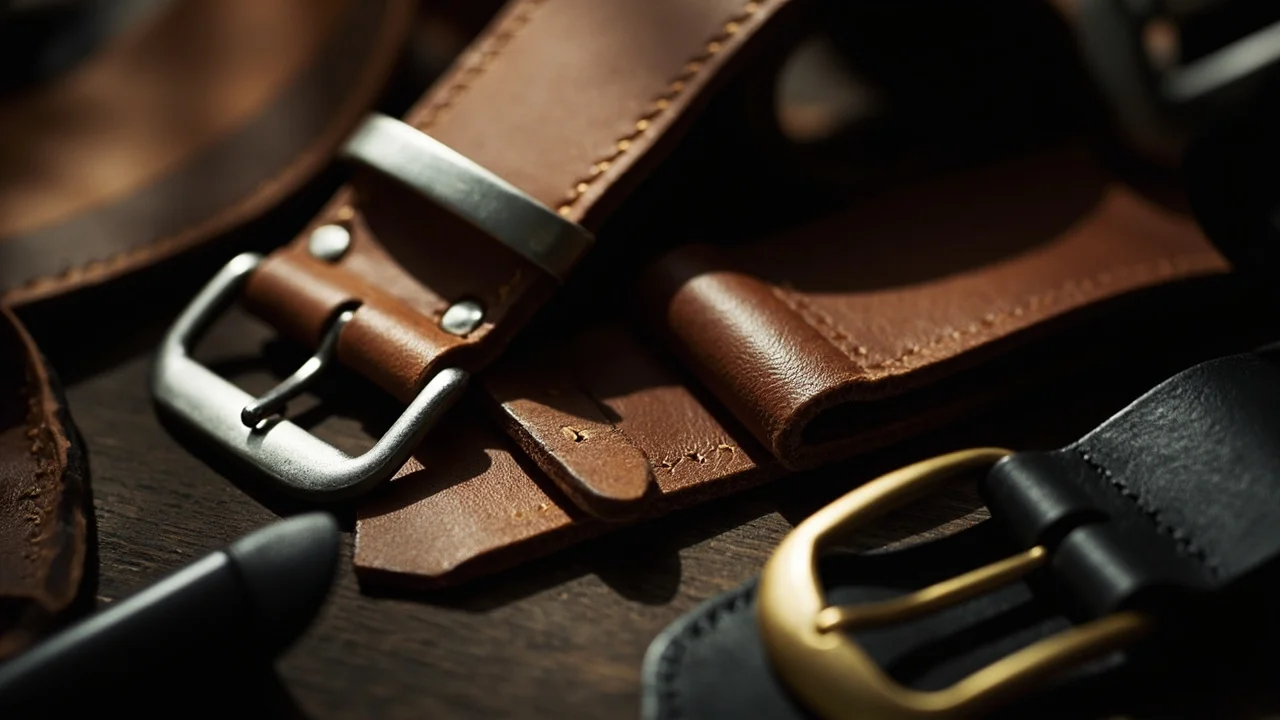
Key market segments and growth drivers in the Leather Belt Accessory Guide sector.
2. Market Analysis
The leather belts market is segmented by product type (formal, casual, and others), gender (men and women), and distribution channel (online and offline retail). Formal belts dominate, driven by corporate culture and the global professional workforce. The formal leather belt segment alone was estimated at $5.6 billion in 2024 and is expected to reach $8.9 billion by 2033, growing at a CAGR of 5.5%. This steady growth reflects persistent demand for sophisticated, high-quality accessories in business attire, especially in emerging economies where white-collar employment is expanding. Casual belts, however, are accelerating faster. The overall casual segment benefits from the rise of 'work-leisure' hybrid wardrobes and the belt-as-hero trend. Animal prints, woven leathers, and heavy metal hardware are pushing casual belts into premium price brackets. From a distribution perspective, online retail is gaining share rapidly, fueled by social commerce and direct-to-consumer brands. Offline retail — specialty stores and department stores — still commands the majority, but the gap is narrowing. Three big drivers are propelling this market: first, rising disposable incomes in Asia-Pacific and Latin America are enabling consumers to spend more on accessories. Second, e-commerce platforms are lowering barriers for niche belt brands to reach global audiences. Third, the 'quiet luxury' trend is making high-quality leather belts a status symbol without logos. The men's segment currently dominates the market, accounting for over 60% of revenue, but women's belts are growing at a faster clip as female consumers adopt belt layering and waist-defining styles.
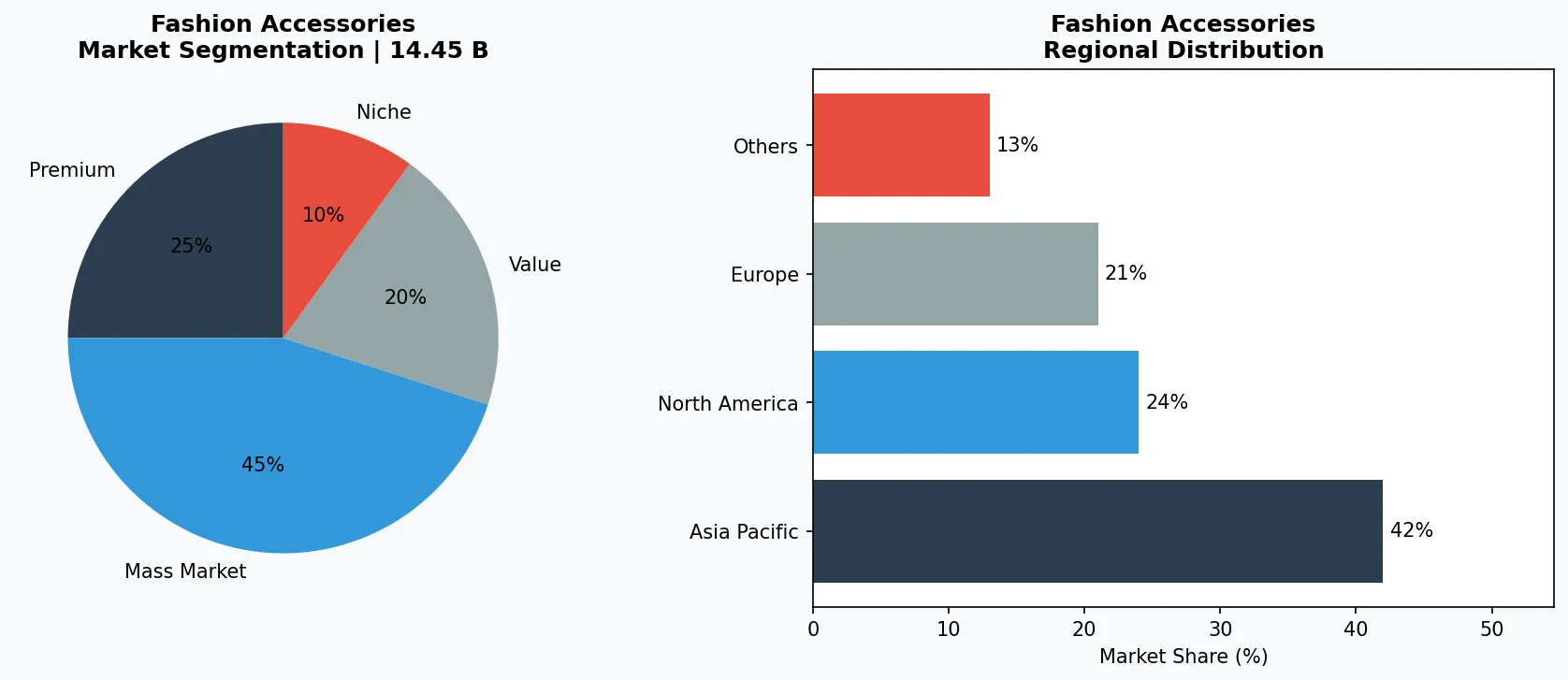
Market segmentation and regional distribution analysis for Leather Belt Accessory Guide.
3. Product Categories
Leather belt accessories fall into three major sub-categories: formal belts, casual belts, and specialty belts. Formal belts are characterized by clean lines, minimal stitching, and classic buckle shapes — typically in black or brown calfskin or patent leather. These belts are essential for suits, dress trousers, and uniforms. Examples: the 1.25-inch wide dress belt with a single-prong buckle, and the reversible belt that offers two leather finishes in one. Casual belts embrace texture and ornamentation. Woven leather belts (sometimes called braided belts) are a perennial favorite, offering flexibility and bohemian flair. Animal-print embossed belts, particularly crocodile or snake patterns, are trending in 2026 as statement pieces. Belt thickness ranges from 1.5 inches for jeans to 2 inches for outerwear cinching. Specialty belts include the D-ring belt, the western belt with ornate conchos, and the technical belt used in outdoor gear (often paired with nylon webbing but featuring leather trims). For B2B buyers, the choice between full-grain, top-grain, and genuine leather determines pricing and durability. Full-grain leather belts command the highest margins but require careful sourcing of hides. The buckle hardware — brass, stainless steel, or nickel-plated — also varies by market region, with European buyers favoring matte finishes and North American buyers often preferring polished chrome.
Formal Dress Belts
Clean lines, classic buckles, 1.25-1.5 inches wide. Preferred materials: calfskin, patent leather. Example: single-prong reversible belt with stitching matching the shoe color.
Casual Statement Belts
Woven leather, animal-print embossing, and oversized hardware. Width ranges 1.5-2 inches. Example: crocodile-embossed belt with a brass D-ring buckle for denim wear.
Specialty & Niche Belts
Includes western concho belts, technical belts with leather-nylon hybrid, and RFID-blocking belts. Example: vegetable-tanned belt with hidden magnetic closure for travel use.
4. Leading Players
The leather belt accessory market features a mix of luxury houses, specialized accessory manufacturers, and private-label suppliers. Luxury heritage brands dominate the premium formal segment with bespoke tailoring and century-old tannery partnerships. These players leverage brand equity to command price premiums exceeding $500 per belt, relying on limited releases and made-to-order programs. Mid-market specialty manufacturers focus on volume and consistency, supplying department stores and e-commerce aggregators. Their competitive edge lies in vertical integration — controlling the tanning process and buckle casting in-house to reduce lead times and ensure quality across thousands of SKUs. A second archetype is the fast-fashion accessory specialist. These companies prioritize trend speed over leather quality, using corrected-grain leather and synthetic linings to hit price points below $30. Their agile supply chains allow them to turn around animal-print or woven styles in under 10 weeks, capitalizing on micro-trends highlighted by fashion influencers. Finally, a growing segment of artisanal workshops operate at smaller scale but high margins, focusing on vegetable-tanned leather and hand-stitched details. They serve the 'slow fashion' buyer willing to pay $200+ for a belt that patinas over years. For B2B buyers, verifying a supplier's tanning certifications (e.g., Leather Working Group) and buckle metal composition (nickel-free for EU compliance) is essential to avoid costly returns or brand reputation damage.
Luxury Heritage Houses
Focus on full-grain leather from historical tanneries, limited-production runs, and hand-stitched details. They leverage brand legacy to sell belts at $500+ and rely on made-to-order logistics.
Mid-Market Volume Specialists
Vertically integrated manufacturers producing 10,000+ SKUs annually for department stores. Their competitive advantage is consistency and lead time reduction through in-house buckle casting.
Fast-Fashion Trend Capturers
Use corrected-grain leather and synthetic linings to hit sub-$30 price points. They rotate 60+ belt designs per season, using data from influencer feeds to decide next week's embossing pattern.
5. Market Trends
1. STATEMENT HARDWARE
Belts are being defined by oversized, sculptural buckles — chunky brass, geometric steel, and even colored enamel. This trend matters because it turns a belt into a focal accessory that commands visual weight. Brands are investing in custom molds to create signature buckle shapes that become instantly recognizable.
2. ANIMAL PRINT & TEXTURE
Crocodile, snake, and ostrich embossed leathers are surging, along with exotic scrapes like shark or stingray for luxury lines. This matters because it allows belts to function as status markers without logos. Leading tanneries now offer 'print-on-demand' embossing patterns to reduce inventory risk for buyers.
3. WOVEN & BRAIDED LEATHER
The resurgence of woven belts, from classic basket-weave to modern macramé, is driving growth in casual segments. They offer breathability and visual interest for warmer climates. Italian and Mexican artisans are key suppliers, and automated braiding machines are reducing labor costs while maintaining complexity.
4. TECH-INTEGRATED BELTS
A niche but growing trend: belts with hidden RFID-blocking pockets or built-in leather loops for wearable tech. Though still small, this sub-segment appeals to business travelers and digital nomads. One manufacturer offers a leather belt with a detachable magnetic phone holder, blurring the line between accessory and gadget.
6. Regional Markets
Europe: Sustainability-Driven Market
Leather Working Group certification is a baseline for EU buyers. Vegetable-tanned and chrome-free belts command premium. Italy and France lead in luxury, while Eastern Europe offers cost-competitive full-grain production.
North America: Volume & Versatility
The US market demands both formal and casual belts, with strong online DTC growth. Western-style belts retain niche but steady demand. Canada sees rising interest in ethically sourced leather for outdoor-urban crossover.
Asia-Pacific: Fastest-Growing Region
Rising disposable incomes in China and India drive demand for branded formal belts. E-commerce platforms like Taobao and Shopee enable small-batch imports. Japan values high-grade cordovan leather for minimalist styles.
7. Investment Outlook
Two clear opportunities emerge for B2B buyers. First, the custom private-label belt market is expanding rapidly, especially for mid-tier retailers seeking exclusive designs without carrying inventory. Platforms that enable minimum-order-quantity flexibility of 500 units per SKU will capture this demand. Second, sustainability certifications — such as Leather Working Group gold ratings and carbon-neutral tanning — are becoming deal-breakers in Europe and North America. Suppliers investing in traceable hide supply chains can command 15-20% price premiums.
One concrete risk: the volatility of raw hide prices, which swung 30% in 2024-2025 due to drought and shifting beef production. Buyers should negotiate price adjustment clauses with suppliers and diversify sourcing across at least two regions (e.g., Italy and Brazil) to mitigate supply shocks. Additionally, the rise of vegan leather alternatives — though still a fraction of the market — could erode demand for lower-grade genuine leather belts, compressing margins for commodity suppliers.
Strategic Considerations:
- Technology & AI Integration: Artificial intelligence and IoT are revolutionizing production efficiency, quality assurance, and demand forecasting across the supply chain.
- Sustainability as Business Strategy: Regulatory pressure and consumer expectations are making environmental commitments essential, not optional.
- Transparency & Traceability: Consumers demand increasingly granular information about product origins, ingredients, and production methods.
- Emerging Market Penetration: Africa, Latin America, and second-tier Asian cities represent the next wave of volume growth.
Frequently Asked Questions
Make Informed Decisions in the Leather Belt Accessory Guide Market
Product quality and sourcing integrity directly impact business outcomes. Discover how Verity Rank's verification platform helps industry participants source with greater confidence.
Contact Verity Rank TodayFurther Reading: Explore additional market intelligence from Grand View Research and Mordor Intelligence.
This article is for informational purposes only, based on publicly available industry data and market reports as of 2026-06-20. All market figures are estimates and may vary from actual results.