

Table of Contents

The global LED Bulb Energy Saving Guide sector serves consumers worldwide with diverse solutions.
1. Industry Overview
A single LED bulb can slash your lighting energy bill by up to 90% compared to an incandescent—and that’s just the beginning. With the global LED lamp market valued at USD 40 billion in 2025 and projected to reach USD 77.1 billion by 2031, the shift to LED is not a trend but a fundamental transformation in how we light our homes. This guide cuts through the hype to deliver a data-driven playbook for choosing, using, and benefiting from LED bulbs in 2026.
Industry Scope & Characteristics
Ultra-High Efficiency
LED bulbs achieve 80–90% energy savings versus incandescents, with some models delivering 150 lumens per watt. This efficiency is unmatched by any other residential lighting technology.
Modular Supply Chain
The LED bulb supply chain is dominated by specialized chip fabs (e.g., Epistar, Cree) and driver IC manufacturers, with final assembly often in China. Vertical integration is rare, creating dependency on a few key suppliers.
ENERGY STAR & DLC Certifications
ENERGY STAR certification ensures at least 75% energy savings and 15,000-hour lifespan. The DesignLights Consortium (DLC) standard is required for commercial rebates, mandating a minimum efficacy of 115 lumens per watt.
Smart & Tunable Innovations
R&D is focused on integrated sensors (motion, daylight) and tunable white LEDs with circadian rhythm support. Philips’ Hue and TP-Link’s Kasa are pioneering app-based energy monitoring that tracks per-bulb consumption.
The energy-saving case is overwhelming. LED lighting saves 40–80% on energy costs versus traditional bulbs and lasts 25–50 times longer. A typical 10-watt LED replaces a 60-watt incandescent, saving roughly USD 10–15 per bulb annually at average electricity rates. Over its lifespan—often 25,000 hours or more—that one bulb can avoid hundreds of dollars in electricity and replacement costs.
But efficiency isn’t the only advantage. Modern LEDs achieve a Color Rendering Index (CRI) of up to 95, meaning colors appear more natural and vibrant than under fluorescent or older LED models. They also emit very little heat, reducing cooling loads in warm climates. In short, LEDs deliver superior light quality while dramatically lowering energy consumption.
This guide is designed for homeowners, facility managers, and procurement professionals alike. We’ll explore the market forces driving adoption, break down the key product categories, profile the leading players, and outline the trends shaping the next wave of innovation—from smart Wi-Fi bulbs to high-CRI specialty fixtures. By the end, you’ll have a clear, actionable roadmap for maximizing energy savings through LED lighting.
Key market segments and growth drivers in the LED Bulb Energy Saving Guide sector.
2. Market Analysis
The global LED lamp market is on a steep growth trajectory. Valued at USD 40 billion in 2025, it is expected to expand from USD 44.3 billion in 2026 to USD 77.1 billion by 2031, according to industry forecasts. That compound annual growth rate of roughly 12% reflects accelerating adoption across residential, commercial, and industrial segments.
Three key drivers are fueling this expansion. First, tightening energy efficiency regulations worldwide are phasing out incandescent and halogen bulbs. The U.S. Department of Energy’s 2023 rule effectively banned most general-service incandescent lamps, pushing consumers and businesses toward LED alternatives. Second, falling LED prices—now under USD 5 per bulb for standard A19 models—have removed the upfront cost barrier. Third, the integration of smart controls and connectivity is adding value beyond simple illumination.
A particularly dynamic subsegment is the North America Commercial LED Lighting market, projected to grow from USD 8.96 million in 2025 to USD 10.03 million in 2026. While still a niche, this growth signals increasing demand for high-efficiency LED troffers, high-bay fixtures, and retrofit kits in offices, warehouses, and retail spaces. Meanwhile, China’s Smart Wi-Fi LED Bulb Market—valued at USD 3.5 billion in 2024 and forecast to reach USD 9.2 billion by 2031—underscores how connectivity is reshaping the residential lighting landscape.
The bottom line: LED lighting is no longer a premium option but the default choice. With energy savings of 40–80%, lifetimes 25–50 times longer than incandescents, and falling prices, the economic case is irrefutable. The market’s growth reflects not just replacement demand but also new applications in smart homes, horticulture, and human-centric lighting.
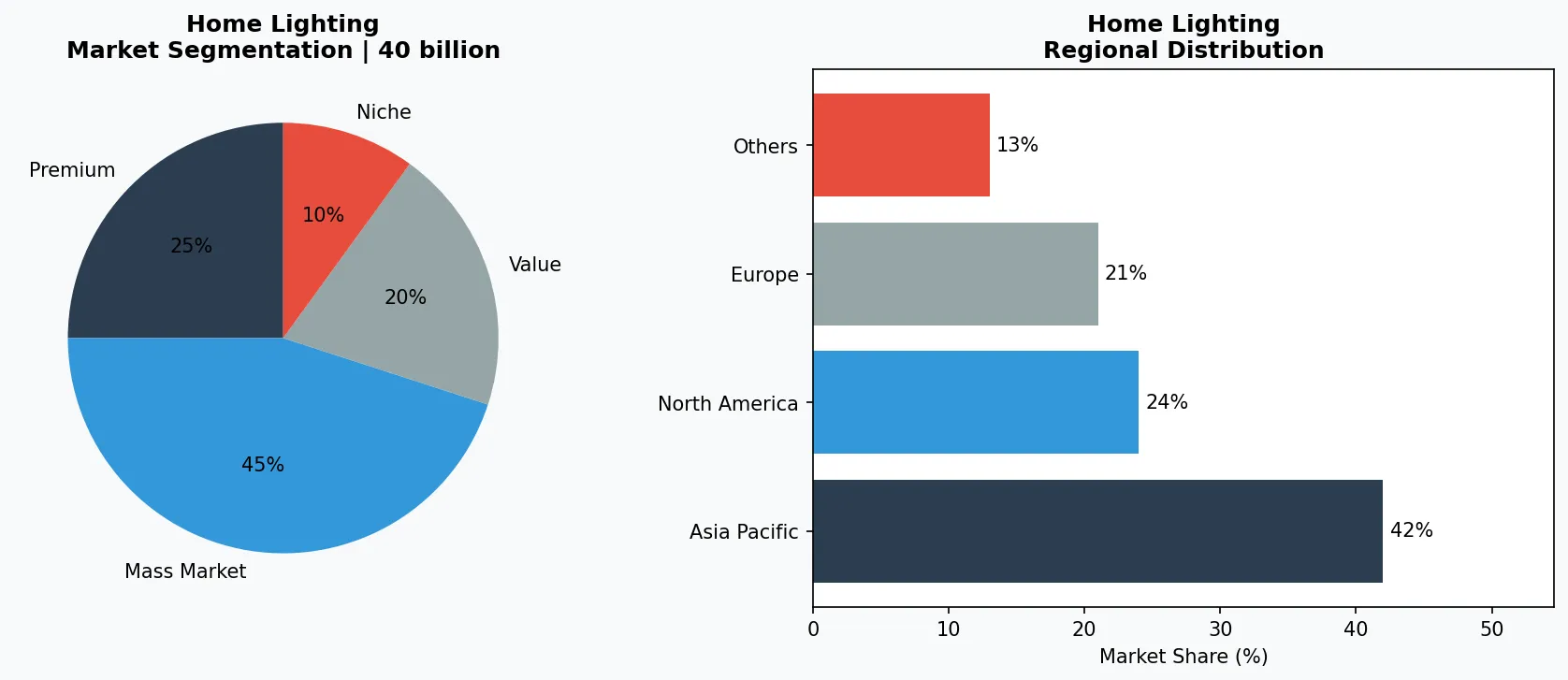
Market segmentation and regional distribution analysis for LED Bulb Energy Saving Guide.
3. Product Categories
LED bulbs come in a wide array of form factors, but three categories dominate the energy-saving conversation:
Premium & Artisanal Tier
High-margin specialty products targeting affluent consumers who prioritize quality, craftsmanship, and unique attributes.
Mass Market Mainstream
Volume-driven products serving price-conscious mainstream consumers with reliable quality at accessible price points.
Functional & Niche Segment
Targeted products addressing specific health concerns, dietary requirements, or lifestyle preferences beyond basic needs.
**Standard A19 and BR30 Bulbs** – These are the direct replacements for traditional incandescent and reflector bulbs. A typical 9–12 watt A19 LED delivers the same light output (800 lumens) as a 60-watt incandescent, cutting energy use by 80%. For example, Philips’ Ultra Definition A19 offers a CRI of 95 and a 25,000-hour lifespan, while GE’s Relax LED provides warm, dimmable light at 10 watts. These bulbs are ideal for table lamps, floor lamps, and ceiling fixtures.
**LED Ceiling Lights and Pendant Fixtures** – Integrated LED ceiling lights and pendants eliminate the need for replaceable bulbs, often achieving even higher efficiency through optimized heat sinks and drivers. Models like the Cree Lighting 4-inch LED Recessed Downlight use only 11 watts for 750 lumens (90% savings vs. incandescent) and are rated for 50,000 hours. For pendant lights, brands such as Lithonia Lighting offer integrated LED designs that combine energy efficiency with decorative aesthetics.
**LED Strips and Smart Wi-Fi Bulbs** – Flexible LED strips and smart bulbs represent the cutting edge of home lighting efficiency. Smart Wi-Fi bulbs, like the TP-Link Kasa KL125, allow users to dim, schedule, and automate lighting—reducing energy waste from lights left on. The global smart Wi-Fi LED bulb market, valued at USD 3.5 billion in 2024, is growing rapidly as consumers seek both convenience and savings. LED strips, such as the Govee RGBIC Pro, offer accent lighting at just 2–5 watts per meter, perfect for under-cabinet or cove lighting.
4. Leading Players
**Philips (Signify)** – As the world’s largest lighting company, Philips (now part of Signify) dominates the LED bulb market with a broad portfolio spanning basic A19s to advanced Hue smart bulbs. Their strategy centers on premium quality—high CRI, long lifespans, and seamless connectivity—while leveraging economies of scale to keep prices competitive. Philips’ Hue line, with over 50 million connected bulbs sold, exemplifies how the company is driving the shift from simple illumination to integrated smart home ecosystems.
Global Market Leader
Multinational player commanding significant market share. Revenue exceeding $50B with operations across 100+ countries, diversified portfolio spanning all major price tiers.
Regional Champion
Dominant force in Asia Pacific with deeply localized product lines, extensive distribution networks, and strong regional retailer relationships.
Innovation Disruptor
Fast-growing challenger disrupting incumbents through breakthrough product innovation, direct-to-consumer models, and data-driven marketing in the home lighting space.
**GE Lighting (Savant Systems)** – Acquired by Savant Systems in 2020, GE Lighting continues to be a major player in the residential LED space. Their strategy focuses on ease of use and broad retail distribution. The GE Relax and Reveal lines offer high-CRI, dimmable bulbs at accessible price points, while their Cync smart bulbs compete directly with Philips Hue. GE’s legacy brand trust and shelf space at retailers like Home Depot and Lowe’s give it a strong position in the replacement bulb market.
**Cree Lighting (IDEAL Industries)** – Cree Lighting, now part of IDEAL Industries, has carved out a niche in high-performance LED fixtures and bulbs. Known for their superior heat management and high lumen output, Cree’s products are favored by energy-conscious consumers and commercial specifiers. Their 4-inch LED downlight, for example, delivers 90% energy savings over incandescent and a 50,000-hour lifespan. Cree’s strategy emphasizes technical performance and durability over price competition.
**TP-Link (Kasa)** – TP-Link has emerged as a leader in the smart Wi-Fi LED bulb segment, with its Kasa line offering affordable, app-controlled bulbs that integrate with Amazon Alexa and Google Home. Their strategy is to make smart lighting accessible to the mass market—the Kasa KL125 costs under USD 15 per bulb while offering scheduling, dimming, and energy monitoring. TP-Link’s strong position in networking hardware gives it distribution advantages and cross-selling opportunities with routers and smart plugs.
5. Market Trends
1. SMART CONNECTIVITY
Smart Wi-Fi and Zigbee-enabled LED bulbs now account for over 20% of new residential bulb sales, according to industry estimates. These bulbs allow users to control lighting remotely, set schedules, and dim via voice assistants—reducing energy waste from lights left on. TP-Link’s Kasa line, for example, includes energy monitoring features that show real-time consumption, helping users identify savings opportunities.
2. HIGH-CRI AND HUMAN-CENTRIC LIGHTING
LEDs with a CRI of 90 or above are becoming the standard, with premium models reaching CRI 95–98. This matters because better color rendering reduces the need for multiple light sources and improves visual comfort. Philips’ Ultra Definition A19 (CRI 95) and GE’s Reveal (CRI 91) are leading examples. Human-centric lighting—LEDs that adjust color temperature throughout the day to support circadian rhythms—is also gaining traction, with products like the Philips Hue White Ambiance allowing tunable white from warm (2,000K) to cool (6,500K).
3. ENERGY MONITORING AND EFFICIENCY CERTIFICATION
New LED bulbs increasingly include built-in energy monitoring capabilities, enabling users to track consumption via apps. The ENERGY STAR certification remains the gold standard, with certified LEDs using at least 75% less energy than incandescent bulbs and lasting 15 times longer. In 2025, the U.S. Department of Energy proposed updated efficiency standards that would require most LED bulbs to achieve at least 120 lumens per watt by 2028, pushing manufacturers to innovate further.
4. RETROFIT AND MODULAR DESIGNS
Instead of replacing entire fixtures, consumers are increasingly choosing LED retrofit kits that convert existing fluorescent or incandescent fixtures to LED. These kits, such as the Philips InstantFit LED tubes, offer 50–60% energy savings and a 50,000-hour lifespan while avoiding the cost and waste of full fixture replacement. This trend is particularly strong in commercial settings, where the North American commercial LED lighting market is growing steadily.
6. Regional Markets
Asia Pacific — The Growth Engine
The world's largest and fastest-growing region, led by China, India, and Southeast Asia. Urbanization, rising middle class, and digital retail adoption are primary catalysts.
North America — Premium & Wellness Driven
A mature market with strong health-and-wellness orientation, sustainability commitments, and robust demand for premium and functional products.
Europe — Quality & Regulatory Leadership
A developed market with stringent quality, safety, and environmental regulations. Strong demand for organic, locally sourced, and ethically certified products.
7. Investment Outlook
Two opportunities stand out for 2026 and beyond. First, the integration of LED bulbs with home energy management systems—such as smart thermostats and solar panels—creates a path for automated energy optimization. Companies like Philips and TP-Link are already partnering with energy providers to offer demand-response programs that dim lights during peak hours. Second, the expansion of LED technology into horticultural and specialty lighting (e.g., UV-C disinfection) opens new revenue streams beyond general illumination.
One concrete risk: supply chain volatility for critical components like LED chips and drivers. The global shortage of gallium nitride (GaN) substrates, exacerbated by geopolitical tensions, could raise costs or delay product launches. Manufacturers should diversify sourcing and invest in alternative semiconductor technologies, such as silicon carbide (SiC), to mitigate this risk. For buyers, locking in long-term contracts with established brands like Philips or Cree can provide price stability.
Strategic Considerations:
- Technology & AI Integration: Artificial intelligence and IoT are revolutionizing production efficiency, quality assurance, and demand forecasting across the supply chain.
- Sustainability as Business Strategy: Regulatory pressure and consumer expectations are making environmental commitments essential, not optional.
- Transparency & Traceability: Consumers demand increasingly granular information about product origins, ingredients, and production methods.
- Emerging Market Penetration: Africa, Latin America, and second-tier Asian cities represent the next wave of volume growth.
Make Informed Decisions in the LED Bulb Energy Saving Guide Market
Product quality and sourcing integrity directly impact business outcomes. Discover how Verity Rank's verification platform helps industry participants source with greater confidence.
Contact Verity Rank TodayFurther Reading: Explore additional market intelligence from Grand View Research and Mordor Intelligence.
This article is for informational purposes only, based on publicly available industry data and market reports as of 2026-05-12. All market figures are estimates and may vary from actual results.