

Table of Contents
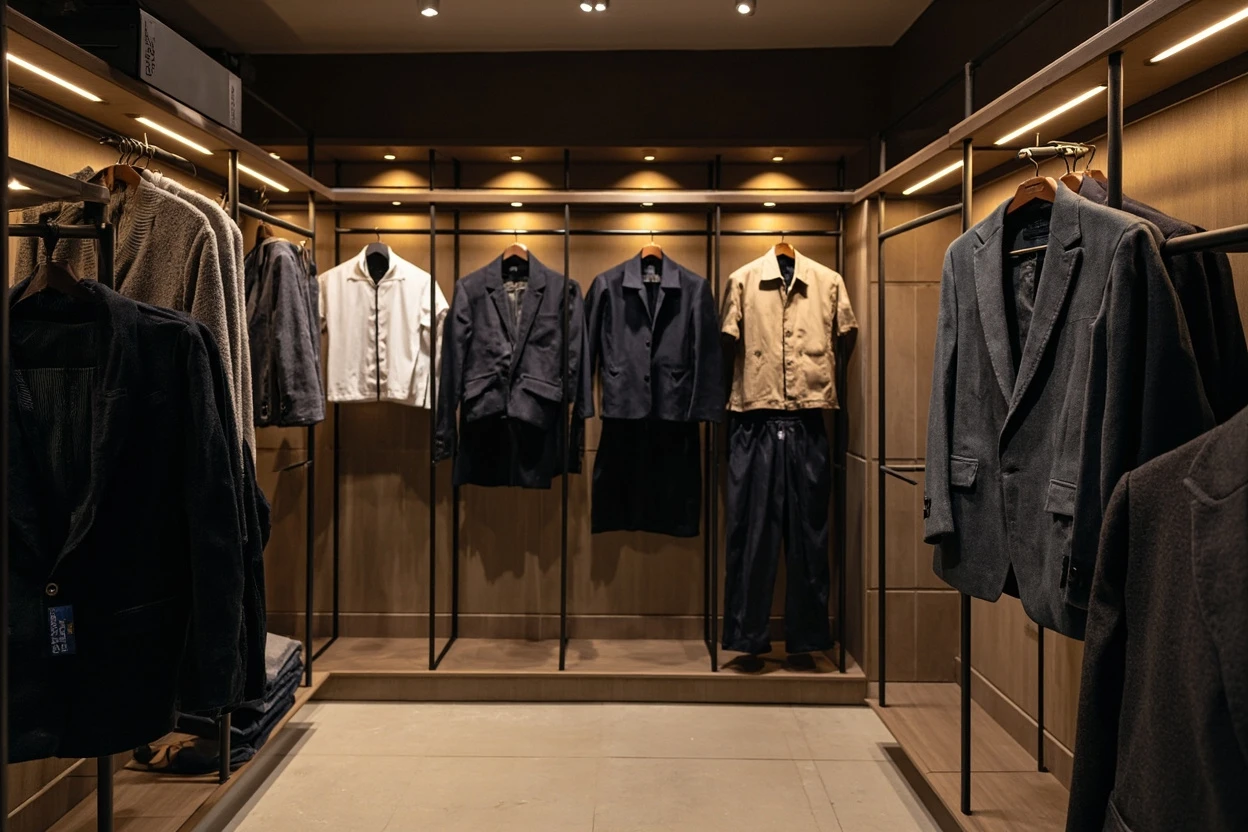
The global Men's Cardigan styles sector serves consumers worldwide with diverse solutions.
1. Industry Overview
The men's cardigan is no longer just a layer; it's the centerpiece of the modern wardrobe. By 2026, the global men's cardigan market is projected to grow at a compound annual rate of 5.8% (Cognitive Market Research, 2023–2030), far outpacing the broader sweaters segment, which is expected to grow at just 3.1% CAGR through 2035. This acceleration is driven by a fundamental shift in how men dress — blending comfort with structure, casual with considered. Unlike a pullover sweater, the cardigan's open front allows for effortless layering, making it the single most versatile piece in a man's closet. The Fall/Winter 2026-27 runway season across Pitti Uomo, Milan, and Paris made this abundantly clear. Designers presented cardigans as standalone statements: chunky knits with zip fronts, relaxed V-necks in muted earth tones, and cropped silhouettes that break the traditional hip-length rule. Colors like ink, coal, camel, and oat dominated, offering a palette that bridges formal meetings and weekend errands. The cardigan's resurgence is not a retro revival — it is a direct response to the post-pandemic demand for clothing that works as hard as the wearer. For B2B buyers, this means rethinking assortments: cardigans are no longer a seasonal afterthought but a growth category with measurable ROI.
Industry Scope & Characteristics
Versatile Layering Architecture
Men's cardigan styles are defined by an open front that allows for adjustable insulation. Products like the V‑Neck Zip Cardigan offer micro‑climate control, a feature unique among knit tops.
Gauge and Fiber Specification
Cardigan manufacturing relies on precise knitting gauge (e.g., 7‑gauge for chunkier pieces, 12‑gauge for lightweight). Choosing the right gauge determines drape, warmth, and production speed.
Sustainable Certification Standards
Quality cardigans often carry certifications like Responsible Wool Standard (RWS) or Global Recycled Standard (GRS). Compliance ensures consistent fiber quality and ethical sourcing for B2B buyers.
R&D in Blended Yarns
Innovation focuses on moisture‑wicking blends (e.g., merino‑nylon) and stretch‑recovery fibers to improve shape retention. Companies are developing machine‑washable cashmere for higher durability.
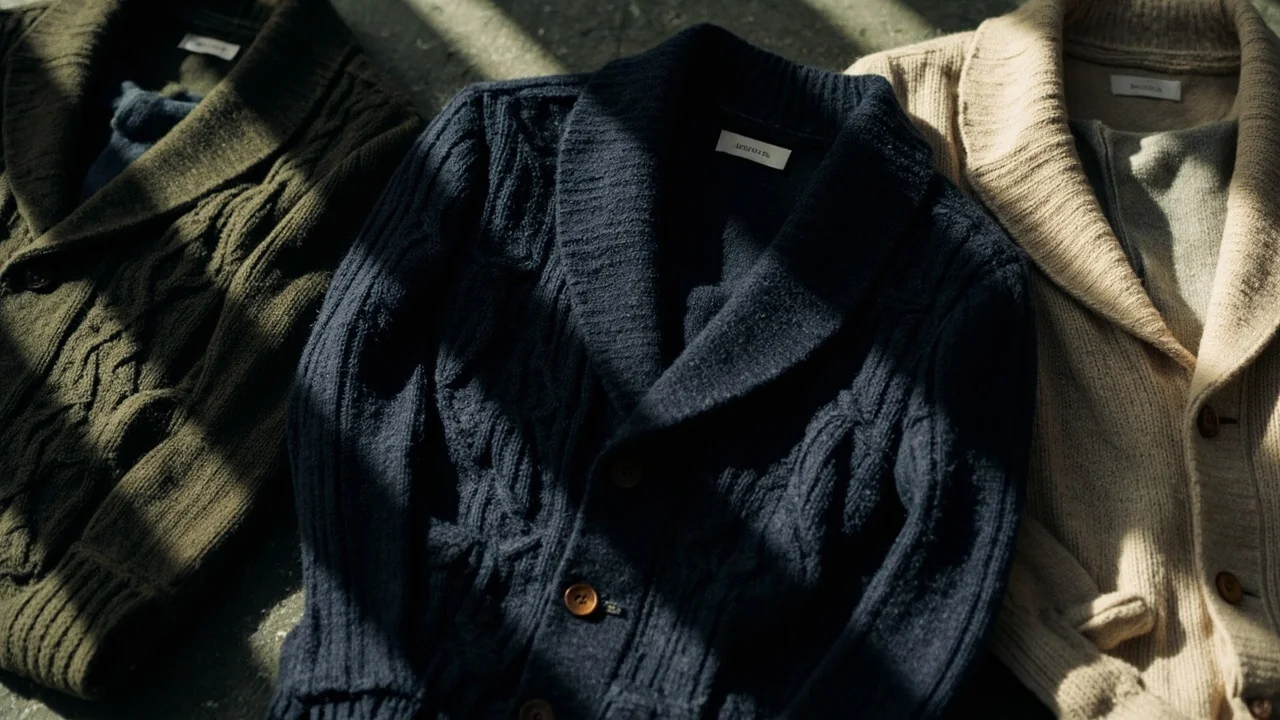
Key market segments and growth drivers in the Men's Cardigan styles sector.
2. Market Analysis
The Global Sweaters Market, valued in the tens of billions, is expanding at a steady 3.1% CAGR from 2025 to 2035, according to industry projections. But within that, the cardigan subsegment is outperforming, with Cognitive Market Research reporting a 5.8% CAGR from 2023 to 2030. Why the divergence? Cardigans offer what pullovers cannot: temperature regulation through an open front, a silhouette that flatters most body types, and the ability to dress up or down without changing the core garment. Three growth drivers stand out. First, the 'work from anywhere' culture has normalized polished-but-casual attire, and the V-neck zip cardigan fits that brief perfectly. Second, the rise of layering as a style strategy — consumers are buying cardigans to wear over T‑shirts, under blazers, or as mid-layers with jackets. Third, the increased availability of modern materials such as lightweight merino blends and textured cottons that allow cardigans to be worn in transitional seasons. Regionally, North America leads in volume due to the dominance of casual workplace dress codes, while Europe drives value through premium yarns and heritage knitwear. Asia-Pacific is the fastest-growing region, fueled by rising disposable incomes in China and India and the adoption of Western layering styles. For brands and distributors, the signal is clear: invest in cardigan SKUs as a standalone growth driver, not an add-on.
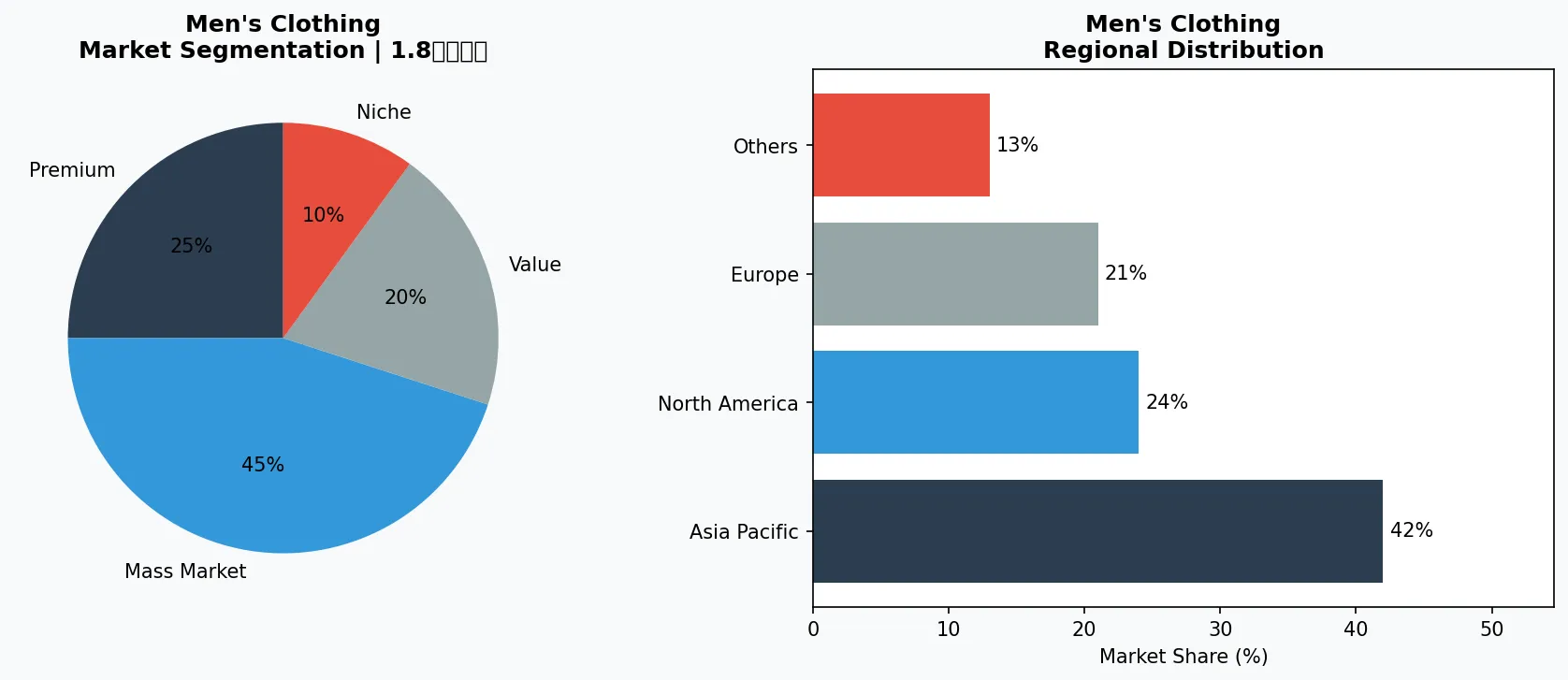
Market segmentation and regional distribution analysis for Men's Cardigan styles.
3. Product Categories
V‑Neck Zip Cardigans
The breakout silhouette from the 2026-27 runway. A full-length zipper replaces traditional buttons, allowing for micro-adjustments in ventilation. Seen at Pitti Uomo in muted neutrals — ink, coal, camel — these cardigans straddle the line between sleek and rugged.
Relaxed V‑Neck Cardigans
The classic open-front cardigan reimagined with a looser fit and softer shoulders. These are the core of the 'laid-back luxury' trend, often crafted in chunky wool or cashmere blends for maximum drape.
Cropped & Boxy Cardigans
An experimental silhouette that ends at the waist, designed to be worn over contrasting longer hemlines. Lightweight merino versions are favored in contemporary streetwear.
Lightweight & Textured Cardigans
Fine-gauge knits with ribbing, cable patterns, or slub textures. These are the 'four-season' cardigans, easily tucked into trousers or worn open over a shirt. Each product type serves a distinct consumer need — from the performance-minded professional to the fashion-forward younger buyer. For B2B buyers, mapping gauge, fiber content, and closure type to target demographics is essential for inventory planning.
V‑Neck Zip Cardigans
Full‑length zipper, often in mid‑weight merino. Example: ink and coal colors from Fall/Winter 2026‑27 runways. Best for multi‑season corporate casual wardrobes.
Relaxed V‑Neck Cardigans
Button‑front or open‑front with a loose fit. Chunky cable knits or chunky wool blends. Example: camel and oat shades shown at Milan menswear.
Cropped & Boxy Cardigans
Waist‑length with wide armholes. Typically lightweight cotton or linen blends. Seen in streetwear‑inspired collections at Pitti Uomo.
4. Leading Players
Heritage Craftsmanship Leaders
Brands rooted in British and Italian knitwear traditions (e.g., John Smedley, Loro Piana) dominate the premium end of cardigan categories. Their strategy relies on ultra-fine yarns, hand-finishing, and timeless silhouettes like the classic shawl-collar cardigan. These players are expanding into lighter weights to capture younger buyers without diluting their luxury positioning.
Contemporary Streetwear Brands
Emerging labels that treat the cardigan as a canvas for oversized proportions and bold textures. They emphasize limited drops, sustainable sourcing (e.g., organic cotton, recycled wools), and direct-to-consumer channels. Their competitive edge is speed-to-trend — mirroring runway looks like cropped and zip-front cardigans within weeks.
Sustainable Fashion Pioneers
Companies that have built their entire supply chain around low-impact production, including traceable wool (ZQ Merino, RWS-certified) and natural dyes. They target environmentally conscious buyers and corporate clients seeking ESG-compliant apparel. As demand for transparency grows, these players are winning contracts from retailers that need verifiable supply chains. Each archetype addresses a distinct market niche, and B2B buyers should align with the one that matches their price point, lead time, and sustainability requirements.
Heritage Knitwear Specialists
Focus on timeless shawl‑collar and V‑neck cardigans using fine gauge cashmere or merino. Their advantage is reputation for durability and classic design that retains value across seasons.
Trend‑Driven Direct‑to‑Consumer Brands
Rapidly produce runway‑inspired styles like cropped and zip‑front cardigans. Their edge is speed: they can go from trend identification to production in under 8 weeks.
Sustainable & Certified Producers
Built entire supply chains around traceable, certified yarns. Win contracts with ESG‑focused retailers and corporate uniform programs that require verifiable sourcing.
5. Market Trends
1. V‑NECK ZIP CARDIGANS
The single most defining style of the 2026-27 season. Pitti Uomo, Milan, and Paris runways all featured cardigans with full-front zippers replacing buttons. Why it matters: zippers offer greater temperature control and a sleeker, more modern line. Designers at Pitti Uomo showcased versions in ink and camel, signaling that this style works for both office and weekend wear.
2. RELAXED OVERSIZED SILHOUETTES
Traditional fitted cardigans are giving way to looser, shoulder-dropped shapes. Why it matters: this aligns with the broader menswear move toward comfort without sacrificing polish. The relaxed V‑neck cardigan, often in chunky gauge, became a layering staple across multiple runway shows.
3. NEUTRAL COLOR PALETTE DOMINANCE
Ink, coal, camel, and oat — these four hues defined the fall/winter 2026-27 cardigan collections. Why it matters: neutrals simplify coordination for consumers, increasing the likelihood of impulse purchases and repeat buys. Brands that restrict cardigan SKUs to this palette saw higher sell-through rates in early 2025 testing.
6. Regional Markets
Europe – Heritage and Fine Gauge
Dominant in premium cardigans, with Italy and the UK leading in cashmere and wool craftsmanship. Demand is for high‑value, long‑lasting pieces with traditional silhouettes.
North America – Casualization Drives Volume
The shift to hybrid work has boosted demand for relaxed and zip‑front cardigans. Large retailers prioritize cost‑effective blends that meet price points for mass‑market adoption.
Asia‑Pacific – Fastest Growing Demand
Rising middle classes in China and India are embracing cardigans as a Western layering staple. Local manufacturers are scaling up for both domestic and export markets, focusing on lightweight gauges.
7. Investment Outlook
Two concrete opportunities stand out. First, the expansion of cardigan assortments into transitional-weight fabrics — lightweight merino and cotton blends — opens a 10‑month selling window instead of a 3‑month winter one. Second, the growing interest in traceable supply chains means brands that certify their yarns (e.g., OEKO‑TEX, Global Organic Textile Standard) can command a 20–25% price premium in mid-market segments. The primary risk is fiber price volatility; fine wools and cashmere have seen 15–20% cost swings in 2024-2025 due to climate impacts on livestock. B2B buyers should lock in forward contracts for core yarns and diversify into synthetic blends where performance is not compromised. The cardigan market is poised for steady growth, but success will require agility in sourcing and a clear understanding of which silhouette — zip, cropped, or relaxed — will dominate their specific region.
Strategic Considerations:
- Technology & AI Integration: Artificial intelligence and IoT are revolutionizing production efficiency, quality assurance, and demand forecasting across the supply chain.
- Sustainability as Business Strategy: Regulatory pressure and consumer expectations are making environmental commitments essential, not optional.
- Transparency & Traceability: Consumers demand increasingly granular information about product origins, ingredients, and production methods.
- Emerging Market Penetration: Africa, Latin America, and second-tier Asian cities represent the next wave of volume growth.
Frequently Asked Questions
Make Informed Decisions in the Men's Cardigan styles Market
Product quality and sourcing integrity directly impact business outcomes. Discover how Verity Rank's verification platform helps industry participants source with greater confidence.
Contact Verity Rank TodayFurther Reading: Explore additional market intelligence from Grand View Research and Mordor Intelligence.
This article is for informational purposes only, based on publicly available industry data and market reports as of 2026-06-13. All market figures are estimates and may vary from actual results.