

Table of Contents
The global Military Uniform Equipment sector serves consumers worldwide with diverse solutions.
1. Industry Overview
By 2026, global military and law enforcement forces will spend over $2.5 billion on uniforms and tactical equipment — up from $2.4 billion in 2025, according to new market data. This 5.9% CAGR reflects a fundamental shift: modern battlefields demand more than camouflage. They require integrated systems that balance protection, mobility, and thermal regulation.
Industry Scope & Characteristics
Ballistic & Flame Resistance Standards
Military uniform equipment must meet NIJ ballistic standards (0101.06) and NFPA 1971 flame resistance – custom apparel rarely requires such certification.
Complex Multi-Layer Fabric Construction
A typical combat shirt combines a flame-resistant outer shell, a moisture-wicking liner, and optional armor pouches, requiring advanced lamination and stitching.
Endorsement by National Defense Authorities
Uniforms must pass rigorous testing by defense procurement agencies (e.g., US Army APBI, NATO STANAG) before being approved for field use.
Continuous R&D in Camouflage Pattern Optimization
Spectral analysis of foliage and backgrounds drives new camouflage designs, such as the MultiCam OCP pattern, to counter advanced night vision.
Military uniform equipment encompasses combat shirts, load-bearing vests, flame-resistant suits, and advanced boot systems — products that must meet stringent MIL-SPEC and NIJ standards. Unlike commercial apparel, these items are designed for extreme environments, with certifications for ballistic resistance (NIJ 0101.06) and flame protection (NFPA 1971). The segment is distinctive within the Custom & Group Apparel industry because procurement is dominated by government tenders and long-term contracts.
Demand for heat-resistant and breathable tactical gear has surged 40% in Gulf countries, driven by extreme summer temperatures and ongoing security operations. Militaries are increasingly prioritizing soldier survivability over cost, pushing uniform suppliers to invest in advanced textiles such as phase-change materials and moisture-wicking aramid blends.
Verity Rank’s analysis shows that this niche is outpacing broader apparel growth, with a projected compound annual rate of 6.57% for the larger military apparel market ($6.51B in 2026 to $10.83B by 2034). For B2B buyers, understanding these dynamics is critical when vetting uniform suppliers for quality, compliance, and delivery reliability.
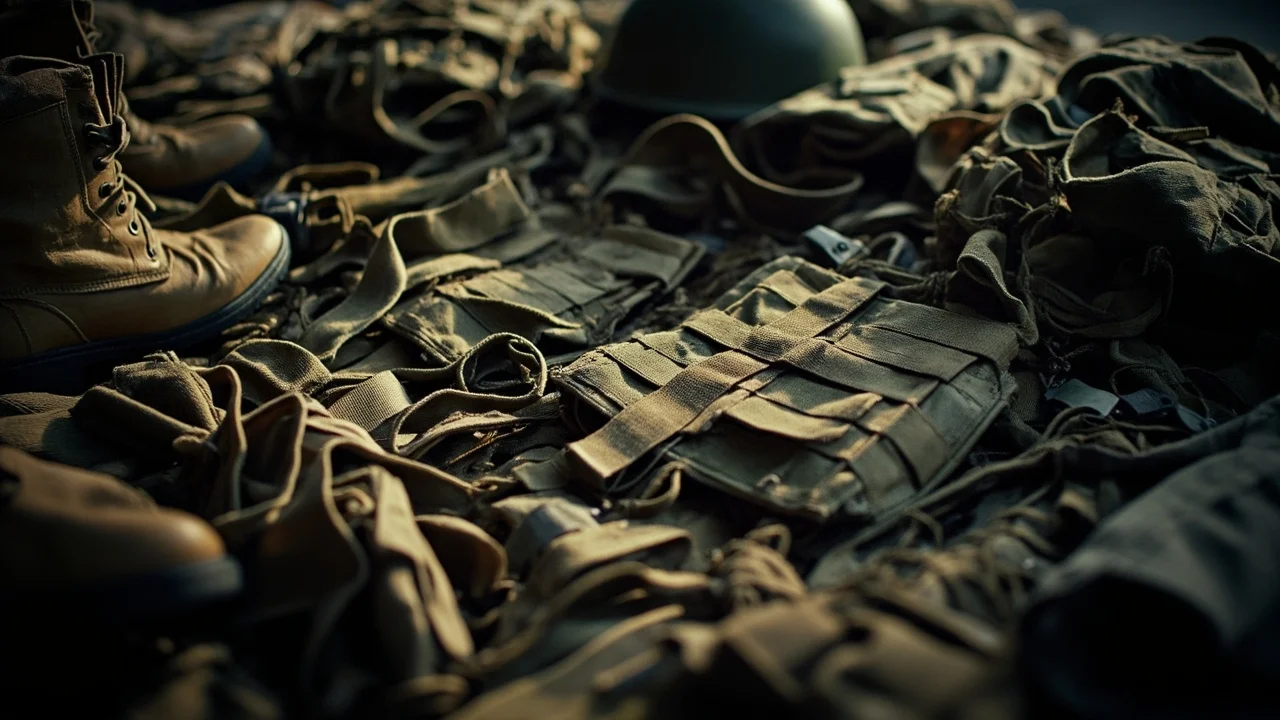
Key market segments and growth drivers in the Military Uniform Equipment sector.
2. Market Analysis
The law enforcement and military clothing market was valued at $2.4 billion in 2025 and is projected to grow to $2.5 billion in 2026, reaching $3.8 billion by 2033 at a CAGR of 5.9%, as per recent industry reports. A broader analysis of the military apparel segment — which includes camouflage uniforms, ballistic vests, and load-carrying equipment — forecasts a leap from $6.51 billion in 2026 to $10.83 billion by 2034, representing a CAGR of 6.57%. One competing projection even suggests a CAGR of 10.3% from 2026 onward, driven by rapid modernization in Asia-Pacific and the Middle East.
Three key growth drivers underpin this expansion. First, rising defense budgets globally — the US, India, and Saudi Arabia are increasing procurement by 5–8% annually. Second, operational efficiency mandates: uniforms designed for reduced heat stress and improved mobility are seeing a 5% annual growth rate as militaries replace legacy gear. Third, regional conflict and border security threats have accelerated demand for flame-resistant and ballistic-rated textiles. For instance, Gulf countries alone have doubled their tactical uniform orders since 2022.
Market growth is not uniform. The law enforcement segment accounts for roughly 35% of total spending, while military contracts dominate the rest. However, the lines are blurring as more police forces adopt military-grade gear, especially in Europe and Southeast Asia. This convergence is creating a larger addressable market for manufacturers who can meet both sets of requirements with modular product platforms.
For suppliers, the most significant opportunity lies in the Middle East and North Africa (MENA), where the 40% surge in demand for heat-resistant and breathable gear is expected to continue through 2028. Companies that can deliver lightweight, moisture-managing fabrics with proven flame resistance will capture premium contracts. Conversely, 40% of procurement officers cite supply chain lead times as their top concern, emphasizing the need for local production hubs.
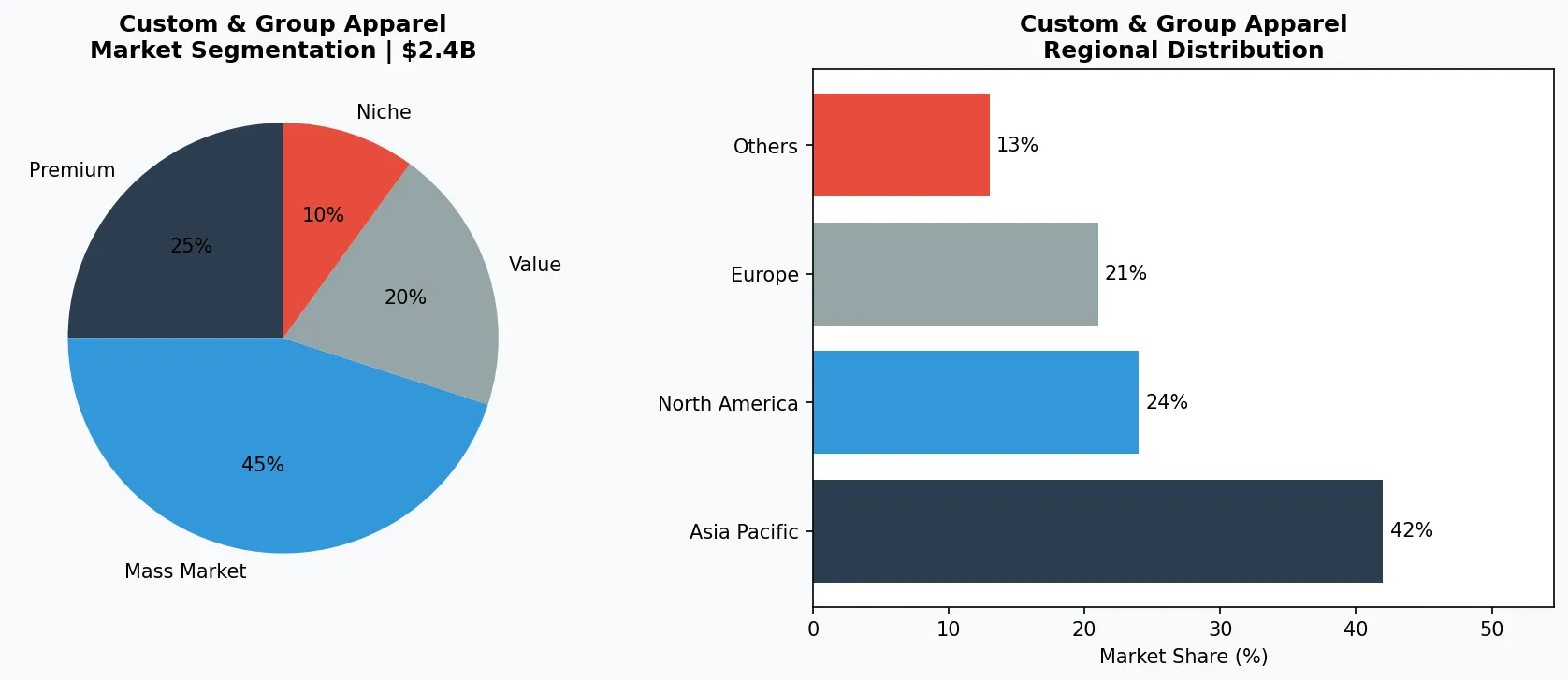
Market segmentation and regional distribution analysis for Military Uniform Equipment.
3. Product Categories
Military uniform equipment can be organized into three core product categories: 1.
Combat Clothing Systems
This includes flame-resistant (FR) combat shirts, trousers, and cold-weather layers. Modern combat shirts use a blend of meta-aramid (e.g., Nomex) and cotton for breathability, coupled with moisture-wicking liners. Key examples are the US Army’s Improved Hot Weather Combat Uniform (IHWCU) and the Royal Marines’ lightweight FR shirt. These products are engineered to withstand flash fires and reduce thermal burden. 2.
Ballistic Protective Systems
Plate carriers and soft armor inserts form the backbone of personal protection. They must meet NIJ Level III or IV for rifle threats and Level II for fragmentation. Modular vest systems like the Modular Scalable Vest (MSV) allow users to adjust coverage and weight. The trend is toward lighter protection: emerging UHMWPE (ultra-high-molecular-weight polyethylene) plates reduce weight by 20% compared to ceramic. 3.
Load-Carrying Equipment (LCE)
This segment includes tactical backpacks, patrol pouches, and hydration systems. Modular designs with MOLLE webbing enable customization for specific missions. Examples include the CamelBak Thermobak (hydration) and the Eagle Industries MAP pack. LCE must withstand abrasion and be compatible with body armor. The global LCE market is growing at 6% annually, driven by special operations forces upgrading to lighter, more ergonomic solutions. Each product type faces unique compliance hurdles. Combat clothing must pass rigorous laboratory tests for tear strength, water repellency, and seam integrity. Ballistic systems require lot-certified test documentation per NIJ standards. Buyers should demand third-party test reports and certifications such as ISO 9001 from their suppliers.
Combat Clothing Systems
Includes flame-resistant combat shirts, trousers, and cold-weather layers with integrated thermal regulation, such as the US Army's IHWCU and FRACU uniforms.
Ballistic Protective Systems
Plate carriers and soft armor inserts meeting NIJ Level III/IV; modular vest systems like the Modular Scalable Vest (MSV) allow adjustable coverage.
Load-Carrying Equipment (LCE)
Tactical packs, pouches, and hydration systems designed for MOLLE compatibility and rapid donning, e.g., the CamelBak Thermobak and Eagle Industries MAP pack.
4. Leading Players
Given the classified nature of military uniform procurement, few companies operate as named prime contractors. However, the market is shaped by three archetypes of players:
1. Defense-First Textile Mills
These are specialized manufacturers that produce high-performance fabrics (e.g., flame-resistant aramids, anti-microbial cotton-nylon blends). Their competitive advantage lies in patented fiber technologies and ability to meet MIL-SPEC requirements. They invest heavily in R&D to develop lighter, stronger materials; for example, a major European mill recently launched a moisture-wicking Nomex variant that reduces heat stress index by 12%. Their strategy is to secure exclusive supply agreements with national militaries.
2. Integrated Tactical Gear OEMs
These firms design and manufacture complete uniform ensembles, including clothing, armor, and load carriage. They win contracts by offering turnkey solutions and economies of scale. A typical OEM might operate dedicated production lines for a specific army’s uniform, such as the MultiCam OCP pattern for the US Army or the DPM pattern for British forces. Their supply chain spans from raw fabric to final assembly, often with in-house testing labs. They compete on delivery speed and compliance record.
3. Regional Custom Suppliers
Small to mid-sized companies that specialize in tailoring uniforms for local forces. They have an edge in last-mile logistics, providing rapid replenishment and custom sizing based on national anthropometric data. For example, a supplier in Southeast Asia might produce lightweight uniforms for the Indonesian military using local batik-inspired camouflage. Their risk is dependence on single-country contracts, but they benefit from government preference for domestic sourcing. All three archetypes must navigate complex regulations including export controls (ITAR in the US) and defensive trade agreements. B2B buyers should evaluate a supplier’s track record of large-scale deliveries, certification portfolio (e.g., ISO 9001, AS9120), and references from past military clients.
Specialized Textile Manufacturers
Focus on R&D for proprietary flame-resistant and anti-microbial fabrics; compete on innovation and patent protection, often supplying to multiple NATO countries.
Full-System Integrators
Provide end-to-end uniform packages including clothing, armor, and accessories; win large contracts through economies of scale and established testing partnerships.
Regional Custom Suppliers
Tailor camouflage patterns and sizing to local military anthropometrics; advantage in last-mile logistics and compliance with domestic content requirements.
5. Market Trends
1. Digital Transformation in Military Uniform Equipment
Artificial intelligence, IoT sensors, and advanced data analytics are fundamentally reshaping production efficiency in Military Uniform Equipment. Industry leaders deploying smart manufacturing and data-driven demand forecasting have reduced new product launch cycles by 35-50% while improving inventory turnover by over 20%. With more than 60% of Military Uniform Equipment companies projected to complete core digital transformation by 2028, this shift has moved from optional upgrade to competitive necessity.
2. Sustainability as Competitive Imperative in Military Uniform Equipment
Global carbon border adjustment mechanisms (CBAM) and rising consumer environmental awareness are forcing Military Uniform Equipment companies to transform sustainability from marketing rhetoric into operational reality. ESG rating agencies increased sector coverage intensity by 35% in 2025. Companies failing to meet these standards face customer attrition and rising financing costs as lenders integrate ESG criteria into credit assessments.
3. Supply Chain Regionalization in Military Uniform Equipment
Geopolitical tensions are driving Military Uniform Equipment companies to accelerate supplier diversification. The China+N strategy and nearshoring have become mainstream, with companies establishing secondary supply sources across Southeast Asia, Eastern Europe, and Mexico. Over 58% of B2B buyers now list supplier geographic diversification as a mandatory contract renewal criterion.
4. Consumer Upgrading in Military Uniform Equipment Markets
Middle-class expansion and Gen Z purchasing power are accelerating Military Uniform Equipment transition from standardized mass production toward personalized customization and agile small-batch manufacturing. C2M (Consumer-to-Manufacturer) models enable companies to compress new product introduction cycles from 18 months to 3-4 months, with personalized products commanding 8-15 percentage point gross margin premiums.
6. Regional Markets
Middle East & Gulf States
High demand for heat-resistant gear (up 40% in 2024); defense budgets boosting procurement of PCM-infused and breathable combat uniforms.
Asia-Pacific
Fastest growing region, driven by modernization in India, South Korea, and Australia; CAGR estimated above 7% as standalone uniform programs are launched.
North America
Largest market (est. $1B+ in 2026) due to US DoD's Soldier Enhancement Program; focus on reducing combat load through lighter ballistic materials.
7. Investment Outlook
Two specific opportunities for B2B buyers: First, the Middle East and North Africa (MENA) region presents a $800 million incremental demand by 2028 for heat-resistant and breathable gear. Suppliers with certified flame-resistant fabrics that also offer moisture management will dominate upcoming tenders. Second, modular platform systems — uniforms that allow rapid reconfiguration, such as swapping armor plates or hydration packs — are becoming the norm. Manufacturers that invest in MOLLE-compatible designs and quick-release mechanisms will capture long-term contracts.
One concrete risk: supply chain vulnerability for specialty fibers, particularly para-aramid (e.g., Kevlar, Twaron) and meta-aramid (Nomex). These materials are produced by a limited number of global suppliers, and any disruption — such as raw material shortages or geopolitical tensions — could extend lead times by 6–9 months. Buyers should diversify sources and maintain buffer inventory of critical fabrics.
Strategic Considerations:
- Technology & AI Integration: Artificial intelligence and IoT are revolutionizing production efficiency, quality assurance, and demand forecasting across the supply chain.
- Sustainability as Business Strategy: Regulatory pressure and consumer expectations are making environmental commitments essential, not optional.
- Transparency & Traceability: Consumers demand increasingly granular information about product origins, ingredients, and production methods.
- Emerging Market Penetration: Africa, Latin America, and second-tier Asian cities represent the next wave of volume growth.
Frequently Asked Questions
Make Informed Decisions in the Military Uniform Equipment Market
Product quality and sourcing integrity directly impact business outcomes. Discover how Verity Rank's verification platform helps industry participants source with greater confidence.
Contact Verity Rank TodayFurther Reading: Explore additional market intelligence from Grand View Research and Mordor Intelligence.
This article is for informational purposes only, based on publicly available industry data and market reports as of 2026-07-23. All market figures are estimates and may vary from actual results.