


Table of Contents

The global Natural Linen Fabric Products sector serves consumers worldwide with diverse solutions.
1. Industry Overview
In 2025, the linen fabric market hit USD 17.32 billion. That’s not a whisper — it’s a signal that natural linen fabric products are no longer a niche luxury but a structural shift in how global home textiles are sourced, specified, and sold. Unlike synthetic blends that dominated the last two decades, linen offers a unique combination of breathability, durability, and biodegradability that resonates with both eco-conscious consumers and procurement managers tightening sustainability mandates.
Industry Scope & Characteristics
Flax-to-Fabric Traceability
Natural linen fabric products offer full supply chain transparency from the flax field to the finished roll, enabling B2B buyers to verify origin, harvest year, and processing methods for each batch.
Linen requires substantially less water and fewer chemicals than cotton; modern wet-spinning mills recycle up to 95% of process water, making it one of the most sustainable home textile manufacturing processes available.
Certification Requirements
Common certifications include OEKO-TEX Standard 100 (no harmful substances), GOTS (organic fiber), and the Masters of Linen label (European origin). Many hospitality contracts now mandate at least one of these for natural linen fabric products.
Enzyme Finishing Innovation
Recent R&D focuses on cellulase enzyme treatments that soften linen without chemical softeners, reducing pilling and improving drape while maintaining the fiber’s natural strength — a key requirement for high-end bedding suppliers.
What makes natural linen fabric products distinctive within the broader Home Textiles & Fabrics industry is the fiber’s inherent properties: flax requires far less water than cotton, grows without heavy pesticide inputs, and yields a fabric that softens with each wash rather than degrading. For B2B buyers — from hotel chains to bedding manufacturers — this translates into a product that commands premium margins while meeting ESG targets. The market is already responding: the global linen fiber market was estimated at USD 2.21 billion in 2024 and is projected to reach USD 3.93 billion by 2033, growing at a 6.6% CAGR.
Yet the rush into linen is not without friction. Sourcing genuine natural linen — as opposed to cotton-linen blends or chemically softened imitations — requires rigorous supplier verification. Quality standards vary widely across regions, and price volatility in flax harvests (largely concentrated in Western Europe) creates periodic shortages. For buyers on platforms like Verity Rank, understanding the provenance and certification of natural linen fabric products is no longer optional; it’s a competitive necessity.
The category is also expanding beyond traditional bed sheets and pillowcases. We’re seeing natural linen penetrate curtains, sofa covers, and even carpets — applications where its moisture-wicking and anti-static properties provide a clear performance edge over synthetics. The question is no longer whether to switch to linen, but how fast the supply chain can scale to meet demand.
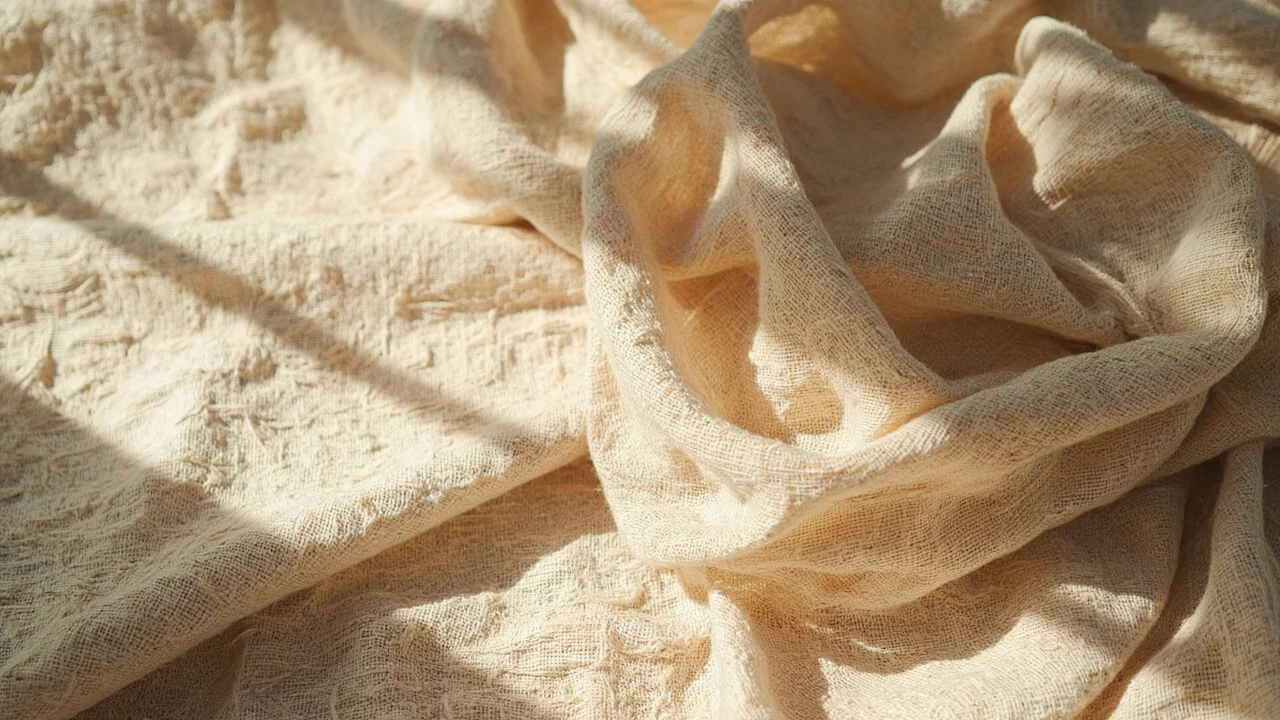
Key market segments and growth drivers in the Natural Linen Fabric Products sector.
2. Market Analysis
The numbers tell a clear story: natural linen fabric products are entering a sustained growth phase. The Linen Fabric Market, valued at USD 17.32 billion in 2025, is expected to grow at a CAGR of 5.33% from 2026 through 2032, driven by both residential and contract segments. The Cotton Linen Fabrics sub-market — which blends linen with cotton for cost optimization — is projected to grow at 5.4% annually from 2026 to 2033, indicating that even hybrid formulations are gaining traction.
Three macro drivers are propelling this expansion. First, the hospitality sector’s post-pandemic renovation wave: hotels and resorts are specifying natural linen bedding and curtains to distinguish guest experiences, often contracting directly with mills in Belgium or France. Second, the explosion of direct-to-consumer bedding brands that use ‘European flax linen’ as a core marketing differentiator. Third, regulatory pressure: the EU’s Textile Strategy (part of the Green Deal) is pushing importers toward biodegradable materials, and linen — unlike polyester — degrades naturally within a few years.
Geographically, Europe remains the dominant producer and consumer of natural linen fabric products, accounting for roughly 60% of global flax fiber production. But Asia-Pacific is the fastest-growing market, with Chinese manufacturers scaling up linen weaving capacity to feed domestic demand and export orders. The Linen Clothing Market — a parallel segment valued at USD 2.37 billion in 2025 — grew to an estimated USD 4.1 billion by 2035 at 5.7% CAGR, further validating consumer appetite for the material.
A less obvious but critical growth driver is the institutional segment. Hospitals, nursing homes, and corporate hospitality buyers are specifying linen because of its natural antimicrobial properties and resistance to dust mites. As workplace and healthcare linen standards tighten post-COVID, natural linen fabric products are moving from ‘nice to have’ to ‘specified in contracts’.
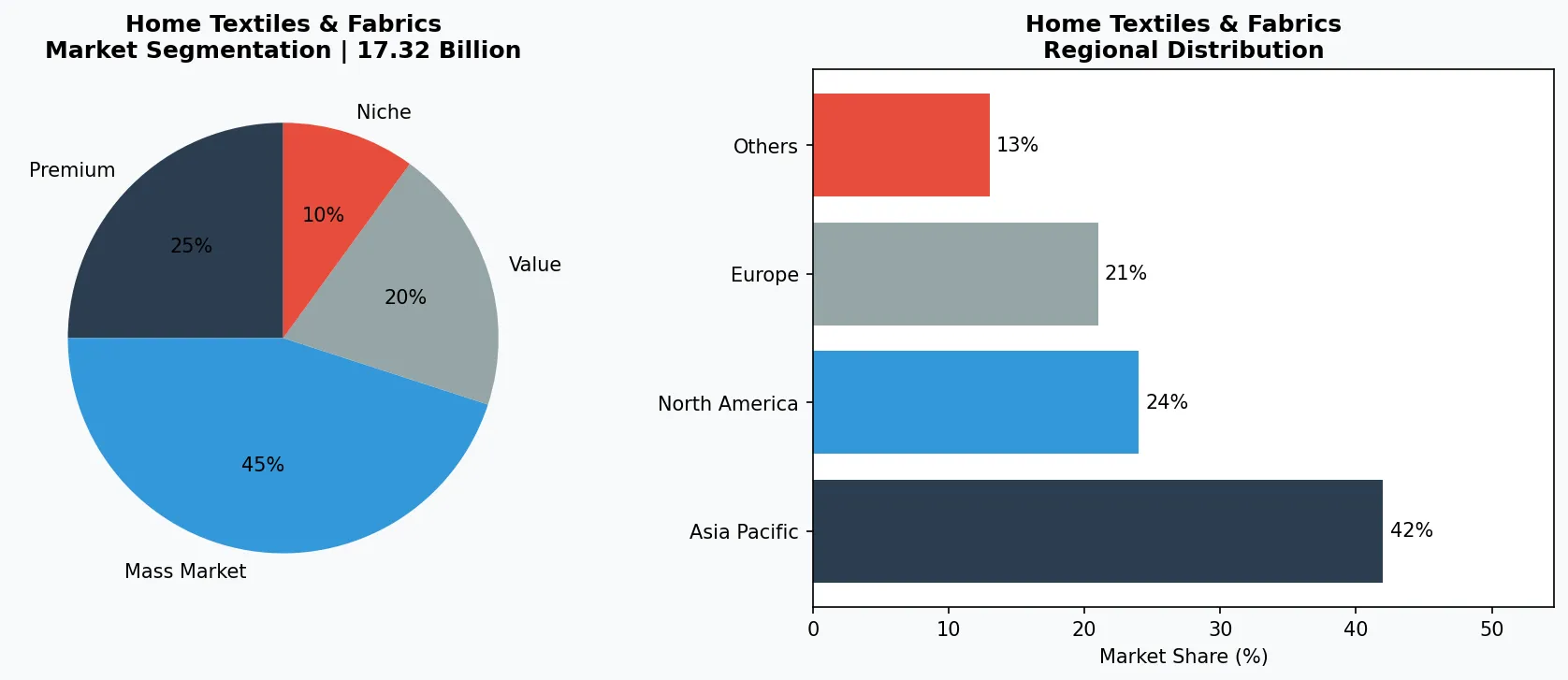
Market segmentation and regional distribution analysis for Natural Linen Fabric Products.
3. Product Categories
Within natural linen fabric products, three sub-categories dominate B2B procurement:
Bedding (sheets, pillowcases, duvet covers).
This is the largest volume segment. Buyers typically specify 100% long-staple flax with thread counts between 140 and 200 TC for a balance between durability and hand feel. Leading hospitality groups require OEKO-TEX or GOTS certification to guarantee no chemical residues. Example product: a 160-gram linen duvet cover set with enzyme-washed finish, commonly sourced from Eastern European mills.
Curtains and drapery.
Natural linen curtains are prized for their light-diffusing texture and natural thermal regulation. Commercial specifiers often choose heavier weights (280–350 gsm) lined with a blackout coating to meet fire-resistance standards (BS 5867 for contract interiors). Example: a 100% linen Roman blind with acrylic backing, used in boutique hotels to replace synthetic blackouts.
Table linens and sofa covers.
The hospitality and foodservice sector drives demand for linen tablecloths and napkins due to stain resistance (linen’s absorbency allows deep cleaning without fabric damage). Sofa covers in natural linen are gaining traction in residential and commercial settings, with slipcover designs that allow easy removal for laundering. Example: a linen-cotton blend upholstery fabric with 45,000 Martindale rubs, suitable for high-traffic lobby seating.
Premium Hospitality Bedding
100% long-staple European flax sheets (160–200 TC) enzyme-washed for softness, often specified by 5-star hotel chains and cruise liners. Example: Libeco's Alba range used by Four Seasons.
Contract Curtains & Drapery
Heavy-weight linen (280–350 gsm) with flame-retardant backcoating to meet BS 5867 standards, used in corporate offices and luxury hotels. Example: a 100% linen blackout curtain by Belgian weaver Verilin.
Residential Sofa Covers & Slipcovers
Linen-cotton blends (55/45) with high Martindale rub counts (>40,000) for durability. Popular among direct-to-consumer brands like Article and interior designers for washable slipcovers.
4. Leading Players
1. The Vertical Integrated Mills (e.g., Libeco, Safilin).
These European family-controlled companies control the entire process from flax cultivation to finished fabric. Their competitive advantage lies in traceability: buyers can specify exactly which field the flax came from. Libeco, based in Belgium, supplies many high-end hospitality chains and offers a ‘Flax to Fabric’ digital passport for each batch. Their strategy is premium-proof certification — every roll is tested for pH, formaldehyde, and azo dyes under OEKO-TEX Standard 100.
2. The Asian Volume Producers (e.g., China-based Linen Textile Exporters).
Large Chinese mills such as Zhejiang Deyang Textile Co. have invested heavily in wet-spinning technology to handle European flax imports and produce mid-range natural linen fabric products at scale. Their advantage is cost: they can deliver 100% linen sheeting at 30–40% below European mill prices. However, quality consistency remains a risk. Verification via third-party audits (like those offered on Verity Rank) is essential for buyers sourcing high volumes.
3. The Specialty Converters (e.g., niche European weavers).
Companies like Ireland-based Baird McNutt focus on unique finishes — garment-washed, crinkled, or stonewashed linen — for designer residential brands. They offer small minimum order quantities (MOQs) and rapid prototyping. Their strategy is agility: they can turn a custom color or finish in 4–6 weeks, compared to 12–16 weeks for large mills. This makes them ideal for boutique hotel chains or interior designers who need exclusive looks.
European Heritage Mill (Libeco)
Libeco controls flax sourcing from French and Belgian fields, offering full traceability and OEKO-TEX certified fabrics. Their strategy: premium vertical integration to serve luxury hospitality and designer brands.
Asian Volume Exporter (e.g., Zhejiang Deyang)
Large Chinese mills leverage wet-spinning technology to produce mid-range linen at 30% lower cost than European peers. Their edge is scale, but buyers must verify color consistency and chemical compliance via third-party audits.
Niche Converter (Baird McNutt, Ireland)
Specializes in artisan finishes — garment-washed, crinkled, and stonewashed linens. Low MOQs and rapid prototyping attract boutique hotels and interior designers seeking exclusive styles without large commitments.
5. Market Trends
1. SUSTAINABILITY CERTIFICATION DEEP-DIVE
Buyers are no longer satisfied with vague ‘eco-friendly’ claims. The European Linen & Hemp Confederation’s ‘Masters of Linen’ label, combined with GOTS certification, is becoming a baseline requirement in EU procurement. In 2025, major hotel group Accor announced it would require 100% certified linen bedding in all new properties by 2028. This trend forces suppliers to audit their entire supply chain from seed to sew.
2. HYBRID BLENDS FOR PERFORMANCE
Pure linen can wrinkle excessively and cost more. Enter cotton-linen blends (typically 55% linen/45% cotton) that offer easier care and lower price points. The Cotton Linen Fabrics market growing at 5.4% CAGR 2026–2033 reflects this shift. Example: a popular hospitality spec is ‘linen-rich’ percale that passes 100+ industrial launderings without fraying.
3. DIGITAL TRACEABILITY PLATFORMS
Closed-loop systems that let B2B buyers scan a QR code on a fabric roll to see the harvest date, spinning mill, dye batch, and shipping route. Mills like Libeco and Italy’s Solbiati have implemented blockchain-based tracking. This is not marketing — it’s a compliance tool for importers needing to prove no forced labor or illegal dyes under EU due diligence laws.
6. Regional Markets
Western Europe (France, Belgium, Netherlands)
Grows over 80% of the world's flax. Dominates premium natural linen fabric products with tight certification standards (Masters of Linen) and high production costs, but attracts buyers needing traceability.
China (Eastern provinces like Zhejiang)
The largest importer of raw flax and fastest-growing producer of finished linen goods. Chinese mills are expanding capacity for cotton-linen blends, targeting mid-market applications in hospitality and residential.
Eastern Europe (Poland, Lithuania)
Emerging as a cost-competitive alternative to Western Europe for linen weaving, with lower labor costs but still close to flax growing regions. Lithuania’s linen industry is gaining traction for bedding exports to Scandinavia.
7. Investment Outlook
Two concrete opportunities for buyers: first, lock in long-term contracts with European flax mills before 2027, when the next EU Common Agricultural Policy reforms may reduce flax subsidies, tightening supply. Second, leverage digital sourcing platforms like Verity Rank to evaluate cotton-linen blends from Asian manufacturers — these offer a 20–30% cost savings while maintaining ‘natural’ marketing claims.
One clear risk: the 6.6% growth in linen fiber demand outpaces flax production expansion. A poor harvest in Normandy (which grows 80% of the world’s flax) could spike prices 15–20% in a single season. Buyers should diversify suppliers across Western Europe and plan for 90–120 day lead times on premium grades.
Strategic Considerations:
- Pre-2027 Flax Supply Contracts: Lock long-term deals with European flax growers before anticipated EU subsidy reductions in 2027 that may tighten supply and push prices up 10–15%.
- Cotton-Linen Blend Cost Savings: Specify 55/45 cotton-linen blends for hospitality sheeting to reduce cost by 20–30% while maintaining natural fiber marketing advantages.
- Crop Volatility in Normandy: A single poor harvest in France can spike linen prices 15–20% within a quarter; buyers should maintain buffer inventory and diversify across Polish and Baltic flax sources.
- Certification Compliance Deadlines: EU's Corporate Sustainability Due Diligence Directive (CSDDD) will require full traceability by 2027 — buyers who delay verifying supplier documentation risk fines and exclusion from tenders.
Frequently Asked Questions
Make Informed Decisions in the Natural Linen Fabric Products Market
Product quality and sourcing integrity directly impact business outcomes. Discover how Verity Rank's verification platform helps industry participants source with greater confidence.
Contact Verity Rank TodayFurther Reading: Explore additional market intelligence from Grand View Research and Mordor Intelligence.
This article is for informational purposes only, based on publicly available industry data and market reports as of 2026-07-13. All market figures are estimates and may vary from actual results.