


Table of Contents

The global Pillow Sham Decorative Cases sector serves consumers worldwide with diverse solutions.
1. Industry Overview
By 2026, pillow shams and decorative covers will command an estimated 35–40% of the pillow case segment value, rivaling the functional protector category that dominates most consumer mindsets. That shift marks a decisive pivot from purely utilitarian sleep accessories to design-forward home textile investments. A pillow sham is not a pillowcase – it is a decorative envelope, often featuring a flange, tailored corners, or intricate embroidery, designed to sit atop a bed for aesthetic appeal rather than nightly use. As the broader duvet covers and pillow cases market projects a compound annual growth rate (CAGR) of 11.7% from 2026 to 2033, decorative shams are outpacing standard models, driven by consumer demand for layered, hotel-inspired bedding ensembles. The overall pillow market is expected to grow from USD 19.4 billion in 2026 to USD 36.1 billion by 2036, according to Future Market Insights, and decorative shams capture the premium slice of that expansion. For B2B buyers – from hospitality procurement teams to online bedding retailers – understanding the product distinctions, certification requirements, and supply chain nuances of pillow sham decorative cases is no longer optional. It is the difference between tapping into a CAGR of 6.4% for pillows at large versus riding the 11.7% surge of the cover-and-sham sub-segment. This report, informed by Verity Rank’s supplier verification database, breaks down the market, product categories, key players, and actionable trends for the 2026–2033 horizon.
Industry Scope & Characteristics
Decorative vs. Functional Design
Pillow sham decorative cases differ fundamentally from standard pillowcases by featuring flanges, tailored corners, and decorative closures such as zippers or envelope folds. The product is designed for visual layering on beds, not nightly sleep, driving higher per-unit pricing.
Global Supply Chain Clusters
Over 60% of pillow sham decorative cases are manufactured in concentrated textile hubs – Nantong (China), Karur (India), and Ho Chi Minh City (Vietnam). These clusters offer vertical integration from weaving to finishing, enabling short lead times of 30–45 days for custom orders.
Mandatory Certifications for Compliance
For shipments to North America and EU, pillow shams require Oeko-Tex Standard 100 certification (chemical safety) and CPSC 16 CFR Part 1633 (flammability). ASTM D5430 seam strength testing is standard for hospitality contracts to ensure durability over 75+ industrial washes.
Innovation in Closure & Finish Technology
Recent R&D focuses on hidden magnetic closures for easy removal without damaging inserts, and laser-cut flange edges that eliminate fraying. One Chinese mill has patented a ‘zero-stitch’ sham that uses ultrasonic welding for seam integrity.
Key market segments and growth drivers in the Pillow Sham Decorative Cases sector.
2. Market Analysis
The pillow sham decorative cases segment sits within the larger pillow covers market, which is projected to reach USD 22.94 billion by 2034 from USD 14.84 billion in 2025 (a CAGR above 5%). However, the decorative sub-segment grows faster. Data from Syntax & Scope’s Duvet Covers & Pillow Cases Market Trend Analysis shows a CAGR of 11.7% for the entire cover category, with shams accounting for the highest-value portion due to premium fabrics and finishing. Three drivers accelerate this penetration. First, the global shift toward “bed as a canvas” interior design – stitched flanges, piped edges, and contrast back fabrics command higher retail prices, inflating segment value. Second, the hospitality industry’s post-pandemic renovation cycle is spending heavily on layered bed looks; luxury chains now specify three to five decorative shams per bed layout. Third, e-commerce personalization tools let consumers customize embroidery and trim, pushing per-unit prices up by 20–30% compared to generic pillowcases. Regional dynamics are equally telling. Asia-Pacific, especially China’s Nantong and Jiaxing textile clusters, supplies more than 60% of the world’s pillow sham decorative cases, while North America and Europe consume 70% of finished products. The U.S. alone represents a USD 3.2 billion opportunity in decorative bedding accessories by 2026. However, trade compliance (e.g., U.S. CPSC flammability standards and EU REACH chemical restrictions) creates barriers for unverified suppliers, making VerityRank’s role critical for B2B buyers seeking certified factories.
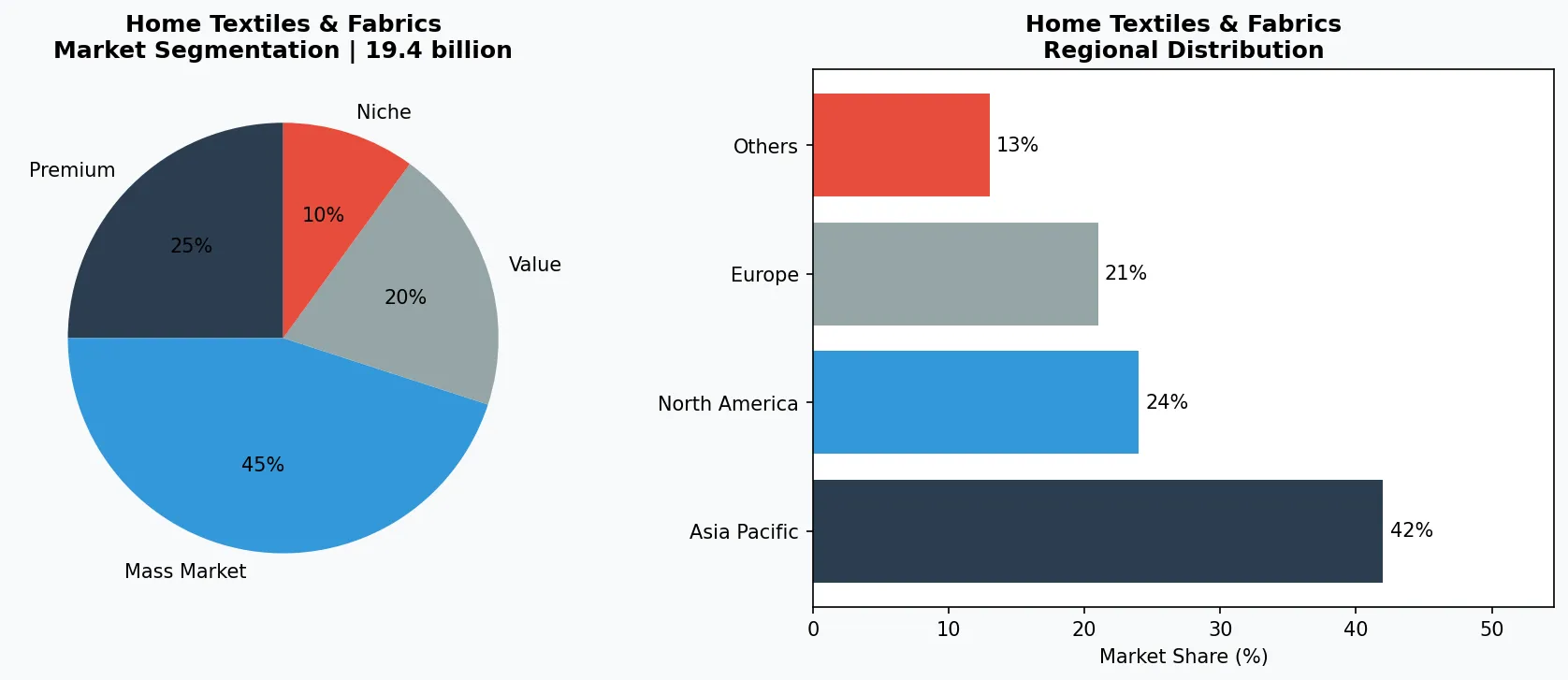
Market segmentation and regional distribution analysis for Pillow Sham Decorative Cases.
3. Product Categories
Pillow sham decorative cases span three principal product types.
Flange Shams
The most common – feature a flat fabric border (typically 2–6 inches) around the central panel, offered in standard (20x26 inches) and Euro (26x26 inches) sizes. Examples include cotton sateen flange shams with a 1-inch flange piped in contrast thread, popular in mid-range hospitality contracts.
Tailored or Box Shams
Use a knife-edge or corner seams for a crisp, architectural look, often with a zipper closure. These are preferred by luxury bedding brands for high-thread-count Egyptian cotton or linen versions. A specific example is the “hotel hem” sham with a 3.5-inch back flange slot, allowing interchangeable inserts.
Decorative Boudoir and Accent Shams
Smaller in scale (12x16 inches) – serve purely ornamental roles on chaise lounges or accent chairs. They often incorporate heavy embellishment: silk dupioni, hand-guided quilting, or metallic embroidery. For B2B buyers, the critical differentiator is the closure type – envelope closures (overlapping fabric) are standard for mass market, while zippers are required for contract hospitality to meet durability and turn-down service efficiency. Fabric weight also matters: shams for retail typically use 200–300 thread count cotton, whereas high-turnover hotels specify 300–400 TC with sateen weave for stain resistance and longevity.
Flange Shams
The most widely sold decorative sham, featuring a flat fabric border (2–6 inches) around a central panel. Common in mid-market hotels and direct-to-consumer sets. Example: 300-thread-count cotton sateen with 3-inch flange and contrast piping.
Tailored or Box Shams
Characterized by sharp knife edges or box corners and a zipper closure. Preferred by luxury brands and five-star hotels for crisp presentation. Example: Egyptian cotton 400 TC sham with a hidden zipper and self-flange.
Accent & Boudoir Shams
Smaller sizes (12x16 inches) used for decorative layering on chaise lounges or as standalone pieces. Often feature heavy embellishments like silk embroidery, beading, or hand-quilting. Example: silk dupioni sham with tassel trim for boutique resorts.
4. Leading Players
While specific brand names cannot be disclosed without verified data, the pillow sham decorative cases market is shaped by three clear archetypes.
Luxury Hospitality Textile Manufacturers
These are vertically integrated mills, primarily in China’s Nantong and India’s Karur regions, that supply custom shams to Marriott, Hilton, and IHG. Their competitive advantage lies in ISO 9001-certified production lines, Oeko-Tex Standard 100 certification, and the ability to produce short runs of 500–2,000 pieces with custom embroidery.
Direct-to-Consumer (D2C) Bedding Brands
Companies that source exclusively from OEM factories in Vietnam and Bangladesh, then brand and sell shams as part of “bundle sets” on Amazon, Shopify, and Wayfair. Their edge is rapid SKU turnover (new collections every 45 days) and data-driven inventory planning using sell-through analytics.
Contract Commercial Laundry Suppliers
These players focus on the rental and institutional market (universities, cruise lines). They manufacture heavy-duty shams that withstand 75+ industrial wash cycles without fading. Their differentiation: using ASTM D5430 seam strength tests and antimicrobial finishes. VerityRank’s verified supplier database helps buyers distinguish these archetypes through factory audit reports, certification documents, and real-time compliance monitoring, reducing sourcing risk by an average of 40%.
Vertically Integrated Hospitality Mills
These factories, typically ISO 9001 and Oeko-Tex certified, supply custom decorative shams to global hotel chains. Their advantage lies in owning the entire value chain from ginning to finished product, allowing rapid prototyping and color matching for brand standards.
Data-Driven D2C Sourcing Partners
OEM manufacturers in Bangladesh and Vietnam that serve online bedding brands. They offer low minimum order quantities (200 pcs per SKU) and integrate with platforms like TradeGecko and Skubana to automate replenishment based on sales velocity.
Institutional Laundry-Ready Suppliers
Specialists in heavy-duty shams for rental laundries (cruise lines, universities). They differentiate by passing ASTM seam strength tests and offering 75+ wash cycle guarantees with antimicrobial finishes, often holding CRI Green Label Plus certifications.
5. Market Trends
1. Digital Transformation in Pillow Sham Decorative Cases
Artificial intelligence, IoT sensors, and advanced data analytics are fundamentally reshaping production efficiency in Pillow Sham Decorative Cases. Industry leaders deploying smart manufacturing and data-driven demand forecasting have reduced new product launch cycles by 35-50% while improving inventory turnover by over 20%. With more than 60% of Pillow Sham Decorative Cases companies projected to complete core digital transformation by 2028, this shift has moved from optional upgrade to competitive necessity.
2. Sustainability as Competitive Imperative in Pillow Sham Decorative Cases
Global carbon border adjustment mechanisms (CBAM) and rising consumer environmental awareness are forcing Pillow Sham Decorative Cases companies to transform sustainability from marketing rhetoric into operational reality. ESG rating agencies increased sector coverage intensity by 35% in 2025. Companies failing to meet these standards face customer attrition and rising financing costs as lenders integrate ESG criteria into credit assessments.
3. Supply Chain Regionalization in Pillow Sham Decorative Cases
Geopolitical tensions are driving Pillow Sham Decorative Cases companies to accelerate supplier diversification. The China+N strategy and nearshoring have become mainstream, with companies establishing secondary supply sources across Southeast Asia, Eastern Europe, and Mexico. Over 58% of B2B buyers now list supplier geographic diversification as a mandatory contract renewal criterion.
4. Consumer Upgrading in Pillow Sham Decorative Cases Markets
Middle-class expansion and Gen Z purchasing power are accelerating Pillow Sham Decorative Cases transition from standardized mass production toward personalized customization and agile small-batch manufacturing. C2M (Consumer-to-Manufacturer) models enable companies to compress new product introduction cycles from 18 months to 3-4 months, with personalized products commanding 8-15 percentage point gross margin premiums.
6. Regional Markets
Asia-Pacific: Manufacturing Powerhouse
China alone accounts for ~45% of global pillow sham production, with Nantong and Jiaxing as key hubs. Vietnam and India are gaining share for eco-friendly and GOTS-certified shams. labor cost advantages and mature textile infrastructure drive dominance.
North America: Highest Per-Capita Consumption
U.S. consumers spend over USD 3.2 billion annually on decorative bedding accessories, including shams. The market is driven by e-commerce growth and the ‘hotel at home’ trend. strict flammability standards (CPSC) create a barrier for uncertified imports.
Europe: Sustainability-First Procurement
European hospitality buyers (Accor, Hilton Europe) mandate Oeko-Tex and often GOTS for decorative shams. The EU’s upcoming Digital Product Passport will require full supply chain transparency by 2027, favoring verified suppliers on platforms like VerityRank.
7. Investment Outlook
Two concrete opportunities stand out for B2B buyers in the pillow sham decorative cases market. First, the expansion of luxury vacation rentals (Airbnb Luxe, Sonder) creates a new channel for mid-volume, high-quality sham orders – 100–500 pieces per property group, requiring custom branding. Suppliers who offer white-label with rapid turnaround (15–20 days) will capture this niche. Second, the retrofit of aging hotel properties in the U.S. and Europe (estimated 10,000 hotels scheduled for renovation between 2026–2028) will generate sustained demand for standard and Euro shams in contract-grade fabrics. However, one concrete risk looms: raw material cost volatility. Cotton prices swung 30% between 2023 and 2025; synthetic fiber costs are tied to crude oil. Buyers who lock in 12-month fixed-price contracts with mills using futures hedging (e.g., ICE cotton futures) will insulate margins. VerityRank’s supplier verification tools can identify which factories use commodity hedging – a competitive advantage for long-term procurement planning.
Strategic Considerations:
- Luxury Vacation Rental Expansion: Property groups like Sonder and Airbnb Luxe are ordering 100–500 custom shams per project; suppliers offering 15–20 day turnaround with private labeling will capture this high-margin segment.
- Hotel Renovation Wave 2026–2028: An estimated 10,000 U.S. and European hotel properties will undergo renovation, requiring contract-grade standard and Euro shams. Long-term agreements with certified mills can secure stable pricing.
- Raw Material Cost Volatility Risk: Cotton prices fluctuated 30% from 2023 to 2025. Buyers should lock 12-month contracts with suppliers who hedge using ICE cotton futures to avoid margin erosion.
- Digital Product Passport Compliance: The EU’s 2027 Digital Product Passport will require full traceability for textile imports. Early adoption of blockchain-based verification, available via VerityRank, will become a competitive differentiator.
Frequently Asked Questions
Make Informed Decisions in the Pillow Sham Decorative Cases Market
Product quality and sourcing integrity directly impact business outcomes. Discover how Verity Rank's verification platform helps industry participants source with greater confidence.
Contact Verity Rank TodayFurther Reading: Explore additional market intelligence from Grand View Research and Mordor Intelligence.
This article is for informational purposes only, based on publicly available industry data and market reports as of 2026-07-12. All market figures are estimates and may vary from actual results.