

Table of Contents

The global Respiratory Mask Types N95 sector serves consumers worldwide with diverse solutions.
1. Industry Overview
The global N95 respirator market was worth $3.5 billion in 2025 and is projected to surge to $6.6 billion by 2033, growing at a compound annual rate of 8.6%. That demand is not a pandemic afterthought — it is a structural shift driven by chronic air quality concerns, stricter workplace safety regulations, and a healthcare system that now treats respiratory protection as a permanent inventory line item. What sets the N95 apart within the broader protective textiles universe is its exacting performance standard: it must filter at least 95% of airborne particles (0.3 microns) under NIOSH testing protocols. This makes it a technical textile product, not a commodity mask. The nonwoven meltblown polypropylene layer — electrostatically charged to capture particles — is the core technology that defines the category. Unlike surgical masks or cloth face coverings, N95s are regulated as personal protective equipment (PPE) and must demonstrate a tight facial seal. That seal is measured by fit factor, and it splits the market into two main physical formats: flat-fold and cup-shaped respirators. The flat-fold designs are favored in healthcare settings for easier storage and donning, while cup-shaped units dominate industrial and construction sites where durability and longer shift wear matter. The distinction extends to valved versus non-valved models, a choice that affects both comfort and infection control protocols. Today, the N95 segment accounts for nearly 40% of the total disposable respirator market, which itself is on track to exceed $9.6 billion by 2034.
Industry Scope & Characteristics
Electrostatic Meltblown Filter Media
The core technology of N95 masks is a nonwoven polypropylene layer that is electrostatically charged to attract and capture 95% of 0.3-micron particles. This specific engineering makes N95 a high-performance technical textile, not a commodity mask.
Manufacturing Requires Cleanroom-Class Web Forming
Producing consistent meltblown fabric demands precise control of polymer melt temperature, air flow, and fiber diameter. Most large N95 manufacturers operate proprietary web-forming lines to maintain yield rates above 90%.
NIOSH Approval Is Non-Negotiable for B2B Sales
In the U.S., N95 respirators must undergo certification by the National Institute for Occupational Safety and Health (NIOSH) under 42 CFR Part 84. Testing includes sodium chloride particle filtration, airflow resistance, and fit among a panel of human subjects.
Antiviral/ Antimicrobial Coatings Are the Next Frontier
Several R&D teams are incorporating copper oxide or silver nanoparticle coatings into the filter layer to reduce surface viability of pathogens. BYD has patented a cupric oxide-treated N95 that claims a 99.9% virus reduction within one hour.
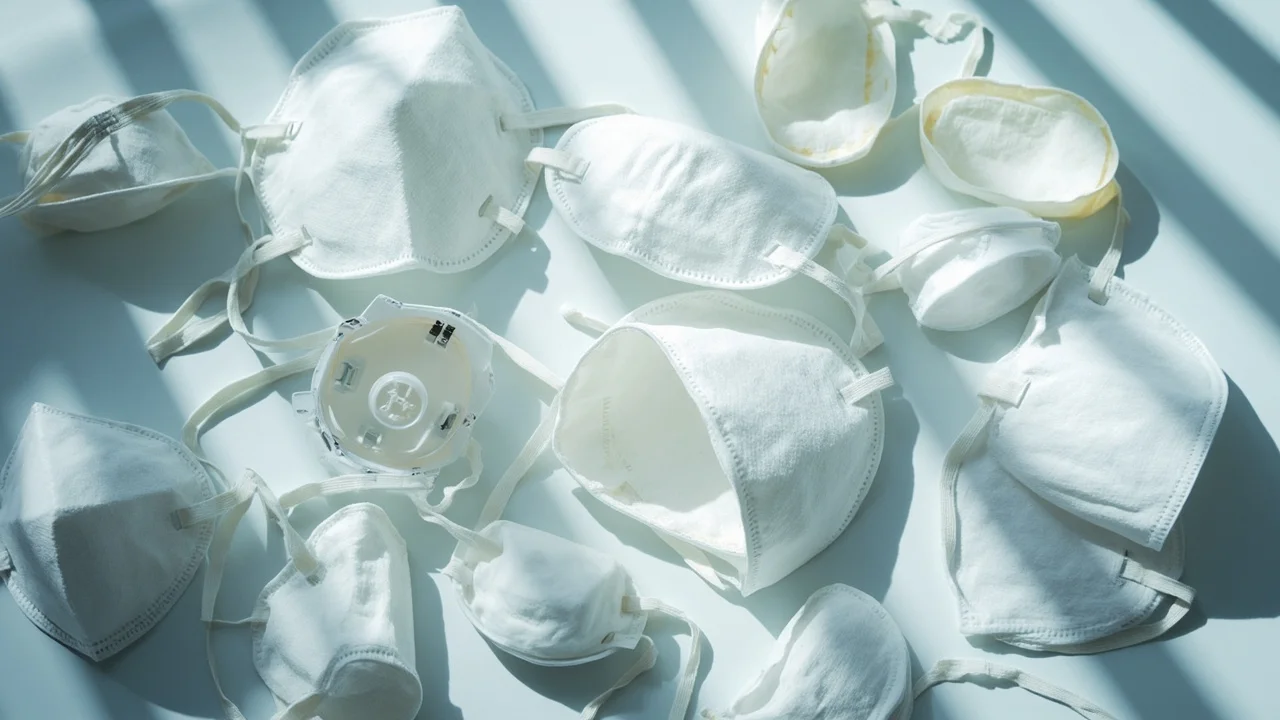
Key market segments and growth drivers in the Respiratory Mask Types N95 sector.
2. Market Analysis
The N95 market is not a monolith. Three distinct sub-segments are growing at different speeds, and buyers need to track each one. The broad N95 disposable respirator market — covering both medical and industrial grades — is forecast to expand at a CAGR of 12.1% between 2026 and 2033. That is faster than the overall protective textiles segment, reflecting persistent demand from healthcare procurement and industrial safety officers alike. Within this, the N95-grade medical protective masks segment — those cleared by the FDA as surgical N95s — is expected to grow at a more moderate 8.98% CAGR, climbing from $4.20 million in 2026 to $7.58 million by 2033. The smaller absolute numbers here are somewhat misleading: medical-grade N95s carry higher unit prices and strict supply chain requirements, making them a premium sub-market with stable margins. The largest demand driver today is the occupational safety sector. Industrial workplaces — construction, mining, manufacturing — now treat N95s as standard issue for particulate exposure, a trend accelerated by tightened OSHA permissible exposure limits for silica and welding fumes. The second driver is healthcare infrastructure stockpiling. Post-COVID, hospitals and clinics have shifted from just-in-time to just-in-case inventory models, with N95 quantities specified in multi-year contracts. The third driver is consumer adoption. While not the primary B2B channel, online store sales of N95s to individuals — for wildfire smoke, allergy seasons, and travel — have created an additional demand layer that manufacturers cannot ignore. Geographically, North America holds the largest revenue share, but Asia Pacific is the fastest-growing region, fueled by urbanization in India and China where PM2.5 levels regularly exceed WHO guidelines. The mask-without-exhalation-valve variant commands the largest market share in healthcare settings — over 60% — because it provides source control, preventing the wearer’s exhaled breath from spreading infection. In industrial applications, valved masks dominate because they reduce heat buildup, improving worker compliance on long shifts.
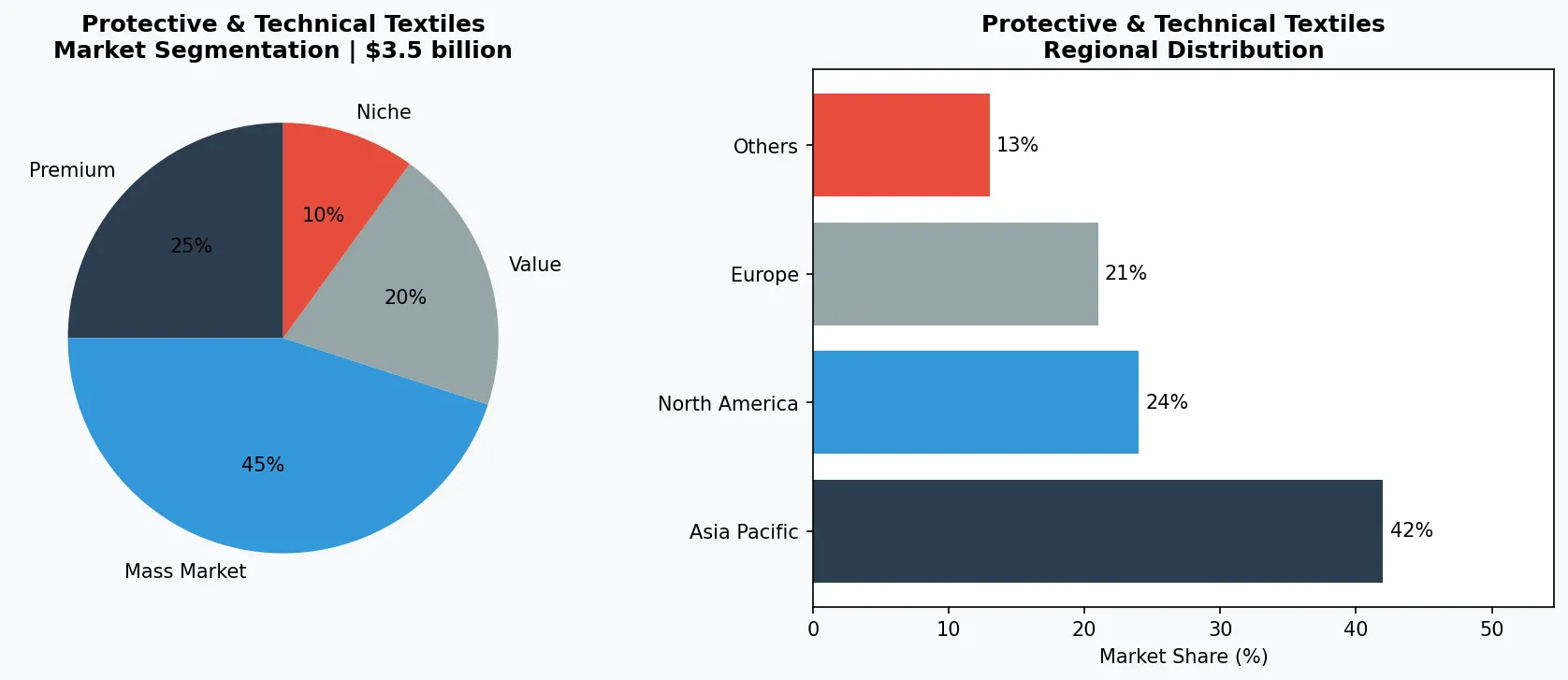
Market segmentation and regional distribution analysis for Respiratory Mask Types N95.
3. Product Categories
Mask with Exhalation Valve.
These respirators incorporate a one-way valve that opens during exhalation, releasing warm, moist air quickly. This reduces heat and moisture buildup inside the mask, making them preferred for high-exertion environments like construction and mining. However, they are not recommended for sterile healthcare settings because the valve bypasses filter media on exhale, offering no source control. Examples include the 3M 8210V and Honeywell H801V cup-style respirators. These models typically use the same meltblown filter layer as non-valved versions, but the valve adds cost and complexity to the assembly.
Mask without Exhalation Valve.
The standard for medical applications. Every breath is filtered in both directions, providing both wearer protection and source control. This type is required for surgical N95 certification under ASTM F2100-19 standards. Products like the 3M 1860 and the Kimberly-Clark N95 Pouch Respirator have no valve, and their flat-fold design allows for easy storage and compatibility with surgical masks worn over them. The non-valved segment captured over 60% of the hospital and clinic market in 2025, driven by infection control protocols.
Flat-Fold vs. Cup-Style N95s.
This is a physical form factor difference that affects supply chain and user preference. Flat-fold N95s (e.g., 3M 1870+ Aura) collapse for storage and are easier to fit in automated dispensers; they are favored by hospitals. Cup-style N95s (e.g., Moldex 2200) hold a rigid shape and provide a more secure seal for industrial workers who may be wearing them for eight-hour shifts. The choice between the two often comes down to storage space and multi-use policies, with cup-style masks being more robust for repeated donning and doffing.
Surgical N95 (FDA-Cleared)
Combines NIOSH N95 filtration with fluid resistance per ASTM F2100-19. Used in operating rooms and sterile environments. Examples: 3M 1860, Kimberly-Clark N95 Pouch.
Industrial N95 (Respirator Only)
Focuses solely on particulate filtration without fluid barrier. Common in construction, mining, and agriculture. Examples: 3M 8210, Moldex 2200.
Disposable Flat-Fold with Adjustable Straps
Portable, collapsible design that fits tightly under chin. Increasingly popular in healthcare surge supply. Example: 3M Aura 9205+.
4. Leading Players
3M Company
Remains the dominant global player, commanding an estimated 35–40% of the N95 market by revenue. Its competitive advantage lies in a dual strategy: serving both the medical and industrial markets with overlapping but distinct product lines. The 3M 1860 surgical N95 is the gold standard in U.S. hospitals, while the 3M 8210 is ubiquitous on construction sites. 3M has invested heavily in domestic production capacity since 2020, operating several NIOSH-approved facilities in the U.S. that give it supply chain resilience and faster lead times compared to offshore competitors.
Honeywell International
Is the second-largest player, with a strong focus on the industrial segment. Its strategy has been to bundle N95 respirators with full-facepiece solutions and powered air-purifying respirators (PAPRs) for comprehensive protection programs. Honeywell’s H801V valved N95 is widely used in oil and gas and heavy manufacturing. The company also leverages its existing distribution network of safety equipment dealers, making it the default choice for many industrial distributors.
Moldex-Metric
Differentiates itself through ergonomic design and sustainability. Moldex N95s (e.g., 2200 series) use a patented mesh outer layer that reduces weight and increases breathability without compromising filter efficiency. The company also produces the only NIOSH-approved biodegradable N95 (the BioMask), which uses bio-based polymers to accelerate landfill degradation — a growing concern for ESG-conscious buyers. Moldex holds 100% of its production in the United States, positioning itself as a premium, made-in-America supplier.
BYD (China)
Has emerged as a major low-cost producer, particularly in the Asia Pacific region. BYD’s fit is in government contracts and emergency stockpiles, where price sensitivity is highest. Its masks meet NIOSH standards but face scrutiny over consistency from some buyers. BYD’s scale is enormous — it can produce over 50 million masks per day — giving it an unrivaled ability to fulfill large, time-sensitive orders.
Vertically Integrated Polypropylene Processor (3M)
3M owns its meltblown extrusion lines and has long-term polymer supply agreements, enabling it to control costs and quality from raw material to finished mask, a rare advantage in a fragmented supply chain.
Specialist in Ergonomic Biodegradable Designs (Moldex)
Moldex focuses on user comfort and environmental impact. Its BioMask is the only NIOSH-approved N95 with bio-based content, appealing to hospitals with sustainability procurement goals.
High-Volume Contract Manufacturer (BYD)
BYD leverages vast scale (50M+ masks/day) to serve government stockpiling contracts globally. Its competitive advantage is speed and price, though quality consistency requires vigilant third-party testing.
5. Market Trends
1. VALVELESS DOMINANCE IN HEALTHCARE
Infection control protocols increasingly mandate mask without exhalation valve in medical environments. This trend, solidified by CDC guidelines, pushes manufacturers to innovate with breathability improvements in non-valved designs. 3M’s Cool Flow valve technology was replaced by advanced filter media with lower breathing resistance in their latest non-valved Aura line.
2. Real-time fit verification is becoming a key differentiator. Companies like Honeywell are integrating Bluetooth sensors into sample masks for training purposes, allowing safety officers to monitor seal integrity via mobile apps. This reduces the time and cost of traditional fit testing (e.g., Bitrex or saccharin solutions) and improves compliance. SUSTAINABLE MATERIALS
The disposable nature of N95s creates massive plastic waste. Moldex launched the BioMask line using poly(lactic acid) based fibers that achieve N95 filtration and biodegrade 95% faster than standard polypropylene. This trend is driven by hospital sustainability mandates and corporate net-zero commitments.
3. While not pure single-use respirators, hybrid systems using reusable half-mask...
While not pure single-use respirators, hybrid systems using reusable half-mask bodies with replaceable N95-rated cartridges are gaining traction in industrial settings. The upfront cost is higher, but total cost per use drops by 40% over a year. 3M’s cartridge-based half-mask series 6000 with 7093C N95 filters leads this segment.
6. Regional Markets
North America – Largest and Most Regulated Market
Dominates with over 40% of global N95 revenue, driven by OSHA enforcement, hospital accreditation requirements (Joint Commission), and high awareness of counterfeit risks. NIOSH listing is mandatory.
Asia Pacific – Fastest Growth at 9.5% CAGR
Rapid urbanization in China, India, and Indonesia has increased chronic exposure to PM2.5, pushing governments to mandate N95 use in schools and public transport. Local manufacturing is expanding, but quality standards vary.
Europe – EN 149:2001+A1:2009 Standard Creates Barrier
European buyers often prefer FFP2 or FFP3 respirators over N95 due to different testing protocols (e.g., total inward leakage). N95 products can still enter if CE-marked under PPE Regulation (EU) 2016/425, but market penetration is limited.
7. Investment Outlook
Two specific opportunities stand out. First, the expansion of N95 into emerging markets via public health infrastructure programs — India’s National Health Mission and ASEAN pandemic preparedness funds are structuring multi-year purchase agreements that suppliers can lock into now. Second, the development of multifunctional N95s that combine particle filtration with chemical barrier layers for industrial settings — a high-margin niche that major players like Honeywell are already piloting. The primary risk remains raw material volatility. Meltblown polypropylene prices spiked 300% during the pandemic and remain subject to petrochemical supply shocks. Manufacturers that secure multi-year fiber supply contracts — as 3M has done with ExxonMobil — will have a distinct cost advantage. Additionally, counterfeit products continue to erode trust in the market; the FDA has issued over 100 warning letters for mislabeled KN95 and N95 products since 2023. Buyers must verify NIOSH approval numbers directly on cdc.gov before purchasing.
Strategic Considerations:
- Public Health Stockpiling Contracts in ASEAN: Countries like Thailand and Vietnam are creating national emergency reserves of N95 masks with five-year replenishment cycles, offering stable, long-term B2B procurement opportunities.
- Hybrid Reusable N95 Cartridge Systems: Industrial buyers are shifting to elastomeric half-masks with replaceable N95 filters, reducing per-user waste. Suppliers developing low-profile, comfortable cartridges can capture premium margins.
- Meltblown Polypropylene Price Volatility: Raw material costs remain tied to crude oil fluctuations. Buyers should enforce price escalation clauses in contracts exceeding 12 months.
- Counterfeit Mask Infiltration in Online B2B Platforms: Over 15% of N95 listings on Alibaba and Amazon Business in 2025 were flagged as non-certified. Buyers must verify NIOSH approval numbers directly with the agency's database.
Frequently Asked Questions
Make Informed Decisions in the Respiratory Mask Types N95 Market
Product quality and sourcing integrity directly impact business outcomes. Discover how Verity Rank's verification platform helps industry participants source with greater confidence.
Contact Verity Rank TodayFurther Reading: Explore additional market intelligence from Grand View Research and Mordor Intelligence.
This article is for informational purposes only, based on publicly available industry data and market reports as of 2026-07-14. All market figures are estimates and may vary from actual results.