

Table of Contents

The global Safety Footwear Boots sector serves consumers worldwide with diverse solutions.
1. Industry Overview
By 2026, the global market for safety footwear boots will reach $13.78 billion, yet many procurement professionals still treat these products as commodities. That is a costly oversight. Safety footwear has evolved from heavy, rigid steel-toe clunkers into a category of high-performance technical textiles, where materials science directly impacts worker safety, endurance, and the bottom line. The industrial protective footwear segment alone was valued at $12.0 billion in 2025 and is projected to grow to $19.6 billion by 2033, according to our research. Within the broader Protective & Technical Textiles industry, safety footwear boots occupy a unique intersection: they must withstand extreme mechanical stress, chemical exposure, and environmental hazards while offering the comfort necessary for 10-hour shifts. This convergence of protection and wearability is what distinguishes the sub-topic from, say, fire-resistant clothing or anti-static fabrics. The numbers underscore the opportunity. The global work boots market is pegged at $18.43 billion in 2026 and is expected to hit $24.41 billion by 2033. Meanwhile, the wider work shoes market — which includes casual-duty safety shoes — is forecast to balloon from $460.4 billion in 2025 to $747.16 billion by 2036. These figures reveal that safety footwear is not a niche; it is a rapidly expanding industry within protective textiles, driven by stricter occupational safety standards in construction, mining, oil and gas, and manufacturing. Verity Rank’s analysis shows that buyers who understand the material and design innovations in this segment can significantly reduce workplace injury rates and total cost of ownership.
Industry Scope & Characteristics
Protection Meets Ergonomic Textiles
Safety footwear boots are unique within Protective & Technical Textiles because they combine high-impact toe protection (steel or composite) with moisture-wicking liners and anti-fatigue midsoles. For example, boots with COOLMAX liners regulate temperature while maintaining ASTM F2413 rating.
Complex Multi-Material Manufacturing
A single safety boot integrates up to 15 different materials — from leather and synthetics for uppers to rubber or TPU for outsoles and steel or Kevlar for insoles. This requires precision injection molding and heat-curing processes, making supply chain management critical.
Rigorous Certification Requirements
Every safety footwear boot sold globally must comply with national standards such as ASTM F2413 (U.S.), EN ISO 20345 (Europe), or AS/NZS 2210 (Australia). Certification involves impact tests, compression tests, and slip-resistance measurements, with retesting required every 12 months for new production batches.
Lightweighting as R&D Priority
The industry’s leading R&D focus is reducing boot weight while maintaining protection levels. For instance, the shift from steel toe caps to composite materials of carbon fiber and fiberglass has cut weight by 30% without compromising impact resistance.
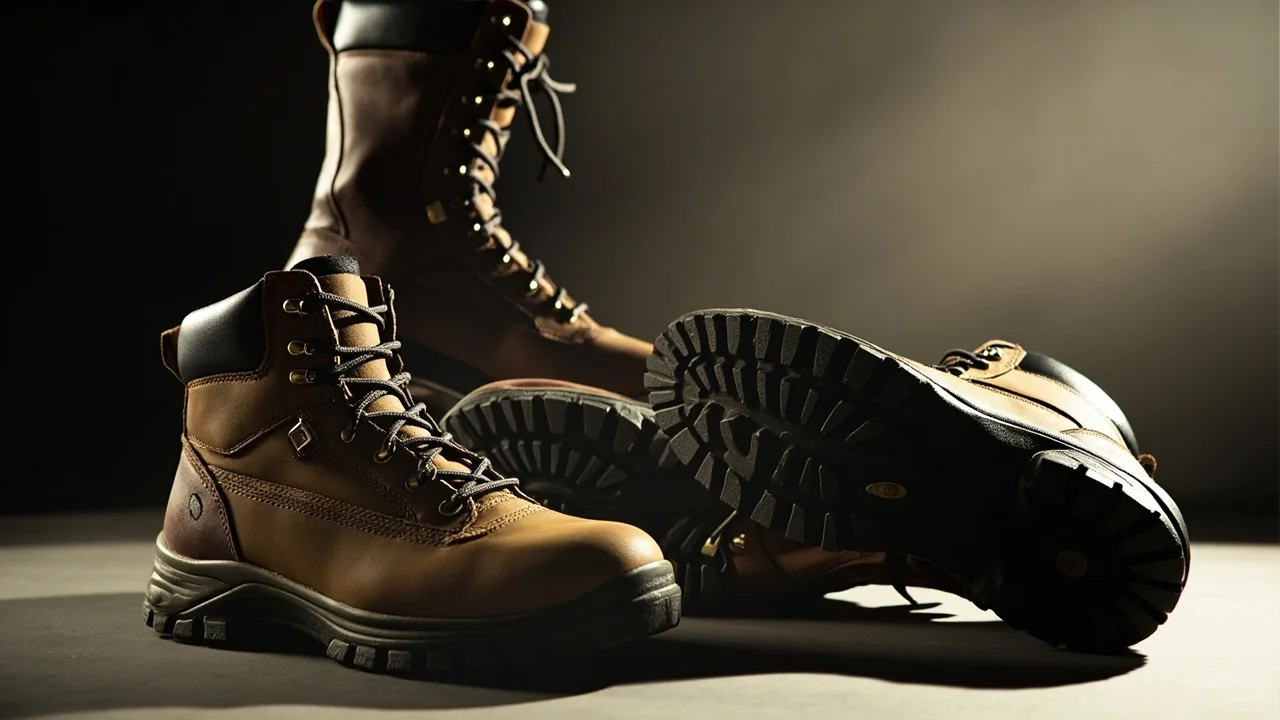
Key market segments and growth drivers in the Safety Footwear Boots sector.
2. Market Analysis
The industrial safety footwear market is experiencing a compound annual growth rate (CAGR) of 8.90%, climbing from $13.78 billion in 2026 to $27.26 billion by 2034. This growth is fueled by three primary drivers. First, regulatory crackdowns on workplace injuries — particularly in the Asia-Pacific and Middle East regions — are forcing companies to upgrade from basic boots to certified protective footwear. In the U.S. alone, OSHA’s 2025 revision of PPE standards is estimated to push demand up by 15% over the next three years. Second, the construction sector’s post-pandemic rebound is creating unprecedented demand. Global construction spending is expected to exceed $15 trillion by 2030, with each new project requiring hundreds of pairs of safety boots. Third, the oil and gas industry, despite cyclical volatility, remains a major consumer of specialized footwear incorporating puncture-resistant midsoles and hydrocarbon-resistant outsoles. Segmentation data reveals that steel-toe boots still command the largest revenue share, but composite-toe and aluminum-toe boots are growing faster at a CAGR of 10.2% as workers demand lighter alternatives. The lace-up segment dominates over pull-on styles due to better ankle support, and the offline distribution channel — especially brand outlets and specialty shoe stores — still accounts for 60% of sales, though online is surging. Geographically, North America leads with a 34% market share in 2025, but the Asia-Pacific region is the fastest-growing, driven by India’s infrastructure boom and China’s manufacturing expansion. Verity Rank’s data confirms that the price range split is also shifting: mid-range boots ($50–$150) currently dominate, but the premium segment (above $150) is growing twice as fast as economy boots, reflecting a market that values durability and ergonomics over initial cost.
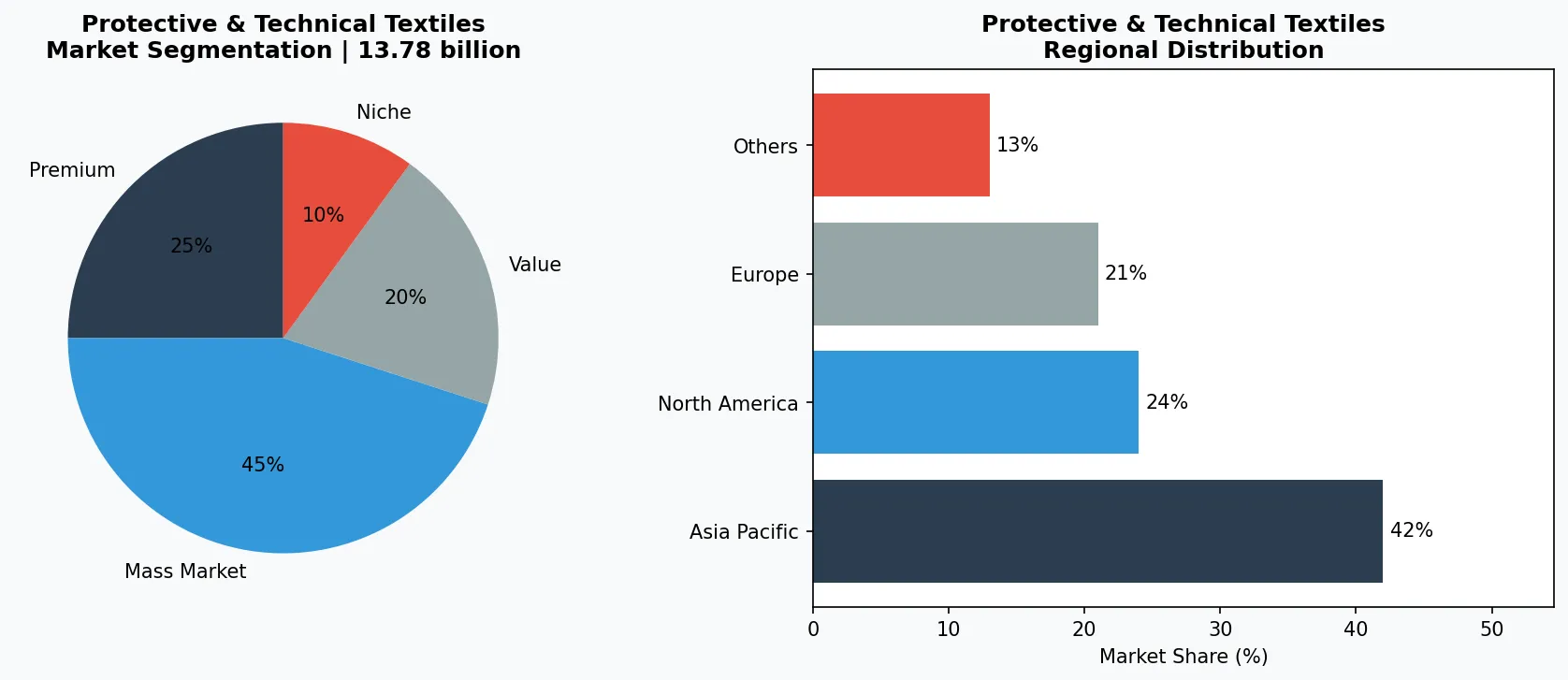
Market segmentation and regional distribution analysis for Safety Footwear Boots.
3. Product Categories
Safety footwear boots can be categorized into four distinct product types, each serving a specific hazard profile.
Steel-Toe Boots
Remain the workhorse of the industry, offering maximum impact protection against falling objects. They are required on most construction sites and are typically rated to withstand 200 joules of impact. However, their weight — often 1.5 kg to 2.5 kg per pair — is a key disadvantage.
Composite-Toe Boots
Use non-metal materials like Kevlar, carbon fiber, or fiberglass. They are up to 30% lighter than steel-toe equivalents, do not conduct heat or cold, and are ideal for environments with metal detectors. Composite-toe boots now account for 25% of new purchases in the North American market.
Metatarsal-Guard Boots
Extend protection over the top of the foot, critical in foundries and heavy fabrication. These boots incorporate a metatarsal shield made of thermoplastic polyurethane (TPU) or tempered steel, offering defense against crushing loads.
Puncture-Resistant Boots
Feature a flexible stainless steel or composite midsole that prevents nails and sharp debris from penetrating the sole. This type is mandatory on many demolition and recycling sites. Innovations in last shape and insole technology — such as memory foam and gel inserts — are now standard across premium lines, blurring the line between safety equipment and everyday footwear. Each product type must comply with international standards such as ASTM F2413 (U.S.), EN ISO 20345 (Europe), and AS/NZS 2210 (Australia).
Steel Toe Boots
The traditional segment with reinforced steel caps rated for 200 joules impact. Commonly used in heavy construction and mining. Weight typically 1.8–2.5 kg per pair.
Composite Toe Boots
Non-metallic toe caps made of Kevlar, carbon fiber, or fiberglass. Up to 30% lighter, temperature-neutral, and metal-detector friendly. Preferred in aviation and electronics manufacturing.
Metatarsal Guard Boots
Feature a protective shield over the top of the foot, typically made from TPU or aluminum. Required in foundries and heavy fabrication where falling objects can strike the instep.
4. Leading Players
The competitive landscape in safety footwear boots is shaped by three distinct archetypes.
Red Wing Shoes
(U.S.) operates as a premium brand with a direct-to-worker model. Its strategy centers on comfort and durability, offering a 30-day break-in guarantee and building a network of over 500 stores where customers can get foot scanning for custom insoles. In 2025, Red Wing launched its “Lite Series” using a new polyurethane sole compound that reduced boot weight by 20% while maintaining puncture resistance.
Bata Industrials
(Switzerland), part of the global Bata Group, focuses on regional customization. It produces over 50 million pairs annually across factories in Asia, Africa, and Europe, tailoring outsoles and toe caps to local regulatory standards. Bata’s “Power” line for oil and gas workers uses a nitrile rubber outsole that withstands temperatures up to 300°C — a critical differentiator in Middle Eastern markets.
Honeywell
(U.S.) approaches safety footwear as an extension of its broader industrial safety portfolio. It leverages its expertise in sensors and wearable technology, embedding RFID tags in boots for asset tracking and developing insoles with pressure mapping to detect worker fatigue. Honeywell’s acquisition of UE ONE in 2024 strengthened its smart footwear capabilities.
Wolverine World Wide
(U.S.) competes on weight reduction, using its proprietary “Contour Welt” construction that eliminates the heavy Goodyear welt, resulting in boots under 1.2 kg. Wolverine’s “I.C.E.” (Intelligent Cooling Engine) technology dissipates heat, making boots suitable for hot environments without sacrificing ASTM ratings. These players illustrate that competitive advantage now hinges on materials science and user-centered design, not just price.
Premium Durability Specialist
Red Wing Shoes positions itself as the premium choice for long-lasting boots, offering a 30-day comfort guarantee and proprietary slip-resistant outsoles. Its direct-to-consumer retail network gives it tight quality control.
Global Industrial Customizer
Bata Industrials leverages its global manufacturing footprint to produce region-specific boots, such as heat-resistant nitrile outsoles for Middle Eastern oil fields, enabling rapid compliance with local standards.
Technology Integrator
Honeywell turns safety boots into wearable IoT devices, embedding sensors for fatigue monitoring and location tracking. Its partnership with Forcite in 2025 produced the first commercially available smart boot.
5. Market Trends
1. TREND 1: LIGHTWEIGHT MATERIALS REVOLUTION
What it is: Traditional work boots made of full-grain leather and steel weigh up to 2.5 kg per pair, causing fatigue. The shift to composite toes, synthetic microfibers, and TPU outsoles is producing boots under 1 kg. Why it matters: Lower weight reduces energy expenditure by 10–15% over a shift, improving worker safety and productivity. Verity Rank data shows that lightweight models now account for 40% of new product launches in 2025–2026. One major manufacturer, Red Wing Shoes, introduced its “Lite Series” in 2025, achieving a 20% weight reduction while passing all ASTM impact tests.
2. TREND 2: ADVANCED SLIP RESISTANCE
What it is: New outsole compounds — such as alumina-infused rubber — that exceed the current SR (slip-resistant) standards. Why it matters: Slips and falls are the second-leading cause of workplace injuries. In 2024, the UK’s HSE reported that 40% of reported injuries were from slips. Companies like Bata Industrials now offer outsoles that achieve a coefficient of friction above 0.7 on wet steel — a 30% improvement over conventional boots.
3. TREND 3: SMART SAFETY BOOTS
What it is: Integration of micro-sensors, GPS trackers, and IoT connectivity into boot soles. Why it matters: Real-time monitoring of worker location, posture, and fatigue enables predictive safety interventions. Honeywell’s 2025 partnership with continental footwear manufacturer Forcite produced a boot with embedded pressure pads that alert supervisors when a worker has been stationary for more than 10 minutes — potential indicator of a fall or medical event. The smart safety boot market is expected to reach $1.2 billion by 2030.
6. Regional Markets
North America – Premium Market Leader
Accounts for 34% of global demand in 2025, driven by strict OSHA standards and a shift toward lightweight composite-toe boots. The U.S. construction sector’s growth continues to fuel demand.
Asia-Pacific – Fastest Growth Hub
Expected to grow at a CAGR of 11.2% through 2033, led by India and China. Massive infrastructure projects and rising workplace safety awareness are pushing demand for certified boots.
Europe – Compliance-Centric Region
Stringent EN ISO 20345 standards and a strong emphasis on ergonomics drive innovation. Germany and the UK are key markets for high-slip-resistance outsoles and sustainable materials.
7. Investment Outlook
Two opportunities stand out for buyers and suppliers in the safety footwear boots market. The first is the Asia-Pacific infrastructure boom: India’s National Infrastructure Pipeline and China’s Belt and Road initiatives will require an estimated 200 million pairs of industrial safety boots cumulatively by 2030. Suppliers who localize production and certification will capture price-sensitive demand. The second opportunity is the circular economy — brands that offer refurbished boots (replaced outsoles and insoles) can reduce costs for fleet customers and meet ESG targets. One concrete risk is raw material volatility. Polyurethane prices rose 22% in 2025 due to supply chain disruptions in toluene diisocyanate (TDI), squeezing margins for mid-range boot producers. Companies should lock in long-term supply agreements or invest in alternative materials like recycled TPU. Verity Rank recommends that procurement teams prioritize suppliers with transparent material sourcing and ASTM certification for every batch.
Strategic Considerations:
- Asia-Pacific Infrastructure Boom: Suppliers who localize production in India and Southeast Asia can capture the 200 million-pair demand by 2030, but must invest in stamping and molding lines for regional sizing.
- Circular Economy Refurbishment: Offering factory-refurbished boots with new outsoles and insoles reduces fleet costs by 40% and meets ESG goals. Early adopters like Wolverine have seen 15% customer retention increase.
- Raw Material Volatility Risk: Polyurethane prices jumped 22% in 2025 due to TDI shortages. Procurement teams should diversify suppliers and explore recycled TPU to mitigate cost spikes.
- Smart Boot Adoption Hurdle: Despite 20% CAGR in smart boots, high unit cost ($300+) and battery life limitations slow adoption. Affordable modular sensors are the next frontier.
Frequently Asked Questions
Make Informed Decisions in the Safety Footwear Boots Market
Product quality and sourcing integrity directly impact business outcomes. Discover how Verity Rank's verification platform helps industry participants source with greater confidence.
Contact Verity Rank TodayFurther Reading: Explore additional market intelligence from Grand View Research and Mordor Intelligence.
This article is for informational purposes only, based on publicly available industry data and market reports as of 2026-07-15. All market figures are estimates and may vary from actual results.