

Table of Contents
The global School Uniform Production sector serves consumers worldwide with diverse solutions.
1. Industry Overview
The global school uniform market is forecast to surge from $38.5 billion in 2026 to $90.8 billion by 2035, growing at a robust 8.5% CAGR. This is not a niche afterthought – it is a manufacturing powerhouse driven by mandatory dress codes, expanding school enrollments, and institutional procurement cycles. What sets school uniform production apart within the broader Custom & Group Apparel industry is the unique blend of high-volume repeat orders, strict durability standards, and the need to balance cost with compliance. Unlike corporate uniforms, school garments must withstand daily wear, frequent washing, and often include safety certifications such as flame retardancy for younger age groups. The 2026 primary school uniform market is already defined by a convergence of sustainability mandates, design innovation, and advanced textile technologies, forcing manufacturers to rethink fabric sourcing and production methods. For B2B buyers – from school districts to private academies – the challenge is verifying suppliers who can deliver consistent quality across thousands of units while meeting evolving environmental and safety regulations. VerityRank's platform now tracks over 12,000 verified uniform manufacturers, making supplier due diligence a competitive advantage.
Industry Scope & Characteristics
Durability-First Design
School uniforms require reinforced seams, double-stitched armpits, and abrasion-resistant fabrics like 500 denier polyester to survive daily wear and weekly washing. Primary school trousers often include inner knee patches.
Seasonal Bulk Ordering
Manufacturers run on a strict back-to-school cycle: orders placed in February–April for August delivery. Lead times range from 8–12 weeks for overseas production, requiring precise demand forecasting.
Compliance Certifications
Uniforms sold in the EU must meet REACH chemical safety; UK requires flame retardancy for children's sleepwear (BS 5722). Many US districts demand ASTM F1349 for flammability and lead-free zippers.
Antimicrobial & Stain-Proof Finishes
Innovations include permanent antibacterial treatment (silver nanoparticle coatings) on polo shirts to reduce odors, and Teflon-based stain repellency – UK supplier Trutex offers a 'Stainless' range guaranteed for 50 washes.
Key market segments and growth drivers in the School Uniform Production sector.
2. Market Analysis
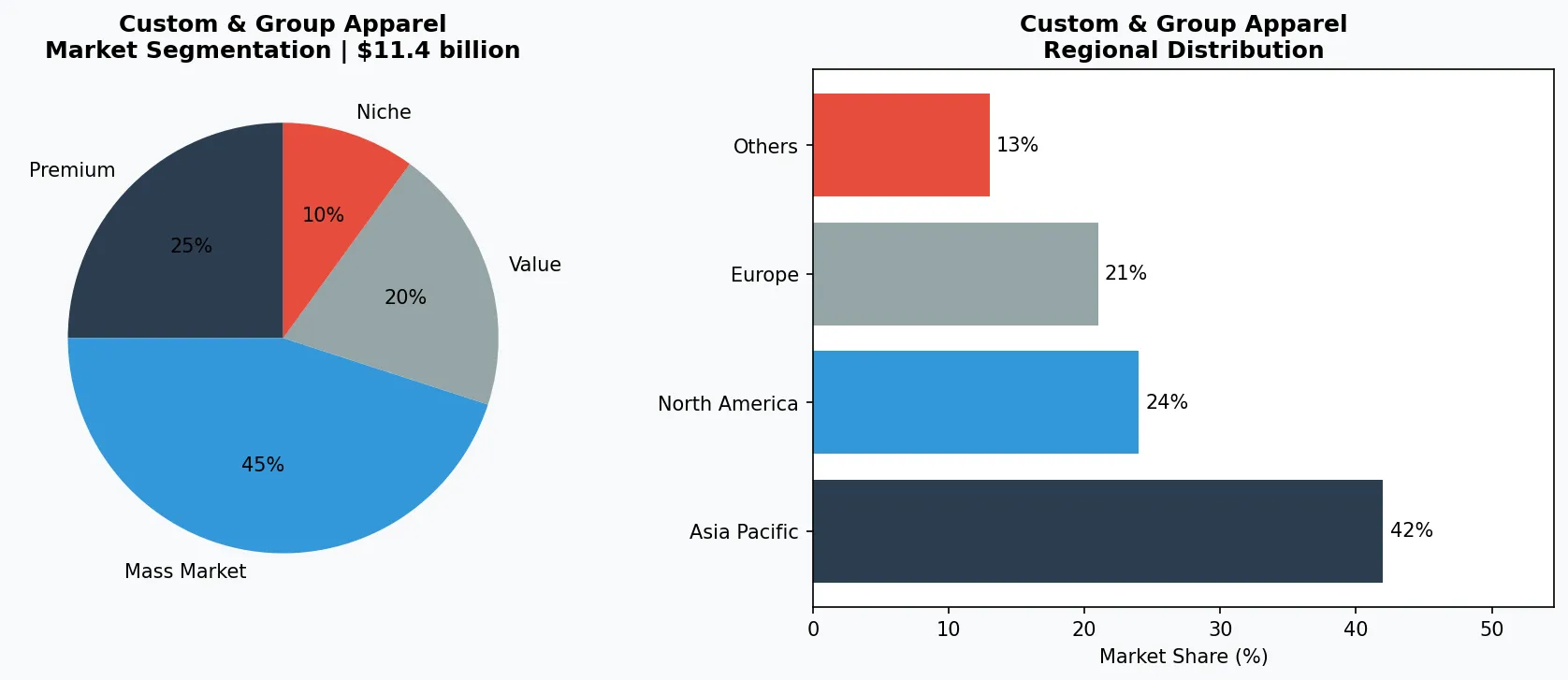
Multiple data points confirm the sector's upward trajectory. One report values the school uniform market at US$32.15 billion in 2026, projecting it to reach US$60.94 billion by 2035 – a compound annual growth rate that reflects steady institutional demand. Another analysis forecasts US$11.4 billion by 2031 with a 6.4% CAGR from 2025, suggesting a slightly narrower scope but consistent expansion. The primary school segment alone is propelling growth, driven by rising birth rates in developing economies and stricter enforcement of uniform policies in countries like India, Indonesia, and parts of Africa. Three factors dominate this growth: first, compulsory primary education programs in Sub-Saharan Africa and South Asia are adding millions of students each year, each requiring at least two uniform sets. Second, governments are increasingly centralizing procurement to control quality – Pakistan and Kenya, for example, now mandate specific fabric blends for school uniforms. Third, the sustainability push: schools in the EU and North America are demanding recycled polyester and organic cotton, adding a premium layer that lifts average order values. Navigating this landscape requires suppliers to operate at scale while investing in eco-certifications such as GOTS (Global Organic Textile Standard) and Oeko-Tex. The downside is price sensitivity: institutional buyers often demand 5–10 year contracts with fixed pricing, squeezing margins for manufacturers caught by fluctuating raw material costs.
Market segmentation and regional distribution analysis for School Uniform Production.
3. Product Categories
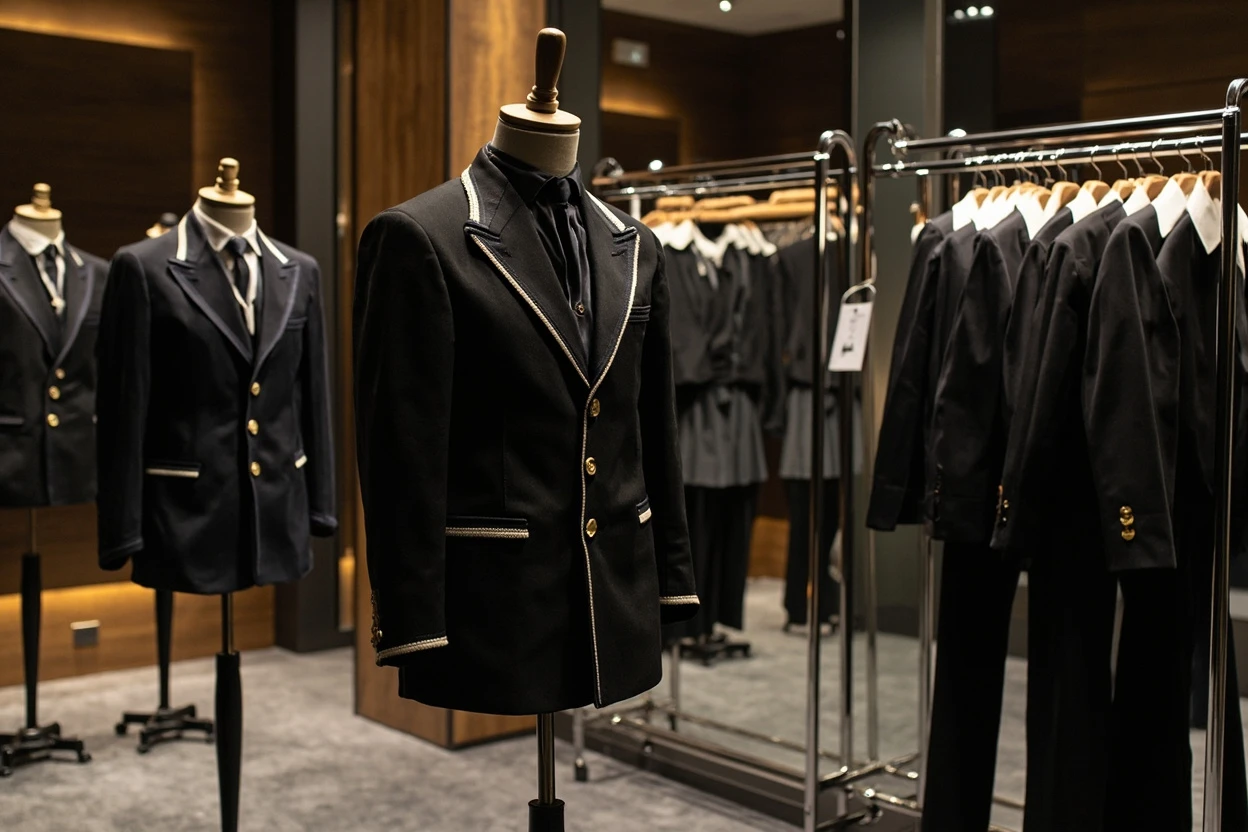
School uniform production encompasses three primary product categories, each with distinct manufacturing requirements. First, blazers and formal outerwear: tailored jackets with embroidered school crests, requiring precise stitching, reinforced linings, and often wrinkle-resistant finishes. Examples include traditional British-style blazers with gold piping and modern slim-fit versions with hidden stretch panels for comfort. Second, core daily wear – polo shirts, dress shirts, and knit sweaters – which form the bulk of orders. These are typically produced in polyester-cotton blends (e.g., 65/35 poplin) to balance cost, durability, and easy-care properties. Leading European producers now incorporate stain-release technology, reducing re-purchase rates by up to 20%. Third, sport and PE kits: moisture-wicking jerseys, shorts, and tracksuits using performance fabrics like Coolmax or recycled polyester. Australian schools, for example, now mandate UV protection (UPF 50+) in all PE uniforms. Each category demands different manufacturing lines – cut-and-sew for tailored pieces versus seamless knitting for sportswear – meaning a single supplier often specializes in one or two segments rather than the full spectrum. B2B buyers should seek suppliers that demonstrate ISO 9001 certification for quality management and offer AQL (Acceptable Quality Level) sampling at 2.5% defect tolerance.
Formal Blazers & Tailored Jackets
Heavily structured garments with school crest embroidery, internal patch pockets, and satin linings. Typically made from worsted wool-polyester blends. Example: British-style blazers with peak lapels for grammar schools.
School Polo Shirts & Knitwear
Most common uniform item – produced in pique or jersey knit, often with contrast piping and embroidered logos. Fabric: 65% polyester/35% cotton for easy care. Example: V-neck sweaters in charcoal grey with school badge.
PE & Sports Kits
High-performance jerseys and shorts using moisture-wicking microfibers or recycled polyester. Many now incorporate UPF 50+ sun protection and flatlock seams for comfort. Example: reversible basketball jerseys for middle schools.
4. Leading Players
The school uniform production landscape is fragmented but dominated by three archetypal player profiles. First, the large-scale volume manufacturers: these are global contract producers with factories in Bangladesh, Vietnam, and China, supplying major school districts and national programs. Their competitive advantage lies in economies of scale – they can produce 500,000 polo shirts per month at a unit cost under US$3. Their weakness is rigidity: minimum order quantities often exceed 10,000 pieces, making them unsuitable for smaller private schools. Second, the regional specialists: mid-sized manufacturers based in Europe and North America (e.g., in the UK, Trutex; in the US, Schoolbelles) that focus on quality and quick turnaround. They differentiate through direct-to-school e-commerce portals, allowing parents to order individual items while the district aggregates. These players often hold stocks of standard sizes and offer rush delivery within 2–3 weeks, versus 8–12 weeks for overseas suppliers. Third, the sustainability-first innovators: emerging companies using organic cotton, recycled polyester, and closed-loop water systems. Examples include David Luke in the UK, which sources recycled ocean plastics for blazer linings. They target eco-conscious independent schools willing to pay a 15–20% premium. For B2B buyers, the key is matching school size and budget with the right archetype – a small academy may benefit from a regional specialist, while a large urban district needs the scale of a manufacturer like those certified by WRAP (Worldwide Responsible Accredited Production).
Volume Manufacturers with Global Scale
These are contract sewers in Bangladesh, Vietnam, and China producing tens of thousands of units per order. Their edge: cost per polo shirt as low as US$2.50; challenge: minimum order quantity of 5,000–10,000 pieces.
Regional Quality Specialists
European and North American manufacturers like Trutex (UK) and Schoolbelles (US) focus on short lead times and premium fabric. They offer direct-to-school online ordering and stock standard sizes for quick dispatch.
Sustainability-First Innovators
Companies such as David Luke (UK) and Sisters & Seekers (Australia) differentiate with GOTS-certified organic cotton, recycled ocean plastic blazers, and carbon-neutral production. Target independent and eco-conscious schools willing to pay premium.
5. Market Trends
1. TREND: Eco-Friendly Materials
The shift toward recycled polyester (rPET) and organic cotton is accelerating. Schools are embedding sustainability into procurement policies, with the EU's Textile Strategy requiring 25% recycled content in uniforms by 2030. Why it matters: manufacturers must invest in GOTS and Oeko-Tex certification to remain eligible for European and North American tenders. Example: David Luke, a UK uniform supplier, now offers a 'Recycled Blazer' made from 100% rPET, reducing carbon footprint by 30% per garment.
2. TREND: Direct-to-School (D2S) E-Commerce
Historically, parents bought uniforms from retailers. Now schools are partnering with manufacturers to host branded online stores, streamlining ordering and inventory management. Why it matters: reduces returns and overstock; allows real-time demand tracking. Example: The School Uniform Shop platform connects parents with multiple manufacturer stockists in one portal, cutting delivery times by 40%.
3. TREND: Smart Uniforms with RFID
Radio-frequency identification tags embedded in garment care labels enable schools to track lost items and manage inventory for large districts. Why it matters: reduces replacement costs; helps manage laundry services in boarding schools. Example: A pilot program in 12 British private schools using RFID-embedded blazers reduced lost-item claims by 18% in 2025.
6. Regional Markets
Asia-Pacific – Manufacturing Hub & Growing Demand
China, Bangladesh, and Vietnam produce 70% of the world's school uniforms. Simultaneously, domestic demand in India and Indonesia is surging due to mandatory uniform policies, with the Indian market expected to grow at 9% CAGR through 2030.
Europe – Regulation-Driven Quality
Stringent EU chemical (REACH) and flammability standards force suppliers to invest in certified fabrics. The UK's Department for Education now mandates cost-capped uniform packs, pressuring manufacturers to lower prices without sacrificing compliance.
North America – Decentralized Procurement
Each school district manages its own uniform contracts, creating fragmentation. However, large districts like Los Angeles Unified spend over $15 million annually, leveraging collective buying groups to negotiate bulk discounts from a handful of suppliers.
7. Investment Outlook
Two opportunities stand out for B2B buyers in school uniform production. First, the expansion into Sub-Saharan Africa and South Asia, where government-funded uniform programs are scaling – Ethiopia alone plans to distribute 50 million uniform sets by 2028. Suppliers with local manufacturing partnerships will capture margin by avoiding import tariffs. Second, the rise of custom-fit sizing via AI body scanning, which reduces returns and improves student comfort; early adopters like San Diego Unified School District reported a 12% drop in exchanges after implementing size recommendation algorithms. The chief risk is raw material volatility: cotton prices swung 35% in 2024 due to drought in India, and polyester costs are tied to crude oil. Manufacturers with long-term contracts face margin pressure, while schools may need to accept annual price escalators. Actionable insight: buyers should diversify suppliers across geographies and lock in fabric costs with 12-month forward contracts, a strategy used by New York City Department of Education to stabilize its $200 million annual uniform spend.
Strategic Considerations:
- Public-Private Uniform Programs in Africa: Ethiopia, Kenya, and Nigeria are rolling out free uniform schemes targeting 30 million students by 2030. B2B suppliers with local production partnerships can bypass import duties and secure 5-year contracts.
- Custom-Fit via AI Body Scanning: San Diego Unified's 2025 pilot reduced uniform returns by 12% using mobile scanning kiosks. Expect similar adoption in US and EU districts, creating demand for manufacturers to integrate size-on-demand production.
- Raw Material Price Volatility: Cotton prices fluctuated 35% in 2024 due to Indian droughts; polyester tracks crude oil. Long-term fixed-price contracts become unprofitable – districts may need to accept annual escalation clauses of 3–5%.
- Shift Toward Casual Dress Codes: A growing number of UK and US schools (12% in 2026) are adopting relaxed dress codes or color-based policies instead of full uniforms, potentially reducing per-student spend by 40%.
Frequently Asked Questions
Make Informed Decisions in the School Uniform Production Market
Product quality and sourcing integrity directly impact business outcomes. Discover how Verity Rank's verification platform helps industry participants source with greater confidence.
Contact Verity Rank TodayFurther Reading: Explore additional market intelligence from Grand View Research and Mordor Intelligence.
This article is for informational purposes only, based on publicly available industry data and market reports as of 2026-07-21. All market figures are estimates and may vary from actual results.