


Table of Contents

The global Small Dog Accessories sector serves consumers worldwide with diverse solutions.
1. Industry Overview
The pet furniture industry has a new heavyweight: small dog accessories. While the broader pet care market surpassed $158 billion in U.S. expenditures in 2025, the accessories segment alone—spanning beds, carriers, crates, and feeding stations—was valued at $7.15 billion in 2025 and is on track to nearly double to $12.34 billion by 2033. That’s a compound annual growth rate (CAGR) of 7.1% from 2026 to 2033. But the real story isn’t just the numbers; it’s how small dog accessories have become the innovation engine for the entire pet furniture category. Unlike generic pet supplies, this sub-topic is defined by products engineered specifically for toy and miniature breeds—think orthopedically contoured beds for Chihuahuas, airline-compliant carriers for Yorkies, and collapsible crates designed to fit under airplane seats. These aren’t scaled-down versions of large-dog products; they are purpose-built items that address the unique ergonomic, safety, and portability needs of small breeds. As urbanization accelerates and more pet owners live in apartments, the demand for compact, multi-functional furniture that doesn’t sacrifice aesthetics or comfort is exploding. This shift is forcing manufacturers to rethink design, materials, and distribution—turning small dog accessories into a distinct, high-growth vertical within pet furniture.
Industry Scope & Characteristics
Breed-Specific Ergonomics
Small dog accessories are engineered for toy and miniature breeds, with orthopedic beds featuring lower entry heights and carriers designed for brachycephalic breeds like Pugs and French Bulldogs.
Compact Manufacturing
Production runs for small dog accessories are typically shorter and more modular than large-dog furniture, allowing manufacturers to offer greater variety without massive inventory overhead.
Safety Certifications
Products must comply with ASTM F963 (toy safety) and CPSC guidelines for small parts, and carriers must meet airline IATA standards for ventilation and structural integrity.
Tech Integration R&D
Innovation is focused on embedding IoT sensors into beds and carriers to monitor pet health metrics, with companies like Furbo developing temperature and activity tracking for small breeds.

Key market segments and growth drivers in the Small Dog Accessories sector.
2. Market Analysis
The small dog accessories market is riding a powerful wave of demographic and behavioral shifts. In the United States alone, the pet accessories market is projected to grow from $14.97 billion in 2026 to $25.59 billion by 2034, at a CAGR of 6.93%. The small dog segment captures a disproportionate share of that growth, driven by three key factors. First, the rise of pet humanization: owners of small breeds spend 30% more on accessories per animal than large-dog owners, according to industry surveys, because they treat their pets as children and demand premium, stylish furniture. Second, the surge in pet wellness spending—a trend that exploded in 2025 and continues into 2026—is pushing demand for orthopedic beds, elevated feeders that reduce neck strain, and temperature-regulated carriers. Third, the global expansion of e-commerce has lowered barriers for niche brands to reach small-dog owners directly, bypassing traditional retail gatekeepers. The U.S. remains the largest market, but Asia-Pacific is the fastest-growing region, with China and Japan seeing double-digit increases in small dog ownership and accessory spending. The market’s 7.1% CAGR from 2026 to 2033 is not a projection of steady growth; it’s a reflection of structural changes in how people live with and care for their pets. Manufacturers that fail to address these shifts—by ignoring sustainability, tech integration, or breed-specific design—will find themselves outpaced by more agile competitors.
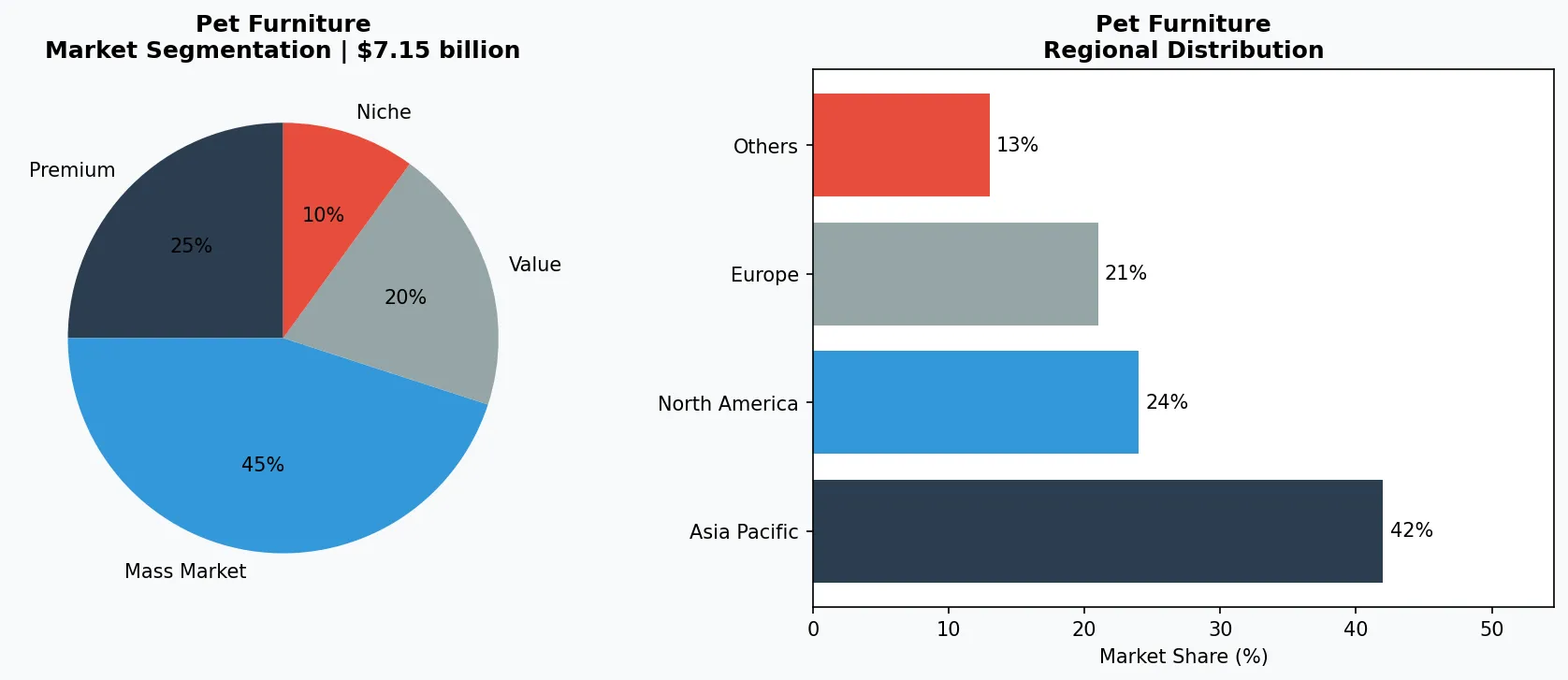
Market segmentation and regional distribution analysis for Small Dog Accessories.
3. Product Categories
Small dog accessories break down into four distinct product categories, each with its own design philosophy and market dynamics.
Orthopedic and Heated Beds
are the fastest-growing sub-segment, driven by the prevalence of joint issues in small breeds like Dachshunds and French Bulldogs. Brands now offer memory foam beds with washable, antimicrobial covers—some even include built-in heating pads for senior dogs.
Portable Carriers and Crates
have evolved from simple nylon bags to structured, airline-approved units with ventilation panels, fleece liners, and side pockets for treats and leashes. The key innovation here is collapsibility: owners want a carrier that folds flat for storage but expands to a spacious den for the dog.
Elevated Feeding Stations
address the digestive health of small breeds, with adjustable-height bowls that reduce bloat risk and promote proper posture. These often double as storage units for food and treats, a space-saving feature critical for apartment dwellers.
Interactive and Smart Toys
are the newest frontier, blending play with tech. Examples include treat-dispensing puzzles that sync with smartphone apps to track a dog’s activity levels, and self-moving balls that keep small dogs entertained when owners are away. Each category is seeing rapid iteration, with materials shifting from plastics to sustainable bamboo, recycled fabrics, and non-toxic finishes.
Orthopedic & Heated Beds
Memory foam beds with washable covers and optional heating pads, designed for small breeds prone to joint issues like Dachshunds and Chihuahuas.
Airline-Approved Carriers
Collapsible, structured carriers with ventilation panels and fleece liners that meet IATA standards for cabin travel with small dogs.
Elevated Feeding Stations
Adjustable-height bowls with anti-bloat design and integrated storage for food, targeting apartment dwellers who need space-saving solutions.
4. Leading Players
Three archetypes dominate the small dog accessories landscape, each with a distinct go-to-market strategy.
Established Pet Furniture Giants
like MidWest Homes for Pets and K&H Manufacturing leverage decades of manufacturing expertise to offer broad product lines—from crates to heated beds—at competitive price points. MidWest, for instance, has invested heavily in e-commerce optimization and now generates over 40% of its revenue through Amazon and direct-to-consumer channels. Their advantage is scale: they can absorb raw material cost fluctuations that smaller players cannot.
Premium Niche Brands
such as Snoozer and PetFusion focus exclusively on high-end, design-forward products for small dogs. Snoozer’s orthopedic beds, for example, are made with CertiPUR-US certified foam and come in over 20 fabric options, targeting owners who view pet furniture as home decor. These brands command 2-3x price premiums over mass-market alternatives and rely on influencer marketing and vet endorsements for credibility.
Tech-Enabled Startups
like Furbo and Whistle (now part of Mars Petcare) are redefining the category by embedding sensors, cameras, and AI into accessories. Furbo’s dog camera, which tosses treats remotely, has sold over 1 million units and is now being adapted for small breeds with gentler treat ejection mechanisms. The competitive battleground is shifting from product features to ecosystem integration—how well a bed, carrier, or feeder connects with a pet owner’s smartphone and daily routine.
Scale Player: MidWest Homes for Pets
Leverages mass production and e-commerce optimization to offer a full range of crates and beds at competitive prices, generating over 40% of revenue online.
Premium Niche: Snoozer
Focuses on design-forward orthopedic beds with CertiPUR-US certified foam and custom fabric options, commanding 2-3x price premiums through influencer marketing.
Tech Disruptor: Furbo
Embeds cameras, GPS, and treat-dispensing tech into carriers and feeders, building a connected ecosystem that tracks small dog activity and health.
5. Market Trends
1. Urban Apartment Living
The rise of micro-apartments and condo living in major metropolitan areas is driving demand for compact, multi-functional pet furniture that doubles as home decor, such as elevated platform beds that fit under desks or modular crate end tables.
2. Customization and Aesthetics
Pet owners are increasingly treating their small dogs as family members, fueling a shift from purely utilitarian products to designer-style furniture that matches human interiors, with custom upholstery, wood finishes, and color-matching options becoming standard B2B order requirements.
3. Health and Ergonomics
Veterinary recommendations for joint support and spinal alignment are pushing manufacturers to incorporate orthopedic memory foam, adjustable height feeding stations, and ramp-integrated furniture for small breeds like dachshunds and French bulldogs, creating a premium sub-market with higher margins.
4. Sustainability Certification
B2B buyers are prioritizing suppliers who offer pet furniture made from recycled materials, FSC-certified wood, and non-toxic, water-based finishes, as eco-conscious pet owners now actively seek brands with verified green credentials, influencing wholesale purchasing decisions.
6. Regional Markets
United States: Largest Market by Revenue
The U.S. pet accessories market is projected to grow from $14.97B in 2026 to $25.59B by 2034, driven by pet humanization and high disposable incomes among small dog owners.
Asia-Pacific: Fastest-Growing Region
Double-digit growth in small dog ownership in China and Japan is fueling demand for compact, tech-enabled accessories suited to urban apartment living.
Europe: Sustainability Regulation Driver
EU bans on single-use plastics and strict chemical safety standards (REACH) are pushing manufacturers to adopt biodegradable foams and recycled fabrics earlier than other regions.
7. Investment Outlook
The small dog accessories market offers two clear opportunities for businesses entering or expanding in this space. First, the convergence of pet wellness and smart technology creates a premium product tier that can command 50-100% higher margins than standard accessories. Companies that invest in R&D for health-monitoring features—like sleep trackers embedded in beds—will capture the high-spending owner segment. Second, the shift toward sustainable materials is not just a trend but a regulatory inevitability, especially in the EU where single-use plastics are being phased out. Early adopters of biodegradable foams and recycled fabrics will gain a first-mover advantage in compliance and brand loyalty. The primary risk is channel fragmentation: as e-commerce platforms like Amazon, Chewy, and niche DTC sites compete for visibility, customer acquisition costs are rising. Brands that fail to build a direct relationship with their buyers—through subscription models, loyalty programs, or exclusive product drops—risk being commoditized and squeezed by platform fees.
Strategic Considerations:
- Opportunity: Health-Monitoring Premium Tier: Embed sleep trackers and temperature sensors into beds and carriers to capture the wellness-focused owner willing to pay 50-100% more.
- Opportunity: First-Mover in Sustainable Materials: Adopt biodegradable foams and recycled fabrics now to comply with impending EU regulations and build brand loyalty among eco-conscious buyers.
- Risk: Rising Customer Acquisition Costs: E-commerce platform fees and ad competition on Amazon and Chewy are squeezing margins; brands need subscription models or loyalty programs to retain buyers.
- Risk: Commoditization of Standard Products: Basic beds and carriers are increasingly price-compared online; differentiation through breed-specific design or tech integration is essential to avoid margin erosion.
Make Informed Decisions in the Small Dog Accessories Market
Product quality and sourcing integrity directly impact business outcomes. Discover how Verity Rank's verification platform helps industry participants source with greater confidence.
Contact Verity Rank TodayFurther Reading: Explore additional market intelligence from Grand View Research and Mordor Intelligence.
This article is for informational purposes only, based on publicly available industry data and market reports as of 2026-05-22. All market figures are estimates and may vary from actual results.