

Table of Contents
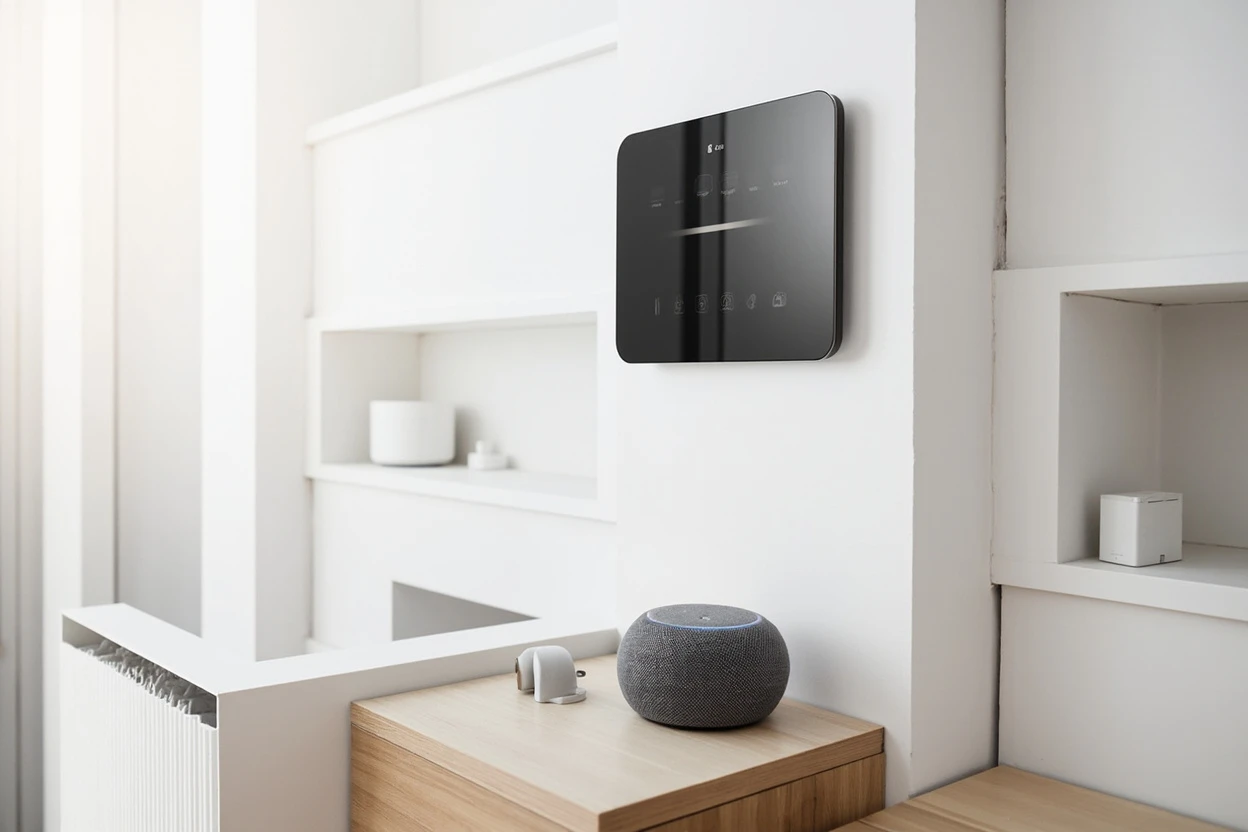
The global Smart AC Control sector serves consumers worldwide with diverse solutions.
1. Industry Overview
When you hear that the global smart HVAC controls market exceeded USD 44.3 billion in 2025, the first question that leaps to mind is: which slice of that pie is growing fastest? The answer is smart AC control—a niche that retrofits ordinary air conditioners with intelligent connectivity, turning dumb cooling into a programmable, adaptive, energy-saving system. Unlike full HVAC replacements, smart AC controllers attach to existing units (window, portable, ductless mini-split, or central), making them the most accessible entry point for both residential and commercial users. The market is distinctive because it operates at the intersection of low-cost hardware and high-value software: a $40 device can slash cooling bills by 20-30%. This sub-topic is booming because it addresses a universal pain point—energy waste—without requiring a complete system overhaul. According to recent projections, the smart HVAC controls segment (which includes smart AC controllers) is expected to grow at a CAGR of 12.02% from 2026 to 2035, driven by integration with smart home platforms, utility demand-response programs, and ever-tightening energy efficiency regulations. For B2B buyers—hotel chains, office landlords, facility managers—adopting smart AC control is no longer a nice-to-have; it's a competitive necessity to meet ESG targets and operational cost goals.
Industry Scope & Characteristics
Retrofit-First Design
Unlike built-in smart HVAC systems, smart AC controllers are designed to attach to existing AC units wirelessly or via infrared, enabling immediate connectivity without replacing equipment. Products like the Sensibo Sky exemplify this universal retrofittable approach.
Chipset Sensitivity
The supply chain for smart AC controllers depends heavily on low-cost Wi-Fi/Bluetooth SoCs (e.g., Espressif ESP32). Shortages in 2021-2022 delayed product launches; manufacturers now dual-source to avoid disruption.
Energy Star & UL Certifications
Key certifications include Energy Star for energy efficiency and UL 60730 for automatic electrical controls. Compliance with these standards is critical for qualifying for utility rebates and insurance requirements in commercial installations.
Edge-AI vs. Cloud-AI Trade-off
Innovation is split between on-device machine learning (e.g., Cielo's local occupancy detection) and cloud-based optimization (e.g., Google Nest's server-side algorithms). Edge processing offers faster response and privacy, while cloud allows richer data models.
Key market segments and growth drivers in the Smart AC Control sector.
2. Market Analysis
The numbers tell a story of accelerating demand. The global HVAC control systems market, which includes smart AC controllers, was valued at USD 31.06 billion in 2026 and is forecast to reach USD 65.14 billion by 2034, growing at a CAGR of 9.70%. Focusing specifically on the smart AC controller segment within North America, the annual growth rate is pegged at 9.6% from 2026 to 2033. Even more aggressive is the broader smart HVAC controls market, which is projected to swell from USD 44.3 billion in 2025 to USD 159.22 billion by 2035 at a CAGR of 12.02%. What's driving these figures? Three major forces. First, the escalating cost of electricity—the U.S. average commercial rate hit $0.128/kWh in 2024, up 4% year-over-year—is forcing businesses to seek granular control over their HVAC load. Second, government mandates like the U.S. Department of Energy's 2023 rule on energy conservation standards for air conditioners are pushing property owners toward smart retrofits. Third, the integration of voice assistants (Alexa, Google Assistant, Siri) and smart home hubs (Samsung SmartThings, Apple HomeKit) has made user adoption frictionless. The result: even a modest 8.6% CAGR in the broad HVAC controls market (USD 25.81 billion in 2025 to USD 39.07 billion by 2030) understates the rapid pivot from manual to smart controls, which now accounts for over 45% of new controller sales in developed markets.
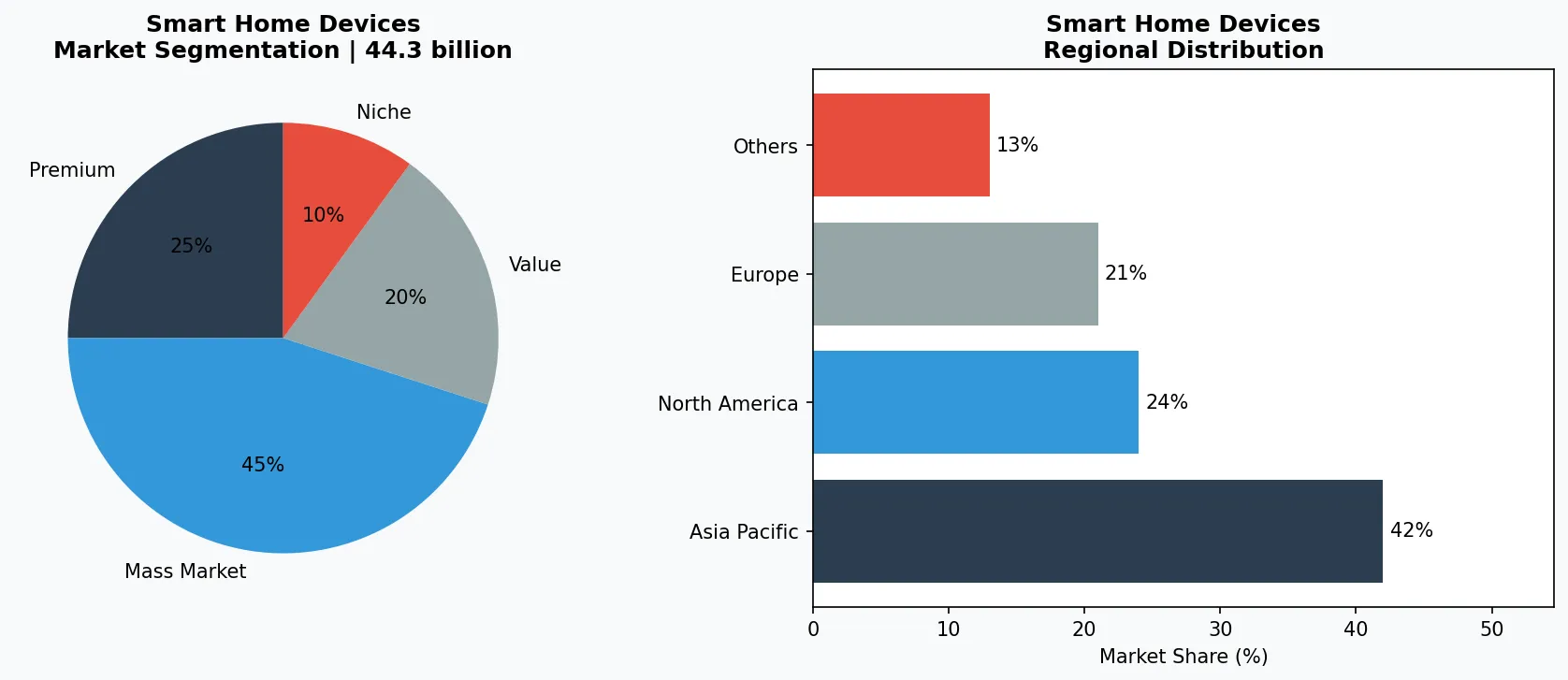
Market segmentation and regional distribution analysis for Smart AC Control.
3. Product Categories
Smart AC control products fall into three distinct categories. First, single-zone controllers designed for window or portable air conditioners. These are compact plug-in devices that use IR blasters or Wi-Fi-enabled relays to replace or augment the remote control. Examples include the Cielo Breez Plus and the Sensibo Sky, which allow scheduling, geofencing, and energy tracking from a smartphone. Second, multi-zone controllers for ductless mini-split systems, which can handle multiple indoor units simultaneously. The Cielo Breeze Max and the Senva (from Schneider Electric) are popular in commercial spaces such as boutique hotels and open-plan offices, where zoning flexibility is critical. Third, central HVAC controllers that integrate with thermostats and duct dampers to manage whole-building cooling. Ecobee's SmartThermostat Premium and Google's Nest Learning Thermostat are the best-known examples, but the real innovation is happening in the retrofit space: products like the Tado AC Controller enable smart control of legacy central ACs without replacing the thermostat. Each product type addresses a different installation complexity, from DIY plug-and-play to professional integration with building management systems (BMS).
Single-Zone Retrofit Controllers
Plug-and-play devices for window, portable, or through-wall ACs. Examples include Cielo Breez Plus and Sensibo Sky, supporting IR and Wi-Fi control with scheduling and geofencing.
Multi-Zone Mini-Split Controllers
Designed for ductless mini-split systems with multiple indoor heads. The Cielo Breeze Max and Senva (Schneider Electric) enable zoned scheduling and temperature sensors per room.
Central HVAC Smart Controllers
Integrated with thermostats and dampers for whole-building management. Examples: Ecobee SmartThermostat Premium, Tado AC Controller for central AC, often paired with BMS systems.
4. Leading Players
Three strategic archetypes dominate the smart AC control landscape. The first is the tech-first disruptor, represented by Cielo (makers of the Cielo Breeze line). Cielo's competitive advantage lies in its deep specialization: it designs controllers exclusively for AC retrofits, not general thermostats, allowing it to offer unparalleled compatibility with over 30,000 AC models and features like 'Comfort Mode' that learns room occupancy patterns. The second archetype is the legacy HVAC giant, such as Honeywell. Honeywell leverages its decades of B2B relationships with commercial HVAC contractors and its powerful portfolio of sensors, valves, and actuators. Its strategy is to embed smart AC control into larger building automation suites (e.g., Honeywell Forge), making it the default choice for enterprise facility managers who need reliability and service contracts. The third archetype is the smart home ecosystem player, led by Google Nest (Alphabet). Nest's advantage is distribution and brand recognition: its Learning Thermostat and Temperature Sensors benefit from Google's AI (via Nest Renew) and integration with the broader Google Home ecosystem. Nest targets the premium consumer and small-business market, using its software ecosystem to lock in users who then add other smart devices. Each archetype competes on different axes—compatibility, ecosystem depth, and installation channel—but all are racing to add AI-driven predictive algorithms that claim to reduce cooling costs by an additional 15-20%.
Tech-First Disruptors (Cielo)
Cielo specializes exclusively in smart AC controllers, offering broad compatibility (>30,000 AC models) and features like noise-level monitoring and auto-away mode. Their strategy: own the retrofit niche by out-featuring general thermostat brands.
Legacy HVAC Giants (Honeywell)
Honeywell leverages its factory-installed control contracts and B2B distribution to embed smart AC control into larger building automation suites. Their competitive advantage: multi-decade trust with commercial HVAC contractors and robust cybersecurity certifications.
Smart Home Ecosystem Players (Google Nest)
Google Nest uses brand power, AI (Nest Renew), and ecosystem lock-in to target premium consumer and small-business segments. Their strength: seamless integration with Google Home and voice assistants, plus utility partnerships for demand-response programs.
5. Market Trends
1. Energy-as-a-Service Models
Property managers are increasingly adopting HVAC-as-a-Service subscriptions, bundling smart AC controllers with predictive maintenance to reduce energy costs without upfront capital expenditure.
2. AI-Driven Predictive Maintenance
Machine learning algorithms now analyze usage patterns and environmental data to preemptively schedule AC servicing, cutting unplanned downtime by up to 30% for commercial buildings.
3. Interoperability Standards Battle
As Matter protocol adoption grows, B2B buyers are prioritizing controllers that promise multi-vendor integration, reducing lock-in and simplifying large-scale deployments.
4. Demand-Response Readiness
Smart AC controllers with built-in utility communication modules enable commercial properties to participate in peak shaving programs, creating a new revenue stream while stabilizing grid load.
6. Regional Markets
North America – Demand-Response Hub
The region leads in smart AC controller adoption, driven by utility incentives (e.g., California's DR programs) and high AC penetration (over 90% of households). CAGR of 9.6% from 2026-2033 reflects both residential and commercial retrofits.
Europe – Regulation-Driven Adoption
Strict EU Energy Performance of Buildings Directive (EPBD) pushes for smart-ready controls in all new buildings post-2025. The market favors controllers with Matter/Thread compatibility and low-power 802.15.4 radios.
Asia-Pacific – the Next Frontier
Soaring AC sales (India +15% CAGR), frequent brownouts, and low labor costs make plug-in smart controllers highly attractive. Local manufacturers like Tuya provide white-label solutions, enabling rapid market entry for B2B distributors.
7. Investment Outlook
Two concrete opportunities stand out for smart AC control in the near term. First, the retrofit of existing commercial real estate: with over 60% of U.S. office buildings still using AC units installed before 2010, the addressable market for plug-in smart controllers is massive, especially for small-to-medium businesses that cannot afford full HVAC replacement. Second, the Asia-Pacific region, where extreme heat waves and rising AC penetration (India alone installed 25 million new units in 2024) create a greenfield market for low-cost smart controllers. However, a significant risk looms: cybersecurity vulnerabilities. As AC controllers become always-on, cloud-connected endpoints, they represent a growing attack surface for building networks. The 2023 breach of a major smart thermostat provider that exposed 2.2 million user accounts is a stark reminder. B2B buyers must prioritize controllers that comply with ISO/IEC 27001 and offer over-the-air firmware updates with validated encryption. VerityRank's supplier verification tools can help buyers assess the security posture of smart AC control vendors before committing to a fleet-wide rollout.
Strategic Considerations:
- Commercial Retrofit Wave: B2B buyers in hospitality, coworking, and healthcare should prioritize fleet-wide smart AC controller deployment over full HVAC replacement; payback periods under 18 months are common with utility rebates.
- Asia-Pacific Price Points: Low-cost controllers (under $30) from OEMs in China and India are flooding the market, but quality varies; VerityRank can help verify supplier compliance with IEC 62368-1 safety standards.
- Firmware Update Fragmentation: Many cheaper controllers lack automatic OTA updates, leaving endpoints vulnerable. Enterprises should mandate a minimum of 3 years of guaranteed firmware support in procurement contracts.
- Interoperability Gaps: Despite Matter, some controllers still require proprietary hubs (e.g., older Sensibo models). Future-proof purchases by requiring Matter certification from all suppliers.
Frequently Asked Questions
Make Informed Decisions in the Smart AC Control Market
Product quality and sourcing integrity directly impact business outcomes. Discover how Verity Rank's verification platform helps industry participants source with greater confidence.
Contact Verity Rank TodayFurther Reading: Explore additional market intelligence from Grand View Research and Mordor Intelligence.
This article is for informational purposes only, based on publicly available industry data and market reports as of 2026-06-07. All market figures are estimates and may vary from actual results.