

Table of Contents
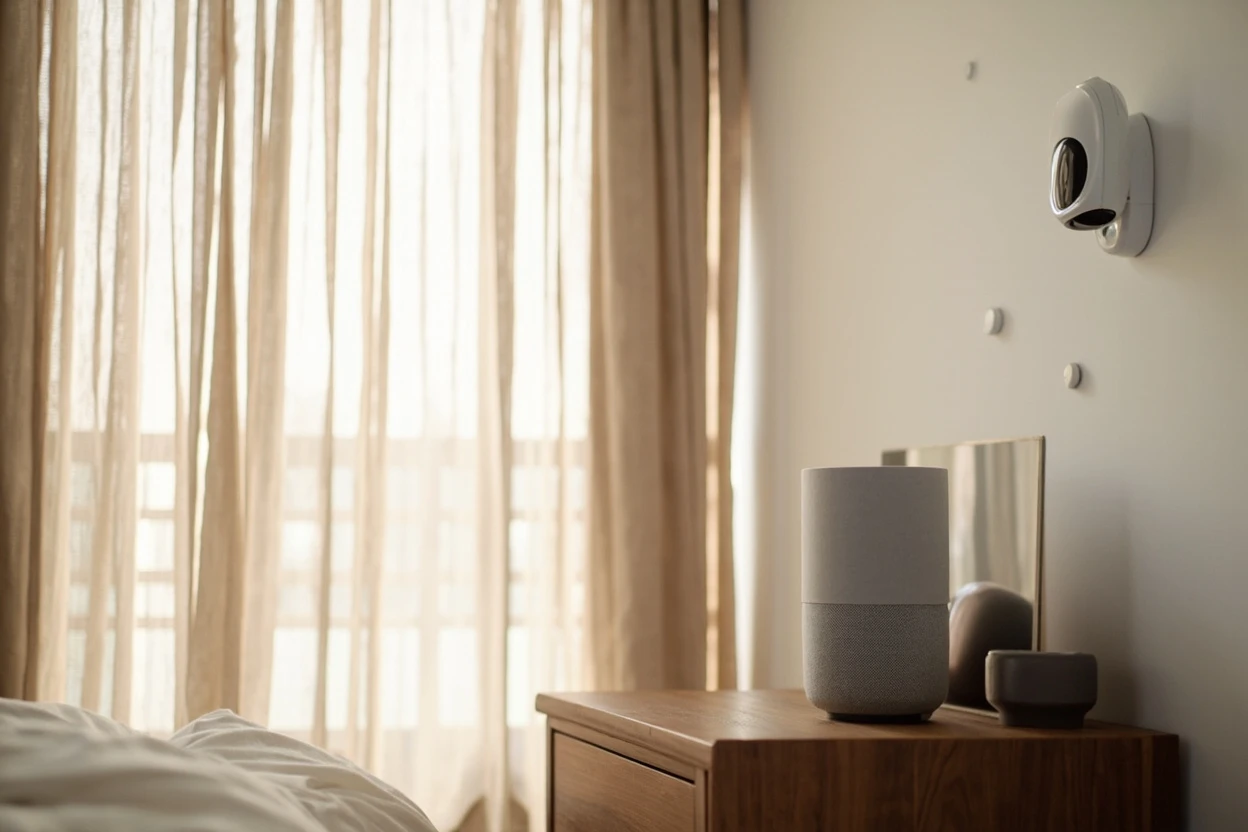
The global Smart Curtain Motor Systems sector serves consumers worldwide with diverse solutions.
1. Industry Overview
What if the next frontier of home automation is already hanging at your window? Smart curtain motor systems—automated devices that open and close curtains via voice, app, or sensor—are quietly transforming residential and commercial spaces. Unlike smart speakers or thermostats, which compete for attention, curtain motors operate invisibly, yet their market impact is anything but subtle. The global automatic curtain market was valued at USD 3.59 billion in 2024 and is projected to hit USD 6.13 billion by 2034, growing at a steady CAGR. But the segment that powers these drapes—the motor itself—is even more dynamic. According to industry reports, the global electric curtains market is expected to reach USD 20.3 billion by 2026 and balloon to USD 61 billion by 2035, driven by a blistering 13% CAGR. Smart curtain motors are distinct because they bridge the gap between retrofit convenience and new-build integration. While traditional electric curtains require pre-installed tracks, modern smart motors can be clipped onto existing rods, making them the go-to solution for renters and homeowners alike. This sub-topic sits at the intersection of motor engineering, Internet of Things (IoT) connectivity, and interior design, creating a unique product category that is both utility and luxury.
Industry Scope & Characteristics
Retrofit-First Design
Unlike smart locks or thermostats, smart curtain motors often require no permanent installation. Products like clip-on motor units fit existing curtain rods, lowering the barrier to entry for renters and reducing installation costs.
Low-Noise Engineering Imperative
Curtain motors operate in bedrooms and living spaces, so noise levels below 30 dB are a key differentiator. Manufacturers use dampened gear trains and DC motors to meet this standard, with premium models achieving whisper-quiet operation.
UL 244A and CE Certification
Safety certifications for electric motors are mandatory in most markets. UL 244A (for battery-powered motors) and CE marking ensure protection against overheating and fire risk. Commercial installations often require additional ASTM E2836 compliance for window covering safety cords.
Solar Integration as R&D Frontier
Recent innovation focuses on integrating photovoltaic cells directly into motor housings. SwitchBot’s solar panel accessory and IKEA’s FYRTUR solar model demonstrate how self-powered motors can eliminate battery waste, appealing to eco-conscious buyers.
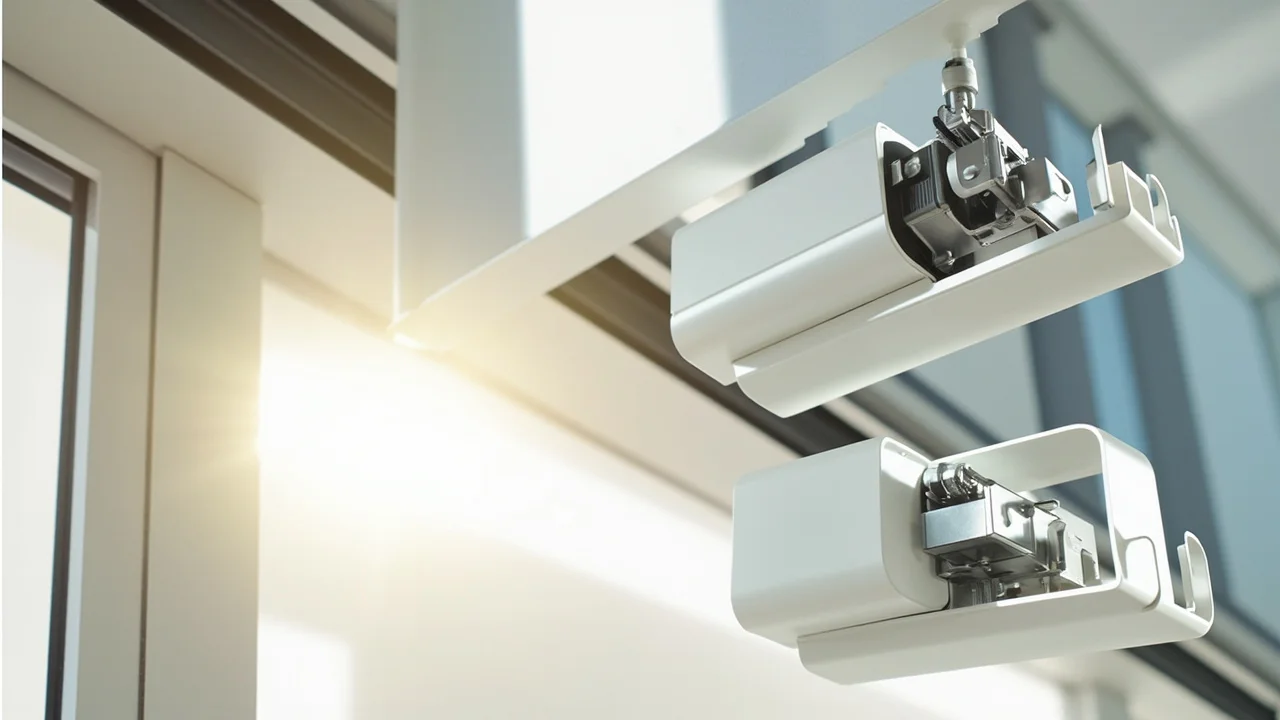
Key market segments and growth drivers in the Smart Curtain Motor Systems sector.
2. Market Analysis
The numbers confirm the momentum. The Automatic Curtain Market is worth USD 4.07 billion in 2026 and is growing at a CAGR of 5.47% to reach USD 5.31 billion by 2031, according to Mordor Intelligence. Meanwhile, a more focused Smart Curtain Motor Market analysis predicts growth from USD 655 million in 2025 to USD 850 million by 2032, a 4.6% CAGR. The discrepancy between these figures highlights the difference between complete curtain systems and motor-only sales, with the latter representing a high-margin, rapidly scaling niche. The North America Remote Control Curtain Motor Market is outpacing global averages with a CAGR of 7.6% from 2026 onward, driven by high disposable incomes and strong smart home penetration. Three forces are fueling this growth. First, energy efficiency mandates in commercial buildings are pushing facilities managers to adopt automated shading, which can reduce HVAC load by up to 20%. Second, the aging population in regions like Europe and Japan is driving demand for voice- and remote-controlled curtains that eliminate physical exertion. Third, the proliferation of smart home ecosystems—Amazon Alexa, Google Home, Apple HomeKit—is creating interoperability standards that make these motors more user-friendly. Suppliers that offer native Matter protocol support are already gaining a competitive edge, as buyers prioritize future-proof hardware.
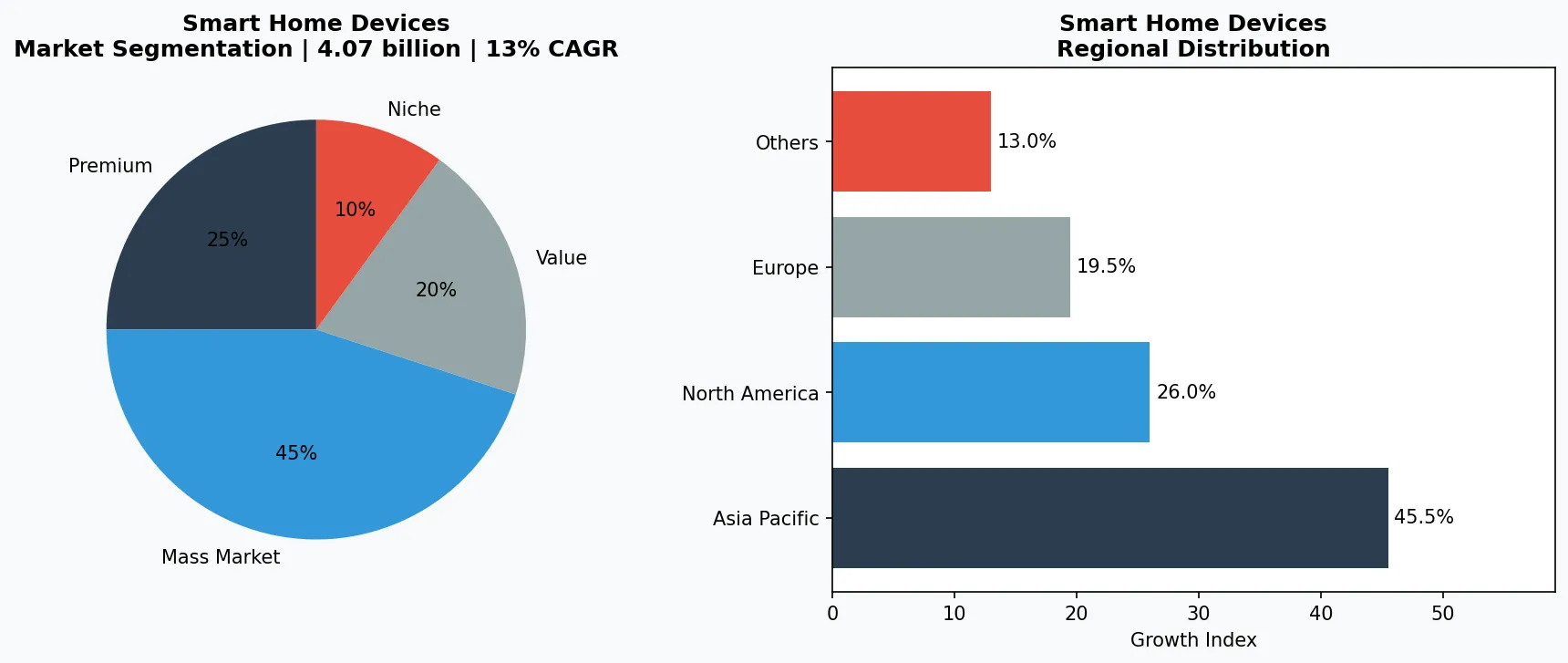
Market segmentation and regional distribution analysis for Smart Curtain Motor Systems.
3. Product Categories
Smart curtain motor systems can be classified into three distinct product categories.
Retrofit Motors
Are clip-on devices that attach to existing curtain rods, requiring no track replacement. Examples include the SwitchBot Curtain, which works with standard I-beam rails, and the Aqara Roller Shade Controller, which retrofits tubular motors. These products dominate the DIY market because installation takes less than 10 minutes.
Dedicated Track Systems
Are full curtain rails with integrated motors, ideal for new constructions or renovations. Companies like Somfy and Lutron offer motorized tracks that support heavy drapes and can be recessed into ceiling coves. Somfy’s TaHoma platform, for instance, allows scheduling based on sunrise/sunset.
Smart Blind & Shade Motors
Represent a third segment, focused on hard window coverings rather than fabric curtains. IKEA’s FYRTUR smart blinds and Lutron’s Serena cellular shades use battery-powered tubular motors that can be solar-charged. Each type requires different certifications: retrofit motors often need UL or CE for safety, while track systems must comply with fire codes for commercial use. B2B buyers sourcing for hotels or offices should prioritize motors with low noise ratings (under 30 dB) and fail-safe manual override.
Retrofit Clip-On Motors
Designed for existing curtain rods, these motors attach to the pull cord or wand. Example: SwitchBot Curtain (works with I-beam rails) and Aqara Curtain Motor (compatible with Zigbee hubs). Ideal for DIY installers.
Dedicated Motorized Track Systems
Full curtain rails with integrated tubular motors. Example: Somfy TaHoma track (supports heavy drapes, up to 50kg) and Lutron Sivoia QS (recessed ceiling installation). Targeted at high-end residential and commercial projects.
Solar-Powered Tubular Motors for Blinds
Battery-driven motors with solar charging panels, used for roller shades and pleated blinds. Example: IKEA FYRTUR (solar version) and Lutron Serena solar shades. Main advantage: zero wiring, endless runtime.
4. Leading Players
The competitive landscape is defined by three strategic archetypes.
Integrated Ecosystem Player (Lutron)
Positions its smart curtain motors as part of a whole-home lighting and shading system. Lutron’s Serena shades and Pico remotes are designed for premium residential and hospitality projects, emphasizing reliability over open standards. The company’s closed-loop radio frequency technology ensures zero latency, but limits cross-brand compatibility—a trade-off that suits high-end buyers.
Retrofit Innovator (SwitchBot)
Focuses on affordability and universal compatibility. Its curtain motor, launched in 2019, sold over 500,000 units within three years by undercutting traditional motor prices by 60%. SwitchBot’s strategy is to partner with IFTTT and Alexa for voice control, and it recently added a Hub with Matter support to future-proof its ecosystem.
European Motor Specialist (Somfy)
Dominates the commercial shading market, with an estimated 40% share of the global motorized curtain track space. Somfy’s advantage lies in its silent DC motors and io-homecontrol protocol, which offers bidirectional feedback for sun-tracking. The company supplies OEM motors to dozens of curtain manufacturers, making it the hidden engine behind many branded systems. A fourth player, IKEA, disrupts the market with a furniture-retail approach: it sells smart blinds at price points 30-50% below specialist brands, using massive distribution to normalize the category.
Integrated Ecosystem Builder (Lutron)
Lutron bundles smart curtain motors within its broader lighting and shading ecosystem. Its Serena shades and Pico remotes offer baked-in compatibility with leading smart home platforms, but require Lutron hubs—a strategy that locks in high-margin repeat sales.
Retrofit Disruptor (SwitchBot)
SwitchBot focuses on low-cost, easy-install motors that work with virtually any curtain rod. By undercutting premium brands by 60% and adding Matter support in 2025, it targets the mass-market retrofitter segment and scales via online direct-to-consumer channels.
Commercial Motor Specialist (Somfy)
Somfy dominates the OEM supply chain for motorized curtain tracks, holding ~40% market share. Its silent DC motors and io-homecontrol protocol are the hidden standard in many branded systems, and its recent Matter upgrade makes it a safe bet for B2B buyers.
5. Market Trends
1. Matter Protocol Adoption
What it is: The smart home interoperability standard Matter (formerly Project CHIP) now supports window coverings. Why it matters: Curtain motors that support Matter can be controlled from any compatible hub, eliminating the need for brand-specific bridges. Somfy announced Matter support for its TaHoma switch in 2024, while Lutron is adding Matter bridges to its RadioRA 3 system. This trend is critical for B2B buyers who need multi-vendor compatibility in hotels or office parks.
2. Solar-Powered Curtain Motors
What it is: Tubular motors with integrated solar panels that recharge batteries during daylight. Why it matters: Eliminates battery swaps and reduces wiring costs. IKEA's FYRTUR solar version sold out within weeks of launch, signaling strong demand. SwitchBot introduced a solar panel accessory for its curtain motor in 2025, targeting off-grid installations.
3. Voice and AI Scheduling
What it is: Integration with voice assistants and AI-driven schedules that learn user routines. Why it matters: Smart curtain motors are no longer just remote-controlled; they can now adjust automatically based on weather, time, and occupancy. For example, Lutron's Serena shades sync with Nest thermostats to close blinds in summer afternoons, cutting cooling costs by 12%. This capability is becoming a baseline requirement for commercial B2B contracts.
4. Retrofit-First Product Innovation
What it is: A new generation of clip-on motors that require no professional installation, enabling consumers to motorize existing curtains in minutes. Why it matters: The retrofit segment is growing 2x faster than dedicated track systems, driven by the rental market and DIY homeowners. Products like SwitchBot Curtain 3 and Aqara Curtain Driver E1 have lowered the barrier to entry, with price points under $100. This trend opens the smart curtain market to the mass consumer segment that previously viewed motorization as a luxury renovation project. Analysts project the retrofit sub-segment will capture 45% of new smart curtain motor sales by 2028.
6. Regional Markets
North America – Remote Control Growth Leader
The North American remote control curtain motor market is growing at 7.6% CAGR, driven by high smart home penetration and commercial retrofit demand. UL certification is a key requirement, and buyers favor brands with Alexa and Google native integration.
Europe – Energy Efficiency Regulation Driver
EU energy directives (EPBD) push commercial buildings to install automated shading. Somfy and Lutron dominate the premium segment, while IKEA captures mid-range with affordable solar blinds. CE marking and low noise (≤30 dB) are mandatory.
Asia-Pacific – Manufacturing Hubs & Fast Adoption
China and Japan lead production of brushless DC motors. Domestic brands like Aqara leverage local supply chains for cost-competitive motors. The region also sees rapid adoption of Matter and Zigbee protocols, with a CAGR close to 5.5% through 2031.
7. Investment Outlook
Two specific opportunities stand out for 2026–2030. First, the commercial retrofit market for offices and hotels is largely untapped—less than 5% of commercial window coverings are motorized. B2B suppliers that offer bulk pricing and installation partnerships with facilities management firms can capture this segment. Second, the rise of Matter certification creates a first-mover advantage: motors with Matter 1.3 compliance will be compatible with Apple Home, Google Home, and Alexa out of the box, reducing return rates and support costs. The primary risk is the supply chain concentration of rare earth magnets used in brushless DC motors. Over 80% of these materials come from China, and any trade disruption could delay deliveries by months. Buyers should diversify suppliers or consider stepper motor alternatives to mitigate this risk.
Strategic Considerations:
- Commercial Retrofit Opportunity: Only 5% of commercial window coverings are motorized; targeting office towers and hotels with bulk pricing and installation partnerships could unlock a $1B+ annual market.
- Matter Certification First-Mover Advantage: Motors with Matter 1.3 compliance reduce support costs and return rates by ensuring out-of-box compatibility with Apple, Google, and Alexa. Early adopters will capture B2B contracts.
- Risk – Rare Earth Magnet Supply Chain: Over 80% of rare earth magnets come from China; trade disruptions or tariffs could delay motor deliveries by 3–6 months. Alternative stepper motors or reluctor designs offer partial mitigation.
- Opportunity – Solar Self-Powered Motors: Integrated solar panels eliminate battery replacement costs and appeal to sustainability mandates. IKEA and SwitchBot already offer models; commercial viability improves with LiFePO4 battery advancements.
Frequently Asked Questions
Make Informed Decisions in the Smart Curtain Motor Systems Market
The smart curtain motor market is at an inflection point — converging IoT standards, AI-driven automation, and retrofit innovation are transforming a niche category into a mainstream smart home essential. Whether you are sourcing for a commercial building project, evaluating components for a new product line, or upgrading your own home, the key differentiators are: certification compliance (UL 244A, CE), protocol interoperability (Matter vs proprietary), and installation flexibility (retrofit vs dedicated track). Companies that bridge these requirements — like SwitchBot for retrofit convenience, Somfy for commercial-grade reliability, and Lutron for integrated ecosystem control — are best positioned to lead in the next growth phase.
1. What certifications should I look for when sourcing smart curtain motors for commercial buildings?
For commercial installations, prioritize motors with UL 244A (USA) or CE marking (Europe) to ensure fire and electrical safety. Additionally, ASTM E2836 compliance regarding window covering cord safety is critical in hospitality settings. Many European buyers also require EN 15269 for curtain track fire resistance. For retrofit motors, look for FCC/IC (RF interference) and IEC 62368-1 for audio/video equipment safety. Brands like Somfy and Lutron typically provide certification documentation upfront, while smaller OEMs may need third-party verification. Always request a certificate of compliance for the specific motor model before bulk ordering.
2. Can smart curtain motors work with my existing manual curtains and rods?
Yes, many smart curtain motors are designed as retrofit clip-on devices that attach to existing curtain rods without replacing them. The SwitchBot Curtain, for example, clips onto I-beam or U-rail rods and uses a motorized pull mechanism to slide the curtains. However, compatibility depends on rod diameter (typically 20-28 mm for round rods) and curtain weight (most support up to 8 kg per motor). Heavy velvet curtains may require a dedicated track system like Somfy's TaHoma, which offers higher torque. For maximum flexibility, choose motors that offer both retrofit and track modes, and always measure your rod dimensions and curtain weight before purchasing.
3. How do Matter-enabled smart curtain motors differ from those using proprietary protocols?
Matter-enabled motors support a universal smart home standard, meaning they can be controlled by any certified hub (Apple Home, Google Home, Amazon Alexa) without requiring a separate bridge or app. Proprietary protocols like Somfy's io-homecontrol or Lutron's Clear Connect require brand-specific hubs, limiting cross-ecosystem interoperability. For B2B buyers sourcing for multi-tenant buildings, Matter-compatible motors reduce integration complexity and future-proof installations against vendor lock-in. However, proprietary systems often offer more advanced features — like Somfy's precise tilt control for blinds — that Matter's current specification does not yet support. The ideal approach is to select motors that support both Matter and their native protocol for maximum flexibility.