

Table of Contents
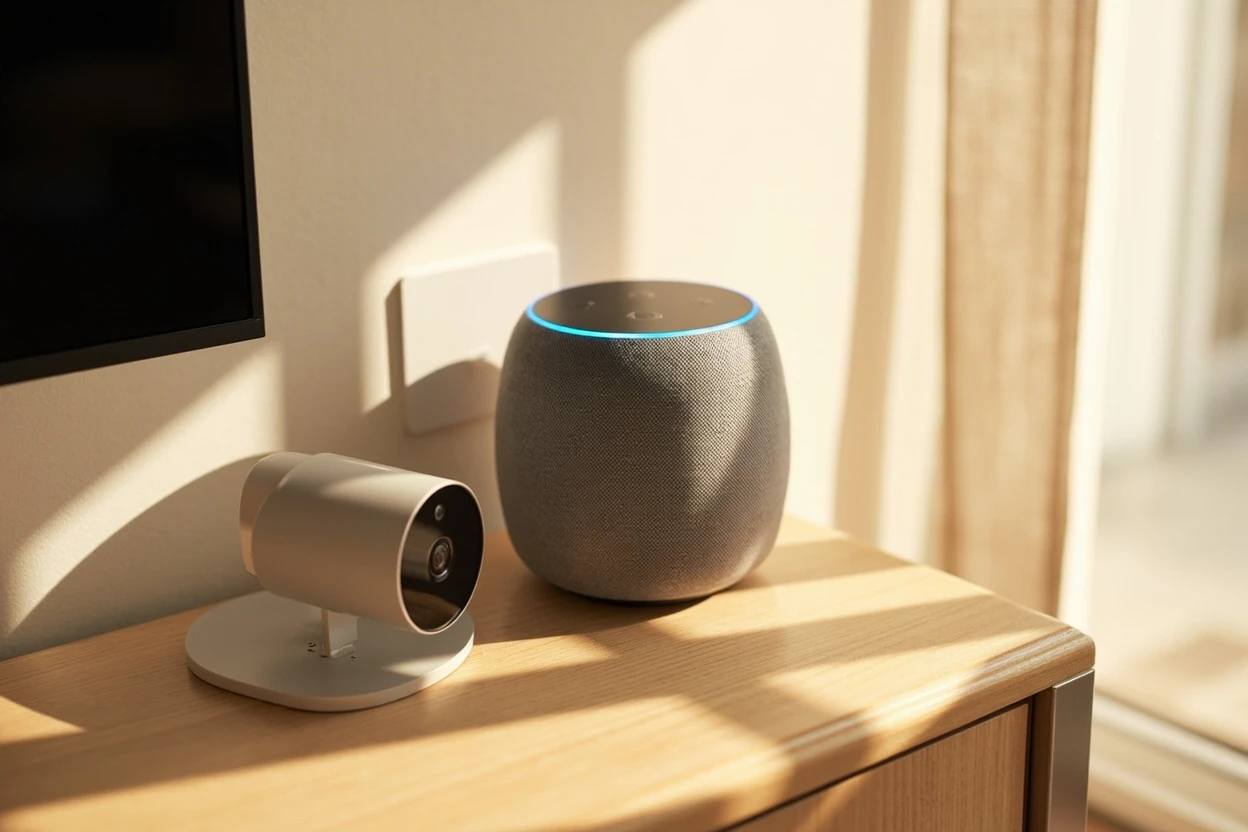
The global Smart Speaker Assistant sector serves consumers worldwide with diverse solutions.
1. Industry Overview
By 2026, the global smart speaker market will be worth $19.01 billion—more than double its 2020 valuation—and is projected to reach $37.6 billion by 2031, growing at a compound annual rate of 14.62%. That is not just a consumer gadget story; it is a foundational shift in how homes, hotels, and offices interact with technology. Smart speaker assistants—voice-activated devices powered by AI that respond to natural language commands—have evolved from novelty speakers into the central nervous system of the connected home. Unlike a standalone Bluetooth speaker, a smart speaker assistant integrates microphones, far-field voice processing, and cloud-based AI to execute tasks: playing music, controlling lights, setting timers, ordering groceries, and even locking doors. The distinctive value proposition is frictionless, hands-free control. In a market projected to reach between $34 billion and $52 billion by 2030–2034 depending on the forecast (with CAGRs ranging from 9.4% to 22.5%), the smart speaker assistant segment stands out as the highest-velocity adoption driver within Smart Home Technology. Every major forecast agrees: double-digit growth is locked in, fueled by declining hardware costs, improved natural language processing, and the expansion of third-party skill ecosystems.
Industry Scope & Characteristics
Voice-First Multimodal Interface
Smart speaker assistants uniquely combine far-field microphones, AI processing, and optional displays to enable hands-free control. Unlike generic Bluetooth speakers, they integrate with over 100,000 third-party skills for tasks like turning off smart lights or reordering groceries.
Supply Chain of MEMS Microphones and Edge AI Chips
Production relies on high-volume MEMS microphone arrays (typically 4–7 per device) and dedicated AI processors (e.g., Amazon’s AZ2 Neural Edge processor). This has driven consolidation among suppliers like Knowles and Cirrus Logic, with lead times currently 8–12 weeks.
Certification for Voice Data Privacy and Security
Key certifications include ISO/IEC 27001 for data security, UL 62368-1 for general product safety, and the OCF (Open Connectivity Foundation) certification for interoperability with smart home standards like Matter. Amazon requires Alexa Skill developers to pass an annual security review.
On-Device NLP and Generative AI Integration
R&D is shifting from cloud-dependent processing to on-device natural language processing (NLP) to reduce latency and enhance privacy. Apple’s HomePod uses the S9 chip for local Siri processing; Amazon’s Alexa+ employs a hybrid model with local caching of frequent commands.
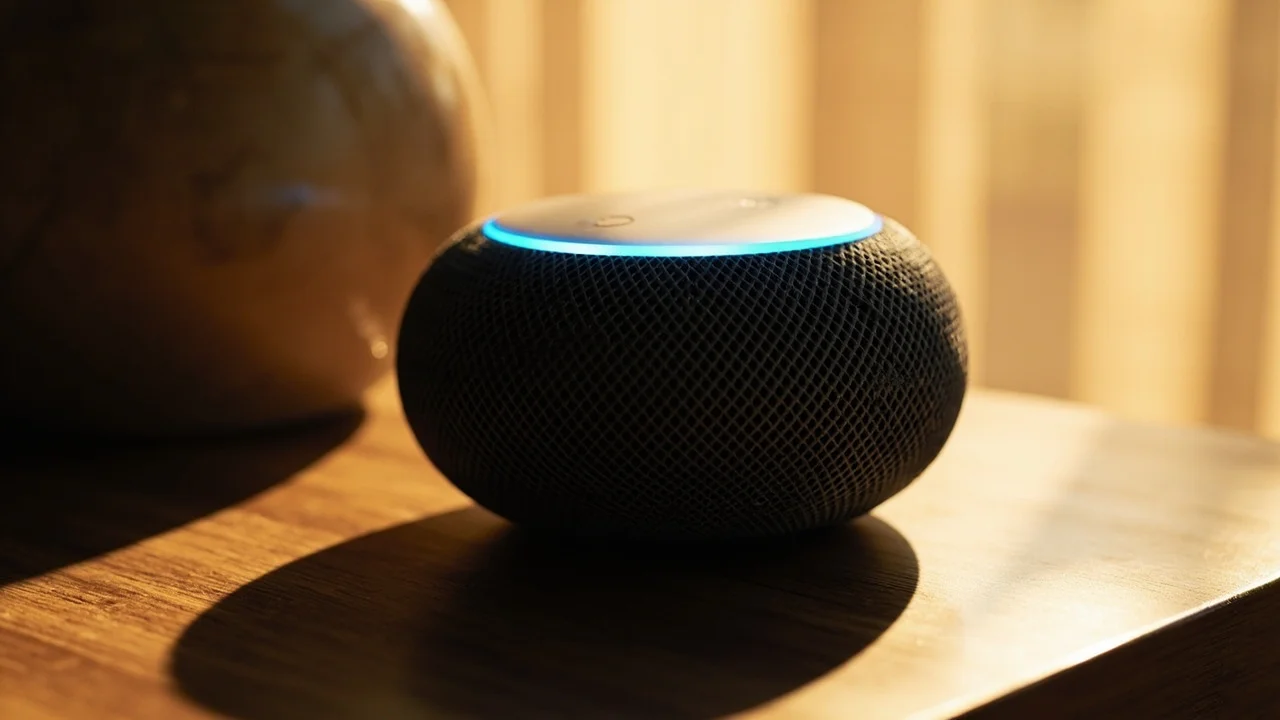
Key market segments and growth drivers in the Smart Speaker Assistant sector.
2. Market Analysis
The numbers tell a consistent story of explosive demand. According to the most cited industry analysis, the Smart Speaker Market was valued at approximately $15.80 billion in 2025, with projections hitting $48.64 billion by 2033 (CAGR of 15.1% from 2026 to 2033). A competing forecast from Mordor Intelligence pegs 2026 at $19.01 billion, rising to $37.6 billion by 2031 at a 14.62% CAGR. Meanwhile, another report sees the market reaching $34.08 billion by 2034 from $16.61 billion in 2026 (9.40% CAGR), while yet another projects $52.44 billion by 2030 from $23.32 billion in 2026 (22.5% CAGR). The wide range reflects differing methodologies and geographic weighting, but all confirm a market that will double or triple within a decade. Three growth drivers stand out. First, the proliferation of affordable Wi-Fi and mesh networks: over 80% of U.S. households now have broadband, removing the connectivity barrier. Second, the expansion of AI voice assistants: Amazon Alexa, Google Assistant, and Apple Siri now support over 100,000 skills each, making devices more useful. Third, the bundling of smart speakers with other smart home devices: companies like Amazon sell Echo devices as part of starter kits with smart plugs and bulbs, lowering the entry cost. In 2025, nearly 30% of smart speaker purchases were part of a bundled smart home package, a number expected to exceed 45% by 2028.
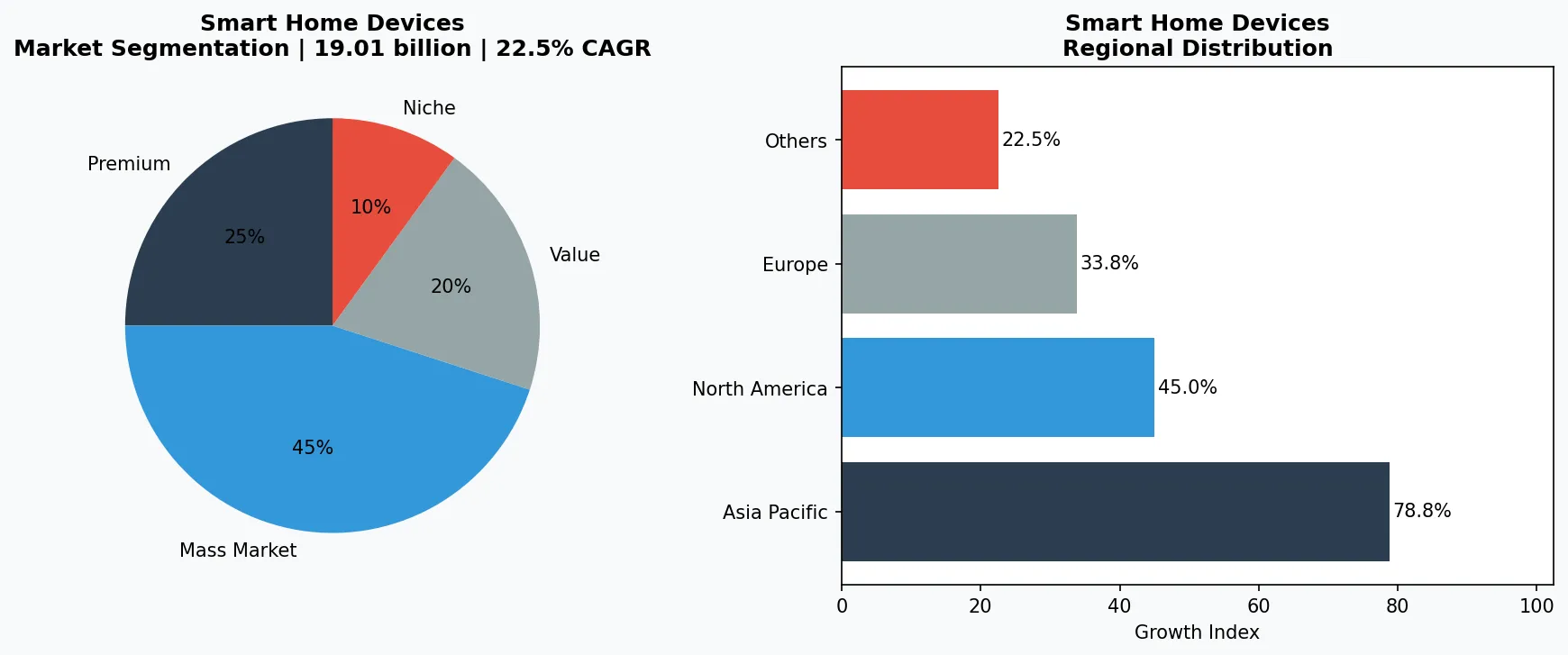
Market segmentation and regional distribution analysis for Smart Speaker Assistant.
3. Product Categories
Smart speaker assistants fall into four distinct product categories.
Standalone smart speakers
The Amazon Echo Dot (5th gen), Google Nest Mini—are compact, affordable, and designed for single-room voice control. They typically feature a small driver, far-field microphones, and no screen.
Smart displays
Such as the Amazon Echo Show 15 and Google Nest Hub Max—add a touchscreen for visual feedback: video calls, recipe walkthroughs, and security camera feeds. This segment is growing at over 18% annually as users demand multimodal interaction.
Premium smart speakers
The Apple HomePod 2 and Sonos Era 300—prioritize audio quality while integrating voice assistants. These target audiophiles and multi-room setups, often supporting spatial audio and lossless streaming.
Portable smart speakers
Like the Amazon Echo Auto and JBL Link Portable—are battery-powered and designed for on-the-go use, linking to the same ecosystem via Wi-Fi or Bluetooth. For B2B buyers, distinguishing between these tiers is critical: hospitality deployments favor smart displays for guest information, while office environments often deploy standalone units for meeting room control.
Standalone Smart Speakers
Compact, display-less devices like the Echo Dot (5th gen) and Google Nest Mini, priced $20–$60, optimized for single-room voice control of music, timers, and smart home commands. They dominate entry-level sales, accounting for over 60% of unit volume.
Smart Displays
Screen-equipped devices such as Echo Show 15 and Nest Hub Max, $100–$300, offering video calls, photo frames, and visual smart home dashboards. They are the fastest-growing segment (18% YoY) driven by demand for seamless video doorbell integration.
Premium Audio Smart Speakers
High-fidelity units like Apple HomePod 2 and Sonos Era 300, $200–$450, emphasizing room calibration, spatial audio, and multi-room synchronization. They target audiophiles and whole-home audio setups, with higher margins but lower volume.
4. Leading Players
Three players dominate the smart speaker assistant arena, each with a distinct strategic position.
Amazon
(via its Alexa ecosystem) commands roughly 35–40% of global smart speaker unit share. Its strategy is ecosystem lock-in: Amazon sells hardware at near cost to drive adoption of Alexa Skills and Amazon Services (music, shopping, audiobooks). The launch of the Echo Hub in 2024—a dedicated smart home controller without a speaker—shows Amazon is pivoting from speaker-first to home-control-first.
Holds around 25–30% share with its Nest Audio and Nest Hub lines. Google’s advantage is its AI: the Google Assistant leverages Google’s search and language models, making it the best at answering factual queries and following multi-turn conversations. Google also integrates deeply with its own smart home brands (Nest thermostat, Nest Cam) and partners like Philips Hue.
Apple
Trails with an estimated 8–10% share, focusing on high-end, privacy-first devices. The HomePod (2nd gen) and HomePod mini emphasize audio quality, HomeKit integration, and local processing of Siri requests to minimize cloud data exposure. Apple’s strategy is not volume but premium margin—the HomePod mini costs $99 versus Echo Dot’s $49. A fourth significant player is
Sonos
Which partners with all three major assistants—Alexa, Google Assistant, and Siri—in its speakers, adopting a platform-agnostic approach to capture multi-ecosystem households. This ‘Switzerland’ strategy appeals to B2B buyers seeking interoperability.
Ecosystem Aggressor (Amazon/Alexa)
Amazon leads with a low-margin, high-volume hardware strategy (Echo Dot at ~$49) to drive adoption of Alexa Skills and services. Its competitive advantage is the world’s largest voice app store (100k+ skills) and deep integration with e-commerce (Amazon Shopping, Whole Foods).
AI-First Platform (Google/Nest)
Google leverages its AI prowess – Gemini models power Google Assistant – to deliver superior natural language understanding and multi-turn conversations. The Nest Hub line benefits from tight bundling with Google’s smart home ecosystem (Nest Thermostat, Nest Cam) and YouTube integration.
Premium Privacy Player (Apple/HomePod)
Apple’s HomePod mini and HomePod 2nd gen focus on audio quality, HomeKit security, and on-device Siri processing. Their strategy yields 8–10% market share but premium revenue per device ($99–$299). They target privacy-conscious consumers and existing Apple users seeking seamless iCloud integration.
5. Market Trends
1. Voice Commerce Integration
Smart speakers are evolving from simple assistants into enterprise-grade transaction hubs, enabling B2B clients in hospitality and retail to process bookings, orders, and payments through voice commands.
2. Multi-Protocol Interoperability
The shift toward Thread and Matter standards is allowing smart home devices from different manufacturers to communicate seamlessly, reducing fragmentation for property managers and system integrators.
3. Edge AI for Local Processing
On-device machine learning is eliminating cloud dependency, enabling faster response times and enhanced privacy—critical for corporate offices and luxury hotels handling sensitive data.
4. Energy Management as a Service
Commercial buildings are deploying smart speaker ecosystems tied to HVAC and lighting controls, offering real-time energy optimization and predictive maintenance under subscription-based B2B models.
6. Regional Markets
North America – Home of the Voice Assistant War
With over 40% household penetration, North America is the most mature smart speaker market. Amazon commands ~40% share, Google ~30%, and Apple ~10%. The region also leads in voice commerce: 65% of US smart speaker owners have made a purchase by voice. B2B demand is strong in hospitality and senior living.
Asia-Pacific – High Growth via OEM and Local Brands
China alone accounts for nearly 35% of global smart speaker shipments, led by Alibaba’s Tmall Genie and Baidu’s Xiaodu. Japan and South Korea are seeing rapid adoption of bilingual assistants. The region’s CAGR exceeds 20% due to low initial penetration and affordable Android-based devices.
Europe – Privacy Regulation Shapes Product Design
GDPR compliance mandates local data processing options, forcing global brands to offer region-specific firmware. The UK, Germany, and France are largest markets. Sonos has gained traction here with its multi-assistant approach (supports Alexa, Google, and Siri), appealing to privacy-conscious consumers.
7. Investment Outlook
Two specific opportunities stand out for the next 24 months. First, the **commercial and hospitality segment**: hotels, hospitals, and assisted-living facilities are deploying smart speakers to handle room service, lighting, and emergency calls. Amazon’s Alexa Smart Properties program already covers over 100,000 hotel rooms. B2B buyers should evaluate devices with enterprise-grade security certifications and remote management APIs. Second, **voice-controlled energy management**: as smart thermostats and lighting become ubiquitous, utilities are subsidizing smart speaker bundles to reduce peak load. A partnership between Google Nest and OhmConnect rewards users for reducing energy use via voice commands. The primary risk is **ecosystem fragmentation**: with Amazon, Google, and Apple all pushing proprietary standards (Matter adoption is still uneven), B2B buyers must ensure their supplier supports at least two major assistants to future-proof installations. Additionally, hardware margins remain thin—Amazon’s device business is not profitable—so long-term dependencies on a single vendor may be risky.
Strategic Considerations:
- Opportunity 1: Commercial Voice Assistants: B2B deployment in hotels, hospitals, and offices is expected to grow 25% annually through 2030; prioritize devices with remote management APIs (e.g., Amazon Alexa for Business) and ISO 27001 certification.
- Opportunity 2: Energy Management via Voice: Utilities are offering subsidies for smart speaker + thermostat bundles; Google Nest and Amazon have energy-saving skills that reduce HVAC usage by voice command—a $1.2B market by 2028.
- Risk 1: Ecosystem Dependency: Matter standard adoption is still less than 30% of devices; choosing a single assistant may lock buyers into that ecosystem if a vendor discontinues support (e.g., Amazon’s decision to drop Echo Look).
- Risk 2: Hardware Margin Pressure: Smart speaker hardware margins are below 5% for most players except Apple; suppliers may exit the market, so B2B buyers should demand 3-year guarantee on firmware updates and spare parts.
Frequently Asked Questions
Make Informed Decisions in the Smart Speaker Assistant Market
Product quality and sourcing integrity directly impact business outcomes. Discover how Verity Rank's verification platform helps industry participants source with greater confidence.
Contact Verity Rank TodayFurther Reading: Explore additional market intelligence from Grand View Research and Mordor Intelligence.
This article is for informational purposes only, based on publicly available industry data and market reports as of 2026-06-07. All market figures are estimates and may vary from actual results.