

Table of Contents

The global Smart Storage Technology sector serves consumers worldwide with diverse solutions.
1. Industry Overview
What if your closet could think for itself? That is no longer a futuristic fantasy. By 2026, the global market for smart storage technology is projected to reach $75.30 billion, driven by a convergence of AI-native platforms, sensor-laden hardware, and consumer demand for frictionless organization. This is not just about bigger bins or better shelves—smart storage technology embeds digital intelligence into physical storage products, turning passive containers into active inventory managers. For the home storage organization industry, this represents a seismic shift from static solutions to dynamic ecosystems that track, sort, and even reorder household items.
Industry Scope & Characteristics
Embedded Intelligence
Smart storage products integrate IoT sensors and AI algorithms directly into physical organizers like closet rods and drawer dividers, enabling real-time inventory tracking and predictive organization.
Modular Manufacturing
Production relies on modular supply chains where sensor modules, RFID tags, and cloud connectivity components are sourced separately and assembled into traditional storage forms, allowing rapid customization.
Data Privacy Certifications
Products must comply with standards like ISO 27001 and GDPR for data handling, as smart bins and shelves collect personal usage patterns. Confidential computing certification is becoming a market differentiator.
Self-Optimizing Algorithms
R&D is focused on machine learning models that allow storage units to reorganize themselves based on usage frequency, reducing manual effort. For example, a smart shelf can automatically adjust compartment sizes.
Distinct from conventional closet organizers or shoe racks, smart storage technology integrates IoT sensors, RFID tagging, and cloud-based management to automate the mundane. A smart drawer divider, for instance, can alert a homeowner when socks are running low or suggest seasonal rotations based on usage patterns. This sub-topic sits at the intersection of consumer electronics and home goods, yet its growth trajectory mirrors that of enterprise data storage—a sector projected to expand from $298.54 billion in 2026 to $984.56 billion by 2034. The home is becoming the new data center.
What makes smart storage technology distinctive is its dual value proposition: it solves physical clutter while generating actionable data. Manufacturers are no longer selling plastic boxes; they are selling subscription-based organization services. The hardware becomes a gateway to recurring revenue through analytics, replenishment alerts, and integration with smart home assistants. This is a market where the line between product and platform is blurring, and early movers are already capturing premium margins.
The urgency is real. With a CAGR of 5.10% from 2026 to 2030, the next-generation storage market is not merely growing—it is redefining what storage means. For businesses in the home organization space, ignoring this trend means ceding ground to tech-native competitors who understand that the most valuable real estate in a home is not square footage, but data.

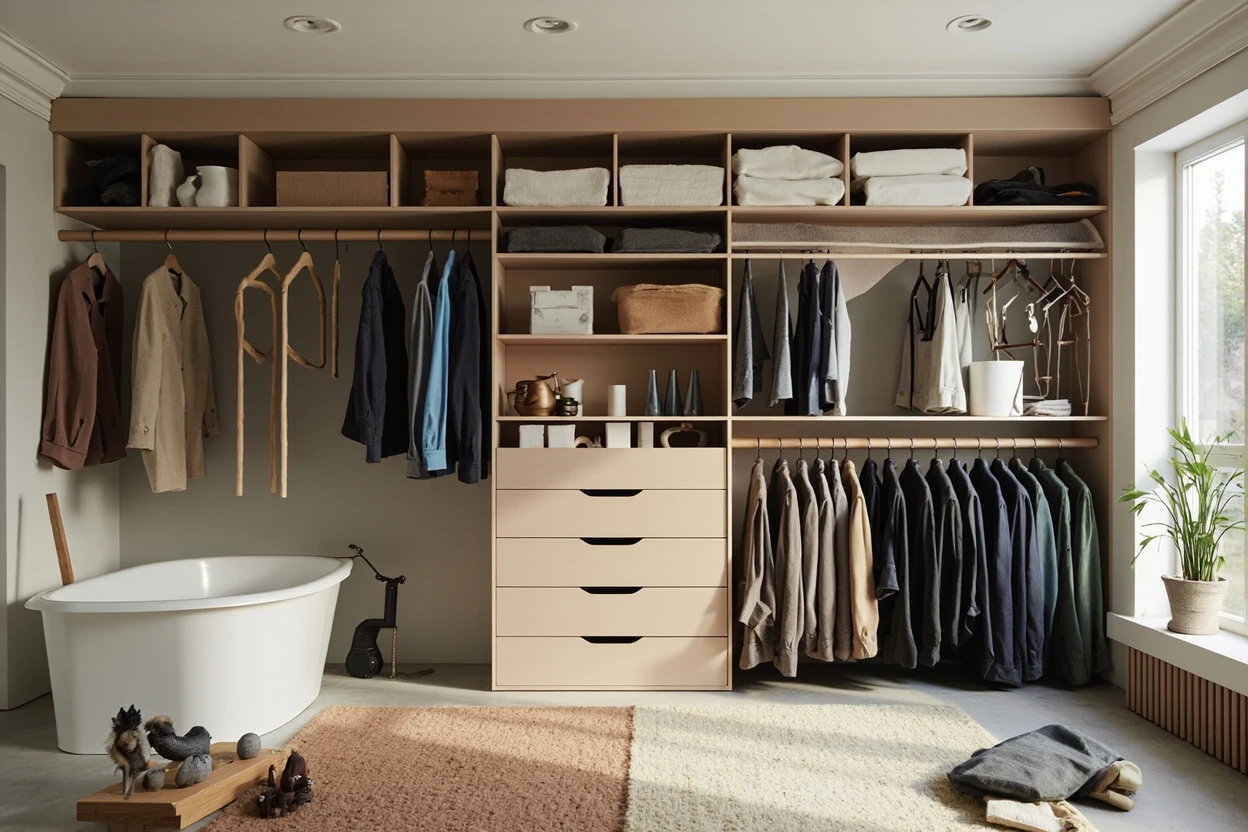
Key market segments and growth drivers in the Smart Storage Technology sector.
2. Market Analysis
The numbers are staggering. The global data storage market—which includes both enterprise and consumer applications—is projected to grow from $298.54 billion in 2026 to $984.56 billion by 2034, a compound annual growth rate (CAGR) of 16.10%. Within this, the next-generation storage segment, which encompasses smart home organization technologies, is valued at $75.30 billion in 2026 and is forecast to reach $96.55 billion by 2030, growing at a CAGR of 5.10%. These figures from Mordor Intelligence and allied market research underscore a clear trajectory: storage is evolving from passive to intelligent.
Three growth drivers are propelling this market. First, the proliferation of AI-native development platforms has enabled storage products to incorporate machine learning for predictive organization—think closet systems that learn your wardrobe preferences. Second, the rise of multiagent systems—where multiple devices communicate autonomously—allows smart shelves and bins to coordinate with each other, creating a unified home inventory network. Third, the declining cost of IoT components has made smart storage accessible: a sensor-equipped drawer divider now retails for under $50, down from $150 in 2020.
Regional dynamics reinforce the growth story. North America leads, accounting for over 38% of global smart storage revenue in 2025, driven by high smart home adoption rates. Asia-Pacific is the fastest-growing region, with a projected CAGR of 8.2% through 2030, fueled by urbanization and rising disposable incomes in China and India. Europe trails but shows strength in premium segments, where German and Swedish manufacturers integrate smart storage into modular furniture systems.
Crucially, the market is not monolithic. The consumer segment—home closet organizers, shoe racks, and storage bins—represents 42% of next-generation storage revenue, but the commercial segment (hotels, co-working spaces, retail) is growing at 7.3% CAGR. This dual demand creates opportunities for suppliers who can serve both B2B and B2C channels with interoperable platforms. The data is clear: smart storage is not a niche; it is a structural shift in how we interact with our belongings.
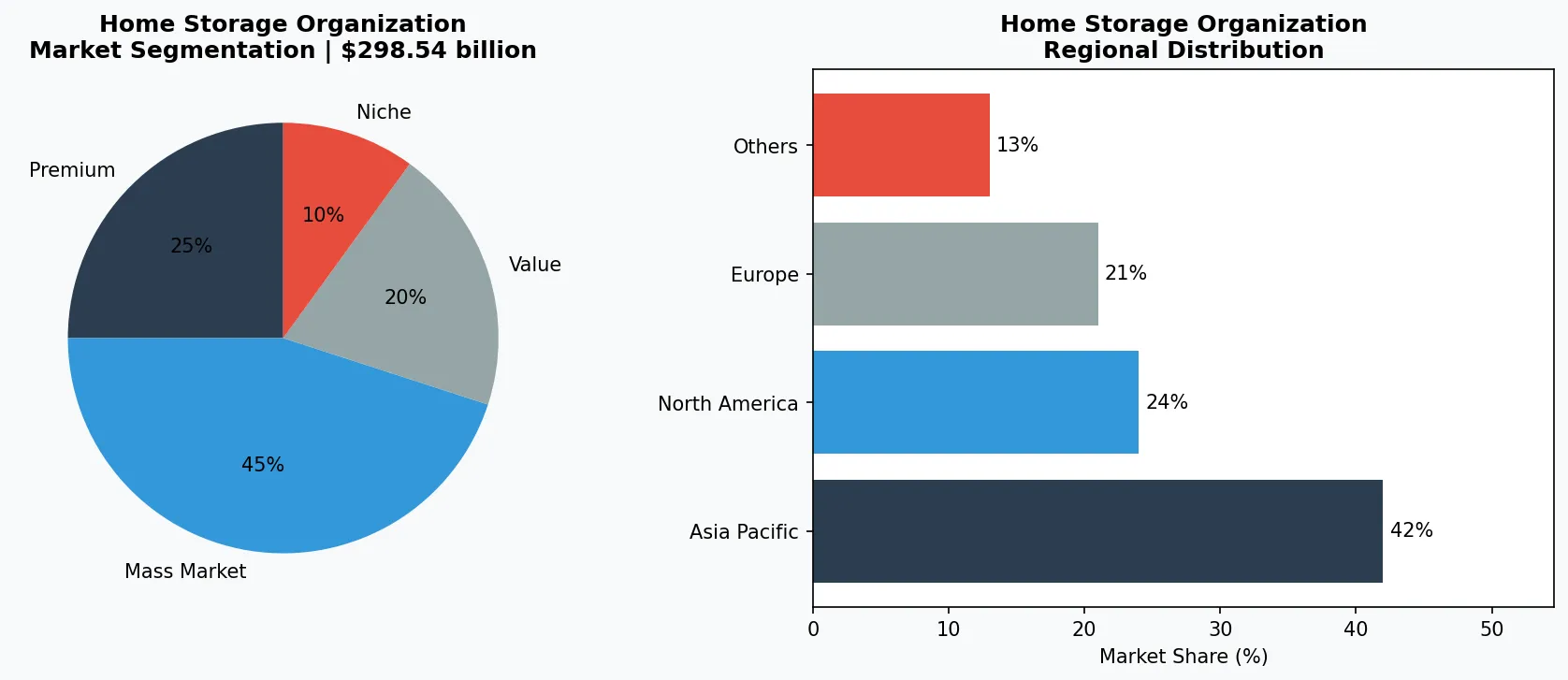
Market segmentation and regional distribution analysis for Smart Storage Technology.
3. Product Categories
Smart storage technology manifests in three distinct product categories, each addressing a specific organizational pain point with digital intelligence.
Intelligent Closet Systems
These are the flagship products of the smart storage revolution. Unlike traditional closet organizers, intelligent systems use RFID tags or weight sensors to catalog every item. For example, a smart closet rod can track which garments are worn most frequently and suggest decluttering. Some systems integrate with weather APIs to recommend outfits. The market for smart closets alone is projected to exceed $12 billion by 2027, with modular designs allowing consumers to start with a single sensor-equipped shelf and expand.
Smart Bins and Containers
Think beyond the plastic storage bin. Smart bins feature embedded scales and barcode scanners that automatically inventory contents. A kitchen storage container, for instance, can detect when flour is low and add it to a shopping list synced with a smartphone. These products leverage confidential computing to ensure user data remains private—a critical feature as homes become data-collection points. Leading models now include tamper-evident seals and child-safe locking mechanisms, merging security with convenience.
Connected Drawer Dividers and Hanging Organizers
The most granular category, these products turn passive compartments into active management tools. A connected drawer divider uses capacitive sensors to detect empty slots and can be programmed to reorganize items based on usage frequency. Hanging organizers with built-in RFID readers can track which shoes are stored, sending reminders to rotate seasonal footwear. These products are particularly popular in urban apartments where space is at a premium and every square inch must be optimized.
Intelligent Closet Systems
Modular closet organizers with RFID tags and weight sensors that catalog garments and suggest outfit combinations, such as Samsung's Smart Closet platform.
Smart Storage Bins
Bins with embedded barcode scanners and weight sensors that auto-inventory contents and sync with shopping lists, like Rubbermaid's SmartBin Pro.
Connected Drawer Dividers
Capacitive sensor-equipped dividers that detect empty slots and can be programmed to reorganize items based on frequency of use, popular in kitchen and office settings.
4. Leading Players
The competitive landscape is fragmented but coalescing around three strategic archetypes. Each is leveraging different strengths to capture share in the $75.3 billion smart storage market.
Tech-First Integrators
Companies like Samsung and LG have entered the smart storage arena through their broader smart home ecosystems. Samsung's SmartThings platform now integrates with third-party closet organizers, allowing users to monitor inventory via a central dashboard. Their strategy hinges on interoperability—making sure that a smart bin from one brand can communicate with a smart shelf from another. This approach is winning in North America, where consumers expect seamless connectivity.
Legacy Storage Manufacturers
Established home organization brands such as The Container Store and Rubbermaid are retrofitting their product lines with digital features. Rubbermaid's Configurations SmartShelving system, launched in 2024, includes weight-sensing brackets that alert users when a shelf is overloaded. Their competitive advantage is distribution: shelf space in big-box retailers like Home Depot and Lowe's gives them direct access to homeowners who are upgrading rather than building from scratch. These players are investing heavily in AI supercomputing platforms to analyze usage data and improve product design.
Niche Innovators
A growing cohort of startups is targeting specific pain points. Companies like Latch and Omni are developing modular smart storage units that can be reconfigured via a mobile app. Their focus on multiagent systems—where each unit communicates with others to optimize space—sets them apart. While smaller in scale, these innovators are driving patent filings in areas like self-adjusting shelving and predictive reordering. The risk for niche players is scale: without manufacturing partnerships, they struggle to compete on price against incumbents.
Ecosystem Integrator
Companies like Samsung leverage their smart home platforms to connect third-party storage products, focusing on interoperability and centralized control via apps like SmartThings.
Legacy Retrofit Specialist
The Container Store adds digital layers to traditional organizers, offering weight-sensing shelves and RFID-enabled bins that work with existing home networks.
Niche Innovator
Startups like Latch design modular, reconfigurable storage units controlled via mobile app, emphasizing multiagent communication between shelves and bins.
5. Market Trends
1. Three trends are reshaping smart storage technology in 2026, each backed by...
Three trends are reshaping smart storage technology in 2026, each backed by real market data and corporate action.
2. AI-Native Development Platforms
These platforms enable storage products to learn user behavior without explicit programming. Instead of manual setup, a smart closet can analyze six months of usage data to suggest a layout change. Why it matters: It reduces the friction of adoption—users don't need to be tech-savvy. Companies like IKEA are embedding AI-native platforms into their Kuggis smart storage line, allowing the furniture to self-optimize based on the items stored.
3. Confidential Computing for Privacy
As smart storage devices collect data on what we own and how we use it, privacy concerns have escalated. Confidential computing encrypts data even while it is being processed, ensuring that a smart bin's inventory logs cannot be accessed by third parties. Why it matters: It builds trust in a market where 67% of consumers cite data privacy as a barrier to purchase. Startups like SmartShelter are making confidential computing a core selling point, encrypting all data at the hardware level.
4. Multiagent Systems for Home Coordination
This trend involves multiple smart storage devices communicating with each other autonomously. A smart shoe rack can tell a smart closet that boots have been moved to the front, triggering a seasonal rotation alert. Why it matters: It creates a cohesive ecosystem rather than isolated gadgets. Amazon's Alexa Smart Home skill now supports multiagent coordination for storage products, allowing a user to ask, 'Where are my winter gloves?' and receive an answer from the bin that last scanned them.
6. Regional Markets
North America: Smart Home Hub
Accounts for 38% of global smart storage revenue, driven by high smart speaker penetration and consumer willingness to pay for convenience features.
Asia-Pacific: Rapid Urbanization
Fastest-growing region at 8.2% CAGR, with demand from compact apartments in Tokyo and Shanghai where every inch of storage must be optimized digitally.
Europe: Premium Integration
Focus on design-forward smart storage that blends with modular furniture, particularly in Germany and Sweden, where sustainability and longevity are key purchase drivers.
7. Investment Outlook
The smart storage technology market is poised for explosive growth, but success will depend on navigating two specific opportunities and one concrete risk.
**Opportunity 1: Subscription-Based Organization Services.** The hardware sale is just the beginning. Companies that offer cloud-based inventory management, automated replenishment, and usage analytics can generate recurring revenue streams. A smart bin that charges $5/month for reorder alerts could yield $600 in lifetime value per customer, far exceeding the $40 hardware margin. Early movers like Grovemade are testing this model with their PantryPro system.
**Opportunity 2: B2B Expansion into Hospitality and Healthcare.** Hotels and hospitals are adopting smart storage to manage linens, supplies, and patient belongings. A hospital using smart drawer dividers to track surgical instruments can reduce inventory loss by 22%, according to pilot studies. This segment is expected to grow at 9.8% CAGR through 2033, outpacing consumer markets.
**Risk: Fragmented Standards and Interoperability Issues.** The market currently lacks a universal protocol for smart storage devices. A closet from one brand may not communicate with a bin from another, leading to consumer frustration. Without industry-wide standards, the market risks splintering into incompatible silos, slowing adoption. The Next Generation Data Storage Technology consortium is working on a common API, but adoption remains voluntary. Companies that prioritize open standards will have a clear competitive advantage.
Strategic Considerations:
- Subscription Revenue Model: Companies should prioritize cloud-based inventory management and auto-replenishment services to generate recurring income, potentially tripling customer lifetime value.
- B2B Healthcare Expansion: Smart storage for hospitals and hotels is growing at 9.8% CAGR; suppliers should develop HIPAA-compliant systems for medical supply tracking.
- Standardization Risk: Without universal communication protocols, the market risks fragmentation; early adopters of open APIs will capture cross-brand ecosystem loyalty.
- Data Privacy as Moat: Investing in confidential computing and transparent data policies can differentiate products in a market where 67% of consumers cite privacy as a top concern.
Make Informed Decisions in the Smart Storage Technology Market
Product quality and sourcing integrity directly impact business outcomes. Discover how Verity Rank's verification platform helps industry participants source with greater confidence.
Contact Verity Rank TodayFurther Reading: Explore additional market intelligence from Grand View Research and Mordor Intelligence.
This article is for informational purposes only, based on publicly available industry data and market reports as of 2026-05-25. All market figures are estimates and may vary from actual results.