

Table of Contents
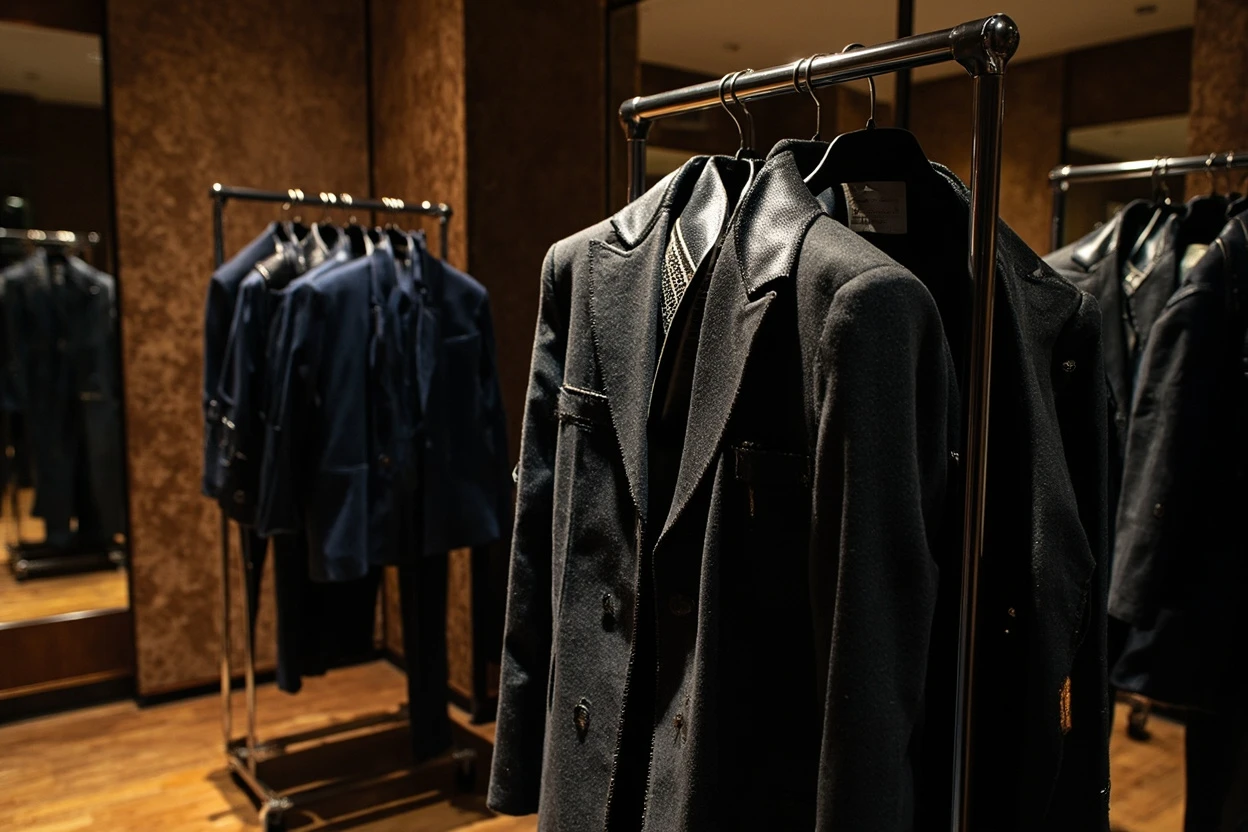
The global Stage Performance Costume sector serves consumers worldwide with diverse solutions.
1. Industry Overview
The stage performance costume market is projected to reach $1.2 billion in 2025—a figure that underscores the growing demand for specialized apparel in live entertainment, from Broadway to local dance recitals. Unlike everyday custom apparel, stage performance costumes are engineered for movement, durability under bright lights, quick changes, and visual impact from a distance. This subsegment within the Custom & Group Apparel industry sits at the intersection of artistry and manufacturing, requiring suppliers to balance creative design with functional materials. The broader global performance costume market—which includes film, theater, dance, and themed events—was valued at $3,076.33 million in 2021 and is expected to climb to $6,342.54 million by 2033, according to recent industry analyses. This growth reflects a post-pandemic resurgence in live events, increased school performing arts budgets, and the rise of touring productions demanding consistent quality across multiple costume sets. For B2B buyers—school districts, theater companies, event organizers—understanding the nuances of this market is critical: lead times, fabric certifications, and the ability to replicate designs at scale separate reliable suppliers from the rest. The stage costume segment, specifically, is projected to expand at a 4.8% CAGR from 2025 to 2034, reaching $1.8 billion. That growth is driven not only by volume but by increasing expectations for customization, sustainability, and trend responsiveness.
Industry Scope & Characteristics
Custom Fit with Quick-Change Mechanics
Stage performance costumes often feature hidden zippers, snap closures, and magnetic fasteners for rapid costume changes during live shows. Unlike standard apparel, these garments prioritize speed of dressing as much as aesthetics.
Small-Batch Production with Digital Prototyping
Most stage costumes are produced in limited runs (10–500 units). Manufacturers increasingly use 3D pattern software and digital fabric printing to reduce waste and speed up the approval process for bespoke orders.
Fire-Retardant and Durability Certifications
Theatrical costumes in many jurisdictions must meet NFPA 701 or equivalent fire-retardant standards. Suppliers who can certify their fabrics and provide compliance documentation have a distinct advantage in institutional and school contracts.
Embedded Lighting and Smart Textiles
A growing R&D direction is integrating LED strips and conductive threads directly into costumes for interactive stage effects. Early adopters are developing battery-powered, washable light modules that can be sewn into dance skirts and superhero capes.

Key market segments and growth drivers in the Stage Performance Costume sector.
2. Market Analysis
The stage costume market's $1.2 billion valuation in 2025 is only one layer of a much larger ecosystem. The broader performance costume market—encompassing theatrical, dance, concert, and seasonal event costumes—was estimated at approximately $7.3 billion in 2024 and is forecast to double to $15.2 billion by 2033. This disparity highlights the rapid evolution of demand beyond traditional stage settings into corporate events, immersive experiences, and social media-driven performances. Three key growth drivers stand out. First, the post-COVID recovery of live entertainment: global box office revenue for touring Broadway shows alone has rebounded to pre-2020 levels, pushing costume orders for new productions and replacements. Second, the proliferation of school and community performing arts programs: data indicates a 6% annual increase in K-12 theater participation in the United States, driving bulk orders for choir robes, dance recital costumes, and competition uniforms. Third, the rise of athleisure-inspired stagewear: as performers seek pieces that transition from rehearsal to stage to street, suppliers are developing dual-purpose garments. The stage costume market's 4.8% CAGR (2025–2034) may seem modest compared to the broader performance costume market, but it reflects a mature segment where quality and consistency matter more than explosive growth. Manufacturers are investing in digital design tools and modular construction to reduce lead times while maintaining the intricate detailing that directors demand.
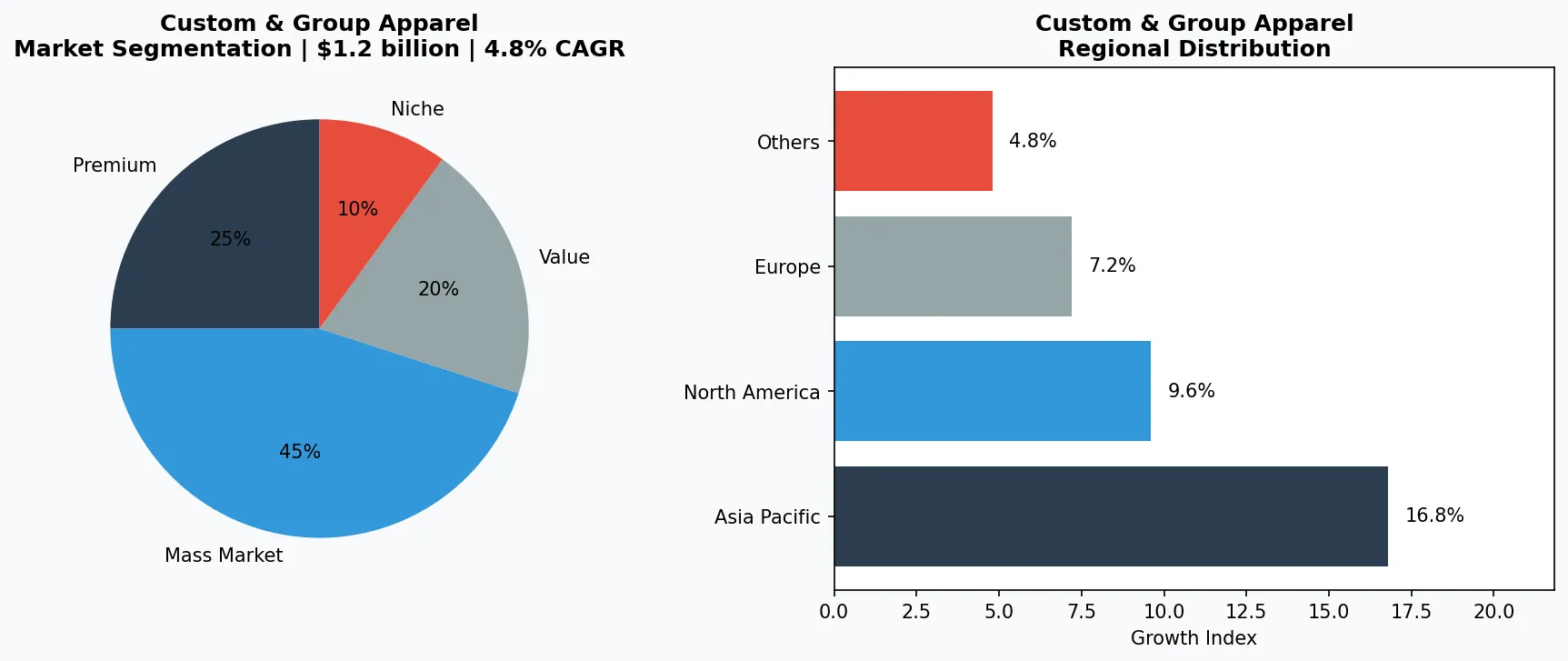
Market segmentation and regional distribution analysis for Stage Performance Costume.
3. Product Categories
Stage performance costumes can be categorized into three primary product types, each with distinct sourcing requirements.
Dancewear
This segment includes leotards, ballet tops, corset-inspired bodices, and layered skirts. At MODE Market 2026, the top trends were corset-inspired leotards and lots of layers—items that offer both visual structure and freedom of movement. Suppliers are using moisture-wicking performance fabrics blended with spandex to withstand repeated rehearsal wear. Examples include the 'Studio to Street' ballet top, designed to be worn as athleisure after performances, extending the garment's use cycle.
Theatrical Costumes
These are highly customized garments for plays, musicals, and operas. They range from period attire (e.g., 18th-century gowns) to fantasy creations using metallic fabrics, feathers, and LED elements. The aquatic aesthetic trend for 2026 oriental dance costumes uses bold color contrasts drawn from ocean depths, requiring dyes that hold up under stage lighting. Manufacturers often rely on hand-finishing and specialized draping to achieve the required silhouette.
Performance Uniforms
Choir robes, marching band uniforms, and competition team outfits fall here. Unlike one-off theatrical costumes, these are ordered in bulk by schools and institutions, demanding consistent sizing, colorfastness, and durability. Polyester blends with wrinkle-resistant finishes are common. Suppliers who offer digital proofing and sample approval workflows gain an edge in this price-sensitive but volume-heavy category.
Dance Recital Costumes
Includes leotards, tutus, ballet tops, and corset-inspired bodices. Typically ordered in bulk by dance studios with a focus on stretch fabrics, vibrant colors, and durable stitching for repeated use.
Theatrical Production Costumes
Custom-made for plays, musicals, and operas. These require period accuracy or fantasy designs, often using hand-beading, layered fabrics, and specialized dyes. Each costume is a one-off or small-series creation.
School and Competition Uniforms
Choir robes, marching band uniforms, and color guard outfits. Prioritize consistency across sizes, colorfastness, and wrinkle resistance. Often ordered in sets of 50+ with institutional budgets.
4. Leading Players
The stage performance costume market is fragmented, with a mix of specialized ateliers and large-scale uniform manufacturers. Leading players include established costume houses that supply Broadway and West End productions—these firms focus on bespoke, handcrafted pieces and typically operate with long lead times. At the other end, manufacturers specializing in school and community performance uniforms leverage digital printing and pattern grading to produce consistent runs of 50 to 5,000 units. At MODE Market 2026, exhibitors showcased how they are blending these approaches: corset-inspired leotards and layered dance tops were offered with both made-to-order and ready-to-ship options. Oriental dance costume designers are carving a niche by incorporating aquatic aesthetics—shifting, ocean-inspired color palettes—using advanced dye-sublimation techniques. Meanwhile, corporate uniform suppliers are entering the stage costume space as demand grows for branded performance wear at product launches and corporate events. The key competitive differentiator is speed-to-sample: buyers increasingly expect a digital render within 48 hours and a physical prototype within a week. Smaller players that invest in 3D design software (such as CLO 3D) are capturing market share from slower traditional houses.
Bespoke Ateliers for Broadway-Level Productions
These small, specialized shops focus on handcrafted, one-of-a-kind costumes with long lead times. Their competitive advantage lies in pattern-making talent and historical accuracy, servicing high-budget theater and film.
Mid-Size Dancewear Brands Exhibiting at MODE Market
Suppliers that combine off-the-shelf designs with customization options. They leverage digital printing and modular sizing to serve dance studios and competition teams. Their edge is speed-to-sample and trend responsiveness (e.g., corset leotards).
Large Uniform Manufacturers Entering Performance Wear
Industrial-scale producers of corporate and school uniforms are expanding into stage costumes. They offer cost efficiency and ISO-certified production, but must adapt to the faster turnaround and smaller minimum orders typical of the performance market.
5. Market Trends
1. Digital Transformation in Stage Performance Costume
Artificial intelligence, IoT sensors, and advanced data analytics are fundamentally reshaping production efficiency in Stage Performance Costume. Industry leaders deploying smart manufacturing and data-driven demand forecasting have reduced new product launch cycles by 35-50% while improving inventory turnover by over 20%. With more than 60% of Stage Performance Costume companies projected to complete core digital transformation by 2028, this shift has moved from optional upgrade to competitive necessity.
2. Sustainability as Competitive Imperative in Stage Performance Costume
Global carbon border adjustment mechanisms (CBAM) and rising consumer environmental awareness are forcing Stage Performance Costume companies to transform sustainability from marketing rhetoric into operational reality. ESG rating agencies increased sector coverage intensity by 35% in 2025. Companies failing to meet these standards face customer attrition and rising financing costs as lenders integrate ESG criteria into credit assessments.
3. Supply Chain Regionalization in Stage Performance Costume
Geopolitical tensions are driving Stage Performance Costume companies to accelerate supplier diversification. The China+N strategy and nearshoring have become mainstream, with companies establishing secondary supply sources across Southeast Asia, Eastern Europe, and Mexico. Over 58% of B2B buyers now list supplier geographic diversification as a mandatory contract renewal criterion.
4. Consumer Upgrading in Stage Performance Costume Markets
Middle-class expansion and Gen Z purchasing power are accelerating Stage Performance Costume transition from standardized mass production toward personalized customization and agile small-batch manufacturing. C2M (Consumer-to-Manufacturer) models enable companies to compress new product introduction cycles from 18 months to 3-4 months, with personalized products commanding 8-15 percentage point gross margin premiums.
6. Regional Markets
North America – Dominant Market for School & Theater Costumes
The U.S. and Canada account for over 40% of global stage costume demand, driven by a robust K-12 performing arts ecosystem and the concentration of Broadway and touring productions.
Asia-Pacific – Fastest Growth in Oriental Dance & Festival Wear
Rising disposable income in China and India fuels demand for traditional and contemporary dance costumes. The 'aquatic aesthetics' trend for oriental dance in 2026 originated from designers in Shanghai and Seoul.
Europe – Emphasis on Fire Safety and Sustainability
Strict regulations (e.g., REACH, fire-retardant standards) push suppliers toward certified materials. European buyers prioritize eco-friendly fabrics and local production for reduced carbon footprint.
7. Investment Outlook
Two opportunities stand out for suppliers in the stage performance costume space. First, the school market—K-12 performing arts programs are expanding, and many schools now require matching uniforms for choir, band, and dance recitals. Suppliers that offer modular sizing (adjustable hems, expandable waistbands) and quick reorder capabilities will capture long-term contracts. Second, the integration of digital design tools: brands that provide real-time 3D previews and direct-to-fabric printing can cut sample turnaround from weeks to days, a critical advantage for time-sensitive productions. The primary risk is fluctuating raw material costs—specialty fabrics like stretch velvet, metallic mesh, and high-twist polyester are subject to supply chain volatility. To mitigate this, forward-thinking manufacturers are pre-purchasing core fabric runs and maintaining buffer stock of popular colors. B2B buyers should prioritize suppliers with transparent lead time guarantees and a proven track record of delivering seasonal peaks without sacrificing quality.
Strategic Considerations:
- School Performance Package Contracts: Suppliers can bundle choir robes, band uniforms, and dance recital costumes into annual contracts with school districts, leveraging repeat orders and predictable cash flow.
- Digital Sample-to-Buy Workflow: Investing in 3D rendering and virtual fitting reduces sample costs by up to 60% and speeds buyer approval, a key differentiator for winning B2B accounts.
- Specialty Fabric Price Volatility: Stretch velvet, metallic mesh, and flame-retardant polyesters are subject to raw material cost swings. Pre-purchasing core fabrics and negotiating fixed-price contracts can mitigate margin erosion.
- Longer Lead Times During Peak Season: The March–June recital and competition season creates production bottlenecks. Suppliers must communicate capacity limits early and offer tiered delivery options (expedited vs. standard) to manage buyer expectations.
Frequently Asked Questions
Make Informed Decisions in the Stage Performance Costume Market
Product quality and sourcing integrity directly impact business outcomes. Discover how Verity Rank's verification platform helps industry participants source with greater confidence.
Contact Verity Rank TodayFurther Reading: Explore additional market intelligence from Grand View Research and Mordor Intelligence.
This article is for informational purposes only, based on publicly available industry data and market reports as of 2026-07-22. All market figures are estimates and may vary from actual results.