

Table of Contents

The global Team Uniform Corporate Apparel sector serves consumers worldwide with diverse solutions.
1. Industry Overview
By 2026, synthetic materials have captured 56.23% of the custom apparel market, while casual and fashion wear account for 35.85%. Yet the $5.22 billion team sports apparel segment—a core pillar of team uniform corporate apparel—is projected to surge to $8.7 billion by 2035, growing at a 5.85% CAGR. This is not merely about jerseys and polos; it signals a fundamental shift in how organizations use fabric to project culture, safety, and brand identity. The sub-topic of team uniform corporate apparel sits at the intersection of workwear, sportswear, and bespoke tailoring. It encompasses everything from executive suit programs for global banks to numbered hockey jerseys for local clubs. What makes it distinctive within the broader Custom & Group Apparel industry is the dual demand for functionality and representation: garments must withstand repeated industrial laundering or athletic abrasion while broadcasting a cohesive visual identity. Buyers are no longer satisfied with a one-size-fits-all catalog. They expect personalized fit, moisture-wicking fabrics, and on-demand production runs as small as 50 units. Meanwhile, the workwear/uniform segment is expanding at a 5.8% CAGR through 2033, driven by tightening safety regulations and a post-pandemic return to office environments that crave comfort without sacrificing professionalism. The convergence of these two growth curves—team sports and corporate uniforms—creates a $12 billion addressable market by 2030, forcing suppliers to rethink supply chains, fabric selection, and digital customization tools.
Industry Scope & Characteristics
Performance vs. Aesthetics
Team uniform corporate apparel must balance ruggedness (e.g., 300+ industrial launderings) with visual brand consistency, often requiring silicone-printed logos that outlast the garment itself.
Just-in-Time Production
Lead times for custom uniforms have shrunk from 8 weeks to 2 weeks due to digital cutting and automated embroidery, but this requires fabric suppliers to hold regional stock of 30+ colorways.
Compliance-Driven Quality
Key certifications include ANSI/ISEA 107 for high-visibility, NFPA 70E for arc flash, and OEKO-TEX Standard 100 for chemical safety; absence of these can disqualify a bid for government contracts.
Mass Customization Technology
3D body scanning and virtual fit engines reduce sample iterations by 70%; companies like Snap36 offer photo-realistic mockups that let corporate clients approve designs before a single yard of fabric is cut.
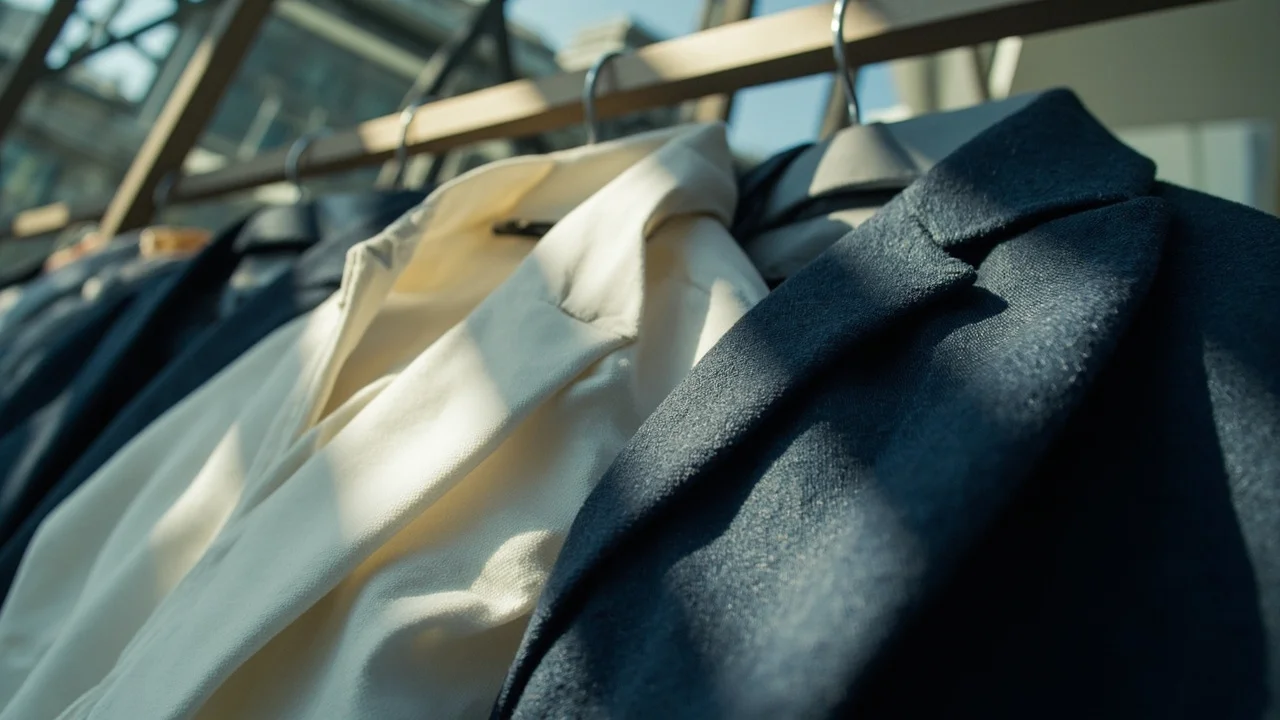
Key market segments and growth drivers in the Team Uniform Corporate Apparel sector.
2. Market Analysis
The global Team Sports Apparel Market stood at USD 5.22 billion in 2026 and is forecast to hit USD 8.7 billion by 2035, a compound annual growth rate of 5.85%. The broader Workwear/Uniform Market, which overlaps heavily with team uniform corporate apparel, is expanding at a similar 5.8% CAGR between 2026 and 2033. Together, these segments represent over $10 billion in annual spend, with corporate clients—ranging from Fortune 500 companies to municipal governments—accounting for roughly 40% of procurement volumes. Three factors are accelerating this growth. First, the shift to hybrid work has forced companies to re-evaluate their dress codes. Instead of two distinct wardrobes (office and home), employers are investing in versatile pieces that perform in both settings. Second, the rise of ESG (environmental, social, governance) mandates is pushing organizations toward sustainable sourcing. Recycled polyesters and organic cottons now account for a growing share of corporate apparel contracts, and suppliers who can prove traceability (e.g., OEKO-TEX or GOTS certifications) gain preferential bidding status. Third, inclusivity is no longer optional. Inclusive sizing—from 2XS to 5XL—and gender-neutral cuts are becoming baseline requirements for RFPs. Brands that fail to offer extended sizing lose out on multi-year deals, particularly in healthcare and education verticals. Regional dynamics also play a role. North America leads in adoption of smart customization and high-visibility safety gear, while Asia-Pacific is the fastest-growing region for school uniform and team jersey production, driven by population demographics and rising disposable incomes. The synthetic materials segment’s 56.23% share in 2026 confirms that performance fabrics—moisture-wicking, anti-microbial, stretch—are now the default choice for corporate clients prioritizing longevity and employee comfort over traditional cotton.
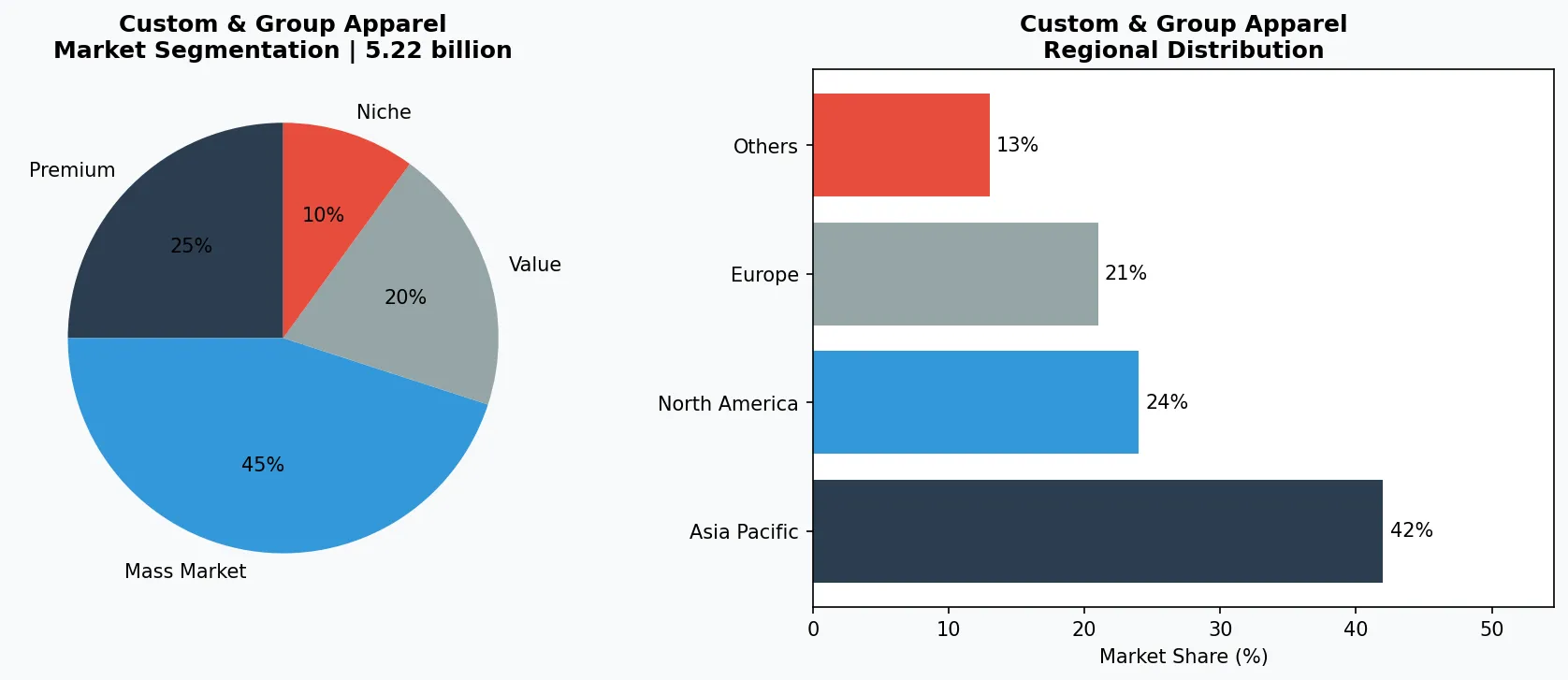
Market segmentation and regional distribution analysis for Team Uniform Corporate Apparel.
3. Product Categories
The team uniform corporate apparel category can be organized into four distinct product types: (1) Executive Corporate Suits and Tailored Shirts – bespoke or made-to-measure pieces for C-suite and client-facing staff. Brands like Indochino and Suitsupply have adapted their retail models to B2B recurring programs, offering fabric swatch kits and virtual fittings. (2) Team Jerseys and Performance Wear – used by corporate sports leagues, esports teams, and college athletics. These garments rely heavily on moisture-wicking polyester blends and silicone-printed logos. The sub-segment is growing fastest in Asia, where corporate cricket and football tournaments attract thousands of participants annually. (3) School Uniforms – a regulated market where durability and compliance with flammability standards (e.g., ASTM F1506 for certain fabrics) are critical. Manufacturers are incorporating stain-resistant coatings and hidden elastic waistbands to meet both parent and school board demands. (4) Industrial and Safety Workwear – high-visibility vests, flame-resistant coveralls, and anti-static lab coats. In the U.S., the ANSI/ISEA 107 standard governs high-vis apparel, and buyers increasingly require labels that specify the exact rating. Each product type demands a different approach to customization: suits require precise measurement algorithms, jerseys demand full-color sublimation, and workwear needs sewn-in reflective tape that doesn't peel after 50 washes. The most advanced suppliers offer a unified digital platform where a client can order all four categories with one upload of logos and sizing data.
Executive Suits & Tailored Shirts
Made-to-measure programs for finance, law, and hospitality; features include half-canvassed construction and monogrammed cuffs. Example: Suitsupply B2B program offers 48-hour turnaround on 10+ suit orders.
Team Jerseys & Performance Wear
Sublimation-printed polyester jerseys for sports leagues and esports, with anti-microbial finishes and raglan sleeves. Nike’s Team platform handles orders as small as 25 units with full numbering.
School Uniforms & Safety Workwear
Stain-resistant, flame-retardant fabrics with sewn-in compliance labels; suppliers must maintain an inventory of 100+ garment SKUs per customer contract to meet reorder demands within 5 days.
4. Leading Players
Cintas Corporation (NASDAQ: CTAS) is the dominant force in corporate uniform rental and direct-sale programs. With over 300,000 uniform rental accounts, Cintas leverages a network of regional manufacturing facilities and distribution centers to guarantee next-day replenishment. Their strategy centers on lifecycle management: they wash, repair, and replace garments under contract, reducing the customer’s administrative burden. In 2026, Cintas expanded its team jersey offering for corporate leagues, integrating moisture-wicking fabrics that mimic high-end sportswear. Nike, Inc. remains the undisputed leader in team sports apparel, supplying uniforms for professional leagues, college teams, and corporate wellness programs. Nike’s competitive advantage lies in its Dri-FIT and recycled polyester technologies, combined with a custom platform (Nike Team) that allows even small clubs to order 25-piece runs with full customization. The company has also begun targeting the corporate workwear segment with its “Nike Apparel for Business” program, offering logo-emblazoned joggers and quarter-zips for tech and creative firms. Carhartt, Inc. owns the rugged workwear niche within team uniform corporate apparel. Known for its duck canvas and flame-resistant fabrics, Carhartt has increasingly partnered with construction and oil & gas companies to provide site-specific uniform programs. Their strategy emphasizes durability testing (e.g., 500+ industrial laundry cycles) and compliance with NFPA 70E for arc flash protection. Carhartt also offers a custom embroidery service that integrates with company HR systems for automatic reorders when employees are hired or promoted.
Rental & Lifecycle Leader
Cintas dominates the corporate uniform rental market through a closed-loop model: they supply, launder, repair, and replace garments, ensuring contract retention rates above 90%.
Brand Licensing & Performance Innovator
Nike leverages its Dri-FIT and recycled polyester technologies to serve both pro teams and corporate wellness programs, offering a consumer-grade experience with B2B logistics.
Industrial Durability Specialist
Carhartt focuses on heavy-industry clients (construction, oil & gas) with flame-resistant and arc-rated apparel, backed by independent lab certifications and a 500-wash durability guarantee.
5. Market Trends
1. Digital Transformation in Team Uniform Corporate Apparel
Artificial intelligence, IoT sensors, and advanced data analytics are fundamentally reshaping production efficiency in Team Uniform Corporate Apparel. Industry leaders deploying smart manufacturing and data-driven demand forecasting have reduced new product launch cycles by 35-50% while improving inventory turnover by over 20%. With more than 60% of Team Uniform Corporate Apparel companies projected to complete core digital transformation by 2028, this shift has moved from optional upgrade to competitive necessity.
2. Sustainability as Competitive Imperative in Team Uniform Corporate Apparel
Global carbon border adjustment mechanisms (CBAM) and rising consumer environmental awareness are forcing Team Uniform Corporate Apparel companies to transform sustainability from marketing rhetoric into operational reality. ESG rating agencies increased sector coverage intensity by 35% in 2025. Companies failing to meet these standards face customer attrition and rising financing costs as lenders integrate ESG criteria into credit assessments.
3. Supply Chain Regionalization in Team Uniform Corporate Apparel
Geopolitical tensions are driving Team Uniform Corporate Apparel companies to accelerate supplier diversification. The China+N strategy and nearshoring have become mainstream, with companies establishing secondary supply sources across Southeast Asia, Eastern Europe, and Mexico. Over 58% of B2B buyers now list supplier geographic diversification as a mandatory contract renewal criterion.
4. Consumer Upgrading in Team Uniform Corporate Apparel Markets
Middle-class expansion and Gen Z purchasing power are accelerating Team Uniform Corporate Apparel transition from standardized mass production toward personalized customization and agile small-batch manufacturing. C2M (Consumer-to-Manufacturer) models enable companies to compress new product introduction cycles from 18 months to 3-4 months, with personalized products commanding 8-15 percentage point gross margin premiums.
6. Regional Markets
North America: High-Vis & Smart Customization
Demand for ANSI-compliant high-visibility workwear and digital measurement tools is highest here; companies like Carhartt and Cintas have invested in on-body scanning kiosks at distribution centers.
Asia-Pacific: School Uniforms & Volume Production
Rapid urbanization and government mandates for standardized school attire drive a $1.8B market; local manufacturers like Youngone Holdings excel at low-cost, high-volume production of polyester uniforms.
Europe: Sustainability & Compliance
EU regulations on textile waste and chemical use (e.g., REACH) push buyers toward GOTS-certified organic cotton and closed-loop recycling; Patagonia Workwear leads with take-back programs in Germany and France.
7. Investment Outlook
Two opportunities stand out for suppliers and buyers in team uniform corporate apparel. First, the integration of smart textiles—embedded RFID tags for inventory tracking, or temperature-regulating phase-change materials—opens premium pricing tiers for high-value programs like firefighting uniforms or hospital scrubs. Early adopters are reporting 15% lower replacement costs because garments are tracked and laundered properly. Second, the Asian school uniform market, worth an estimated $1.8 billion by 2030, remains fragmented with largely local suppliers; global players who invest in localized design hubs and rapid fulfillment can capture share. The primary risk is synthetic material price volatility. With crude oil fluctuations directly affecting polyester yarn costs, buyers locked into fixed-price contracts face margin erosion. Mitigation requires multi-year agreements with price-escalation clauses tied to the Asia PTA index, or shifting to bio-based alternatives like lyocell and hemp blends that decouple from oil markets.
Strategic Considerations:
- Smart Textile Integration: Embedded RFID tags for uniform tracking can reduce inventory losses by 15%; early adopters in healthcare report faster laundering cycles and fewer lost scrubs.
- Asian School Uniform Expansion: The fragmented $1.8B Asian market presents an opportunity for global players to offer standardized sizing and rapid fulfillment via local warehouses.
- Synthetic Material Price Risk: Polyester costs are tied to crude oil; buyers should negotiate multi-year contracts with index-linked escalation clauses or switch to lyocell/hemp blends.
- Inclusive Sizing as Differentiator: Corporate RFPs now require 2XS–5XL and gender-neutral options; suppliers that invest in grading algorithms for extended sizes secure 30% more bids.
Frequently Asked Questions
Make Informed Decisions in the Team Uniform Corporate Apparel Market
Product quality and sourcing integrity directly impact business outcomes. Discover how Verity Rank's verification platform helps industry participants source with greater confidence.
Contact Verity Rank TodayFurther Reading: Explore additional market intelligence from Grand View Research and Mordor Intelligence.
This article is for informational purposes only, based on publicly available industry data and market reports as of 2026-07-20. All market figures are estimates and may vary from actual results.