


Table of Contents

The global Throw Pillow Cushion Covers sector serves consumers worldwide with diverse solutions.
1. Industry Overview
The global pillow cover market is projected to hit $4.5 billion by 2025, growing at a CAGR of 4.8% through 2033. That’s not just a number—it’s a signal. Within the broader $100B+ Home Decor industry, throw pillow cushion covers have emerged as the fastest-moving SKU category, driven by consumers’ insatiable appetite for low-commitment, high-impact interior updates. Unlike vases or wall art, a cushion cover costs under $30, ships flat, and transforms a room in seconds. This sub-topic is distinctive for its dual nature: it sits at the intersection of textile manufacturing and decorative accessories, requiring expertise in fabric sourcing, print design, and supply chain agility. The market’s $4.3B forecast for 2026 underscores a shift from generic polyester fills to premium materials like linen and hand-block-printed cotton. Buyers are no longer just accessorizing—they’re curating. And suppliers who can deliver on-trend, customizable, and ethically produced covers are winning the race. For B2B buyers on Verity Rank, verifying the provenance and quality of these covers has become as critical as the design itself.
Industry Scope & Characteristics
Low-Risk, High-Reward Product
Throw pillow cushion covers are the lowest-commitment home decor upgrade: no installation, no assembly, and buyers reuse existing inserts, reducing cost and waste.
Decentralized Global Supply Chain
Production is fragmented across India, Turkey, Vietnam, and Portugal, with each region specializing in distinct techniques—block print, handloom, or machine weave.
Certification-Driven Differentiation
OEKO-TEX Standard 100, GOTS (organic cotton), and Fair Trade certifications are now table stakes for premium covers; buyers verify these on platforms like Verity Rank.
Digital Customization at Scale
AI-powered design tools allow buyers to upload patterns for custom-print covers with MOQs as low as 25 units, enabling real-time trend testing.
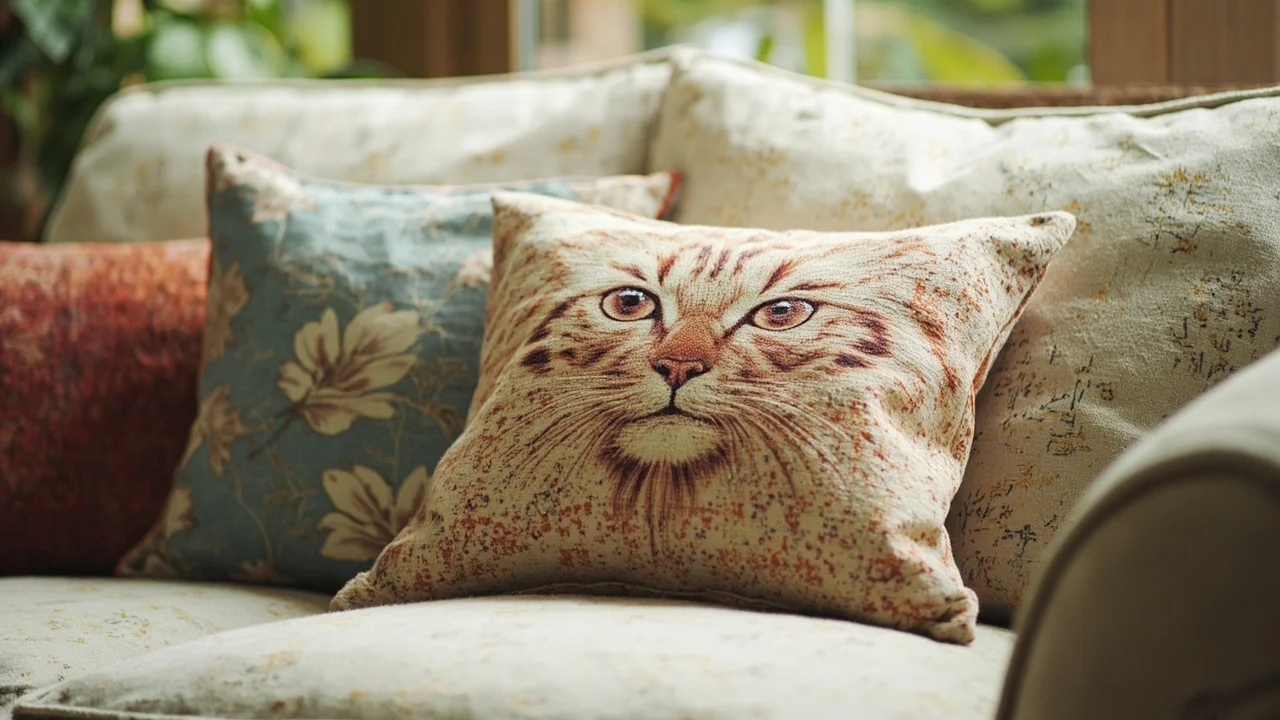
Key market segments and growth drivers in the Throw Pillow Cushion Covers sector.
2. Market Analysis
The cushion cover market is projected to reach $4.5 billion by 2025, with a compound annual growth rate (CAGR) of 4.8% from 2025 to 2033, according to recent market research. Demand and supply dynamics are revealed by market research, which supports the predicted growth at a 14.9% yearly rate from 2026 to 2033, indicating a sharp acceleration driven by e-commerce penetration and rising disposable incomes. Three key drivers fuel this expansion. First, the increasing demand for home aesthetics and interior decoration: post-pandemic, consumers have permanently elevated spending on home decor, with throw pillows serving as the easiest refresh point. Second, the growth of e-commerce and online customization: platforms like Etsy and Amazon Handmade have enabled small-batch artisans to sell block-print and boho-style covers directly to US buyers, bypassing traditional retail markups. Third, rising disposable income in emerging markets—particularly India and Vietnam—has expanded the manufacturing base, lowering unit costs and enabling faster trend replication. The US remains the largest import market, accounting for nearly 30% of global pillow cover trade in 2024. The shift from generic polyester to natural fibers like linen and organic cotton is not a fad; it’s a structural change in consumer preference. By 2026, analysts expect linen covers to capture 22% of the premium segment, up from 14% in 2022. For B2B buyers, understanding these dynamics is essential for sourcing decisions: the window to lock in high-quality linen suppliers is narrowing as demand outstrips supply.
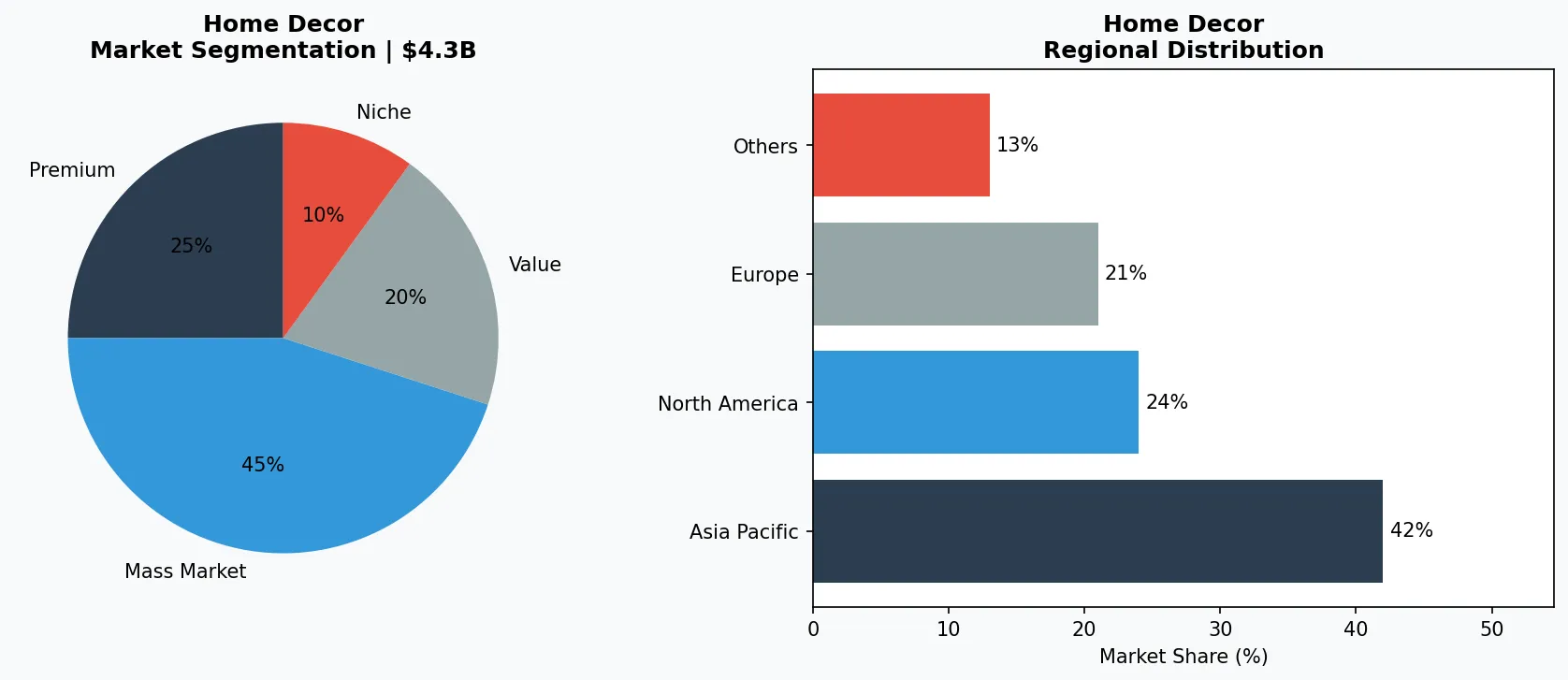
Market segmentation and regional distribution analysis for Throw Pillow Cushion Covers.
3. Product Categories
Throw pillow cushion covers break into three distinct product categories. First, Linen and Natural Fiber Covers: These dominate the premium tier, prized for their texture, breathability, and sustainable profile. Examples include Belgian flax linen covers with hidden zippers and washed finishes, often retailing between $35–$60. Second, Block Print and Artisan Covers: Hand-block-printed cotton covers from Rajasthan, India, have become a US bestseller, with patterns ranging from floral to geometric. Companies like Anokhi (India) have built global B2B networks around this technique, offering 100% organic cotton variants. Third, Boho and Textured Covers: Featuring tassels, pom-poms, macrame inserts, or embroidered details, these cater to the eclectic decor segment. A 2024 trend report shows boho-style covers accounted for 18% of all cushion cover sales on US e-commerce platforms. Within these categories, customization is the differentiator: buyers increasingly request custom sizes (18x18, 20x20, 12x24 inches) and insert configurations (down-alternative vs. polyester fill). The rise of 'cover-only' sales—where consumers reuse existing inserts—has reduced shipping costs and return rates, making this sub-topic uniquely attractive for cross-border trade.
Linen & Natural Fiber Covers
Premium segment featuring Belgian flax linen or organic cotton; sold primarily through high-end retailers and DTC brands like Parachute and Brooklinen.
Block Print & Artisan Covers
Hand-stamped cotton covers from India; distinct for their irregular print patterns and cultural authenticity, often sold through fair-trade channels.
Boho & Textured Covers
Includes tassels, pom-poms, macrame, and embroidered details; popular on Etsy and Amazon, with designs rotating seasonally to match Instagram trends.
4. Leading Players
Three archetypes dominate the throw pillow cushion cover landscape. First, Vertically Integrated Manufacturers: Companies like Creative Co-Op (US-based) control the entire chain from fabric sourcing to finished product, enabling rapid response to trend shifts. Their strategy focuses on private-label production for retailers like HomeGoods and Target, emphasizing compliance with OEKO-TEX standards. Second, E-commerce-Native Artisan Collectives: Anokhi (India) exemplifies this model, connecting 1,000+ rural artisans directly to global buyers via a digital platform. Their competitive advantage lies in authenticity—each block-print cover is hand-stamped, which commands a 40% price premium over machine-printed alternatives. Third, Specialist Importers and Distributors: Companies like Indo Era (US) curate collections from small Indian and Turkish workshops, offering low minimum order quantities (MOQs) of 50–100 units per design. This flexibility appeals to boutique hotel chains and interior designers who need variety without inventory risk. For B2B buyers on Verity Rank, verifying these players’ production capacity, lead times, and certification (e.g., GOTS for organic cotton) is critical to avoiding supply chain disruptions.
Vertically Integrated Manufacturer
Controls weaving, dyeing, cutting, and sewing in-house; enables 2-week turnaround on custom orders and consistent quality across large volumes.
E-commerce Artisan Collective
Aggregates output from hundreds of rural artisans; offers unique designs and storytelling that command premium pricing, but requires longer lead times.
Specialist Importer/Distributor
Curates small-batch collections from multiple countries; offers low MOQs and trend flexibility, ideal for boutique hotels and design firms.
5. Market Trends
1. MINIMALIST CURATION
Two designers weigh in on why people seem to be paring down their number of throw pillows in 2026. The trend moves from 'pillow mountains' to 'accent trios'—three carefully chosen covers per sofa. Why it matters: fewer pillows per household means higher willingness to pay for premium materials. Company example: West Elm now offers 'curated sets' of three linen covers with a single insert, reducing SKU complexity. SUSTAINABLE FIBER SWITCH
2. NATURAL FIBER DOMINANCE
E-commerce platforms now enable buyers to order small runs of custom-size or custom-print covers. Why it matters: this reduces inventory risk for retailers and allows real-time trend testing. Company example: Spoonflower (US) offers print-on-demand cushion covers with 15,000+ designer patterns, serving both B2B and B2C segments.
6. Regional Markets
India – Block Print & Handloom Capital
Accounts for 35% of global cushion cover exports; Jaipur and Panipat are hubs for block-print and handloom cotton covers, with 60% of production going to US buyers.
Turkey – Linen & Weave Specialists
Leading supplier of washed linen covers; Bursa region produces high-quality flax textiles, with 20% annual export growth to North America since 2022.
Vietnam – Cost-Effective Machine Weave
Emerging as a low-cost alternative for polyester and cotton blends; Ho Chi Minh City factories offer competitive pricing but limited design customization.
7. Investment Outlook
Two opportunities stand out. First, the rise of 'pillow subscriptions'—monthly cover swaps for rotating seasonal decor—could create recurring revenue streams for B2B suppliers. Second, expanding into hospitality contracts: hotels are replacing polyester covers with linen to meet sustainability goals, representing a $200M+ annual procurement opportunity. One concrete risk: raw material price volatility. Linen prices surged 22% in 2023 due to flax crop failures in France, squeezing margins for suppliers without long-term contracts. Buyers should lock in pricing with verified suppliers on Verity Rank to mitigate this exposure.
Strategic Considerations:
- Opportunity: Pillow Subscription Models: Monthly cover swaps for seasonal decor could create recurring revenue; early movers like Linen+Loft reported 40% retention rates in pilot programs.
- Opportunity: Hospitality Contracts: Hotels shifting to linen covers for sustainability goals represent a $200M annual procurement market; require bulk orders with consistent quality.
- Risk: Raw Material Price Volatility: Linen prices surged 22% in 2023 due to flax crop failures; buyers should lock long-term contracts with verified suppliers to avoid margin erosion.
- Risk: Counterfeit Certifications: Fake OEKO-TEX and GOTS labels are rising; Verity Rank's verification process helps buyers avoid non-compliant suppliers.
Make Informed Decisions in the Throw Pillow Cushion Covers Market
Product quality and sourcing integrity directly impact business outcomes. Discover how Verity Rank's verification platform helps industry participants source with greater confidence.
Contact Verity Rank TodayFurther Reading: Explore additional market intelligence from Grand View Research and Mordor Intelligence.
This article is for informational purposes only, based on publicly available industry data and market reports as of 2026-05-16. All market figures are estimates and may vary from actual results.