

Table of Contents

The global Toilet Types & Smart Toilet Guide sector serves consumers worldwide with diverse solutions.
1. Industry Overview
The global smart toilet market is not a niche curiosity—it is a $10.11 billion industry in 2024, projected to surge past $16 billion by 2030. That is a compound annual growth rate of 8.04%, according to the latest Global Smart Toilet Market Size, Share & Trends report. For procurement professionals and brand managers in the bathroom fixtures sector, understanding toilet types—from wall-hung to one-piece—and the smart features driving adoption is no longer optional. It is a strategic imperative.
Industry Scope & Characteristics
Integrated Electronics & Ceramics
Smart toilets combine vitreous china with circuit boards, sensors, and motors—a manufacturing challenge few companies master. TOTO's in-house production of both ceramics and electronics gives it a quality edge over assemblers.
High-Margin Aftermarket Components
Unlike standard toilets, smart models generate recurring revenue from replacement seats, filters, and nozzles. This aftermarket can account for 30% of a brand's total profit over a product's lifecycle.
Water & Electrical Safety Certifications
Smart toilets must meet both plumbing standards (like ASME A112.19.2) and electrical safety (UL 1431). Compliance with these dual certifications is a barrier to entry for new manufacturers.
Health-Tech R&D Pipeline
R&D spending in the sector has tripled since 2020, focused on non-invasive health sensors. LIXIL is testing a toilet that analyzes stool consistency using computer vision—a potential game-changer for gastrointestinal diagnostics.
What distinguishes the smart toilet segment within the broader sanitary ware industry is the convergence of traditional ceramics with electronics, connectivity, and hygiene-focused engineering. Unlike standard toilets, smart models integrate bidet functions, heated seats, automatic flushing, and even health monitoring sensors. This elevates the product from a simple fixture to a connected wellness device, commanding significantly higher price points and margins.
The market's acceleration is fueled by aging populations in developed markets, rising disposable incomes in Asia-Pacific, and a post-pandemic emphasis on touchless, hygienic bathroom solutions. For B2B buyers, the challenge is no longer whether to stock smart toilets, but which types and technologies will deliver the best return. This guide cuts through the noise with data, product categories, and competitive intelligence.
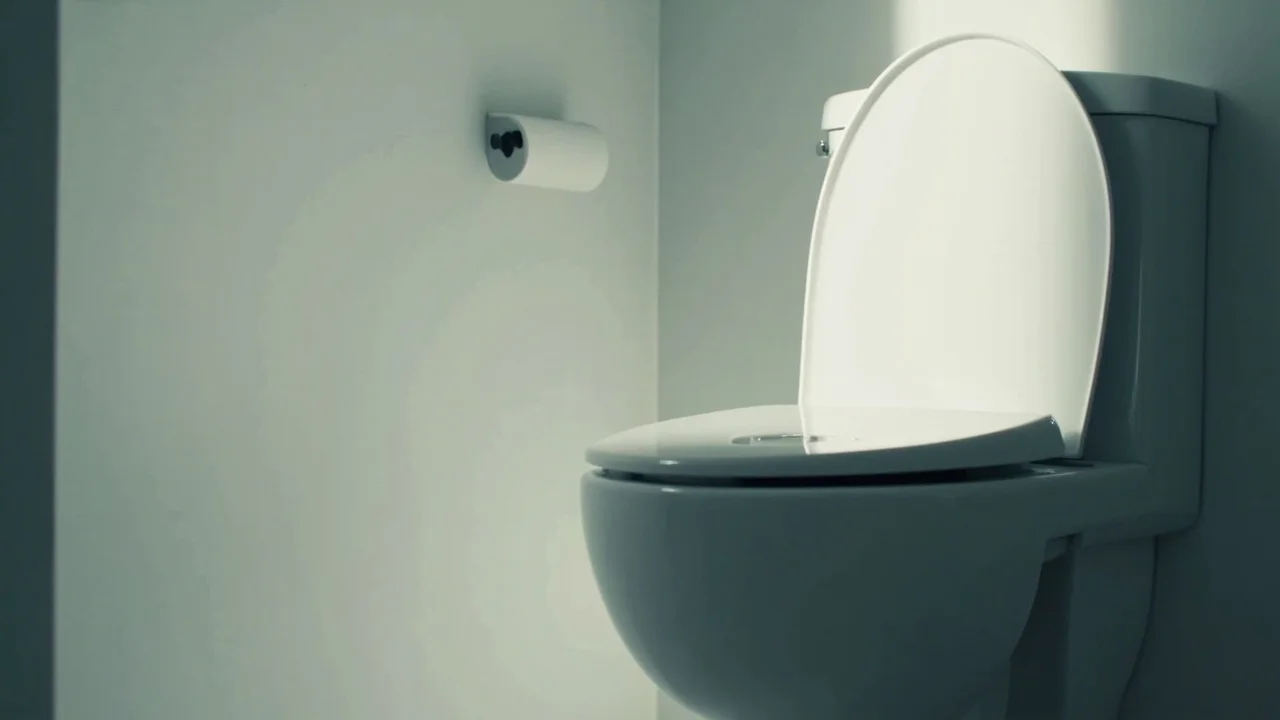
Key market segments and growth drivers in the Toilet Types & Smart Toilet Guide sector.
2. Market Analysis
Market data reveals a range of growth projections, all pointing upward. The Smart Toilet Market was valued at USD 9.57 billion in 2023 and is forecast to reach USD 21.55 billion by 2030, growing at a CAGR of 12.6% from 2024 to 2030. A more conservative estimate from Mordor Intelligence places the market at USD 9.33 billion in 2026, expanding to USD 14.26 billion by 2031 at a CAGR of 8.85%. Yet another analysis projects the market hitting USD 51.14 billion by 2035, with a CAGR of 15.12%.
The three primary growth drivers are unmistakable. First, urbanization and smart home adoption: as consumers invest in connected homes, the smart toilet becomes the next logical upgrade. Second, hygiene awareness: the COVID-19 pandemic permanently shifted preferences toward touchless flushing and self-cleaning nozzles, features now standard in mid-range models. Third, aging demographics: in Japan and parts of Europe, elderly populations demand toilets with bidet functions and heated seats to improve quality of life and reduce caregiver burden.
Geographically, Asia-Pacific dominates both production and consumption. The region accounted for over 40% of global revenue in 2024, driven by Japan's TOTO and LIXIL, and China's rapid urbanization. North America and Europe are catching up, with the U.S. market expected to grow at a CAGR of 8.5% through 2030. For B2B buyers, this means supply chain diversification is critical—relying solely on Asian manufacturers carries geopolitical and logistics risks.
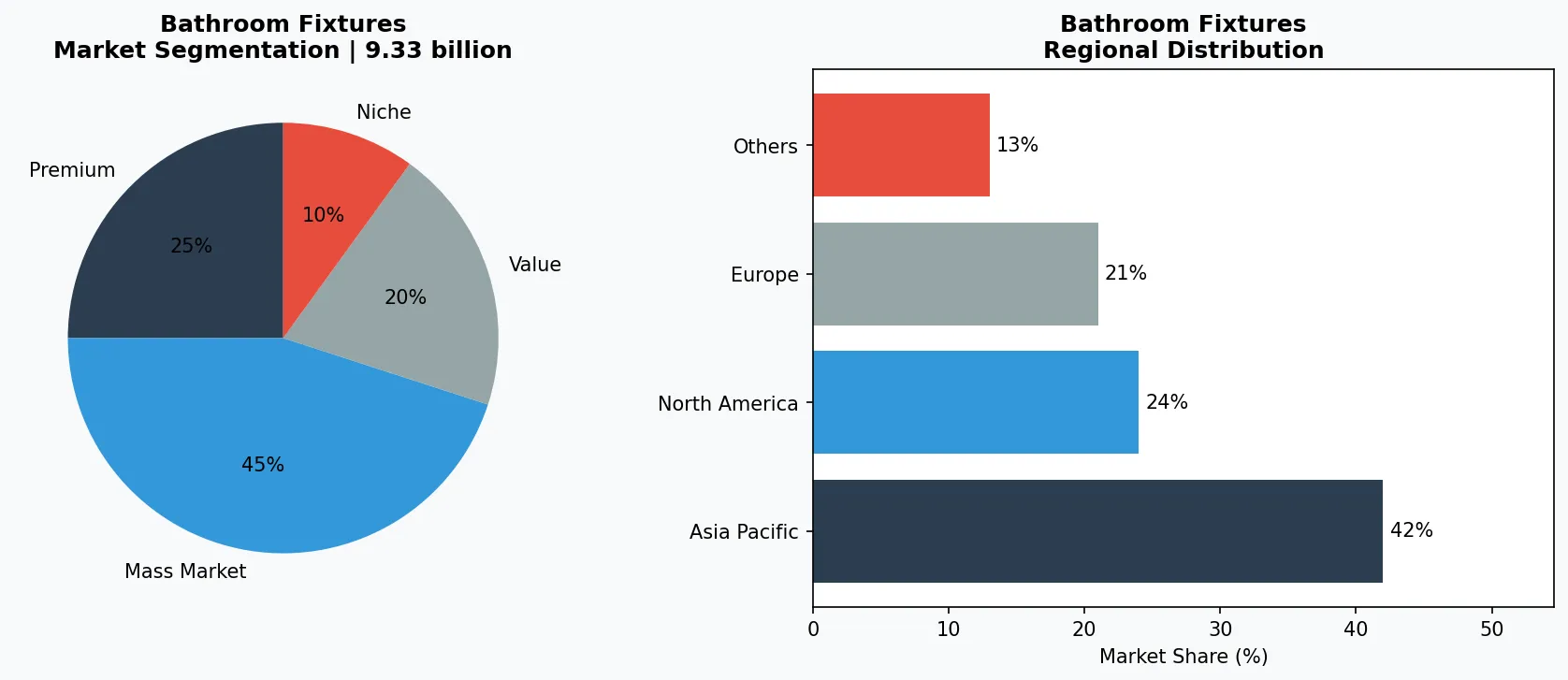
Market segmentation and regional distribution analysis for Toilet Types & Smart Toilet Guide.
3. Product Categories
Smart toilets generally fall into three product types: one-piece toilets, wall-hung toilets, and close-coupled units. One-piece toilets dominate the premium smart segment because of their seamless design, which minimizes crevices where bacteria can hide. TOTO's Neorest series exemplifies this category, combining a sleek ceramic shell with integrated bidet, warm air dryer, and automatic lid operation.
Wall-hung smart toilets are gaining traction in commercial and high-end residential projects. They offer easier floor cleaning and a floating aesthetic. LIXIL's INAX brand has pioneered wall-hung models with built-in tanks and concealed plumbing, making them ideal for hotels and luxury apartments where design matters as much as function.
Close-coupled toilets, where the tank is separate but bolted directly to the bowl, remain the most cost-effective entry point into smart features. Brands like Kohler offer close-coupled models with optional smart seats that retrofit onto standard bowls, allowing consumers to upgrade without replacing the entire fixture. This segment is critical for B2B buyers targeting the mid-market renovation sector.
One-Piece Smart Toilets
Seamless ceramic design with integrated bidet, dryer, and heated seat. Example: TOTO Neorest NX2, priced $5,000–$8,000.
Wall-Hung Smart Toilets
Floating installation with concealed tank. Popular in commercial and luxury residential. Example: INAX SATIS S Series.
Retrofit Smart Seats
Bolt-on bidet and control units for existing toilets. Price range $200–$800. Example: Kohler PureWash E930.
4. Leading Players
TOTO Ltd. remains the undisputed market leader, holding an estimated 20% global share. The Japanese company pioneered the Washlet category in 1980 and continues to set the standard for reliability and innovation. TOTO's strategy focuses on vertical integration—manufacturing its own ceramic bodies, electronics, and software—ensuring quality control and faster time-to-market for new features like automatic deodorizing and UV sanitation.
LIXIL Group, owner of the INAX and American Standard brands, competes aggressively on price and distribution breadth. With a presence in over 150 countries, LIXIL leverages its scale to offer smart toilets at multiple price points, from $800 entry-level models to $5,000+ luxury units. The company's recent pivot to water-saving technologies aligns with tightening environmental regulations in Europe and North America.
Kohler Co., the Wisconsin-based giant, differentiates through design and ecosystem integration. Its Numi 2.0 smart toilet features voice control via Amazon Alexa and Google Assistant, plus built-in ambient lighting and speakers. Kohler's strategy is to position the toilet as a centerpiece of the smart bathroom, encouraging cross-selling of its faucets, showers, and lighting systems. For distributors, this creates a bundled revenue opportunity.
The Integrated Manufacturer (TOTO)
Controls the full supply chain from ceramic molding to circuit board assembly, ensuring quality and rapid iteration of features like UV sanitation.
The Scale Player (LIXIL)
Leverages global distribution and multi-brand strategy (INAX, American Standard) to offer smart toilets from $800 to $5,000, capturing both budget and luxury segments.
The Ecosystem Builder (Kohler)
Positions the smart toilet within a broader smart bathroom suite, using voice control and app integration to drive cross-category sales.
5. Market Trends
1. HEALTH MONITORING INTEGRATION
Smart toilets are evolving from hygiene devices to health diagnostics. TOTO and Kohler are embedding sensors that analyze urine for glucose and protein levels, with data synced to smartphone apps. This is a $2.5 billion adjacent market opportunity by 2028, appealing to aging populations and chronic disease patients.
2. TOUCHLESS AND UV-C SANITATION
Post-pandemic, touchless flushing and self-cleaning nozzles have become table stakes. LIXIL's ActiClean system uses electrolyzed water to sanitize the bowl, reducing chemical use by 90%. This trend drives specification in hospitals, airports, and luxury hotels.
3. WATER EFFICIENCY AND SUSTAINABILITY
Dual-flush smart toilets now achieve 1.0 gallons per flush (GPF) versus the standard 1.6 GPF. Kohler's WaterSense-certified models save 16,500 gallons per household annually. In water-scarce regions like California and Australia, this is a regulatory and consumer mandate.
4. AI-POWERED PERSONALIZATION
New models from Chinese brands like Jomoo use AI to learn user preferences for seat temperature, water pressure, and spray position. This creates a sticky user experience that drives brand loyalty and repeat purchases in the residential segment.
6. Regional Markets
Asia-Pacific: Production & Innovation Hub
Accounts for 40%+ of global revenue. Japan leads in adoption (80% of households have smart toilets), while China drives volume growth at 15% CAGR.
North America: Retrofit & Hospitality Demand
The U.S. market is driven by hotel renovations and aging-in-place upgrades. Smart seat retrofits are the fastest-growing sub-segment at 18% CAGR.
Europe: Regulatory-Driven Adoption
EU water efficiency directives and aging population in Germany/Italy push demand for dual-flush smart toilets. Market growing at 9% CAGR through 2030.
7. Investment Outlook
Two opportunities stand out for B2B buyers in 2026. First, the retrofit smart seat segment: with over 300 million standard toilets in U.S. homes alone, offering smart seats that upgrade existing bowls unlocks a massive addressable market without requiring full replacement. Second, the commercial hospitality vertical: hotels are investing in smart toilets to differentiate guest experiences, with brands like Marriott specifying TOTO and Kohler in new builds.
The primary risk is supply chain concentration: over 70% of smart toilet electronic components are manufactured in China. Tariff volatility, semiconductor shortages, or geopolitical disruptions could delay orders by 6-12 months. Diversifying suppliers and maintaining safety stock of critical electronics is a prudent hedge for 2026 and beyond.
Strategic Considerations:
- Retrofit Smart Seat Market: Target the 300M+ standard toilets in U.S. homes with bolt-on smart seats—a $2B+ addressable market with zero plumbing renovation needed.
- Hospitality Vertical: Major hotel chains are standardizing smart toilets in new builds. Partner with TOTO or Kohler for bulk procurement contracts in 2026.
- Component Supply Chain: 70% of electronics come from China. Tariff or semiconductor disruptions could delay orders 6-12 months. Diversify sourcing to Vietnam or Mexico.
- Consumer Education Gap: Only 35% of U.S. consumers understand smart toilet benefits. B2B buyers must invest in showroom demos and installer training to drive adoption.
Make Informed Decisions in the Toilet Types & Smart Toilet Guide Market
Product quality and sourcing integrity directly impact business outcomes. Discover how Verity Rank's verification platform helps industry participants source with greater confidence.
Contact Verity Rank TodayFurther Reading: Explore additional market intelligence from Grand View Research and Mordor Intelligence.
This article is for informational purposes only, based on publicly available industry data and market reports as of 2026-05-29. All market figures are estimates and may vary from actual results.