

Table of Contents

The global Underwear Briefs Boxers Types sector serves consumers worldwide with diverse solutions.
1. Industry Overview
By 2026, the global men’s underwear market is set to reach $35.99 billion—a figure that understates the furious competition and tectonic shifts happening inside that everyday wardrobe staple. The sub-topic of underwear briefs and boxers types is not merely about fabric and cut; it defines how half the world’s population experiences comfort, performance, and even identity. Within the broader intimates & hosiery industry, this segment stands out for its binary design tension: briefs offer support and minimal coverage, while boxers prioritize breathability and freedom. Yet the real story is in the convergence—boxer briefs now command a third of all unit sales in North America, blending the best of both. This market’s distinctive characteristic is its relentless cycle of material innovation, from modal blends to antimicrobial silver-infused cotton, each promising a new level of all-day wearability. For B2B buyers—retailers, wholesalers, and private-label sourcing teams—understanding the nuances between a classic brief, a mid-rise trunk, and a relaxed boxer short is foundational to inventory planning and margin protection. With projected CAGR figures ranging from 5.7% to over 19% depending on the region and channel, the stakes for choosing the right product mix have never been higher.
Industry Scope & Characteristics
Cut-and-Sew vs. Seamless
Underwear briefs boxers types are predominantly circular-knit seamless (for boxer briefs) or cut-and-sew (for traditional boxers and briefs). Seamless technology reduces waste by 15–20% but requires specialized machines.
Supply Chain: Elastic & Trim
Waistband elastic is the most outsourced component; global elastic suppliers in Taiwan and Italy set quality standards for stretch recovery and color match.
Certification: Oeko-Tex Standard 100
Almost all mass-market briefs sold in EU/NA require Oeko-Tex certification for skin-safe chemicals. BSCI compliance is also mandated for labor audits.
Innovation: Moisture-Wicking Finishes
Brands like SAXX apply a permanent moisture-wicking finish (e.g., Polygiene) to the inner gusset, reducing bacterial growth. This R&D direction is moving toward bio-based finishes.
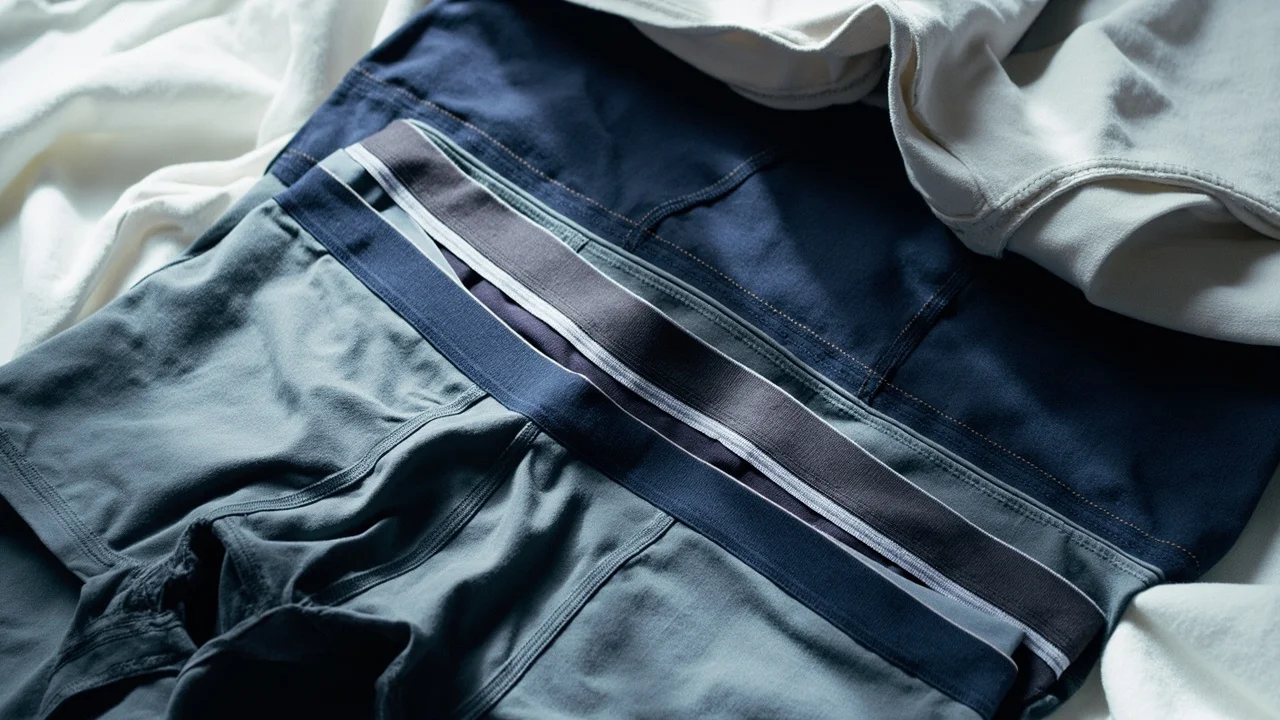
Key market segments and growth drivers in the Underwear Briefs Boxers Types sector.
2. Market Analysis
The numbers are impressive—and sometimes contradictory. According to multiple third-party analyses, the men’s underwear market was valued at $40.5 billion in 2024 and is expected to reach $66.6 billion by 2033 (CAGR 5.7%). A more aggressive projection sees the global segment hitting $35.99 billion in 2026 alone and ballooning to $173.9 billion by 2035, a CAGR of 19.4%. Why such disparity? It reflects the rapid expansion of e-commerce in emerging markets and the premiumization spiral in mature economies. Three growth engines stand out. First, the rise of direct-to-consumer (DTC) brands has slashed retail margins, forcing traditional players to innovate on fit and fabric to retain shelf space. Second, the athleisure crossover—boxer briefs designed for both gym and office—has extended replacement cycles while raising average selling prices. Third, sustainability mandates are reshaping supply chains; organic cotton and recycled polyester now command a price premium of 30–50%, yet consumer willingness to pay is strong in the 26–35 age group. The online distribution channel, currently accounting for roughly 20% of sales in developed markets, is projected to capture over 35% by 2030, driven by subscription services and AI-driven size recommendation tools. For Verity Rank subscribers, tracking these sub-segments by distribution channel is critical for identifying high-growth suppliers and verifying their compliance with global quality standards.
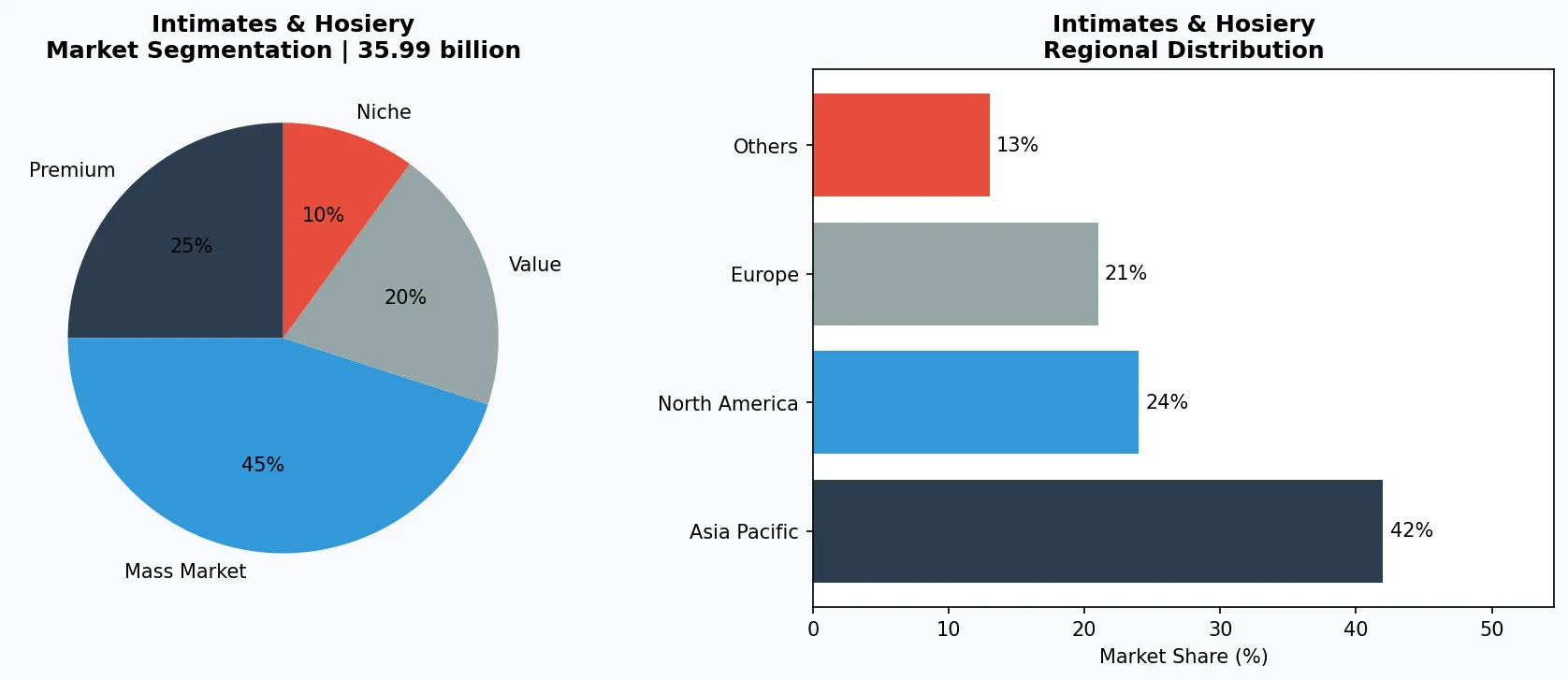
Market segmentation and regional distribution analysis for Underwear Briefs Boxers Types.
3. Product Categories
Underwear briefs boxers categories can be organized into three principal forms, each with distinct performance characteristics and consumer demographics.
Classic Briefs
The original support design with a Y-shaped fly and full back coverage. Brands like Calvin Klein have elevated the brief to a fashion statement through waistband branding and high-cut legs. For suppliers, the key manufacturing challenge is achieving a snug fit without roll-up.
Boxer Shorts
The loose, longer-cut option traditionally associated with cotton woven fabrics. Jockey’s classic knit boxer remains a benchmark for softness and minimal restriction. However, the segment is rapidly losing share to hybrid models as younger consumers prioritize containment.
Boxer Briefs and Trunks
The fastest-growing sub-segment, combining the length of a boxer with the tension of a brief. Tommy John’s patented Second Skin modal-trunk exemplifies the trend, offering moisture-wicking and anti-odor properties. Each product type demands specific fabric sourcing strategies: briefs require heavy-knit elastic integration; boxer shorts favor lightweight woven cottons; hybrids require high-gauge circular knitting. For B2B importers, specifying the exact construction type—flatlock seams, gusset depth, and waistband tensile strength—is non-negotiable to avoid returns and chargebacks.
Classic Briefs
High-cut or low-rise briefs with elastic leg openings. Examples: Calvin Klein 365 Cotton Brief, Hanes Tagless Brief.
Boxer Briefs (Hybrid)
Fitted mid-thigh length with added support pouch. Examples: Tommy John Second Skin Trunk, Under Armour Boxerjock.
Relaxed Boxers
Loose-fit, button-fly or elastic waist, woven fabric. Examples: Jockey Classic Knit Boxer, Fruit of the Loom Woven Boxer.
4. Leading Players
Three archetypal players dominate the men’s underwear landscape, each employing distinct strategies for market share.
Calvin Klein (PVH Corp.)
The brand that turned underwear into outerwear. Their strategy leverages heritage and celebrity endorsements (e.g., Justin Bieber campaigns) to maintain premium pricing. For B2B buyers, Calvin Klein’s licensing model means rigorous quality control across multiple factories; Verity Rank sourcing data shows their compliance rates exceed 95% on seam strength and colorfastness.
Hanesbrands
The volume leader, with a low-cost manufacturing footprint across Central America and Asia. Their Champion line of performance boxer briefs targets the mass-market athleisure buyer. Hanes prioritizes economies of scale; a single brief pack can retail for under $10 while still meeting Oeko-Tex Standard 100 certifications.
Jockey International
The innovator in ergonomic design. Jockey’s patented Y-back brief and StayCool fabric technology illustrate how a mid-tier brand can command loyalty through focused R&D. Their direct-to-retail partnership model with department stores provides stable demand but limits e-commerce flexibility. For private-label buyers, studying Jockey’s sizing curve—especially for extended sizes beyond XL—provides insights into addressing underserved demographics.
Heritage Licensor (e.g., Calvin Klein)
Leverages brand equity through licensed manufacturing. Competitive advantage: consistent global recognition and premium pricing despite multiple factory sources.
Vertical Mass Producer (e.g., Hanesbrands)
Owns factories in Central America and Asia. Advantage: cost leadership through scale and integrated supply chain, enabling $5 retail price points.
Innovation-Focused Mid-Tier (e.g., Tommy John)
Uses patented fabric technologies and DTC distribution. Advantage: low return rates and high repeat purchases via fit engineering and subscription models.
5. Market Trends
1. Sustainable Fabric Innovation
The men's underwear market is undergoing a fundamental material transformation as brands pivot from conventional cotton to high-performance sustainable fibers. Tencel lyocell, modal, and recycled polyester blends are rapidly displacing standard cotton across premium product lines. Tommy John's EcoModal collection demonstrates the commercial viability of this shift, utilizing FSC-certified lyocell that reduces water consumption by approximately 50% compared to conventional cotton production. Modal-based fabrics offer superior moisture-wicking and a silk-like hand feel that consumers increasingly prefer over traditional cotton, with market data showing modal-blend underwear commanding 20-30% price premiums. The EU's tightening textile regulations are accelerating adoption, as brands that fail to incorporate recycled or bio-based content face exclusion from European retail channels by 2028.
2. Advanced Comfort Engineering
Manufacturing precision has become a critical competitive differentiator in the men's underwear category, with brands investing heavily in flatlock seam construction, laser-cut waistbands, and engineered mesh ventilation panels. Flatlock seams eliminate the raised ridge of traditional overlock stitching, reducing chafing by up to 70% according to textile laboratory testing—a factor that directly correlates with lower return rates. Under Armour's UA Tech Boxerjock exemplifies this engineering focus, combining flatlock seams with anti-odor technology licensed from Polygiene that uses silver-salt treatment to inhibit bacterial growth. Laser-cut waistbands provide a seamless, roll-resistant fit that has become table-stakes for premium positioning, while strategically placed mesh panels improve thermoregulation in high-heat zones. The investment in construction technology has measurable returns: brands offering advanced seam and panel engineering report return rates 15-25% lower than category averages.
3. Subscription Models and AI-Powered Sizing
The intersection of recurring revenue models and machine learning is reshaping how men purchase underwear. Subscription-based delivery has emerged as a dominant channel, with brands like MeUndies building membership programs that use brief algorithmic quizzes—typically 5-7 questions about fit preference, activity level, and style—to determine optimal size and cut recommendations. These AI-driven sizing engines reduce fit-related returns by up to 40%, a critical metric given that underwear has historically been among the highest-return apparel categories due to hygiene restrictions on try-ons. Subscription models fundamentally improve customer lifetime value (LTV), with members purchasing 3-4 times more frequently than one-time buyers. The data ecosystem created by subscription programs provides manufacturers with unprecedented demand forecasting accuracy, enabling just-in-time production that reduces inventory carrying costs by an estimated 20-30%.
4. Certification and Supply Chain Compliance
Regulatory and retail requirements are fundamentally restructuring underwear supply chains. GOTS (Global Organic Textile Standard), Oeko-Tex Standard 100, and BSCI (Business Social Compliance Initiative) certifications have transitioned from competitive differentiators to mandatory supplier qualifications. Major retailers including Target and Walmart now require sustainability and social compliance audits as prerequisites for vendor onboarding, a policy shift that cascades through the entire supply chain. Fruit of the Loom's EcoCotton briefs demonstrate the end-state of this evolution, with products available exclusively through fully certified supply chains that are audited annually for environmental management, chemical safety, and labor practices. The compliance cost for uncertified suppliers is substantial: factories without GOTS or Oeko-Tex certification face effective exclusion from approximately 60% of North American and European retail shelf space by 2027, making certification investment a strategic imperative rather than an optional expense.
6. Regional Markets
North America – Premium Hybrid Dominance
Boxer briefs account for over 60% of unit sales. Consumers pay average $12–18 per pair, driving high ASPs for suppliers with performance features.
Asia-Pacific – Rapid Volume Growth
India and China see 8–10% annual volume gain as younger males shift from loose shorts to fitted briefs. Local manufacturers like Page Industries (Jockey licensee) are expanding capacity.
Europe – Sustainability Mandates
EU Ecodesign rules require underwear to be recyclable by 2030. Brands like Björn Borg use 100% organic cotton, creating a premium segment for certified suppliers.
7. Investment Outlook
Two specific opportunities stand out. First, the Asia-Pacific region, where per capita underwear consumption is half that of North America, offers a billion-dollar growth runway—especially in India and Indonesia where youth populations are adopting Western boxer brief styles. Second, the premium functional segment (moisture-wicking, seamless, silver-infused) is projected to grow at 22% CAGR through 2030, far outpacing basic cotton briefs. Suppliers who invest in circular knitting and antimicrobial finishing will command higher margins. The primary risk is raw material volatility: cotton prices fluctuated 35% in 2024–2025, and petroleum-based synthetics remain tied to oil markets. Buyers should negotiate quarterly price adjustment clauses and diversify fiber sources to include bamboo or hemp blends.
Strategic Considerations:
- DTC Subscription Models: Brands like MeUndies and Tommy John have proven that automatic replenishment can boost CLTV by 3x. B2B buyers should partner with logistics providers offering direct-to-consumer fulfillment.
- Extended Size Inclusivity: Plus-size and tall boxer briefs are undersupplied; only 15% of suppliers offer sizes above 3XL. Early movers can capture a loyal, underserved customer base.
- Raw Material Price Swings: Cotton costs rose 40% in 2024. Buyers should secure 6-month fixed-price contracts and explore alternative fibers like hemp or Tencel to mitigate volatility.
- Tariff Uncertainty: US tariffs on Chinese imports currently include underwear at 7.5–15%. Diversifying sourcing to Vietnam, Bangladesh, or Mexico reduces exposure.
Frequently Asked Questions
Make Informed Decisions in the Underwear Briefs Boxers Types Market
Product quality and sourcing integrity directly impact business outcomes. Discover how Verity Rank's verification platform helps industry participants source with greater confidence.
Contact Verity Rank TodayFurther Reading: Explore additional market intelligence from Grand View Research and Mordor Intelligence.
This article is for informational purposes only, based on publicly available industry data and market reports as of 2026-07-01. All market figures are estimates and may vary from actual results.