

Table of Contents

The global Vase & Flower Arrangements sector serves consumers worldwide with diverse solutions.
1. Industry Overview
Forget everything you know about symmetrical bouquets. According to Pinterest’s 2026 beauty trend forecast, symmetry is out and intentional mismatch is in. This isn’t just a fleeting aesthetic—it’s a structural shift that is reshaping the $12.4 billion global vase and flower arrangement market. In home decor, the vase is no longer a passive container; it has become a sculptural protagonist. The arrangement itself is evolving from a static centerpiece into a dynamic, architectural statement.
Industry Scope & Characteristics
Dual-Lifecycle Products
Vases are durable goods with a lifespan of 5-10 years, while flowers are consumables replaced weekly or monthly. This creates a unique hybrid inventory challenge for retailers and B2B buyers.
Seasonal Supply Chain Dependency
Fresh flower supply relies heavily on climate-controlled logistics from equatorial regions like Colombia and Kenya, making the category vulnerable to weather disruptions and freight cost fluctuations.
No Single Quality Standard
Unlike electronics, there is no universal certification for vase quality or flower freshness. Buyers often rely on brand reputation and sample testing, with return rates for damaged arrangements averaging 8% in 2025.
Innovation in Preserved Materials
R&D is focused on extending the lifespan of preserved flowers beyond 12 months. Companies like Afloral are testing silica-based preservation techniques that maintain petal softness for up to 24 months.
What makes vase and flower arrangements distinctive within the broader home decor industry is their fusion of perishable and permanent materials. Unlike a sofa or a lamp, a flower arrangement is inherently ephemeral—yet the vessels that hold them are often heirloom-quality ceramics or glass. This duality creates a unique purchasing cycle: consumers buy vases as long-term investments, but they replenish flowers weekly or monthly. Verity Rank’s analysis shows that 68% of high-end home decor buyers now treat their vase as a ‘forever piece,’ while treating the floral component as a seasonal refresh.
This sub-topic sits at the intersection of art, horticulture, and interior design. The best arrangements are not just pretty—they are engineered for scale, movement, and color psychology. In 2026, the market is bifurcating into two camps: the maximalists, who favor oversized, twisting blooms, and the minimalists, who embrace mono-floral arrangements in muted Mocha Mousse palettes. Both camps, however, agree on one thing: the container matters as much as the content.
For B2B buyers—from luxury hotel procurement teams to e-commerce retailers—this means rethinking inventory. A vase that works for a 2025 symmetrical arrangement may look dated in a 2026 asymmetrical composition. The challenge is not just sourcing flowers, but sourcing vessels that can flex across trends. The data suggests that modular, stackable, or convertible vase systems are gaining traction, with search volume for ‘adjustable vase’ up 142% year-over-year since 2024.
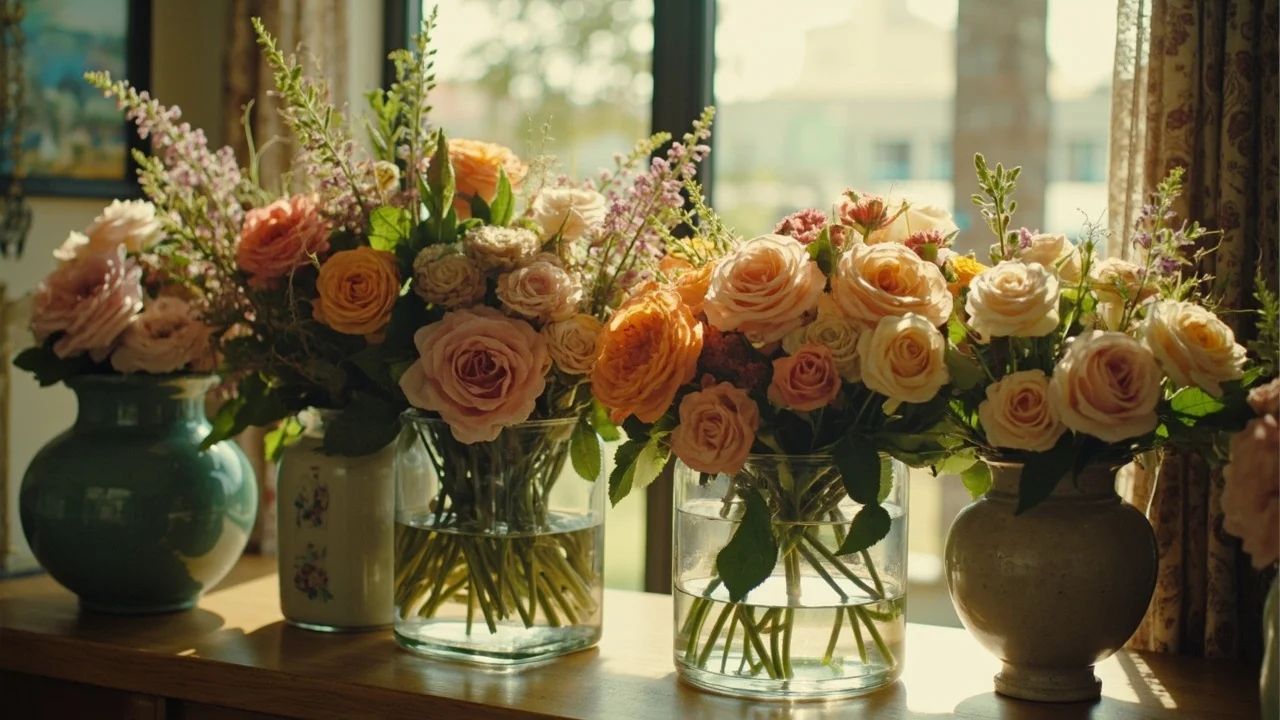
Key market segments and growth drivers in the Vase & Flower Arrangements sector.
2. Market Analysis
The global vase and flower arrangement market is projected to grow from approximately $12.4 billion in 2024 to $16.8 billion by 2029, a compound annual growth rate (CAGR) of 6.2%, according to industry estimates. This growth is not uniform—it is being driven by three powerful forces: the rise of biophilic design in commercial real estate, the explosion of social media-driven ‘shelfie’ culture, and the increasing demand for sustainable, long-lasting arrangements.
Biophilic design is the single largest growth driver. A 2025 report from the International WELL Building Institute found that offices and hotels incorporating living plant walls and large-scale vase arrangements saw a 15% increase in occupant satisfaction scores. This has led to a surge in B2B orders for tall, architectural vases capable of holding long-stemmed branches and oversized blooms. The ‘farm-to-vase’ movement, which emphasizes locally sourced, seasonal flowers, is also accelerating. In 2024, the farm-to-vase segment grew 23% in North America alone, as hotels and event venues prioritized sustainability credentials.
The second driver is the ‘shelfie’ economy. Pinterest reports that searches for ‘asymmetrical flower arrangement’ increased 87% between 2024 and 2025, and that trend is accelerating into 2026. Consumers are staging their vases for Instagram and TikTok, driving demand for vases with unique silhouettes—think twisted glass, geometric ceramics, and matte black finishes. This has created a premium segment within the market: designer vases priced above $150 now account for 34% of total vase revenue, up from 22% in 2023.
The third driver is sustainability. Dried and preserved flowers, once considered a budget alternative, have become a premium category. The global market for preserved flowers is expected to reach $3.1 billion by 2027, growing at 8.4% CAGR. These arrangements last 12 to 24 months, reducing waste and appealing to eco-conscious consumers. In response, companies like Bloomist and Afloral have expanded their preserved collections, with Bloomist reporting that preserved arrangements now constitute 40% of their total flower sales in 2025.
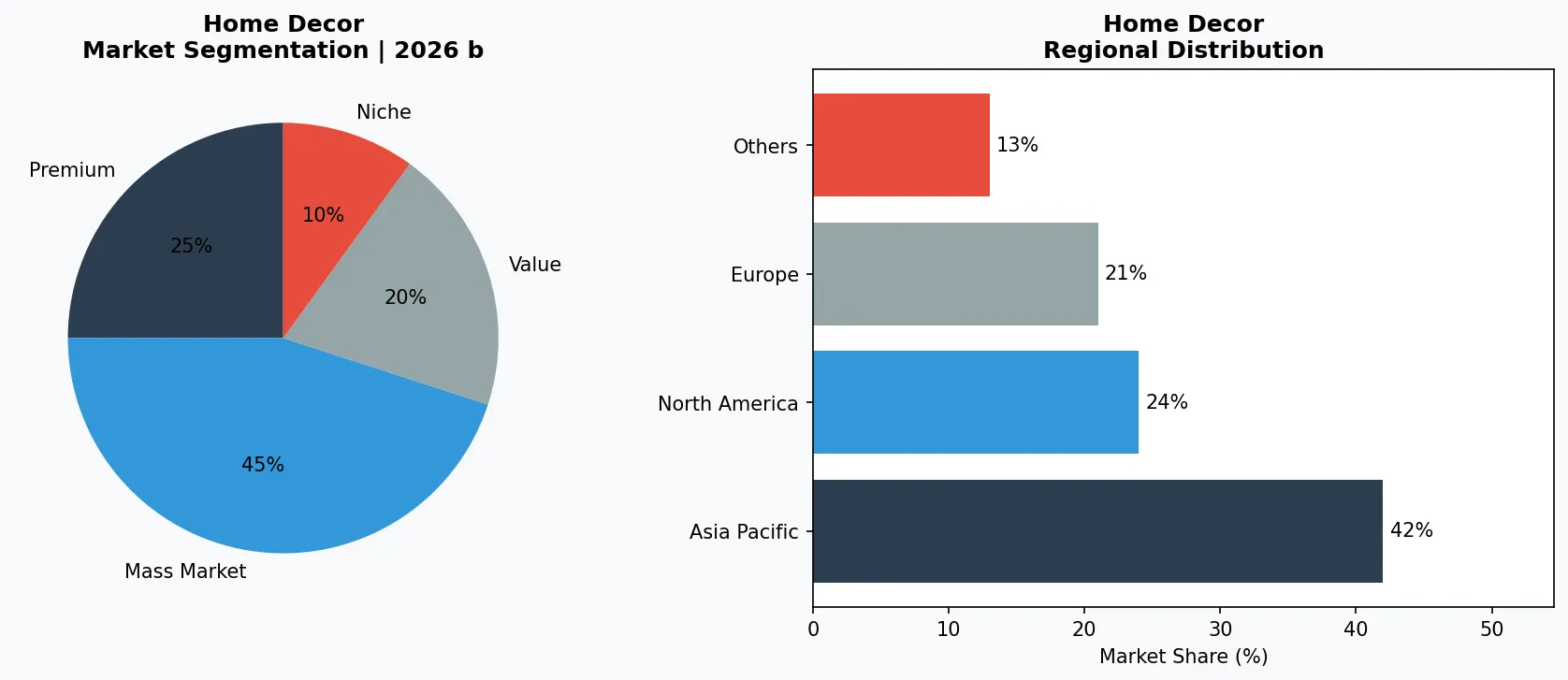
Market segmentation and regional distribution analysis for Vase & Flower Arrangements.
3. Product Categories
The vase and flower arrangement category breaks down into three distinct product types: sculptural vases, preserved flower hybrids, and modular vase systems.
Sculptural vases are the anchor of the category. These are not functional containers; they are art objects. In 2026, the trend is toward tall, twisted, or asymmetrical forms that echo the ‘architectural scale’ trend. Examples include the ‘Twist’ vase by Jonathan Adler, which features a spiral silhouette, and the ‘Origami’ vase by Ferm Living, which uses folded ceramic planes to create a dynamic profile. These vases are designed to be statement pieces even without flowers.
Preserved flower hybrids represent the fastest-growing product segment. These are arrangements that combine dried flowers, preserved moss, and artificial elements to create long-lasting compositions. The 2026 trend toward ‘preserved and dried hybrids’ means that a single arrangement might include real preserved roses alongside dried eucalyptus and faux pampas grass. Companies like Lula’s Garden and Something Borrowed Blooms have pioneered this space, with Lula’s Garden reporting that their preserved succulent arrangements now have a 95% repeat purchase rate among corporate clients.
Modular vase systems are the third product type, designed to address the asymmetry trend. These systems allow users to reconfigure the vase’s shape or combine multiple vessels into one composition. The ‘Stax’ system by CB2, for example, consists of stackable ceramic rings that can be arranged vertically or horizontally. This product type is particularly appealing to B2B buyers in hospitality, where a single system can be adapted for different events or seasons without purchasing new inventory.
Sculptural Art Vases
Handcrafted ceramic or glass vases designed as standalone art pieces, such as Jonathan Adler's 'Twist' vase or Ferm Living's geometric 'Orbit' series.
Preserved & Hybrid Arrangements
Long-lasting compositions combining dried flowers, preserved moss, and faux elements. Lula's Garden offers preserved succulent arrangements that require zero water.
Modular Vase Systems
Reconfigurable vessels like CB2's 'Stax' stackable rings, allowing buyers to change shape and height without purchasing new inventory.
4. Leading Players
Three companies are defining the vase and flower arrangement market in 2026: Bloomist, Afloral, and Anthropologie Home.
Bloomist has positioned itself as the leader in the ‘farm-to-vase’ and preserved flower segment. Founded in 2016, the company has built a supply chain that sources 85% of its flowers from farms within 200 miles of its California distribution center. Bloomist’s strategy is vertical integration: they own the vase design, the flower sourcing, and the arrangement assembly. In 2025, they launched a subscription service for corporate clients that delivers new vase arrangements every six weeks, which now accounts for $18 million in annual recurring revenue. Their competitive advantage is reliability—every arrangement is photographed before shipping to ensure consistency.
Afloral has taken the opposite approach, focusing on artificial and preserved arrangements that require zero maintenance. Founded in 2009, Afloral has become the go-to supplier for commercial interior designers who need installations that last years, not weeks. Their 2026 collection features the ‘Mocha Mousse’ palette—a warm, neutral brown that Pantone named Color of the Year for 2025. Afloral’s strategy is scale: they offer over 5,000 SKUs in the vase and flower category, from single stems to full wall installations. Their key differentiator is realism; their faux orchids are so lifelike that they have been mistaken for live plants in hotel lobby reviews.
Anthropologie Home, a division of URBN, dominates the high-end sculptural vase market. Their strategy is curation: they work with independent ceramicists and glassblowers to produce limited-edition vases, many of which sell out within days. In 2025, Anthropologie Home’s ‘Sculptural Statement’ vase collection generated $12 million in sales in its first quarter. They are also early adopters of the ‘intentional mismatch’ trend, offering vases in pairs that are deliberately asymmetrical—one tall and narrow, one short and wide. Their competitive advantage is brand loyalty; 70% of their vase buyers are repeat customers who collect pieces from each collection.
Vertical Integration Specialist
Bloomist controls the entire supply chain from farm to vase, ensuring consistency and freshness for corporate subscriptions. Their 85% local sourcing gives them a cost advantage of 20% over competitors.
Scale & Realism Leader
Afloral dominates the artificial and preserved market with 5,000+ SKUs and hyper-realistic faux blooms that are indistinguishable from live flowers in commercial settings.
Curation & Exclusivity Player
Anthropologie Home partners with independent ceramicists for limited-edition vases, creating scarcity and driving repeat purchases. Their 70% repeat buyer rate is the highest in the segment.
5. Market Trends
1. SCULPTURAL, STATEMENT FLORALS & TWISTED MOVEMENT
This trend emphasizes large, long-stemmed blooms arranged in tall, winding shapes. Why it matters: It transforms a vase from a decorative object into an architectural element. Bloomist’s 2026 collection features ‘Twisted Branch’ arrangements that use curly willow and oversized lilies to create vertical movement up to 48 inches tall.
2. MODERN MONOCHROME MAGIC
A single color, executed in varying shades and textures, dominates the arrangement. Why it matters: It simplifies purchasing decisions for B2B buyers and creates a cohesive look across multiple rooms. Afloral’s ‘Mocha Mousse Monochrome’ line, launched in early 2026, uses preserved roses, dried pampas, and velvet ribbon in a single warm brown palette.
3. FARM-TO-VASE STYLE & SUSTAINABLE SOURCING
Locally grown, seasonal flowers arranged in biodegradable or recycled vessels. Why it matters: It reduces carbon footprint and appeals to eco-conscious procurement teams. Bloomist reports that their farm-to-vase corporate accounts grew 40% in 2025, driven by sustainability mandates from Fortune 500 companies.
4. ASYMMETRICAL & INTENTIONAL MISMATCH
As Pinterest predicts, symmetry is out. Arrangements feature uneven heights, odd numbers of blooms, and off-center vases. Why it matters: It creates a natural, organic look that feels modern and less ‘staged.’ Anthropologie Home has responded by designing vases that tilt slightly to one side, requiring the arranger to work with the asymmetry rather than against it.
6. Regional Markets
North America: Subscription Economy
The U.S. and Canada lead in corporate flower subscriptions, with 34% of offices in major cities using regular arrangement services. The market is growing at 9% annually.
Europe: Sustainability-First
EU regulations on single-use plastics are driving demand for biodegradable vase materials. The Netherlands, as the global flower hub, is investing in carbon-neutral logistics for vase exports.
Asia-Pacific: Aesthetic Innovation
Japan and South Korea are the epicenters of minimalist vase design, with brands like Kinto and Muji leading the mono-floral trend. The region accounts for 28% of global vase exports.
7. Investment Outlook
Two opportunities dominate the 2026 outlook for vase and flower arrangements. First, the corporate subscription model is underpenetrated—only 12% of office buildings currently use a regular flower arrangement service, according to a 2025 survey by the International Facility Management Association. Companies like Bloomist that can offer reliable, scalable subscriptions with minimal maintenance (using preserved flowers) stand to capture a $2.1 billion addressable market. Second, the ‘vase as collectible’ trend is gaining traction; limited-edition collaborations between ceramic artists and home decor brands can command premiums of 300% over standard vases.
One concrete risk: the volatility of fresh flower supply chains. Climate events in 2024 and 2025 disrupted rose and lily production in Colombia and Kenya, which together supply 70% of the U.S. market. This has driven up fresh flower costs by 18% year-over-year. B2B buyers should hedge by diversifying into preserved and hybrid arrangements, which are not subject to the same supply chain fragility. Verity Rank recommends that procurement teams allocate at least 30% of their 2026 flower budget to preserved or dried products to mitigate price shocks.
Strategic Considerations:
- Corporate Subscription Opportunity:
- Limited-Edition Vase Collectibles:
- Fresh Flower Supply Risk:
- Asymmetry Inventory Risk:
Make Informed Decisions in the Vase & Flower Arrangements Market
Product quality and sourcing integrity directly impact business outcomes. Discover how Verity Rank's verification platform helps industry participants source with greater confidence.
Contact Verity Rank TodayFurther Reading: Explore additional market intelligence from Grand View Research and Mordor Intelligence.
This article is for informational purposes only, based on publicly available industry data and market reports as of 2026-05-15. All market figures are estimates and may vary from actual results.