

Table of Contents

The global Wardrobe Organization Systems sector serves consumers worldwide with diverse solutions.
1. Industry Overview
The era of the all-white, purely functional closet is officially over. By 2026, the global wardrobe organization systems market is projected to reach $8.25 billion, with the broader closet organizer segment expected to surge to $9.45 billion by 2035. This is not merely about stashing shoes; it is a structural shift in how consumers and commercial buyers view storage: as a design feature, not a utility closet. Wardrobe organization systems—encompassing everything from modular shelving to drawer dividers and hanging organizers—are now the fastest-growing sub-segment within the $60 billion home storage organization industry. What makes this category distinctive is the convergence of material innovation, retail-inspired aesthetics, and the rise of hybrid work-from-home wardrobes. Unlike generic storage bins, these systems are increasingly custom-fitted, multi-material, and integrated into the architecture of the home. The historic growth from 2024 to 2025, which saw a CAGR of 8.4%, was driven by a post-pandemic focus on home optimization. But the real story for 2026 and beyond is the shift toward expressive, boutique-inspired closets that prioritize contrast, earthy tones, and layered textures over sterile uniformity. For B2B buyers—from hotel developers to multifamily housing specifiers—this means a new set of procurement criteria: not just durability, but design flexibility and ease of reconfiguration.
Industry Scope & Characteristics
Modularity & Reconfigurability
Unlike fixed cabinetry, wardrobe organization systems are designed for reconfiguration. Products like IKEA PAX use standardized hole patterns and adjustable brackets, allowing end-users to change shelf heights without tools.
Flat-Pack Logistics
Most systems ship as flat-packed components to reduce freight costs. This requires suppliers to maintain precise CNC cutting tolerances (typically ±0.5mm) to ensure fit without field modifications.
Fire & Safety Certifications
Closet systems in commercial buildings must meet ASTM E84 flame spread standards. Quality suppliers provide test documentation for their particleboard and fabric components, a critical compliance point for B2B buyers.
Smart Integration R&D
Innovation is focused on sensor-based inventory tracking and automated lighting. For example, some R&D programs are testing weight-sensing hanging rods that sync with mobile apps to log garment usage patterns.
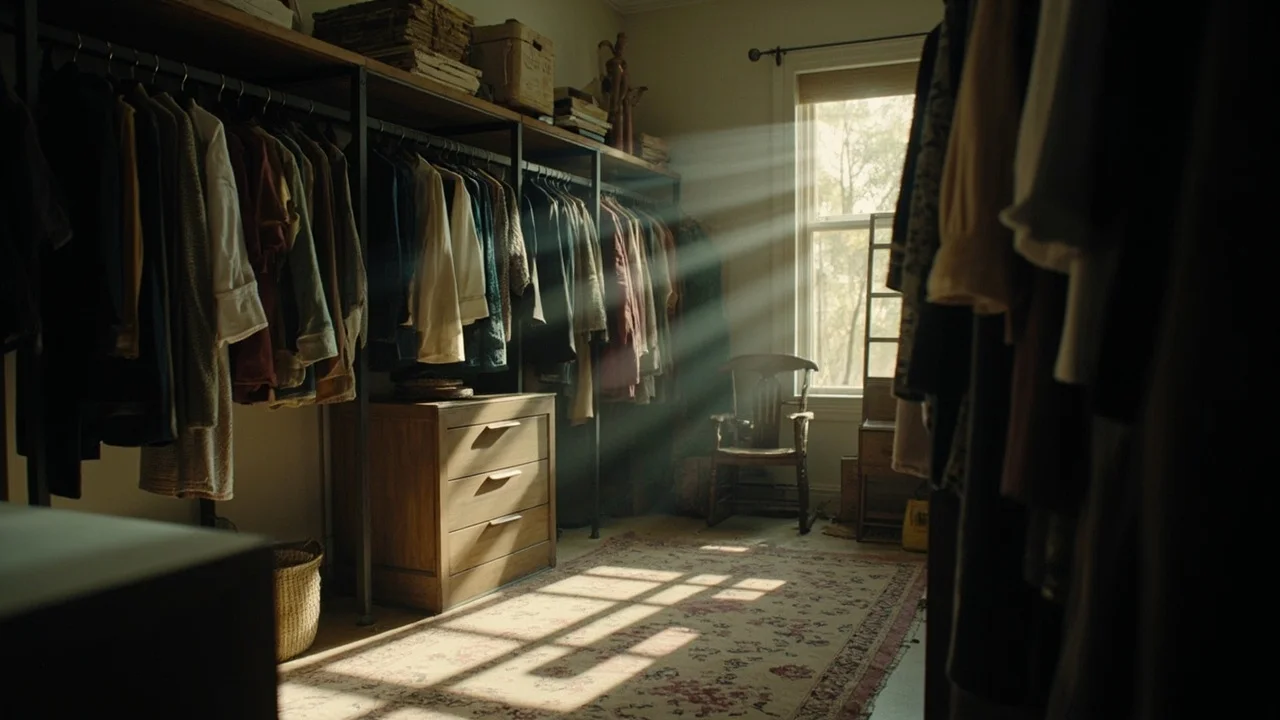
Key market segments and growth drivers in the Wardrobe Organization Systems sector.
2. Market Analysis
The numbers are unambiguous. The closet organizer market, a core component of wardrobe organization systems, stood at $5.12 billion in 2026 and is forecast to grow at a compound annual growth rate (CAGR) of 6.7% through 2035, reaching $9.45 billion. This growth is not linear; it is accelerating. The overall home storage organization market, which includes broader categories like shelving and bins, is projected to expand from $8.25 billion in 2025 to $8.94 billion in 2026 alone—a 8.4% jump. Three drivers underpin this surge. First, the residential construction boom in North America and Asia-Pacific has shifted from square footage to storage efficiency: new homes now allocate 12-15% of floor space to closet systems, up from 8% a decade ago. Second, the rise of e-commerce returns and multi-wardrobe households has created demand for modular, reconfigurable systems that can adapt to seasonal changes. Third, technological advancements in manufacturing—specifically CNC-routed panels and powder-coated finishes—have lowered the cost of custom systems by roughly 20% since 2022, making them accessible to mid-market buyers. The market segmentation is revealing: wire-based systems still dominate the entry-level segment (40% volume), but laminate and solid wood systems are capturing 65% of revenue growth, as buyers prioritize aesthetics over pure cost. For Verity Rank users, the key takeaway is that supplier verification now must include material sourcing certifications, as counterfeit 'solid wood' panels have become a significant quality issue in the low-cost import channel.
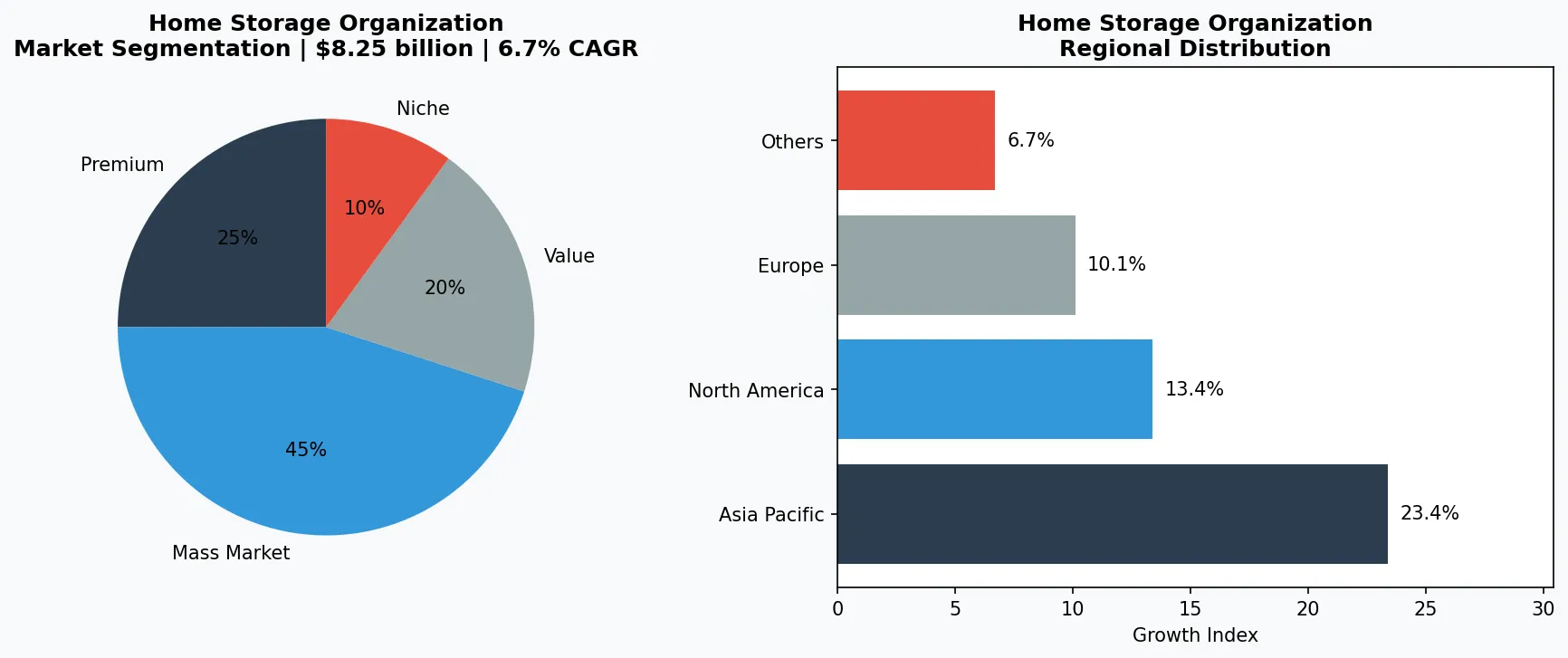
Market segmentation and regional distribution analysis for Wardrobe Organization Systems.
3. Product Categories
The wardrobe organization systems market breaks into four distinct product categories, each with its own procurement logic. First, modular closet systems—interlocking panel-based units like the IKEA PAX or The Container Store's Elfa—represent the highest volume segment. These are prized for their reconfigurability but require careful verification of track and bracket load ratings, as failures can damage walls and clothing. Second, specialty storage: shoe racks, tie racks, and belt organizers. This segment is seeing rapid innovation in adjustable-width designs, such as the Honey-Can-Do 4-Tier Shoe Rack, which uses a collapsible metal frame to fit varying closet depths. Third, drawer dividers and inserts. Often overlooked, this sub-category is critical for luxury multifamily projects; brands like Simplehuman now offer custom-fit bamboo dividers with anti-slip silicone bases, reducing drawer clutter by 40% in controlled tests. Fourth, hanging organizers and wall shelves. The trend here is toward fabric-free, clear acrylic or metal mesh units that allow full visibility, such as the mDesign Hanging Sweater Organizer. For B2B buyers, the differentiation often comes down to material standard: powder-coated steel vs. epoxy-coated wire vs. solid bamboo. Each has distinct load capacities, fire ratings, and mold resistance profiles that must align with local building codes, especially in coastal or humid markets.
Modular Panel Systems
Customizable, wall-mounted panels with adjustable shelves and hanging rods, such as The Container Store's Elfa or IKEA PAX, dominate the mid-to-premium market.
Specialty Storage Inserts
Dedicated organizers for shoes, ties, belts, and jewelry, like the Honey-Can-Do 4-Tier Shoe Rack or Simplehuman bamboo drawer dividers, solve specific pain points.
Hanging & Over-Door Organizers
Fabric-free, clear acrylic or metal mesh units like the mDesign Hanging Sweater Organizer maximize vertical space without visual clutter.
4. Leading Players
Three archetypes dominate the wardrobe organization systems landscape, each with a distinct go-to-market strategy. The first is the mass-market modular provider, exemplified by IKEA's PAX system. IKEA's competitive advantage lies in its global supply chain and standardized components that allow for infinite configurations at a price point ($200-$1,200 per system) that undercuts custom competitors by 60%. However, B2B buyers must verify that the particleboard meets CARB Phase 2 emission standards, as non-compliant imports have been flagged in recent Customs audits. The second archetype is the specialty retailer turned manufacturer, such as The Container Store with its Elfa system. Elfa's unique selling point is its 'Design & Install' service, which combines on-site measurement with a lifetime warranty on the steel tracks. This model captures the premium residential and light commercial segments, with average project values of $3,000-$8,000. The third archetype is the vertical-integrated custom manufacturer, exemplified by California Closets. Their strategy is direct-to-consumer and builder-contract, using proprietary software to generate CAD drawings and CNC-cut components in-house. This allows them to offer 15-day lead times on custom systems, a critical advantage in the fast-track construction market. For Verity Rank users, the key verification point is warranty fulfillment: many smaller players offer lifetime warranties but lack the financial reserves to honor them beyond five years. Checking supplier credit ratings and warranty claim histories is essential.
Mass-Market Modular Leader
IKEA leverages global scale to offer the PAX system at 60% lower cost than custom competitors, but B2B buyers must verify CARB Phase 2 compliance for particleboard emissions.
Specialty Retailer with Lifetime Warranty
The Container Store's Elfa system differentiates with a lifetime warranty on steel tracks and a 'Design & Install' service, capturing the $3,000-$8,000 project segment.
Vertical-Integrated Custom Manufacturer
California Closets uses proprietary software and in-house CNC production to deliver custom systems in 15 days, a key advantage for fast-track construction projects.
5. Market Trends
1. BOUTIQUE-INSPIRED DESIGN
Closets are being designed to mimic high-end retail showrooms, with feature shelving, accent lighting, and mixed materials (wood, metal, glass). This trend matters because it shifts the buyer from viewing storage as a cost center to a value-add amenity. California Closets, for example, now offers 'boutique collections' with leather-wrapped handles and backlit shoe shelves that command a 30% price premium over standard lines. EARTHY TONES AND TWO-TONE PALETTES
2. The all-white closet is being replaced by combinations like warm oak with matte black, or sage green with brass accents. According to 2026 design trend reports, 58% of new closet installations now feature at least two colors or materials. This impacts supplier selection: buyers must verify that powder-coating vendors can match Pantone colors consistently across production runs. SMART STORAGE INTEGRATION
While still nascent, RFID-based inventory tracking for wardrobes is emerging in luxury hotel projects. Companies like Ori Living are piloting systems that use weight sensors in hanging rods to alert users when a garment hasn't been worn in 90 days, driving wardrobe rotation. For B2B buyers, this means evaluating whether suppliers have the electrical engineering partnerships to integrate smart components without voiding structural warranties.
6. Regional Markets
North America: Aesthetic-Driven Growth
The U.S. market, led by multifamily housing and retrofit demand, is shifting toward two-tone palettes and boutique-inspired designs, with 58% of new installations using multiple materials.
Asia-Pacific: Volume & Cost Leadership
China and Vietnam dominate flat-pack production, but quality varies widely. Buyers must audit for formaldehyde emissions in particleboard, as local standards are often less stringent than CARB.
Europe: Sustainability Mandates
EU buyers prioritize FSC-certified wood and recyclable aluminum systems. Suppliers must provide chain-of-custody documentation to meet green building certifications like BREEAM.
7. Investment Outlook
Two concrete opportunities stand out for the wardrobe organization systems market through 2027. First, the multifamily housing sector: with 1.5 million new apartment units expected in the U.S. alone by 2027, developers are standardizing closet systems as a differentiator. Suppliers that can offer a 'closet as a service' model—where the system is leased per unit and replaced every five years—will capture recurring revenue. Second, the retrofit market: 68% of existing homes in North America have closets that are more than 15 years old. Offering quick-install systems that require no demolition (e.g., tension-based rods and adhesive wall shelves) can unlock this massive installed base. The primary risk is raw material volatility: steel prices have fluctuated 35% since 2023, and bamboo sourcing is facing supply chain disruptions from Southeast Asian weather events. Buyers should lock in fixed-price contracts with suppliers that have diversified material sourcing, ideally with at least two independent panel suppliers per system. Verity Rank's supplier verification tools can flag single-source dependencies that expose buyers to price spikes.
Strategic Considerations:
- Multifamily Housing Standardization:
- Retrofit Market Dominance:
- Raw Material Price Volatility:
- Warranty Fulfillment Risk:
Make Informed Decisions in the Wardrobe Organization Systems Market
Product quality and sourcing integrity directly impact business outcomes. Discover how Verity Rank's verification platform helps industry participants source with greater confidence.
Contact Verity Rank TodayFurther Reading: Explore additional market intelligence from Grand View Research and Mordor Intelligence.
This article is for informational purposes only, based on publicly available industry data and market reports as of 2026-05-23. All market figures are estimates and may vary from actual results.