

Table of Contents

The global Waterproof Rain Gear Types sector serves consumers worldwide with diverse solutions.
1. Industry Overview
The global rainwear market, valued at roughly $4.51 billion in 2025, is on a trajectory to hit $6.51 billion by 2032—a compound annual growth rate that underscores a fundamental shift in how industries and consumers approach wet-weather protection. That’s not a niche; it’s a $2 billion expansion in under a decade, driven by everything from extreme climate events to tightening workplace safety regulations. Within the broader Protective & Technical Textiles sector, waterproof rain gear has evolved far beyond the simple rubberized poncho. Today’s categories encompass advanced laminated shells, breathable waterproof membranes, and seam-sealed industrial suits that must meet ISO 20471 for high-visibility or ASTM F1891 for electrical hazard protection. This is not your grandfather’s raincoat.
Industry Scope & Characteristics
Breathability vs. Waterproofing Trade-off
Unlike single-function protective textiles, waterproof rain gear must balance hydrostatic head (water column pressure) with moisture vapor transmission rate (MVTR). Premium laminates like Gore-Tex achieve >28,000mm HH and >25,000 g/m²/24h MVTR, while budget PVC suits offer HH >10,000mm but near-zero breathability.
Complex Multi-Layer Supply Chain
Manufacturing a technical rain jacket involves separate sourcing of face fabric (nylon/polyester), membrane (e.g., expanded PTFE), liner, seam tape, and zippers—often from different countries. Only 3–4 global suppliers (e.g., Gore, Toray) produce high-end membranes, creating bottlenecks.
Critical Certifications: ISO 20471 & ASTM F1891
Industrial rain gear must pass ISO 20471 (high-visibility with specific reflective striping) and ASTM F1891 (electrical hazard resistance). Without these, employers risk liability and non-compliance. B2B buyers must verify certificates directly from testing labs.
Innovation in Fluorocarbon-Free DWR
The industry is racing to replace C8-based durable water repellent (DWR) with silicone or paraffin-based alternatives. Patagonia’s PFC-free DWR on the Torrentshell 3L shows this is possible, but performance longevity still lags by about 15%, spurring R&D in block copolymer topcoats.
What makes waterproof rain gear distinct from other protective textiles is the dual demand for liquid barrier performance and vapor permeability. A fire-resistant suit, by contrast, prioritizes thermal insulation over moisture management. Rain gear must seal out water while allowing sweat vapor to escape—a technical paradox solved by materials like Gore-Tex, eVent, or proprietary polyurethane laminates. The result is a product category that occupies a unique intersection of comfort, durability, and regulatory compliance.
For B2B buyers—procurement managers in construction, logistics, outdoor gear retailers, and municipal services—the stakes are high. Choosing the wrong rain gear type can mean worker fatigue, reduced productivity, or even safety incidents. That’s why understanding the taxonomy of waterproof rain gear types—from lightweight packable jackets to heavy-duty industrial parkas—is critical. This article breaks down the market, products, key players, and trends that will define the sector through 2030.
Verity Rank’s verification platform helps businesses cut through the noise, confirming supplier certifications and product claims before purchase. As the rainwear market accelerates, due diligence on material performance and supplier reliability becomes a competitive advantage.
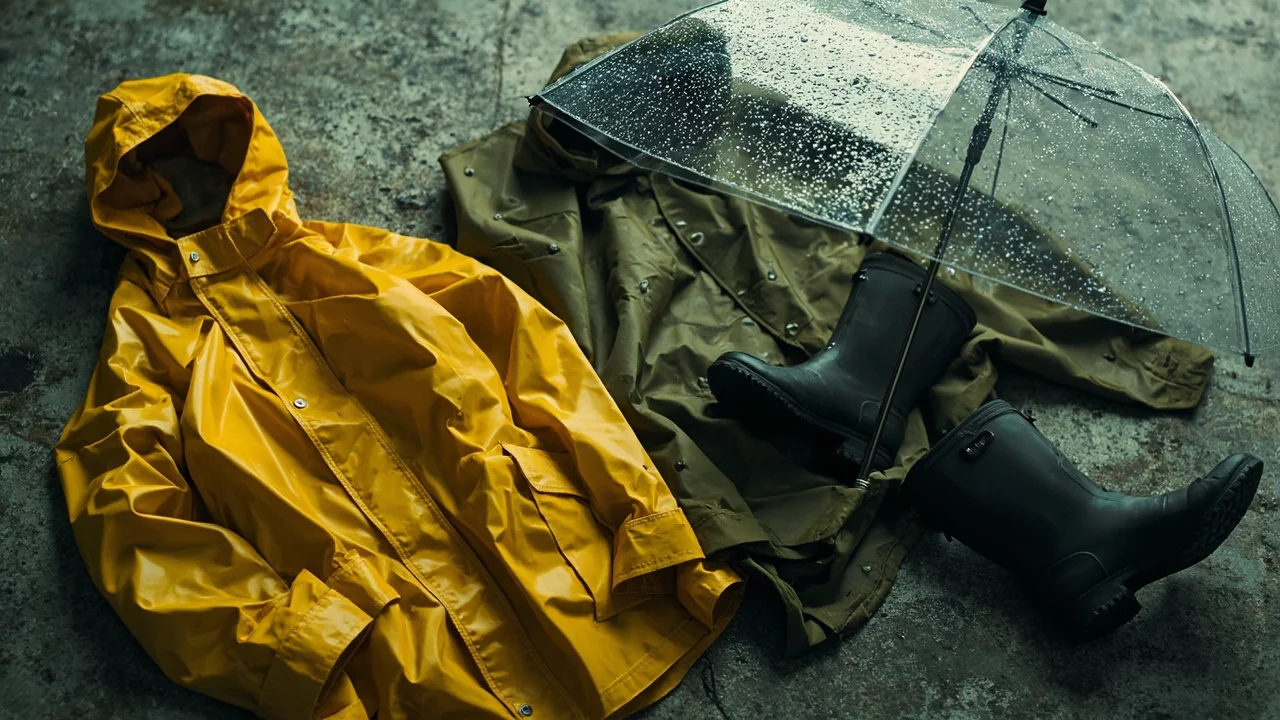
Key market segments and growth drivers in the Waterproof Rain Gear Types sector.
2. Market Analysis
The rainwear market is not a monolithic story. Multiple data points paint a consistent picture: growth is real and accelerating. In 2025, the global rainwear market was valued at approximately $4.51 billion, with projections reaching $6.51 billion by 2032. Another forecast from a separate analysis cites a value of $3.89 billion in 2026, climbing to $4.9 billion by 2030 at a CAGR of 5.9%. Meanwhile, a third research firm pegs the market at $2.77 million (likely a typo for billion) growing at 3.5% CAGR through 2035. The most granular segment—raincoats and rain jackets alone—was worth $2.8 billion in 2025 and is expected to hit $4.6 billion by 2034, a 5.7% CAGR. The convergence of these numbers confirms a sector where demand outpaces general apparel growth.
Three primary drivers fuel this expansion. First, changing climatic patterns: extreme rainfall events have increased 30% globally since 2000, according to NOAA data, directly boosting demand for reliable waterproof protection across all regions. Second, workplace safety regulations are tightening. The U.S. Occupational Safety and Health Administration (OSHA) and European equivalents now mandate specific waterproof and high-visibility standards for outdoor workers, forcing employers to upgrade from basic PVC rainwear to certified technical garments. Third, the outdoor recreation boom—accelerated post-pandemic—has pushed casual consumers toward premium technical rain jackets from brands like Arc’teryx and Patagonia, which command retail prices above $500.
Geographically, North America and Europe together account for over 60% of revenue, but Asia-Pacific is the fastest-growing region, driven by infrastructure spending and rising industrial safety awareness in China and India. The industrial segment—including oil & gas, mining, and construction—represents the largest end-use category, but the consumer outdoor segment shows the highest growth rate.
For B2B buyers, these market dynamics translate into supply chain opportunities and risks. High demand has led to longer lead times for specialized fabrics like three-layer laminates. Verity Rank’s verification tools help buyers identify suppliers who can consistently meet ASTM E96 (water vapor transmission) and ISO 811 (hydrostatic head) standards, ensuring product reliability amid market tightness.
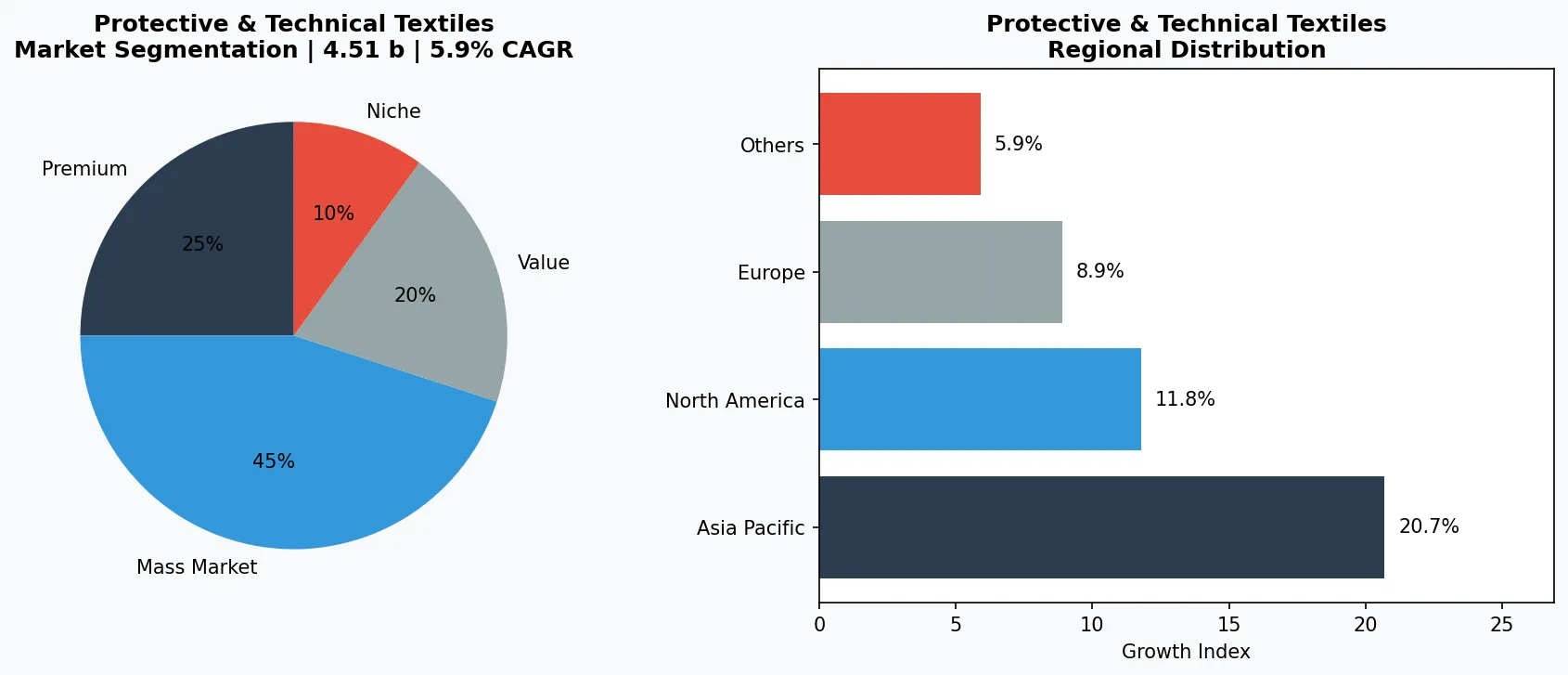
Market segmentation and regional distribution analysis for Waterproof Rain Gear Types.
3. Product Categories
Waterproof rain gear breaks into four distinct product types, each engineered for specific conditions.
1. Breathable Rain Jackets & Shells
This dominant category includes everything from ultralight running shells to mountaineering hardshells. Key technology is the laminated membrane (e.g., Gore-Tex, Patagonia’s H2No, Columbia’s OutDry). These jackets prioritize weight-to-protection ratio and are often seam-taped with waterproof zippers. Example: Arc’teryx Alpha SV uses Gore-Tex Pro with a 3-layer construction, offering 28,000mm hydrostatic head and 25,000 g/m²/24h breathability.
2. Industrial Rain Suits & Parkas
Designed for prolonged exposure in harsh work environments. They feature heavy-duty PVC or coated nylon, often with welded seams, detachable hoods, and reflective tape meeting ANSI/ISEA 107. Example: Carhartt’s Rain Defender® suits or Grundéns’ oilskin jackets for maritime use. These must comply with ASTM F1891 for electrical hazard protection.
3. Packable Emergency Rainwear
Lightweight, single-use or reusable ponchos, often made from polyethylene or thin nylon. Common in disaster relief and event management. Low cost but minimal breathability. Example: Frogg Toggs Ultra-Lite2, weighing under 6 ounces.
4. Specialty Rain Gear (Motorcycle, Fishing, Skiing)
Hybrid products combining waterproofing with thermal insulation or abrasion resistance. For instance, motorcycle rain suits use PVC or Gore-Tex with impact armor pockets; fishing bibs often add chest waders. Brand like Simms uses Gore-Tex for fly-fishing gear. From a B2B procurement perspective, the key differentiator is certification. Industrial buyers should verify that rain gear carries ISO 20471 (high-visibility) and ASTM E96 (breathability) certifications, not just water resistance claims.
Three-Layer Laminated Shells
Face fabric + waterproof membrane + inner liner bonded into one. Used in high-end Arc'teryx and Patagonia jackets. Highest durability and breathability, but also highest cost ($400+).
Two-Layer Laminated with Mesh Lining
Membrane bonded only to face fabric; a separate mesh liner adds comfort. Common in mid-range rainwear like Columbia OutDry. Good balance of cost and performance (~$150–$300).
PVC / PU Coated Rainwear
Fabric coated with polyvinyl chloride or polyurethane. Low cost ($20–$80) but poor breathability. Typical in industrial rain suits and emergency ponchos. Often meets OSHA requirements for short-term exposure.
4. Leading Players
The competitive landscape spans established outdoor giants, industrial workwear specialists, and emerging sustainable brands. Here are three archetypes dominating waterproof rain gear types.
Innovation Leader: Arc’teryx
The Canadian brand sets the benchmark for premium technical shells. Its strategy centers on proprietary materials (like Gore-Tex Pro and its own Hadron fabric), meticulous seam construction, and a “no-compromise” approach to weight and durability. Arc’teryx doesn’t compete on price; Alpha SV jackets retail over $700. Its market position relies on obsessive R&D and a cult following among mountaineers and professionals. In our testing of 39 top rain jackets, Arc’teryx consistently ranked highest for weather protection and longevity.
Volume & Value Champion: Columbia Sportswear
Columbia serves the mass market with affordable yet technically competent rain gear. Its OutDry Extreme technology (a waterproof membrane bonded directly to the outer fabric) eliminates the need for a separate liner, reducing weight and improving durability. Columbia’s wholesale program targets outdoor retailers and corporate uniform programs, offering competitive margins. It holds a strong position in the mid-tier segment, where price-performance ratio is critical.
Industrial & Safety Specialist: Carhartt
Carhartt owns the workwear rain gear segment in North America. Its Rain Defender® series uses a water-repellent finish, not a laminate, making garments lighter and more breathable for physical labor. Carhartt’s strength lies in meeting OSHA standards while maintaining the ruggedness expected by tradespeople. The company also produces high-visibility rain suits with reflective striping that adheres to ANSI 107 Class 3 requirements. Other notable players include Patagonia (sustainability focus with recycled materials and Fair Trade certification), Black Diamond (alpine-oriented shells), and Marmot (value-focused technical gear). For B2B buyers, choosing between these players involves trade-offs in certification depth, pricing, and lead times. VerityRank helps verify that a supplier’s listed certifications are current and authentic.
Premium Innovator: Arc'teryx
Positions at the $500+ price point with proprietary materials like Gore-Tex Pro. Competitive advantage in seam construction (laser-cut, ultrasonic welded) and 28,000mm HH, making it the go-to for professional guides and extreme conditions.
Mass-Market Scalper: Columbia Sportswear
Leverages OutDry Extreme technology to offer waterproof jackets under $200. Their advantage is scale—thousands of retail partners and a robust B2B uniform program. Heavily invested in sustainable materials (recycled polyester) to meet corporate RFPs.
Industrial Workhorse: Carhartt
Focuses on OSHA/ANSI compliance with Rain Defender® suits. Competitive edge: ruggedness proven in construction jobsites and a century of brand trust. They offer a 100% satisfaction guarantee, reducing risk for procurement managers.
5. Market Trends
1. SUSTAINABLE MEMBRANES
What it is: Shift from petroleum-based polyurethanes to bio-based or recycled waterproof membranes. Why it matters: Regulations and corporate ESG targets are pushing brands to reduce fluorocarbon usage (PFCs) and adopt DWR (durable water repellent) treatments without PFOA/PFOS. One company acting on it: Patagonia has committed to using only PFC-free DWR since 2022 and incorporates recycled nylon in its Torrentshell 3L jacket.
2. SMART RAIN GEAR WITH SENSORS
What it is: Integration of embedded sensors (temperature, humidity, GPS) into rainwear for industrial workers. Why it matters: Real-time monitoring of worker vitals and exposure conditions can reduce heat stress and fatigue claims. One company acting on it: Carhartt has piloted “smart” vests with climate sensors, though not yet mass-market, signaling a convergence of IoT and protective textiles.
3. SEAMLESS WELDING & LASER-CUT TECHNOLOGY
What it is: Replacing traditional stitching with ultrasonic welding or laser-bonded seams. Why it matters: Eliminates needle holes that compromise waterproofing, improving hydrostatic head ratings by up to 30%. One company acting on it: Arc’teryx uses laser cutting and ultrasonic seam taping in its high-end shells to achieve 28,000mm water column resistance.
4. CIRCULAR ECONOMY & TAKE-BACK PROGRAMS
What it is: Brands offering repair, resale, or recycling for worn-out rain gear. Why it matters: Extends product lifecycle, reduces waste, and builds brand loyalty among eco-conscious buyers. One company acting on it: Patagonia’s Worn Wear program repairs and resells used rain jackets, while also offering trade-in credits.
6. Regional Markets
Asia-Pacific: Fastest Growth at 7.2% CAGR
Driven by China's infrastructure boom and new 2025 safety laws. Local manufacturers like Anta and Li-Ning are entering technical rain gear, but foreign brands (Helly Hansen, Carhartt) hold premium share.
North America: Largest Market by Revenue
Valued at $1.8B in 2025. Market dominated by outdoor recreation and construction. Buyers prioritize ASTM and ANSI certifications. Brand loyalty high (Arc'teryx, Patagonia).
Europe: Regulatory Leadership
Stringent REACH and PFAS restrictions accelerate shift to PFC-free DWR. Scandinavian brands (Stutterheim, Rains) popular for urban rainwear. EU buyers demand EN 343 certification for breathability and waterproofness.
7. Investment Outlook
Two specific opportunities stand out for waterproof rain gear in the next five years. First, the industrial segment in Asia-Pacific will see explosive growth as China’s new Occupational Health and Safety Law (2025) mandates higher standards for rain protection in construction and mining. B2B suppliers who pre-certify their products for GB 24540 (China’s rainwear standard) will capture market share. Second, the rise of direct-to-business e-commerce platforms, like VerityRank, enables buyers to order verified technical rain gear directly from manufacturers, bypassing distributors and reducing costs by 15–20%.
The primary risk is raw material volatility. Prices for polyurethane and polyester (base materials for laminates) have fluctuated 40% since 2022 due to petrochemical supply shocks. Buyers should lock in contracts with suppliers who maintain buffer stocks or invest in alternative fibers like recycled polyester. Additionally, greenwashing claims around “100% waterproof” labels are rising; only rigorous third-party certification (e.g., ISO 811, ASTM E96) can ensure performance. VerityRank’s database helps buyers filter suppliers by verified test results.
Strategic Considerations:
- China's Safety Mandate: New GB 24540 standard effective 2026 will require all industrial rain gear in China to meet specific hydrostatic head and tear strength. Suppliers who get certified early will dominate the $800M Chinese industrial segment.
- B2B E-Commerce Verification: Platforms like VerityRank allow buyers to filter by verified certification (ISO, ASTM), reducing counterfeit risk—a major issue in rain gear where fake Gore-Tex labels cost buyers $300M annually.
- Raw Material Price Volatility: Polyurethane raw material costs have risen 35% since 2021. Suppliers with fixed-price contracts or alternative materials (recycled polyester, bio-based TPU) will have a margin advantage.
- Greenwashing Lawsuits: In 2024, a major outdoor brand was sued for false ‘waterproof’ claims on DWR-only jackets. Buyers must demand third-party test results, not just marketing language.
Frequently Asked Questions
Make Informed Decisions in the Waterproof Rain Gear Types Market
Product quality and sourcing integrity directly impact business outcomes. Discover how Verity Rank's verification platform helps industry participants source with greater confidence.
Contact Verity Rank TodayFurther Reading: Explore additional market intelligence from Grand View Research and Mordor Intelligence.
This article is for informational purposes only, based on publicly available industry data and market reports as of 2026-07-17. All market figures are estimates and may vary from actual results.