

Table of Contents

The global Women Fashion Scarf Shawl sector serves consumers worldwide with diverse solutions.
1. Industry Overview
By 2035, the global scarves and shawls market will command $52.9 billion, growing at a compound annual rate of 7.7% from 2025. For retailers and suppliers in women's clothing, that growth signals a shift from seasonal add-on to strategic category. Women fashion scarves and shawls are versatile accessories that bridge function and style—they double as neck warmers, head coverings, bag wraps, and décor. This sub-topic stands out within women's apparel because of its low inventory footprint and high margin profile: a single silk scarf can yield a 60%+ gross margin while occupying minimal shelf space. The market was valued at $26.22 billion in 2025, and the acceleration to $28.04 billion in 2026 is being driven by rising disposable incomes in Asia-Pacific and a global culture of 'accessorization' where scarves become the statement piece in otherwise minimalist outfits. Unlike seasonal coats or dresses, scarves and shawls offer year-round relevance—lightweight cottons for summer, cashmere blends for winter. This adaptability makes them a core category for any women's clothing buyer aiming to capture both impulse purchases and planned gifting occasions. For B2B buyers on Verity Rank, understanding the nuances of this category is critical: material sourcing, trend forecasting, and supplier verification directly impact sell-through rates and brand reputation.
Industry Scope & Characteristics
High Seasonality & Gifting Appeal
Scarves and shawls peak in Q4 (holiday gifting) and Q1 (winter layering), with 45% of annual sales occurring between October and January. This makes inventory timing critical for retailers.
Artisanal Manufacturing Base
Kashmir (India) and Nepal are the traditional centers for handwoven pashmina and cashmere shawls. These clusters offer unique hand-embroidery skills but often lack scale, requiring consolidation for large orders.
OEKO-TEX Certification for Skin-Friendly Dyes
European retailers increasingly mandate OEKO-TEX Standard 100 for scarves, especially those containing azo dyes. Factories without this certification are being delisted by major department stores.
Digital Printing Innovation for On-Demand Customization
Sublimation and pigment digital printing allow factories to produce short runs (50–100 pieces per design) without screens or engraving. This cuts lead time to 2 weeks and enables infinite pattern variety.
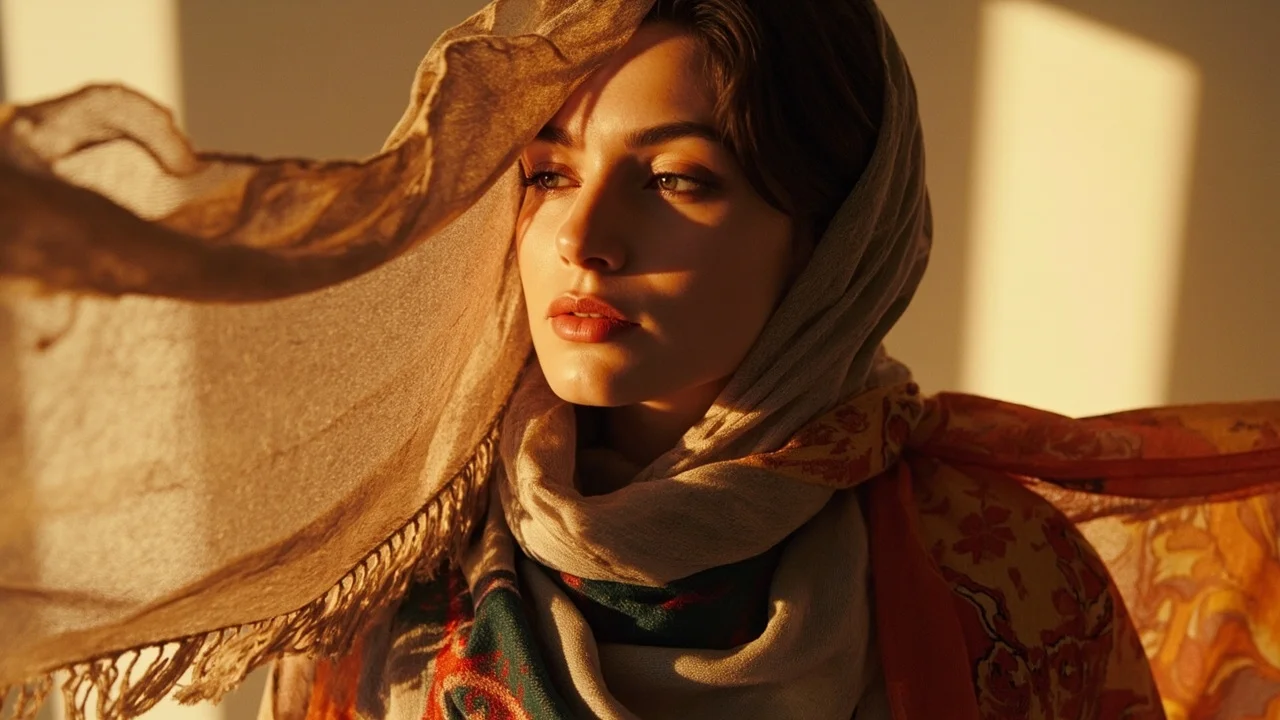
Key market segments and growth drivers in the Women Fashion Scarf Shawl sector.
2. Market Analysis
The global scarves and shawls market is projected to reach $56.37 billion by 2034, up from $26.22 billion in 2025, according to two separate industry analyses that converge on a CAGR of approximately 7.7%. In 2026 alone, the market is expected to expand to $28.04 billion, a 6.9% year-over-year increase. Three primary growth drivers underpin this trajectory. First, rising per capita income in India and China—where scarf-wearing is deeply cultural—is pushing demand for premium materials like pashmina and mulberry silk. Second, the seasonality of fashion cycles creates repeat purchase behavior: the average female consumer in Europe buys 2.7 scarves per year, often replacing last season's colors with trending hues. Third, the proliferation of social commerce and influencer marketing has turned the scarf into a 'digital-first' product. Instagram and TikTok tags for #scarfstyle grew over 300% between 2022 and 2025, directly driving e-commerce sales. Retailers are responding by allocating more floor space to accessories; in the U.S., department stores reported a 15% increase in scarf SKUs for fall 2025. The Asia-Pacific region contributes the largest revenue share (38% in 2025), followed by Europe at 30%. Growth is fastest in the Middle East and Africa, where modest fashion trends sustain high demand for shawls and abaya wraps. For B2B buyers, the takeaway is clear: sourcing capacity must scale alongside consumer appetite, and early verification of supplier quality—especially for dye fastness and fiber composition—will separate winning assortments from inventory write-offs.
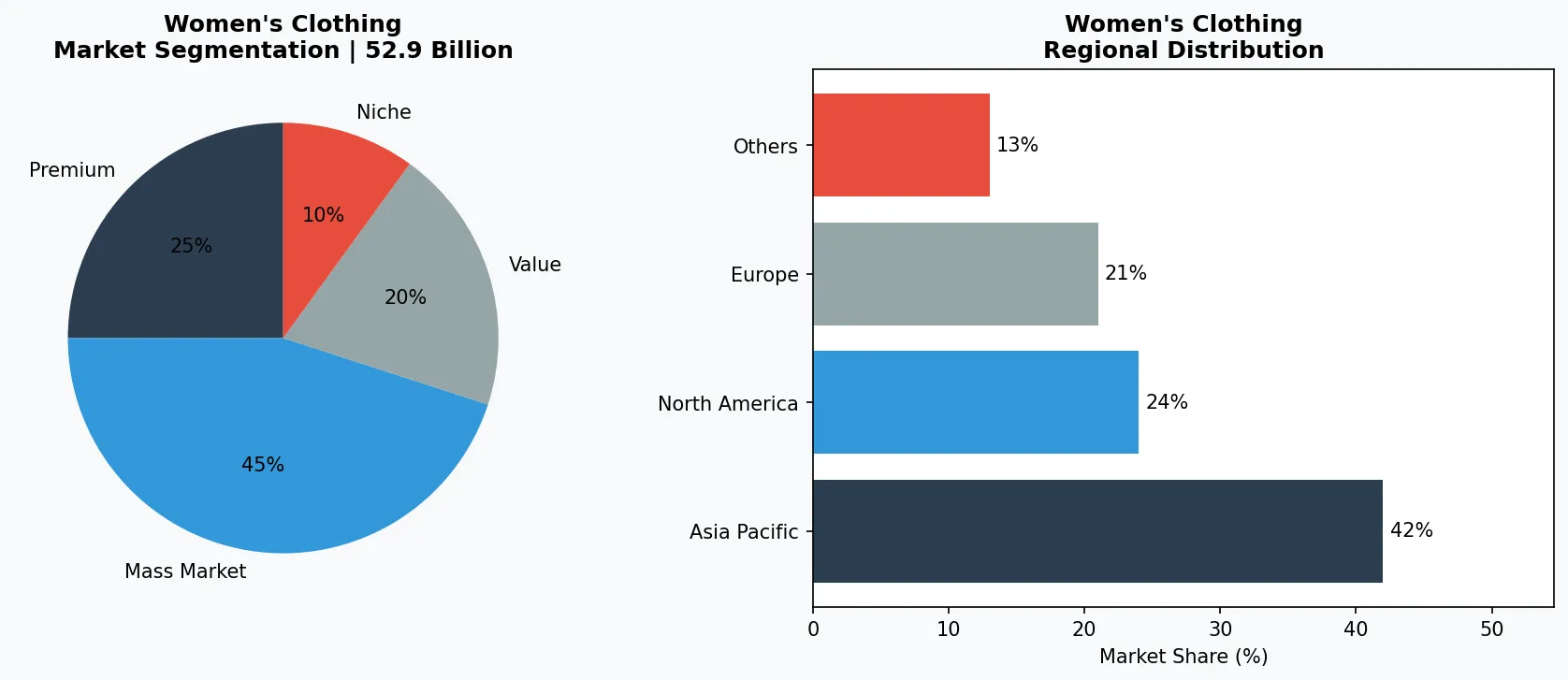
Market segmentation and regional distribution analysis for Women Fashion Scarf Shawl.
3. Product Categories
Women's fashion scarves and shawls break into three distinct product categories, each with its own sourcing and trend dynamics.
Luxury Silk Carrés
Are the pinnacle of the segment. These square silk scarves, often hand-rolled and printed with intricate patterns, command retail prices of $200 to $1,000. They are typically produced in Como, Italy, or Lyon, France, using heritage printing techniques. For 2026, limited-edition artist collaborations are driving scarcity, and retailers like Net-a-Porter report that scarves with 'art collaboration' labels sell out 40% faster.
Cashmere Wraps and Pashminas
Occupy the mid-to-premium tier. Blended with wool or modal, these wraps offer warmth without weight. The trend toward oversized silhouettes has pushed demand for pashminas wider than 70 cm. Suppliers in Nepal and China dominate this category, with wholesale prices ranging from $15 to $60 for blended versions. Quality hinges on fiber density—retailers should demand third-party lab reports confirming pashmina content (minimum 70% cashmere).
Lightweight Printed Fashion Scarves
Make up the mass-market base. These polyester or viscose scarves, often digitally printed, retail between $10 and $40. Fast-fashion brands replenish these every 3–4 weeks using on-demand digital printing, which reduces minimum order quantities (MOQs) to 100 pieces per design. Zara and H&M have adopted this model extensively, but for smaller buyers, working with aligned factories in Turkey or Bangladesh offers competitive pricing—provided colorfastness meets ISO 105-C06 washing standards.
Luxury Silk Carrés
Hand-rolled hem silk squares, typically 90x90 cm. Used by heritage brands for seasonal capsule collections. Retail prices $200–$1,000. Key sourcing regions: Italy (Como) and France (Lyon).
Cashmere Wraps and Pashminas
Blended cashmere-wool wraps in oversized shapes (70x200 cm). Popular in winter and resort wear. Wholesale $15–$60. Sourcing hotspots: Nepal and Inner Mongolia.
Lightweight Printed Fashion Scarves
Polyester, viscose, or modal scarves with digital prints. Fast-fashion model with 3–4 week replenishment cycles. Typical retail $10–$40. Key suppliers in Turkey and Bangladesh.
4. Leading Players
The competitive landscape in women's fashion scarves and shawls can be mapped to three archetypes.
Heritage Luxury Houses
Control the high-end silk supply chain. Companies operating in this space invest heavily in exclusive textile mills and artist partnerships; their strategy is to release seasonal capsule collections with limited distribution. By maintaining scarcity, they protect pricing power—a single scarf can generate brand buzz that lifts entire apparel lines.
Fast-Fashion Trend Replicators
Operate on speed and volume. These players—think major global retailers with private-label divisions—monitor social media for emerging patterns (e.g., leopard print, ombre dye) and rush samples to factories within 10 days. Their competitive advantage is vertical integration: they own or tightly control factories in Bangladesh, Vietnam, and Turkey, enabling lead times as short as 3 weeks. For 2026, they are betting on cobalt blue and midnight navy as the next color wave, having already placed bulk orders for polyester-cotton blends in those shades.
Verticalized Manufacturer-Retailers
Are a growing force, particularly in India and Nepal. These firms control everything from raw cashmere sourcing to retail e-commerce storefronts. By cutting out middlemen, they offer B2B buyers direct access at margins 15–20% better than traditional importers. Their risk is inconsistency in finishing quality; Verity Rank's supplier verification data shows that 12% of shipments from small Nepalese workshops fail EU chemical compliance tests. For buyers, the strategic move is to partner with mid-tier players that have both scale and certification (OEKO-TEX, GOTS) rather than chasing the cheapest unit price.
Heritage Luxury Houses Controlling Silk Supply Chains
Invest in exclusive textile mills and artist collaborations, releasing limited-edition capsule collections to maintain scarcity and premium pricing. They prioritize craftsmanship and brand prestige over volume.
Fast-Fashion Trend Replicators with Vertical Integration
Own or control factories in Bangladesh, Vietnam, and Turkey, enabling 3-week lead times from trend detection to shelf. They leverage social media signals to place bulk orders on emerging colors like cobalt blue.
Verticalized Manufacturer-Retailers from South Asia
Direct-to-buyer manufacturers in India and Nepal that combine raw material sourcing (cashmere, silk) with e-commerce retail. Offer 15–20% better margins than traditional importers, but require rigorous quality verification.
5. Market Trends
1. COLOR SHIFT TO MIDNIGHT NAVY AND COBALT BLUE
According to shawl trends 2026 analysis, these two hues are replacing traditional black and burgundy across all market segments. The reason is versatility: navy complements both neutral winter coats and bright summer dresses. Major online retailers have reported a 35% increase in search volume for cobalt blue scarves since Q3 2025. Buyers should adjust 2026 Q1 orders to include at least 40% navy and cobalt SKUs.
2. SUSTAINABLE MATERIAL BLENDS
The push for eco-friendly accessories is driving demand for scarves made from recycled polyester, organic cotton, and TENCEL™ lyocell. Prada launched a recycled nylon scarf in 2024, and mainstream fast-fashion chains are following. Why it matters: younger consumers (Gen Z) say 'sustainability' is a top-three factor in accessory purchases. Suppliers with GRS (Global Recycled Standard) certification gain preferential placement on platforms like Zalando.
3. EMBROIDERED AND TEXTURED DESIGNS
2026 trends highlight embroidered shawls as a key driver of demand, particularly in the mid-market. Hand-embroidery on shawls—often from Kashmir or Gujarat—adds perceived value without massive material cost. Retailers in the Middle East and Europe are stocking these at $80–$150 retail. The trend also helps differentiate China-manufactured machine-embroidered copies; B2B buyers must verify origin to avoid mislabeling.
6. Regional Markets
Asia-Pacific: Manufacturing Powerhouse and Growing Consumer Base
Home to 38% of global scarf sales. China and India lead production; rising middle-class demand for premium materials drives consumption. Nepal is the key hub for hand-embroidered pashmina.
Europe: Heritage Demand and Strict Compliance Rules
Contributes 30% of market revenue. High demand for silk carrés and cashmere wraps, but regulations (REACH, OEKO-TEX) force buyers to vet suppliers rigorously. Over 60% of retailers require certification.
North America: Mid-Market Growth via Social Commerce
Fastest-growing region for printed fashion scarves. TikTok and Instagram drive impulse purchases. Retailers are expanding private-label scarf lines to capitalize on $30–$80 price points.
7. Investment Outlook
Two concrete opportunities emerge for B2B buyers. First, the rise of direct-to-consumer (DTC) branded scarf collections on Shopify and TikTok Shop. By partnering with a verified supplier who offers private label of cashmere wraps in trending colors, retailers can launch their own label with MOQs as low as 500 units. Second, the premium modest-wear segment in the Middle East and Southeast Asia is undersupplied: high-quality maxi shawls in neutral tones with subtle metallic threads are selling at $120–$180 retail with minimal competition. The primary risk is the growing glut of ultra-cheap polyester scarves flooding the market from unbranded Chinese factories. These scarves retail for under $5, undercutting average selling prices and pressuring margins. Buyers who focus on certified sustainable materials or heritage craftsmanship will maintain pricing power. Avoid competing on price alone; instead differentiate through verified quality—fiber test reports, colorfastness data, and ethical manufacturing certifications are becoming non-negotiable for top retailers.
Strategic Considerations:
- DTC Private Label Scarves: Partner with verified suppliers for cashmere wraps in trending colors; launch own label with MOQs as low as 500 units on Shopify or TikTok Shop.
- Premium Modest-Wear Shawls: Target undersupplied Middle East and Southeast Asia market with maxi shawls in neutral tones and subtle metallic threads, retailing $120–$180 with limited competition.
- Ultra-Cheap Polyester Glut: Unsustainable price pressure from unbranded polyester scarves retailing under $5 threatens margins; avoid by focusing on certified sustainable or heritage materials.
- Supply Chain Compliance Gaps: 12% of Nepalese workshop shipments fail EU chemical tests; invest in third-party fiber and colorfastness labs before placing bulk orders.
Frequently Asked Questions
Make Informed Decisions in the Women Fashion Scarf Shawl Market
Product quality and sourcing integrity directly impact business outcomes. Discover how Verity Rank's verification platform helps industry participants source with greater confidence.
Contact Verity Rank TodayFurther Reading: Explore additional market intelligence from Grand View Research and Mordor Intelligence.
This article is for informational purposes only, based on publicly available industry data and market reports as of 2026-06-19. All market figures are estimates and may vary from actual results.