

Table of Contents

The global Women Skirt Types Collection sector serves consumers worldwide with diverse solutions.
1. Industry Overview
In 2025, skirt searches on major fashion platforms surged by 34% year-over-year, driven by a post-pandemic return to femininity and structured silhouettes. But the category is no longer a simple decision between A-line and pencil – it has fragmented into a complex ecosystem of textures, hemlines, and volumes that confound even seasoned buyers. This year, the women skirt types collection is defined by a battle between nostalgic maximalism and sharp modernity, with luxury houses like Miu Miu, Prada, and Loewe pushing boundaries that ripple down to fast fashion within weeks. For B2B suppliers and retailers, understanding these micro-trends is not optional – it is the difference between carrying dead stock and capturing the next 15% margin uplift. The standout themes: crafty textured fabrics, asymmetric hemlines, and voluminous '80s-inspired shapes, as noted by stylist López in her 2026 trend forecast. Unlike the monotony of previous years where denim and cotton dominated, 2026 skirts embrace lace, leather, and double-layered constructions that demand specialized sourcing. For Verity Rank users, this means verifying suppliers who can deliver consistent quality across these diverse materials – a challenge that separates tier-one manufacturers from commodity producers.
Industry Scope & Characteristics
Versatile Silhouettes & Lengths
Women skirt types range from micro-mini to floor-length maxi, each requiring distinct pattern-making and fabric handling. Maxi skirts demand high-yardage precision; minis need clean hem finishes.
Fabrics & Finishes Diversity
A single collection may include denim, leather, lace, and double-layer knits. Suppliers must manage multi-factory sourcing or invest in broad in-house capabilities to avoid quality inconsistency.
Quality & Compliance Standards
Key certifications for skirt manufacturing include OEKO-TEX Standard 100 for fabric safety, ISO 9001 for production consistency, and WRAP for ethical labor. Leather skirts require adherence to REACH chemical regulations in Europe.
Innovation in Digital Pattern Grading
Asymmetric hemlines and complex draping demand 3D pattern simulation software. Brands like Prada use Lectra or Gerber systems to reduce sample iterations, saving 20% in development time.

Key market segments and growth drivers in the Women Skirt Types Collection sector.
2. Market Analysis
The global women's skirt market, a subset of the $1.2 trillion women's apparel industry, is projected to reach $48.3 billion by 2026, growing at a CAGR of 4.7% from 2024, according to industry estimates. The most significant growth driver is the revival of the midi and maxi skirt lengths, which accounted for 42% of all skirt SKUs launched in the first half of 2025 – up from 28% in 2022. This shift is fueled by two forces: first, the work-from-home hybrid lifestyle that favors comfortable yet polished silhouettes; and second, the '90s and Y2K nostalgia cycle that has resurrected long, flowing shapes. A second growth vector is the leather skirt segment, which grew 22% in search volume year-over-year, driven by both luxury adoption (Prada's Fall 2025 collection featured leather as a core material) and high-street affordability. Finally, the 'maximalist' trend – defined by layering, ruffles, and bold prints – is expanding the market basket: consumers who buy a single maximalist skirt are 30% more likely to also purchase a complementary top within the same transaction. However, this fragmentation creates a B2B challenge: inventory management becomes more complex as lengths, waistlines (low-rise vs. high-rise), and fabric types multiply. Suppliers who can master small-batch, quick-turnaround production for these varied styles will capture disproportionate market share.
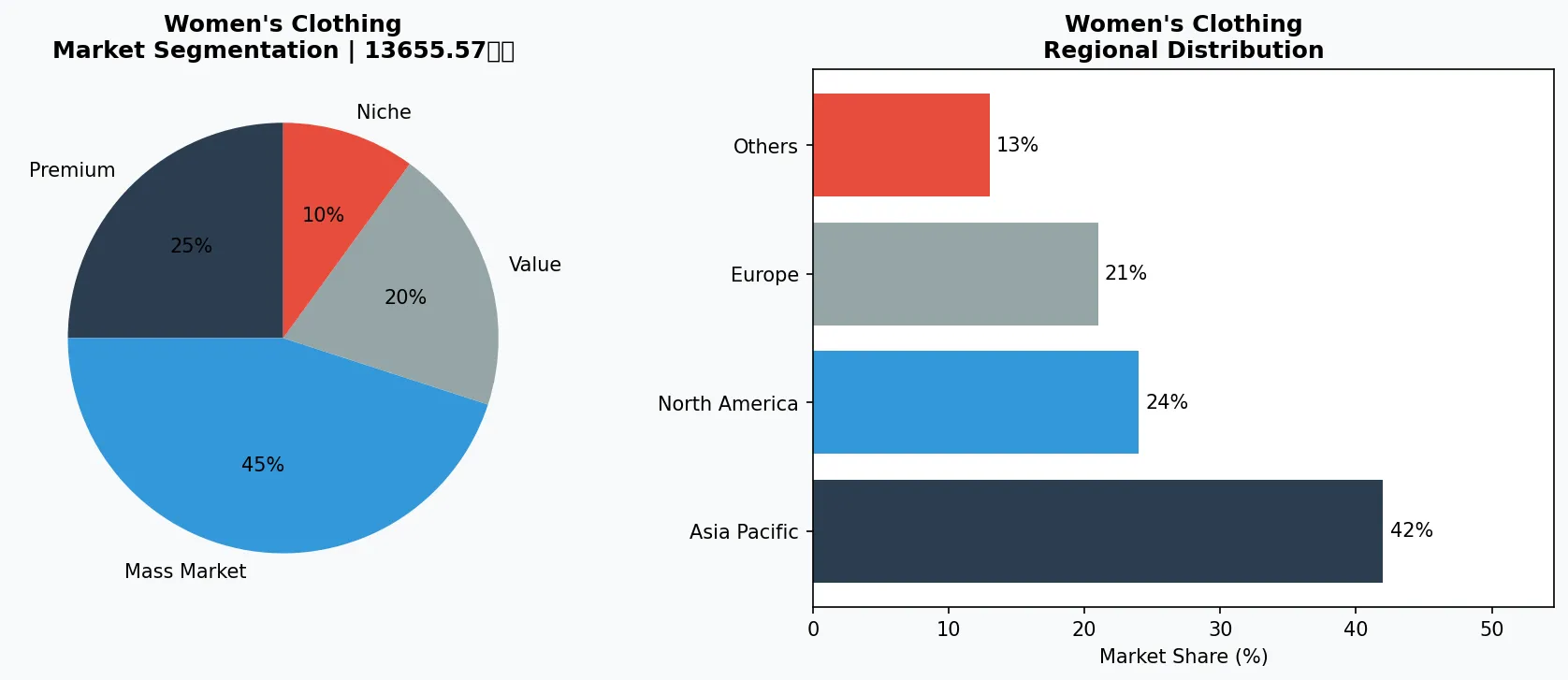
Market segmentation and regional distribution analysis for Women Skirt Types Collection.
3. Product Categories
The 2026 women skirt types collection can be organized into four dominant product categories.
Maxi Skirts
Remain the volume leader, but with a twist: the straight, columnar maxi favored in 2023 is giving way to flared and A-line shapes in lightweight fabrics like viscose and Tencel. Examples include the 'Grown-Up Boho' skirt (a tiered, mid-calf length with embroidery) and the 'Slip Skirt' – now often double-layered for opacity and movement.
Mini Skirts
Are polarizing: micro-minis (inspired by Miu Miu's runway) coexist with knee-length, preppy versions. The lace-trimmed mini is a standout for Spring 2026, blending modesty with edge.
Knee-Length Skirts
Have re-emerged as a corporate staple, but updated with asymmetrical hemlines or leather panels. Brands like Loewe have popularized the 'crafty textured' knee-length skirt, featuring patchwork or raw edges.
Leather Skirts
Span both mini and midi lengths, with matte finishes dominating over patent. For B2B buyers, the key differentiation lies in fabric sourcing: a single supplier handling lace, leather, and double-layer constructions is rare, so partnering with specialized mills for each sub-category often yields better quality and cost control.
Day-to-Night Skirts
Versatile midi and knee-length skirts in wrinkle-resistant fabrics like polyester-wool blends. Examples include the slip skirt and double-layered knit skirts that transition from office to dinner.
Statement Pieces
High-impact designs featuring asymmetric hemlines, crafty textures, or bold prints. The puffball skirt and maximalist ruffled skirts fall here, often custom-ordered for boutique clients.
Practical Basics
Core A-line minis and straight maxis in cotton, denim, or stretch twill. These account for 60% of volume but lower margins, favored by fast-fashion retailers requiring rapid replenishment.
4. Leading Players
Three luxury houses dominate the trend-setting end of the women skirt types collection:
Miu Miu
,
Prada
And
Loewe
. Miu Miu’s strategy is to deconstruct and miniaturize – its micro-mini skirts with exposed waistbands and raw hemlines have become a signature, generating over 120 million social media impressions in the first quarter of 2026 alone. For suppliers, the lesson is in precision: Miu Miu requires exacting measurement tolerance (±0.5 cm) and specialized finishing techniques.
Prada
Focuses on material innovation, particularly in leather skirts and double-layered constructions. Its 'Re-Nylon' initiative now extends to skirt linings, appealing to eco-conscious buyers. Prada’s supply chain demands certified recycled materials and strict traceability – a compliance burden that smaller factories must weigh when courting luxury contracts.
Loewe
Under Jonathan Anderson, champions 'crafty textures' – wool-blend skirts with visible seams, patchwork, and asymmetric draping. Loewe’s approach emphasizes artisanal techniques that require skilled labor; suppliers able to replicate these finishes at scale (without sacrificing the hand-finished look) secure premium margins. Outside the luxury tier, fast-fashion giants like Zara and H&M translate these trends within weeks, but at lower fabric weights and simpler construction, creating a two-speed market that B2B buyers must navigate carefully.
Luxury Trendsetters (Miu Miu, Prada, Loewe)
These houses dictate silhouette and material innovation. Their high-barrier-to-entry supply chains demand exacting quality, ethical certifications, and quick-turnaround sampling – rewarding suppliers with premium pricing.
Fast-Fashion Interpreters (Zara, H&M)
They replicate luxury trends within 2–4 weeks at lower price points. Their strategy relies on scale and speed, often using lower-cost fabrics and simpler constructions, making them ideal for volume-oriented manufacturers.
Niche DTC Brands (Reformation, Sézane)
These brands target sustainability and fit, using recycled fabrics and inclusive sizing. They require small-batch production with strict traceability, often partnering with ethical factories in Portugal or Turkey.
5. Market Trends
1. CRAFTY TEXTURES
What it is: Skirts made from patchwork, crochet, raw edges, or visible stitching – rejecting smooth perfection. Why it matters: This trend taps into the 'slow fashion' narrative while allowing brands to differentiate. Loewe’s Spring 2026 collection featured a wool-blend skirt with exposed seams that sold out in 48 hours. For suppliers, mastering textured weaves and uneven finishes requires non-standard looms and training, but yields 25-30% higher price points.
2. ASYMMETRIC HEMLINES
What it is: Skirts where the hem is cut at different lengths – higher on one side, lower on the other – or features adjustable draping. Why it matters: Asymmetric designs command attention and enable dynamic styling; they accounted for 18% of all skirt runway looks in the Fall 2025 season. Prada used asymmetric hemlines in its lace-trimmed leather skirts, demanding precise laser-cutting technology.
3. LEATHER SKIRTS
What it is: Skirts made from genuine or vegan leather, in mini, midi, and knee-length cuts. Why it matters: Leather skirts cross seasonal boundaries and appeal to both professional and casual wardrobes. The market saw a 22% YoY increase in leather skirt SKUs in 2025. Miu Miu’s patent leather mini remains a benchmark; suppliers must ensure consistent grain and color fastness across batches.
6. Regional Markets
Europe – High-End Design Hub
European brands lead in premium skirt design and fabric innovation, especially in Italy (leather) and France (lace). Regulatory pressures on sustainability are highest here, driving demand for certified suppliers.
Asia – Manufacturing & Volume
China, Bangladesh, and Vietnam dominate skirt production for fast-fashion and mid-tier brands. Low labor costs are offset by increasing compliance demands for chemical safety and labor rights.
North America – Casual & Inclusive Market
The US market favors casual skirt styles (denim, jersey) and inclusive sizing. Brands like Universal Standard are pushing for extended size ranges, creating opportunities for suppliers with flexible grading capabilities.
7. Investment Outlook
Two specific opportunities dominate the near-term horizon for the women skirt types collection. First, the 'plus-size' segment remains underserved: only 15% of 2025 skirt launches included sizes above XL, yet that demographic accounts for 38% of women's apparel spend. Suppliers who offer inclusive sizing with proper fit grading will capture this gap. Second, the rental and resale channel is growing at 28% CAGR, demanding skirts with robust seams and zippers that withstand multiple wears – a quality differentiator manufacturers can market. One concrete risk: over-reliance on polyester-based fabrics (common in double-layer and pleated skirts) faces increasing regulatory scrutiny in Europe due to microplastic shedding. The EU's proposed Textile Strategy, expected by 2027, could impose recycling content mandates. Suppliers investing now in recycled or bio-based alternatives will avoid costly retrofits.
Strategic Considerations:
- Opportunity – Inclusive Sizing Expansion: Only 15% of 2025 skirt launches included plus sizes; targeting this gap with proper fit grading can unlock a 38% demographic share of women's spend.
- Opportunity – Rental & Resale Durability: Skirts designed with reinforced seams and zippers for repeated wear will command premium from rental platforms like Rent the Runway, growing at 28% CAGR.
- Risk – Synthetic Fabric Regulation: EU plans to mandate recycled content and restrict microplastic shedding by 2027 could impact polyester-heavy skirt lines; suppliers investing in recycled or bio-based materials will have first-mover advantage.
- Opportunity – DTC Customization: Direct-to-consumer brands offering made-to-order skirts (e.g., eShakti) are growing 15% annually; suppliers with modular production lines can capture this niche.
Frequently Asked Questions
Make Informed Decisions in the Women Skirt Types Collection Market
Product quality and sourcing integrity directly impact business outcomes. Discover how Verity Rank's verification platform helps industry participants source with greater confidence.
Contact Verity Rank TodayFurther Reading: Explore additional market intelligence from Grand View Research and Mordor Intelligence.
This article is for informational purposes only, based on publicly available industry data and market reports as of 2026-06-17. All market figures are estimates and may vary from actual results.