

Table of Contents

The global Wrist Watch Brands Types sector serves consumers worldwide with diverse solutions.
1. Industry Overview
The global watch market is set to hit $132.22 billion in 2026, yet the real story lies in the fragmentation of brand types—from heritage Swiss maisons to disruptive microbrands and smartwatch giants. Wrist watch brand types today are not just about price tiers; they represent competing philosophies of craftsmanship, technology, and distribution. At one end, luxury watchmakers guard centuries-old traditions with hand-finished mechanical movements; at the other, microbrands leverage direct-to-consumer models and social media to challenge incumbents on value. Meanwhile, smartwatch brands have carved out a functional segment that is reshaping how consumers define a 'watch.' This bifurcation is accelerating: the market is projected to grow from $132.22 billion in 2026 to $183.09 billion by 2031, a CAGR of 6.73%, driven by rising disposable incomes in Asia and a renewed appetite for precious metals. For B2B buyers—retailers, distributors, and private-label partners—understanding these brand types is critical to sourcing decisions. A single misstep in supplier verification can mean missing the microbrand wave or overpaying for a fashion label that lacks horological heft. VerityRank’s analysis breaks down the ecosystem, backed by real market data and the movements that will define 2026.
Industry Scope & Characteristics
Movement Technology Diversity
Wrist watch brand types span quartz, automatic, manual, and smart movements. Mechanical movements (automatic and manual) require high-precision assembly and COSC certification for chronometers, while quartz relies on battery standards (ISO 7750) and low-cost Asian supply chains.
Supply Chain Fragmentation
Luxury brands often vertically integrate movement and case production in Switzerland; microbrands and fashion brands outsource to Chinese or Japanese OEMs. This split requires B2B buyers to verify country of origin and raw material sourcing for gold, steel, and sapphire crystals.
Certification Compliance
Quality standards vary by type: luxury watches require COSC or Geneva Seal; fashion watches need water resistance (ISO 22810) and lead-free materials (RoHS). Microbrands may lack formal certification—VerityRank enables buyers to verify third-party testing reports.
Innovation in Materials
R&D focuses on ceramic bezels, titanium cases, and anti-magnetic movements (e.g., Rolex Milgauss). Microbrands experiment with forged carbon and bronze. Smartwatches push biometric sensors. B2B buyers should track material patents to assess long-term durability.
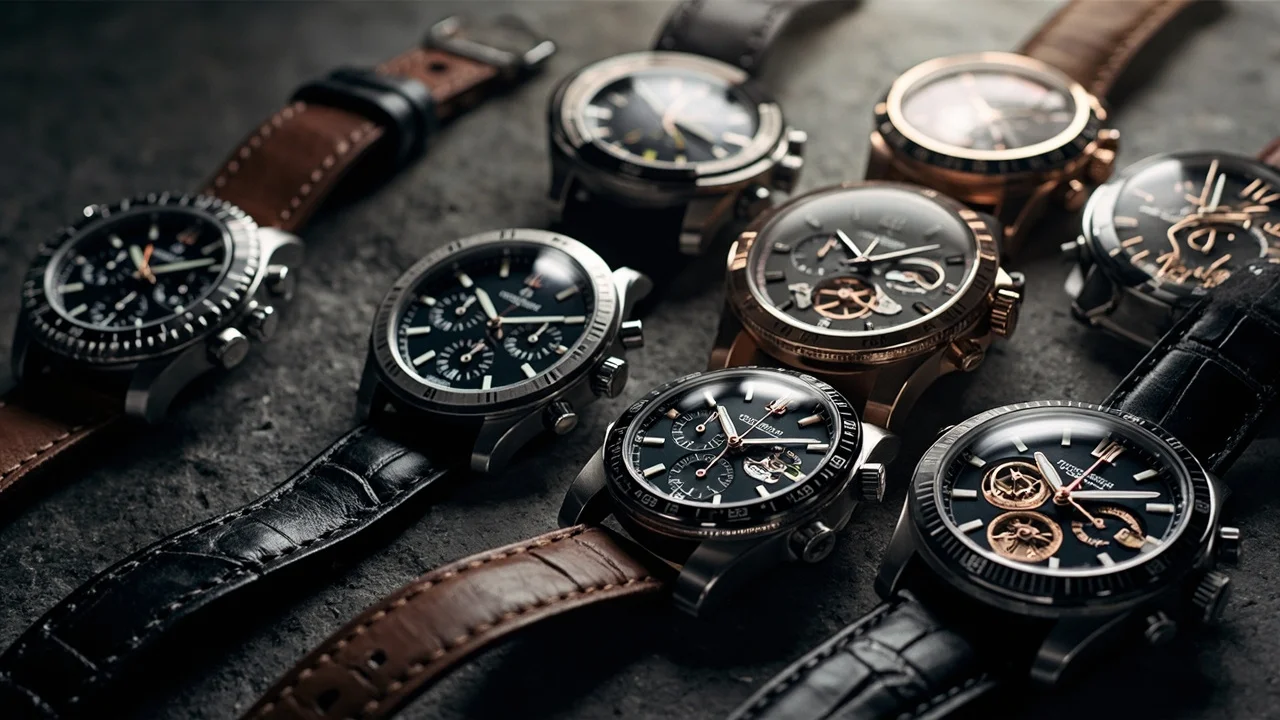
Key market segments and growth drivers in the Wrist Watch Brands Types sector.
2. Market Analysis
The wrist watch brand types market is not monolithic. The luxury segment alone is forecast to leap from $62.35 billion in 2026 to $119.48 billion by 2034, a 8.47% CAGR, according to industry projections. Gold is the accelerant: at Watches and Wonders 2025, gold dominated new releases, with brands like Rolex and Patek Philippe doubling down on precious metal cases. The Middle East & Africa region, fueled by high demand for gold timepieces, is expected to see a 3.7% CAGR from 2026 to 2033. This gold rush is more than aesthetic—it signals a flight to tangible value in uncertain economies. Meanwhile, microbrands occupy a smaller but faster-growing slice. Borrowing from the 'Just One More Watch' community, which ranked the world’s 25 best microbrands, these independents use lean supply chains and crowdfunding to capture enthusiast wallets. The overall watch market CAGR of 6.73% masks this intra-category divergence: luxury and gold pull the average up, while lower-cost quartz fashion brands face pressure from smartwatches. Growth drivers are threefold: first, the post-pandemic luxury rebound that lifted Heritage maisons; second, the microbrand democratization via Instagram and YouTube; third, the Middle East’s appetite for gold watches, which shows no sign of cooling. For B2B partners, this means diversifying supplier portfolios to include both established luxury houses and nimble microbrands—and verifying their claims through platforms like VerityRank to avoid counterfeit or exaggerated certifications.
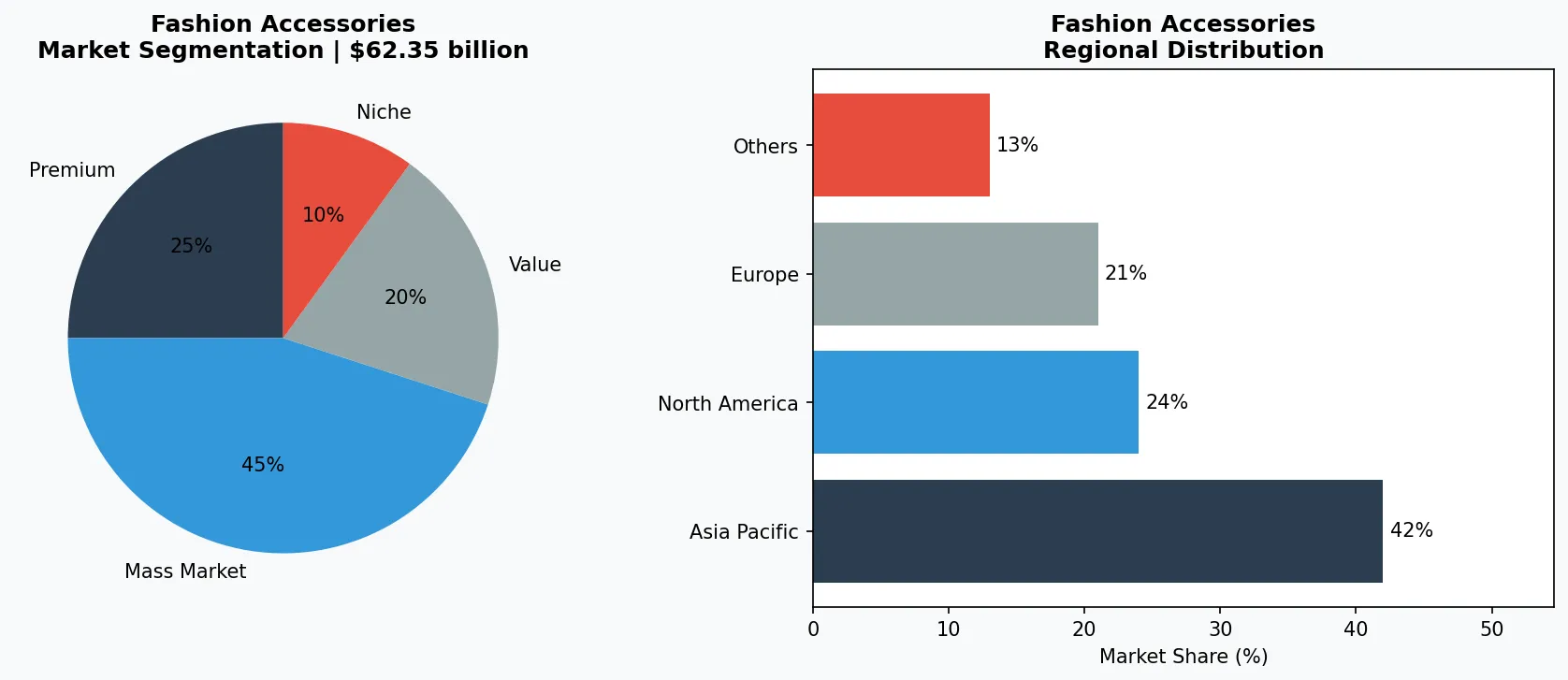
Market segmentation and regional distribution analysis for Wrist Watch Brands Types.
3. Product Categories
Wrist watch brand types can be grouped into three distinct product categories, each with its own sourcing and quality considerations.
Luxury Mechanical Watches
Are the crown jewels: hand-wound or automatic movements, often COSC-certified chronometers, and cases in precious metals. Examples include Rolex Submariner and Patek Philippe Calatrava. These brands command the highest margins but require deep due diligence on movement provenance and Swiss Made labeling compliance.
Fashion & Quartz Watches
Appeal to style-conscious consumers who prioritize design over horology. Brands like Fossil and Michael Kors produce quartz-driven pieces at accessible price points. While unit volumes are high, margins are thinner, and B2B buyers must scrutinize battery standards (ISO 7750) and water resistance ratings (ISO 22810). The risk of gray-market flooding is real.
Smartwatches
Primarily Apple Watch and Samsung Galaxy—are the fastest-growing type by unit sales. They blur the line between accessory and gadget, with software updates creating recurring revenue. For B2B distributors, smartwatches demand expertise in electronics compliance (CE, FCC) and supply chain resilience for chipsets. Each category requires a different verification protocol: movement certification for luxury, material safety for quartz, and wireless standards for smart. VerityRank’s supplier profiles help buyers match brand types to their risk tolerance and market positioning.
Luxury Mechanical (Automated & Hand-Wound)
Includes Rolex Submariner, Patek Philippe Nautilus. Defining features: in-house movements, precious metals, COSC certification, heritage branding. B2B buyers require movement authentication and hallmarking (18K/950 platinum).
Fashion & Quartz
Examples: Fossil, Michael Kors. Quartz movements with branded dials, stainless steel or resin cases. Key verification: battery type (SR626SW), water resistance (3 ATM), and compliance with EU RoHS for nickel release.
Smartwatches & Hybrids
Apple Watch, Samsung Galaxy Watch, plus hybrid mechanical-smart (e.g., Withings). Focus on wireless charging (Qi), FDA-cleared ECG, and IP68 dust/water resistance. B2B distributors need FCC/CE marking and firmware update commitments.
4. Leading Players
Three distinct player archetypes shape the wrist watch brand types ecosystem.
Rolex
Epitomizes the Heritage Luxury Architect: vertically integrated, with in-house manufacturing of movements and cases, it controls every link from raw gold to authorized dealer networks. Its market power is such that secondary prices often exceed retail, creating a premium halo for the entire segment. Rolex’s 2026 strategy centers on gold—its Oyster Perpetual models in yellow gold spiked in demand after Watches and Wonders, confirming the precious-metal trend.
Apple
Is the Tech Disruptor, treating the watch as a health hub and fashion accessory. With the Apple Watch Series 10 expected in 2026, Apple’s focus on wellness sensors (ECG, blood glucose) pressures traditional watch brands to add functionality. For B2B partners, Apple offers standardized margins but no customization—a trade-off between scale and exclusivity.
Microbrands
Represent the Independent Artisan archetype. Brands like Baltic and Zelos (featured in 'Just One More Watch' top-25 lists) operate without retail markups, using Kickstarter and e-commerce to deliver high-spec mechanical watches at sub-$1,000 prices. Their fragility lies in small-batch production and occasional supplier quality lapses. For B2B buyers, microbrands offer high authenticity but require supply chain audits. VerityRank’s verification tools help assess their ISO 3159 movement compliance and delivery reliability.
Heritage Luxury Architect (Rolex)
Vertically integrated, controls from gold smelting to distribution. Its authorized dealer model restricts supply, driving secondary market premiums. B2B buyers benefit from stable pricing but face strict allocation policies and need to verify warranty paperwork.
Tech Disruptor (Apple)
Turns watch into a health platform with recurring software revenue. B2B partnerships are strictly through Apple's wholesale program; customization is limited to bands. Verification focuses on serial number authenticity and cellular carrier compatibility in target regions.
Independent Artisan (Microbrands like Baltic, Zelos)
Direct-to-consumer via Kickstarter and own webstores. Small batches, high design flexibility. B2B buyers can negotiate exclusive models but must verify movement sourcing (Seiko NH35 vs. Miyota 9000) and case water resistance through independent tests.
5. Market Trends
1. GOLD PREMIUMIZATION
At Watches and Wonders 2025, gold accounted for over 60% of new luxury releases, a spike driven by consumer demand for tangible assets. Brands are shifting from steel to gold cases, even in entry-level luxury. Why it matters: gold watches command higher margins and attract B2B buyers targeting Middle East markets. Rolex’s gold Oyster Perpetual line exemplifies this trend, with prices up 15% year-over-year.
2. MICROBRAND DEMOCRATIZATION
The 'Just One More Watch' video featuring the World’s 25 Best Microbrands garnered 338K views, signaling a community-driven shift. Microbrands now bypass traditional distribution, offering B2B partners direct wholesale. Why it matters: B2B buyers can source unique, limited-run models with lower minimum order quantities, but must verify assembly quality and movement certifications.
3. MIDDLE EAST GOLD HUNGER
The 3.7% CAGR in MEA from 2026 to 2033 is fueled by gold watch demand. Why it matters: B2B buyers should target regional distributors with gold-heavy portfolios and ensure hallmarking compliance (e.g., Dubai Good Delivery standards). This trend also raises the risk of counterfeit gold watches, making supplier verification essential.
6. Regional Markets
Middle East & Africa: Gold Watch Epicenter
Driven by 3.7% CAGR, demand for 18K-24K gold watches and diamond-set pieces is highest. B2B buyers must ensure Dubai Good Delivery hallmarking and avoid counterfeit gold by auditing supplier smelting certificates.
Switzerland: Luxury Heritage Hub
Home to Rolex, Patek, Omega. Swiss Made label requires 60% manufacturing cost in Switzerland. B2B partners need to verify component origin, especially for movements—genuine ETA or Sellita vs. Chinese clones.
Asia Pacific: Growth Engine for All Types
Rising middle class in China and India fuels demand for both luxury and microbrand watches. B2B buyers targeting Asia must navigate import duties and anti-counterfeit labeling (e.g., China's GB standards for watch cases).
7. Investment Outlook
Two opportunities stand out. First, B2B buyers can capitalize on the microbrand surge by acting as regional distributors for top-25 microbrands. Low entry costs and high enthusiast loyalty promise healthy margins if suppliers are verified for movement accuracy (COSC) and material purity. Second, luxury gold watches offer a hedge against economic uncertainty—partnering with Swiss suppliers that guarantee 18K gold sourcing can lock in premium pricing through 2030. The primary risk is smartwatch encroachment. As health-tech features commoditize timekeeping, traditional watch brands may lose entry-level market share. B2B buyers should balance portfolios by mixing gold luxury, microbrand mechanical, and smartwatch segments. VerityRank enables this balance by providing audited supplier profiles, certification checks (ISO 3159, COSC, hallmarking), and real-time delivery ratings, ensuring every wrist watch brand type you source is authentically represented.
Strategic Considerations:
- Microbrand Wholesale Distribution: Partner with top-25 microbrands (per 'Just One More Watch') for exclusive territories; verify their COSC or Miyota movement certifications to ensure quality before committing to repeat orders.
- Gold Watch Private Labeling: Collab with Swiss suppliers to create limited-edition gold watches targeting Middle East buyers—ensure hallmarking and 18K purity guarantees to capture 8.47% CAGR luxury growth.
- Smartwatch Cannibalization of Entry-Level Quartz: Fashion quartz brands face margin compression as smartwatches add fashion features (custom faces, straps). Diversify into hybrid mechanical-smart watches or focus on sub-$500 luxury microbrands.
- Gold Price Volatility: Gold watches are sensitive to bullion prices. Hedge by negotiating hedging clauses in supplier contracts or sourcing gold-plated alternatives for lower price points.
Frequently Asked Questions
Make Informed Decisions in the Wrist Watch Brands Types Market
Product quality and sourcing integrity directly impact business outcomes. Discover how Verity Rank's verification platform helps industry participants source with greater confidence.
Contact Verity Rank TodayFurther Reading: Explore additional market intelligence from Grand View Research and Mordor Intelligence.
This article is for informational purposes only, based on publicly available industry data and market reports as of 2026-06-23. All market figures are estimates and may vary from actual results.