











Siemens AG
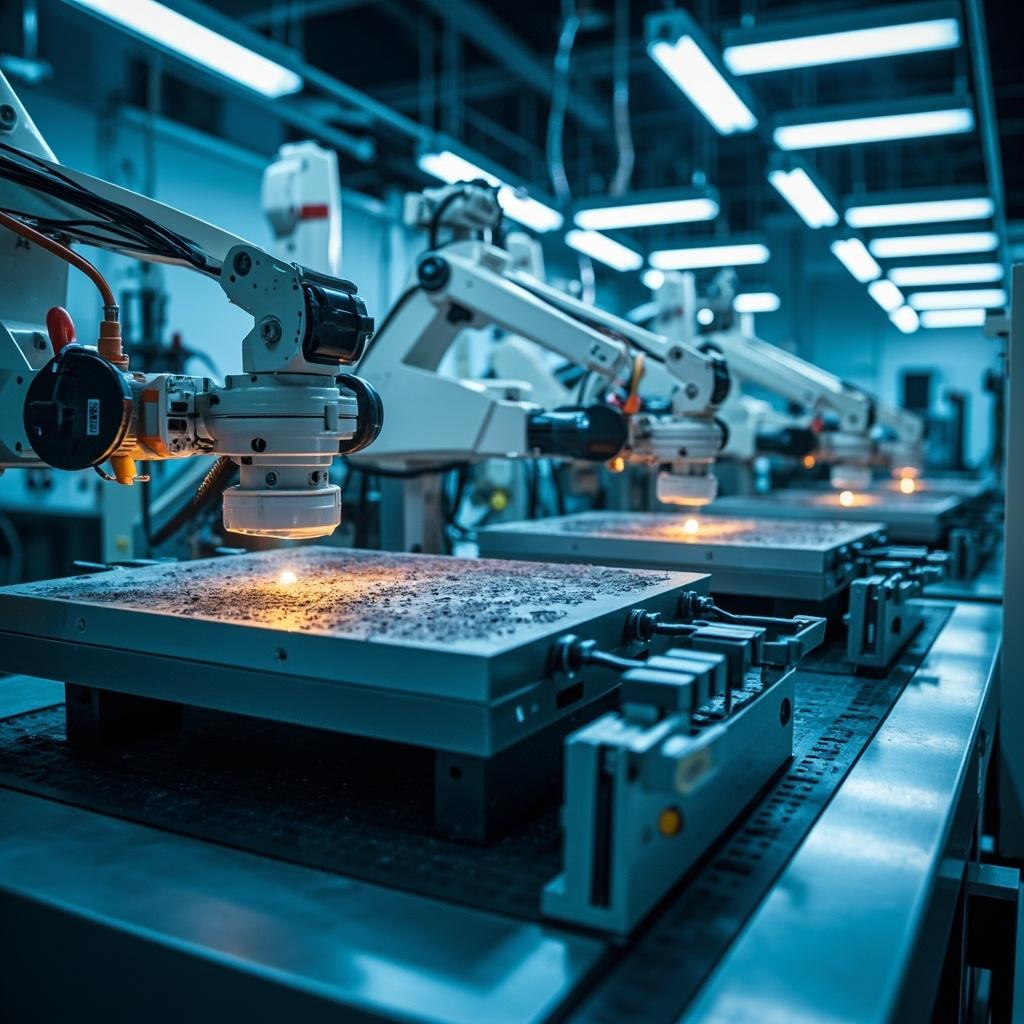
With €78.9 billion in FY2025 revenue and roughly 318,000 employees across more than 170 production bases, Siemens AG stands as the defining force in industrial automation, electrification, and power electronics, headquartered in Munich, Germany. Founded in 1847, the company fuses heavy machinery with industry-leading control software (SIMATIC PLCs, SINAMICS drives, digital twins), operating over 170 production bases worldwide with ~318,000 employees. Reporting revenue of approximately €78.9 billion in FY2025
Brand
Siemens
Founded
1847
Workforce
~318,000
Presence
190+ countries
Facilities
170+ Production Base
Headquarters
Germany
Market
XETRA: SIE
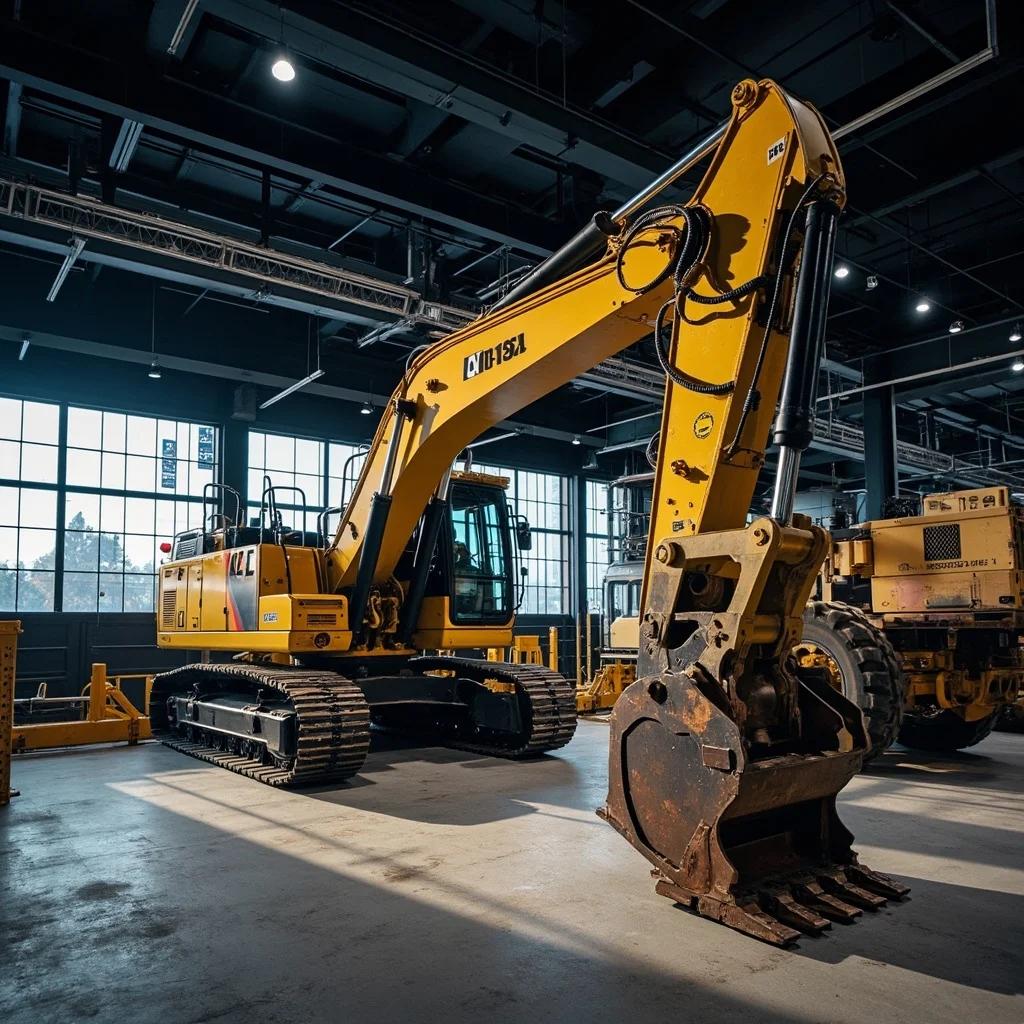
Caterpillar Inc.
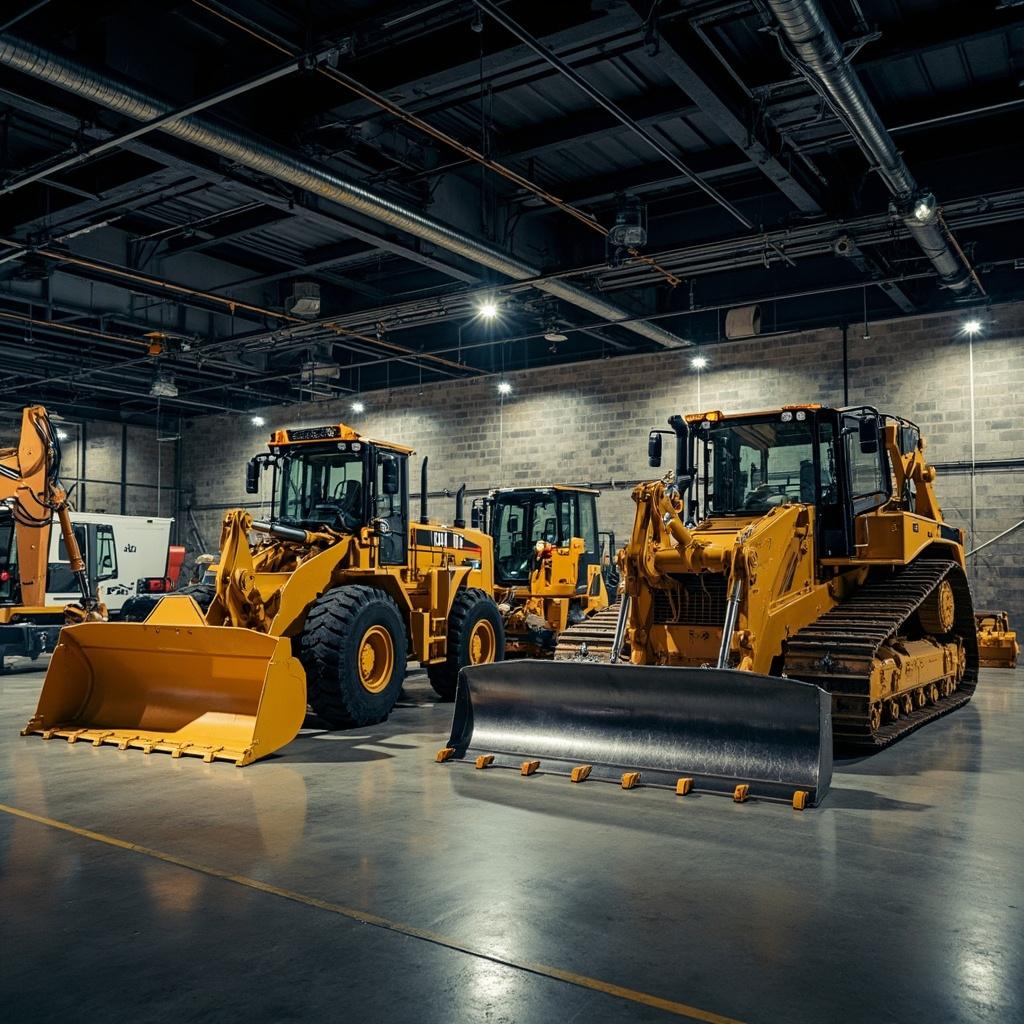
Caterpillar Inc. (CAT) is the undisputed king of global construction and mining equipment, headquartered in Irving, Texas. Founded in 1925, the company autonomously casts engine blocks, precision-machines hydraulic cylinders, and forges ultra-large drive shafts across 180+ global facilities. Reporting record revenue of $67.6 billion in FY2025 with a $63 billion order backlog, Caterpillar operates through 500+ independent dealers in 190+ countries with ~118,000 employees, and its construction industry segment alone generated $37.5 bi…
Brand
Caterpillar (CAT)
Founded
1925
Workforce
118,000
Presence
190+ countries
Facilities
180+ Production Base
Headquarters
United States
Market
NYSE: CAT
Deere & Company
For a grower deciding how to work five thousand acres, the green-and-yellow machine in the shed is less a purchase than a decade-long operating commitment. Deere & Company (John Deere) has built its business around that reality from its Moline, Illinois headquarters — the world's largest agricultural machinery maker by revenue and a growing force in construction equipment. Founded in 1837, the company transformed traditional farming equipment into precision high-tech machinery, independently manufacturing engines, transmissions, and electronic control units…
Brand
John Deere
Founded
1837
Workforce
73,100
Presence
160+ countries
Facilities
100+ factories and facilities worldwide, including 60+ major sites in the US
Headquarters
United States
Market
NYSE: DE
ASML Holding N.V.
ASML Holding N.V. is the sole global supplier of extreme ultraviolet (EUV) lithography systems—the most advanced manufacturing equipment ever created by humanity. Headquartered in Veldhoven, Netherlands, and founded in 1984, ASML manages an ecosystem of 5,100+ Tier-1 suppliers while concentrating on core R&D and final assembly. The company achieved record revenue of €32.7 billion in FY2025 with a 52.8% gross margin, delivering 535 lithography systems. In Q4 2025 alone, it recorded €13.2 billion in new orders (€7.4 billion for next-gen H…
Brand
ASML
Founded
1984
Workforce
~44,000+ across 16 countries
Presence
60+ locations in 16 countries; cleanrooms in Veldhoven, Wilton (US), San Diego, Berlin, Linkou (TW), Hwaseong (KR)
Facilities
5 major assembly & test centers across Netherlands, USA, Taiwan
Headquarters
Netherlands
Market
NASDAQ: ASML
ABB Ltd
ABB Ltd is the global engine of electrification and industrial automation, headquartered in Zurich, Switzerland. Founded in 1988 from the merger of Sweden's ASEA and Switzerland's Brown Boveri, ABB provides foundational power conversion, motion control, and energy distribution equipment across 160+ manufacturing bases with ~111,900 employees in 100+ countries. The company achieved record orders of $36.77 billion in FY2025 with $33.22 billion in revenue and a 19.0% operational EBITA margin, and generated $4.57 billion in free cash flow. ABB …
Brand
ABB
Founded
1988
Workforce
~111,900
Presence
100+ countries
Facilities
More than 160 manufacturing sites worldwide
Headquarters
Switzerland
Market
SIX: ABBN
Daikin Industries, Ltd.
Daikin Industries, Ltd. is the world's leading comprehensive air conditioning and fluorochemicals manufacturer, headquartered in Osaka, Japan. Founded in 1924, Daikin uniquely produces its own refrigerants alongside the compressors and complete systems that use them—a level of vertical integration unmatched in the industry. The company achieved ¥5.01 trillion ($33.5 billion) in FY2025 revenue with ~103,544 employees across 133 production bases and 59 R&D centers in 150+ countries. Its FUSION 30 strategy commits $1.9 billion to next-gene…
Brand
Daikin
Founded
1924
Workforce
~103,544
Presence
150+ countries
Facilities
133 production bases
Headquarters
Japan
Market
TYO: 6367
Komatsu Ltd.
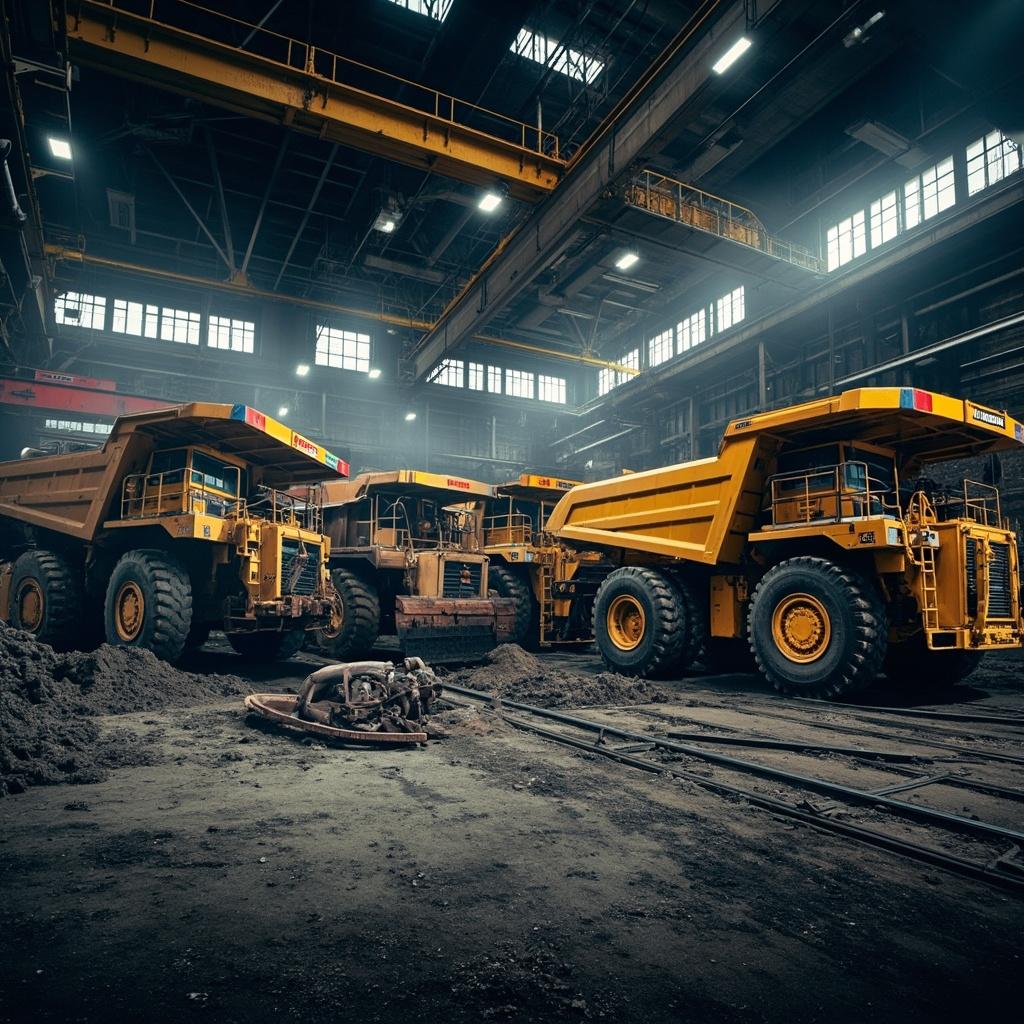
Komatsu Ltd. earned its position where no road reaches — on copper, iron-ore and coal benches that run 24 hours a day, 365 days a year. The Tokyo-based group is one of only two companies worldwide with the scale to equip an entire open-pit operation, from the loading shovel to the autonomous haul truck that carries the ore away. Founded in 1921, the company operates 71 manufacturing bases across 17 countries with ~66,697 employees serving customers in 140+ countries. Komatsu achieved ¥4.13 trillion ($27.8 billion) in FY2025 revenue, with it…
Brand
Komatsu
Founded
1921
Workforce
66,697
Presence
140+ countries
Facilities
71 manufacturing bases across 17 countries
Headquarters
Japan
Market
TYO: 6301
XCMG Construction Machinery Co., Ltd.
With RMB 100.8 billion (about USD 14.2 billion) of revenue in FY2025 and roughly 30,000 employees, XCMG Construction Machinery Co., Ltd. is the largest heavy machinery manufacturer in China and the country's most internationally distributed one, run from Xuzhou in Jiangsu Province. Founded in 1943, XCMG has forcefully risen to global #3 in the KHL Yellow Table 2026, surpassing John Deere with roughly $14.2 billion in construction machinery sales (5.8% global share). The company achieved a historic milestone…
Brand
XCMG
Founded
1943
Workforce
30,485
Presence
190+ countries
Facilities
20+ domestic mega-factories + localized plants in Brazil (140,000m²), Germany, Poland, India, Indonesia
Headquarters
China
Market
SZSE: 000425
Sany Heavy Industry Co., Ltd.
From a small welding-materials workshop founded in Lianyuan, Hunan in 1989, Sany Heavy Industry Co., Ltd. (SANY) grew into one of the twin pillars of China's construction machinery industry, now headquartered in Changsha, Hunan Province. Founded in 1989, SANY operates two WEF-certified Global Lighthouse Factories — a level of unmanned heavy machining extraordinarily rare in traditional industry. The company achieved RMB 89.7 billion ($12.5 billion) in FY2025 revenue, with net profit surging 41.2% to RMB 8.41 billion and operating cash flow …
Brand
SANY
Founded
1989
Workforce
28,469
Presence
180+ countries
Facilities
25 major manufacturing bases with 37 smart factories + 2 WEF Global Lighthouse Factories
Headquarters
China
Kubota Corporation
Kubota Corporation is a century-old Japanese precision manufacturing enterprise, headquartered in Osaka, Japan. Founded in 1890, Kubota has achieved absolute dominance in sub-100-horsepower agricultural machinery and compact urban construction equipment—a highly profitable niche that larger competitors find difficult to match. The company achieved ¥3.01 trillion ($20.2 billion) in FY2024 revenue with ~52,503 employees across 120+ countries. An extraordinary 77% of its revenue comes from outside Japan. Kubota's KVPR transforming robot platfo…
Brand
Kubota
Founded
1890
Workforce
52,503
Presence
150+ countries and regions
Facilities
50+ core manufacturing plants worldwide
Headquarters
Japan
Market
TYO: 6326Frequently Asked Questions
How Do We Generate Our Machinery & Equipment Rankings?
SEC, Frankfurt Stock Exchange, Tokyo Stock Exchange, Shenzhen Stock Exchange, and Shanghai Stock Exchange—encompassing all global markets including China. Second, we measure Category Revenue Concentration (30% weight), quantifying how deeply a company's actual revenue is tied to core machinery classifications versus non-mechanical or consumer electronics diversification, with companies like Siemens and Caterpillar scoring highest due to their pure-play industrial focus.
Third, our Global Supply Chain Depth & Physical Manufacturing Footprint (15% weight) assessment quantifies self-operated processing facilities, core component supply chain control, global employee scale, and country coverage, with severe penalties for OEM-dependent or brand-licensing-only entities—this is why companies like XCMG and SANY with their massive self-operated factory networks score highly despite lower revenue than some competitors.
Fourth, we compute a Technology Moat & Brand Heat Value (15% weight) as a 0–100 composite score incorporating Google search trend data, end-user equipment durability and lifecycle cost evaluations from industrial contractors and mine operators globally, and recent strategic developments including AI investments (e.g., Caterpillar's NVIDIA Physical AI partnership), major M&A (e.g., ABB's $5.375 billion robotics divestiture to SoftBank), and non-core divestitures.
All financial data is cross-referenced against at least three independent sources including official earnings releases, S&P Global Ratings reports, SEC filings, and Tokyo Stock Exchange disclosures. Our rankings are updated semi-annually to reflect the latest financial reporting periods and significant corporate developments.
The final VerityRank Score on a 0–100 scale represents a weighted composite of all four dimensions, not a simple revenue ranking—which explains why companies like ASML (Score 95, revenue $35.6B) rank above ABB (Score 94, revenue $33.22B) despite similar scale, due to ASML's unparalleled technology moat and monopoly position in semiconductor lithography equipment.
What Are the Key Differences Between the Brand and Manufacturer Rankings?
This weighting favors companies with iconic brand identities—like John Deere with its instantly recognizable green-and-yellow livery commanding generational farmer loyalty, and ASML whose name is synonymous with the physical limits of precision manufacturing—even when their product scope is narrower than diversified conglomerates.
The Manufacturer Ranking applies heavier weight to physical production capacity, factory scale, and supply chain control—rewarding companies that operate massive self-owned manufacturing complexes, deeply control core component production, and maintain extensive global plant networks.
This explains why Atlas Copco appears in the Manufacturer Top 10 (for its unparalleled compressed air and vacuum pump production scale across 180+ countries) while being absent from the Brand Top 10, and why ASML (with its narrower but extraordinarily high-value production scope) appears in the Brand ranking but not the Manufacturer ranking.
Both rankings share eight of ten industrial titans—Siemens, Caterpillar, John Deere, ABB, Daikin, Komatsu, Kubota, XCMG, and SANY—demonstrating that true industrial leadership requires both brand power and manufacturing depth.
Companies aiming for procurement partnerships should consult both rankings: the Brand ranking for market reputation and end-user trust indicators, and the Manufacturer ranking for production capacity and supply reliability assessment.
What Are the Major Industry Trends Reshaping Machinery & Equipment in 2025–2026?
Caterpillar partnered with NVIDIA on Physical AI for fully autonomous mining trucks, while SANY's two WEF-certified Lighthouse Factories achieved unprecedented levels of unmanned heavy machining. The convergence of heavy steel processing with machine learning algorithms is creating a new category of intelligent equipment that traditional manufacturers without software capabilities cannot replicate.
Second, "Local-for-local" supply chain reconstruction has become the dominant manufacturing strategy as punitive tariffs and geopolitical tensions dismantle the old model of centralized production with global export. Caterpillar alone faces $2.2–2.4 billion in additional tariff costs for 2026, driving accelerated investment in regional manufacturing hubs.
John Deere relocated excavator assembly lines from Japan to a new super-factory in North Carolina, Daikin committed $1.9 billion to localized eco-friendly production through its FUSION 30 strategy, and Chinese giants XCMG and SANY established deep localized production in Brazil, Poland, Germany, India, and Indonesia to bypass trade barriers while capturing local market share.
Third, the servitization and remanufacturing revolution is transforming profit models from one-time equipment sales to lifetime service subscriptions. Caterpillar operates 45 remanufacturing centers creating a closed-loop component recycling system, Komatsu acquired SRC of Lexington to lock in decades of high-margin aftermarket revenue from its installed mining fleet, and the entire industry is shifting toward predictive maintenance powered by IoT sensor data.
Additionally, electrification of heavy equipment has reached an inflection point—SANY's electric mixer trucks and excavators doubled sales to RMB 8.64 billion (+115% YoY), while XCMG won major European green mining contracts with electric fleets—marking the beginning of the end for diesel dominance in construction machinery.
Which Machinery Equipment Sector Is Experiencing the Fastest Growth?
Caterpillar's large generator set and turbine equipment sales surged 48% in Q1 2026 alone, driven by hyperscale data center construction requiring massive backup and primary power systems.
Simultaneously, Daikin's data center liquid cooling and precision thermal management systems experienced unprecedented demand, while ABB's acquisition of Italian specialty transformer manufacturer Specialtrasfo directly addressed severe global power equipment supply chain bottlenecks caused by the data center construction boom. Siemens Energy raised its 2026 margin guidance to 10–12% specifically citing data center power demand as the primary driver.
The second-fastest growing sector is new energy and electrified construction equipment, where SANY is the undisputed global leader. The company's electric mixer trucks, excavators, and other new energy products saw sales double to RMB 8.64 billion in FY2025, growing 115% year-on-year—a growth rate that traditional diesel equipment manufacturers cannot approach.
XCMG has aggressively pushed electric and new energy construction equipment into European markets, winning major green mining contracts by leveraging China's mature battery supply chain to offer competitive electric fleets that European manufacturers have been slow to develop. Even Caterpillar introduced new electric drive models in its heavy bulldozer product line, signaling that the industry's largest incumbent recognizes the inevitability of electrification.
The third growth hotspot is semiconductor manufacturing equipment, driven by the global AI chip and high-bandwidth memory (HBM) capacity race. ASML recorded an astonishing €13.2 billion in new orders in Q4 2025 alone, of which €7.4 billion was for next-generation High-NA EUV systems—the most advanced manufacturing equipment ever created.
Komatsu's affiliated excimer laser light source business benefits from the same semiconductor capital expenditure cycle, providing semiconductor equipment exposure alongside traditional heavy machinery. This sector's growth is structurally supported by the multi-year AI infrastructure buildout that shows no signs of slowing, with ASML's record €32.7 billion in FY2025 revenue representing a starting point rather than a peak.
How Are Chinese Machinery Companies XCMG and SANY Performing Globally?
XCMG's financial performance validates this rise: FY2025 revenue hit RMB 100.8 billion ($14.2 billion), with the most impressive metric being operating cash flow quality—a staggering 148.42% surge to RMB 14.14 billion that demonstrates best-in-class earnings quality among global heavy machinery peers.
Overseas revenue reached RMB 48.6 billion, now comprising 48.2% of total revenue with 16.58% year-on-year growth, as XCMG won major European green mining contracts and expanded its Polish directional drilling operations.
SANY (VerityRank Score 88, ranked #9 globally) has executed perhaps the most successful globalization strategy of any Chinese industrial company, with a historic milestone: overseas revenue exceeded 64% of total revenue for the first time, reaching RMB 55.9 billion in FY2025.
This is not merely an export story—SANY operates 25 major global manufacturing bases with 37 smart factories, including two WEF-certified Global Lighthouse Factories representing the pinnacle of intelligent manufacturing. The company's profitability trajectory is remarkable: net profit surged 41.2% to RMB 8.41 billion, while operating cash flow hit a historic record of RMB 19.98 billion.
SANY's most disruptive development is in new energy construction equipment, where electric mixer trucks and excavators sales doubled to RMB 8.64 billion (+115% YoY)—positioning SANY as the global leader in electrified heavy construction equipment at a time when traditional Western manufacturers are just beginning their electrification journeys.
Both companies face significant challenges that temper their rapid ascent. XCMG's Q4 FY2025 single-quarter net profit was briefly pressured by severe currency exchange rate volatility, and domestic traditional construction and real estate investment deep adjustment has severely compressed domestic sales growth to just 1.7%—making the company almost entirely dependent on overseas markets for growth.
SANY faces an RMB 197 million fine from Indonesia's KPPU antitrust authority for alleged competition violations, highlighting the overseas regulatory compliance risks that accompany rapid international expansion.
Both companies must also navigate intensifying geopolitical tensions: as overseas revenue dependence approaches and exceeds 50%, trade friction, technology export controls, and investment screening regimes represent persistent strategic risks that domestic-focused competitors do not face.
What Methodology Does VerityRank Use for Machinery Equipment Evaluation?
Pillar 1: Brand Influence & Global Sales Revenue (40% weight) evaluates FY2025 through Q2 FY2026 official financial disclosures from the U.S. SEC, Frankfurt Stock Exchange (XETRA), Tokyo Stock Exchange, Euronext, SIX Swiss Exchange, Shenzhen Stock Exchange, and Shanghai Stock Exchange.
Unlike consumer goods rankings that emphasize marketing spend, our machinery evaluation weights heavy B2B sales to industrial contractors, mining operators, and infrastructure developers—markets where purchase decisions are driven by equipment total cost of ownership rather than advertising. Siemens leads this pillar with €78 billion in FY2025 revenue and the highest global industrial search volume.
Pillar 2: Category Revenue Concentration (30% weight) is perhaps our most distinctive evaluation metric. The machinery equipment industry is uniquely vulnerable to "conglomerate dilution"—where massive corporate revenue masks minimal actual machinery manufacturing.
Companies whose revenue is predominantly derived from core machinery classifications (construction equipment, industrial automation, power transmission, precision manufacturing tools) score higher than diversified conglomerates whose machinery operations are secondary to consumer electronics, financial services, or software.
This is why Caterpillar (near-100% machinery revenue) and Komatsu (near-100% machinery revenue) achieve higher pillar scores than some larger conglomerates, and why former machinery divisions spun off from diversified parents often see their VerityRank scores improve post-separation.
Pillar 3: Supply Chain Depth & Physical Manufacturing Footprint (15% weight) quantifies self-operated processing facilities, in-house core component production (engines, hydraulics, control systems), global employee scale, and country coverage.
This pillar imposes severe penalties on OEM-dependent or brand-licensing-only entities that lack physical manufacturing capability—a crucial differentiator in the machinery industry where aftermarket parts availability, service response time, and manufacturing quality control are existential competitive factors.
XCMG and SANY score exceptionally well here due to their sprawling self-operated super-factories, while ASML receives a structural adjustment reflecting its unique "ecosystem integration" model managing 5,100+ Tier-1 suppliers.
Pillar 4: Technology Moat & Brand Heat Value (15% weight) is a dynamic composite score integrating multiple real-time data sources including Google Trends industrial equipment search volume, Glassdoor and industry forum sentiment analysis, equipment durability evaluations from Mining Magazine and Construction Equipment Guide, and recent strategic moves (AI investments, major M&A, non-core divestitures).
This pillar explains why ASML (Score 95, with absolute monopoly in EUV lithography equipment) ranks above several larger-revenue companies—its technology moat is the deepest in global industry, and without ASML equipment, production of the world's most advanced semiconductors would be physically impossible.