

Table of Contents

The global Air Purifier vs Air Washer sector serves consumers worldwide with diverse solutions.
1. Industry Overview
By 2026, the global air purifier market is projected to hit $12.53 billion, but a quieter revolution is underway: the air washer. Unlike traditional purifiers that trap particles, air washers use water to both clean and humidify the air, offering a dual-function solution that appeals to eco-conscious buyers and commercial facilities. Yet most B2B buyers still conflate the two technologies, missing critical differences in maintenance, energy use, and total cost of ownership. The air filters market—a key component of both systems—is itself set to grow from $18.29 billion in 2026 to $34.66 billion by 2034, at an 8.30% CAGR. This convergence of filtration and humidification is reshaping procurement strategies for hotels, healthcare facilities, and office buildings. For supply chain managers, the choice is no longer just about HEPA versus ionic filtration; it is about whether a single device can replace two, and at what operational cost. Understanding the distinct mechanics of air washers—which rely on water-based scrubbing rather than disposable filters—can unlock long-term savings and sustainability gains. As regulatory pressure on indoor air quality intensifies globally, the air washer segment is emerging as a disruptive force within the broader $18.1 billion air purification ecosystem.
Industry Scope & Characteristics
Dual-Function Engineering
Air washers uniquely combine air cleaning and humidification in one unit, using a water-based disc system instead of disposable filters. This reduces consumables waste but requires regular water maintenance.
Filter Supply Chain Dependency
HEPA purifiers rely on a complex global supply chain for filter media, with prices rising 8.30% CAGR. Air washers bypass this entirely, offering price stability for long-term contracts.
CARB and HEPA Certifications
Commercial buyers must ensure compliance with CARB for ozone emissions and HEPA standards (EN 1822 or IEST-RP-CC001). Air washers typically meet CARB limits but may not qualify for HEPA-rated environments.
Water Quality Innovation
Next-gen air washers are integrating UV-C sterilization of the water reservoir to prevent biofilm growth. Venta’s latest models include antimicrobial discs, addressing a key hygiene concern for healthcare buyers.
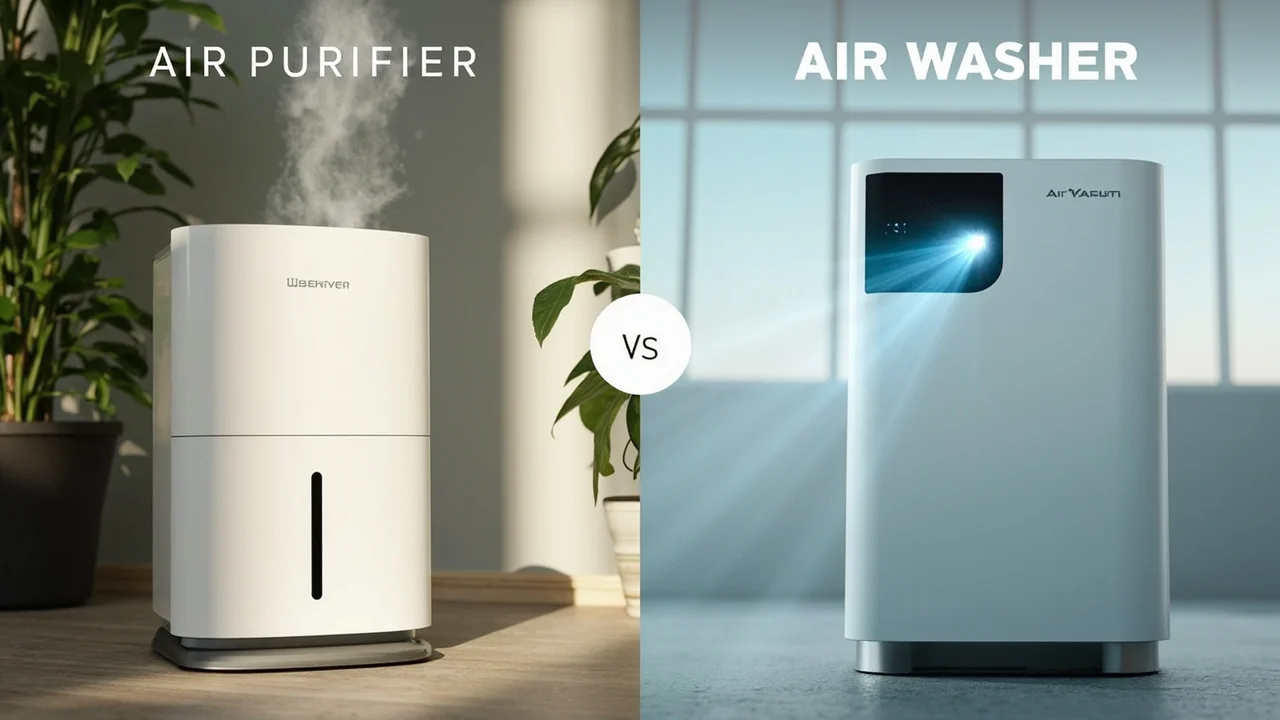
Key market segments and growth drivers in the Air Purifier vs Air Washer sector.
2. Market Analysis
The global air purifier market is expected to rise from US$18.1 billion in 2025 to US$29.4 billion by 2032, growing at a CAGR of 7.2%. Within this, the US smart air purifier segment alone is estimated at $0.84 billion in 2026, up from $0.73 billion in 2025. This growth is fueled by three primary drivers. First, rising health awareness post-pandemic has made HEPA filtration a baseline expectation in commercial spaces, pushing the HEPA segment to dominate market share. Second, regulatory shifts in North America and Europe are mandating higher indoor air quality standards in schools and hospitals, accelerating replacement cycles. Third, the push toward energy-efficient, eco-friendly systems is driving adoption of air washers, which consume less electricity and eliminate filter waste. The air filters market—a proxy for replacement revenue—is growing at 8.30% CAGR, signaling that filter-based purifiers remain the volume leader. However, air washers, which require no filter replacements, are gaining traction in markets with high water quality and humidity concerns, particularly in parts of Asia and Europe. Commercial buyers should note that while air purifiers offer proven PM2.5 reduction, air washers provide added humidification, reducing the need for separate humidifiers in dry climates. The price analysis shows that premium HEPA purifiers command $300–$1,200, while air washers range from $400–$900, with total cost of ownership favoring washers after three years due to zero filter costs.
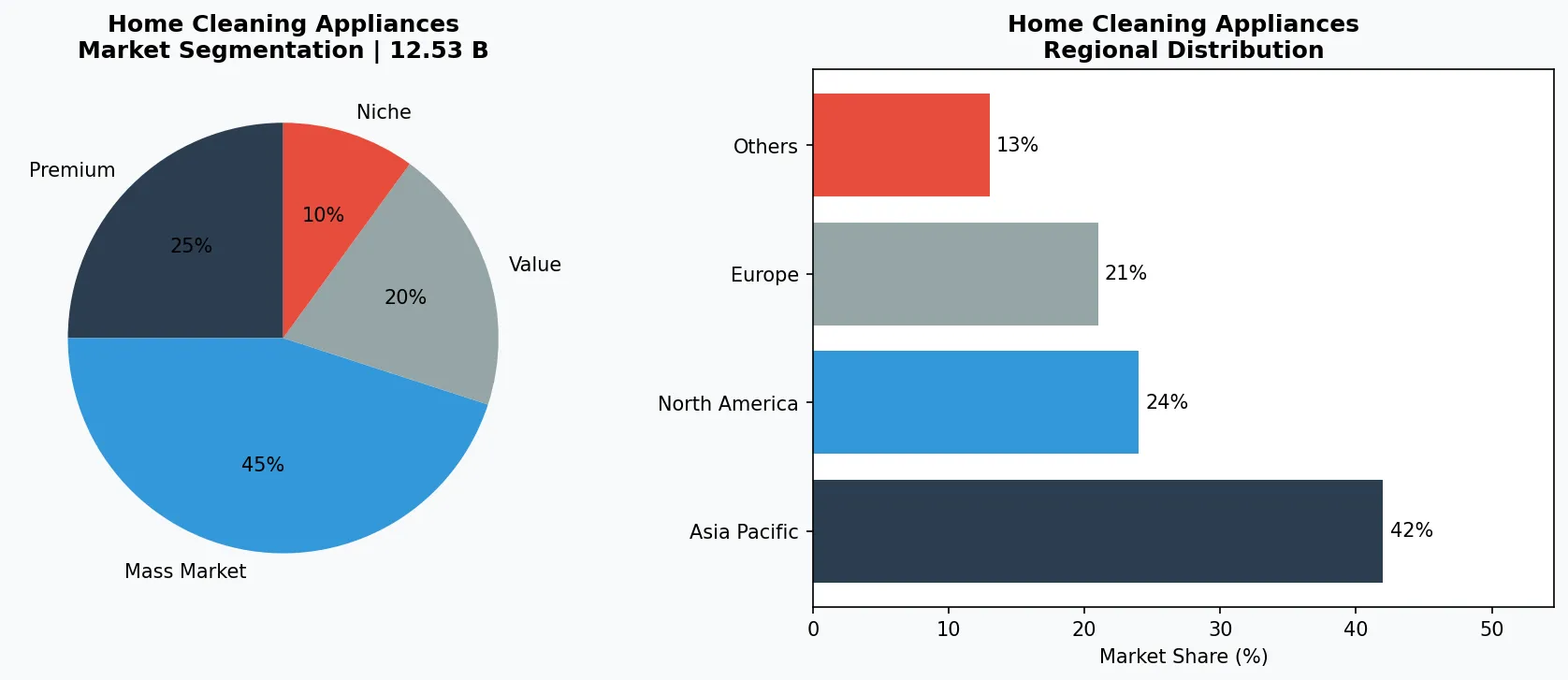
Market segmentation and regional distribution analysis for Air Purifier vs Air Washer.
3. Product Categories
HEPA-Based Air Purifiers: These remain the gold standard for particle removal, capturing 99.97% of particles as small as 0.3 microns. Examples include the Coway Airmega and Dyson Pure Cool series. Ideal for allergy-prone environments and healthcare settings, but require regular filter replacements costing $50–$150 annually. Activated Carbon + HEPA Hybrids: Combining mechanical filtration with gas adsorption, these units target VOCs and odors. Brands like Blueair and Honeywell offer models with washable pre-filters to extend HEPA life. Air Washers: Devices like the Venta LW45 and Stadler Form Roger use a water-based disc system to trap dust and pollen while adding moisture. No disposable filters—just periodic water changes and disc cleaning. Best for dry climates or spaces where humidity control is as important as particle removal. Ionic/Electrostatic Purifiers: These charge particles to attract them to collection plates. While filter-free, they produce trace ozone, limiting their use in sensitive environments. Examples include the Ionic Pro Turbo and certain Sharp Plasmacluster models. For B2B buyers, the choice depends on whether the primary need is particulate removal (HEPA), gas removal (carbon), or dual-function humidity control (air washer).
Commercial HEPA Purifiers
High-CADR units like the Coway Airmega 400S and Blueair Pro XL are designed for open-plan offices and lobbies, with filter replacement intervals of 6–12 months.
Air Washers for Controlled Humidity
Venta LW45 and Stadler Form Roger are popular in museums and wine cellars where both particle removal and stable humidity (40–60% RH) are critical.
Smart Ionic Purifiers
Sharp Plasmacluster and Ionic Pro Turbo offer filter-free operation but produce trace ozone, limiting their use to unoccupied spaces or areas with low sensitivity.
4. Leading Players
Dyson: Dominates the premium smart purifier segment with its 360-degree HEPA filters and real-time air quality monitoring. Dyson’s strategy emphasizes design and connectivity, targeting high-end offices and luxury hospitality. Its direct-to-consumer model and strong patent portfolio create a moat against commoditization. Coway: A South Korean giant that leads in value-for-money HEPA purifiers. Coway’s Airmega series is popular in North America and Asia, with a subscription model for filter replacements that ensures recurring revenue. The company invests heavily in R&D for low-noise, energy-efficient fans. Venta: The specialist in air washers, Venta has carved a niche in the commercial humidification and purification space. Its LW45 model is widely used in schools and museums where humidity-sensitive artifacts require stable conditions. Venta’s strategy focuses on education—convincing buyers that water-based cleaning is more sustainable than disposable filters. Blueair: A Swedish brand that targets the premium health segment with HEPA + carbon + electrostatic hybrid technology. Blueair’s units are known for low energy consumption and are often specified in LEED-certified buildings. The brand’s partnership with the Asthma and Allergy Foundation of America strengthens its credibility in healthcare procurement.
Premium Innovator
Dyson leverages proprietary 360-degree HEPA filtration and real-time sensors to command premium pricing in luxury hospitality and executive suites.
Value-for-Mass Specialist
Coway dominates the mid-market with the Airmega series, offering competitive CADR and a subscription filter model that locks in recurring revenue.
Sustainability-Focused Niche
Venta leads the air washer segment with water-based, filter-free technology, targeting eco-conscious commercial buyers in dry climates.
5. Market Trends
1. ENERGY EFFICIENCY AND ECO-DESIGN
As energy costs rise and sustainability mandates tighten, buyers are prioritizing purifiers with low wattage and recyclable components. Dyson’s latest models use brushless DC motors that consume 40% less power than earlier iterations, while Venta’s air washers use only 8 watts on low speed—comparable to an LED bulb. This trend is driving specifications in green building certifications like WELL and LEED. SMART CONNECTIVITY AND IOT
2. The US smart air purifier market’s growth to $0.84 billion in 2026 reflects demand for Wi-Fi-enabled units that integrate with building management systems. Coway’s Airmega models offer app-based monitoring of filter life and air quality, while Blueair’s units connect to IFTTT for automated responses to pollution spikes. This data-rich approach helps facility managers optimize run times and filter replacements. FILTER-LESS ALTERNATIVES
Air washers and electrostatic purifiers are gaining share as buyers seek to reduce consumables waste. Venta’s water-based technology eliminates filter disposal, appealing to hospitality chains with zero-waste goals. However, these systems require regular cleaning and water quality management, adding operational complexity that B2B buyers must factor into total cost of ownership.
6. Regional Markets
North America – Smart & HEPA Dominance
The US smart air purifier market will reach $0.84 billion in 2026, driven by smart building retrofits and allergy prevalence. HEPA remains the standard, but air washers are gaining in the Southwest.
Europe – Regulatory Push for Eco-Design
EU energy labeling and ozone limits favor low-power HEPA units and air washers. Germany and Scandinavia lead in adoption of water-based systems for energy savings.
Asia Pacific – High Humidity, High Adoption
In China and India, air washers are popular for their humidification function in dry winters. Local brands like Xiaomi offer affordable smart purifiers, intensifying price competition.
7. Investment Outlook
Two opportunities stand out for B2B buyers in 2026. First, air washers offer a clear total-cost-of-ownership advantage in dry climates where humidification is already needed—replacing two appliances with one and eliminating filter replacement costs. Hotels and office towers in the Middle East and Southwestern US should evaluate Venta’s commercial-grade units. Second, the rapid growth of the smart air purifier segment creates an opening for integrated building management systems; suppliers like Coway and Blueair that offer API access will win contracts in smart buildings. The primary risk is regulatory: as the EU tightens ozone emission limits, ionic purifiers face potential bans, and even some air washers may face scrutiny if they use UV-C lamps that produce ozone. Buyers should verify that any unit purchased complies with California Air Resources Board (CARB) standards, which are becoming a de facto global benchmark.
Strategic Considerations:
- Replace Two Devices with One: Combination units that both purify and humidify eliminate the need for separate appliances, reducing device clutter and total cost of ownership. Leading brands are integrating HEPA filtration with evaporative humidification into single compact units targeting urban consumers with limited space.
- Smart Building Integration: Air quality devices with WiFi connectivity and IoT integration can feed real-time IAQ data into building management systems. This enables automated HVAC adjustments based on actual pollutant levels rather than fixed schedules, reducing energy consumption by 15-25% in commercial buildings.
- Ozone Regulation Tightening: California CARB and EU regulations are imposing stricter limits on ozone emissions from electronic air cleaners. Devices using ionization or plasma technology must undergo recertification, potentially forcing product recalls or redesigns that could cost manufacturers millions in compliance expenses.
- Water Quality Maintenance: Air washers require regular water changes and tank cleaning to prevent bacterial growth and biofilm accumulation. Consumer complaints about musty odors from neglected units represent a recurring warranty and brand reputation risk that manufacturers must address through improved self-cleaning mechanisms and clearer maintenance alerts.
Make Informed Decisions in the Air Purifier vs Air Washer Market
Product quality and sourcing integrity directly impact business outcomes. Discover how Verity Rank's verification platform helps industry participants source with greater confidence.
Contact Verity Rank TodayFurther Reading: Explore additional market intelligence from Grand View Research and Mordor Intelligence.
This article is for informational purposes only, based on publicly available industry data and market reports as of 2026-05-28. All market figures are estimates and may vary from actual results.