

Table of Contents

The global Kids Bookshelf Designs sector serves consumers worldwide with diverse solutions.
1. Industry Overview
By 2026, the global kids bookcases market will be worth $1.98 billion, according to the latest industry projections. That figure is not just a number—it signals a fundamental shift in how parents and retailers view children's storage. No longer a simple shelving unit, the kids bookshelf has evolved into a design-led piece of furniture that balances aesthetics, safety, and developmental utility. This sub-segment within the broader kids furniture industry is distinctive because it merges the functional need for book storage with the emotional pull of character-driven, playful design. Unlike adult bookshelves, which prioritize minimalism or efficiency, kids bookshelf designs must accommodate lower height profiles, rounded edges, and vibrant finishes that stimulate engagement. The category is also uniquely tied to the rise of early literacy campaigns and the growing emphasis on creating dedicated reading nooks at home. As urban families in Asia and North America downsize living spaces, the demand for compact, multi-functional bookshelves that double as toy storage or room dividers has surged. This convergence of safety regulations, design innovation, and parental spending habits makes kids bookshelf designs one of the most dynamic niches in children's furniture today.
Industry Scope & Characteristics
Child-Centric Safety Engineering
Kids bookshelf designs prioritize rounded corners, anti-tip anchors, and non-toxic finishes. Products like the Delta Children MySize Bookshelf include patented stability brackets to prevent tipping.
Flat-Pack Manufacturing Efficiency
Most kids bookshelves are produced using CNC-cut engineered wood panels for cost-effective shipping. IKEA's FLISAT shelf exemplifies this supply chain model, with parts packed flat for global distribution.
Stringent Global Safety Certifications
Products must comply with ASTM F2057 (US), EN 71 (EU), or GB 28007 (China) standards. Certification costs can add 5-8% to production expenses but are non-negotiable for market access.
R&D in Modularity and Adaptability
Innovation focuses on adjustable shelving heights and convertible designs. KidKraft's Nautical Bookcase includes removable shelves that can be repositioned as the child grows, reducing replacement purchases.
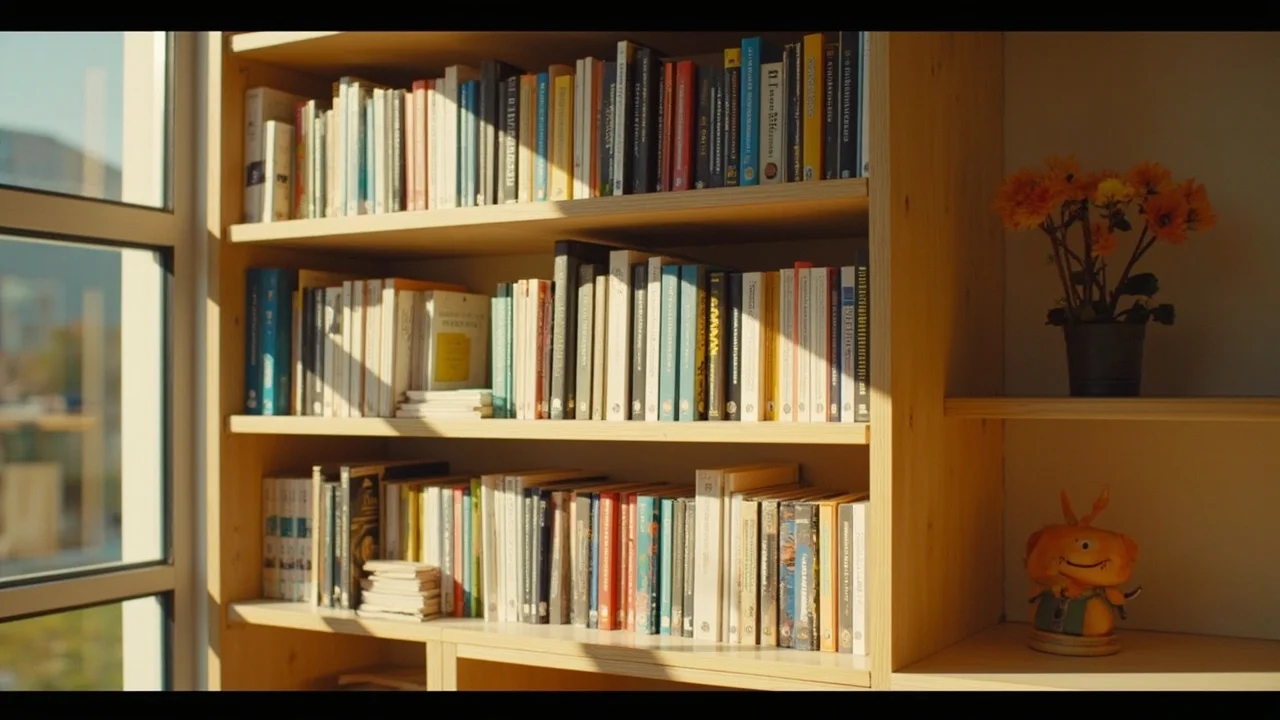
Key market segments and growth drivers in the Kids Bookshelf Designs sector.
2. Market Analysis
The global kids bookcases market was valued at $1.98 billion in 2026 and is projected to reach $3.12 billion by 2034, growing at a compound annual growth rate (CAGR) of 5.8%. A separate analysis from ANS puts the Children Bookcases Market at $850.5 million in 2026, with a forecast to hit $1,345.2 million by 2033—underscoring a consistent upward trajectory across different measurement scopes. The discrepancy in base figures reflects varying definitions (e.g., inclusion of toy storage units vs. pure bookcases), but the growth trend is unanimous. Three key drivers fuel this expansion. First, rising disposable incomes in developing economies—particularly in China and India—have enabled parents to allocate larger portions of household budgets to specialized children's furniture. Second, the global push for early childhood literacy, amplified by government programs and NGO initiatives, has made bookshelves a near-essential purchase for families with young children. Third, the shift toward remote learning and home-based activities post-2020 has accelerated the conversion of spare rooms into study and reading areas. The market is also benefiting from e-commerce penetration: online sales of kids bookshelves grew by over 18% in 2024, as platforms like Amazon and regional players like Tmall offer extensive design variety and easy price comparison. However, supply chain volatility for raw materials such as engineered wood and non-toxic paints remains a headwind, particularly for smaller manufacturers.
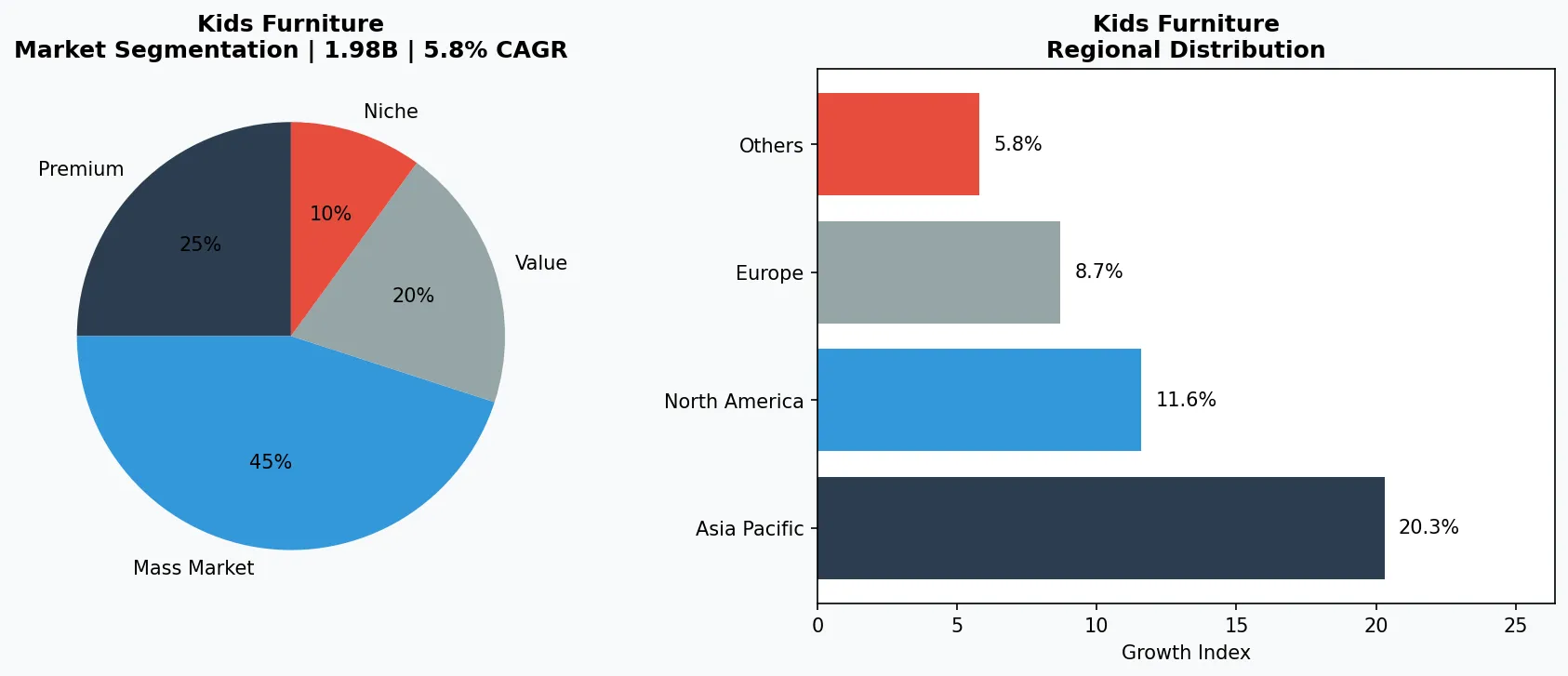
Market segmentation and regional distribution analysis for Kids Bookshelf Designs.
3. Product Categories
Kids bookshelf designs fall into three primary product categories. The first is the low-height, front-facing display shelf, often called a 'book ledges' or 'picture book shelf.' These units have shallow shelves that display book covers outward, encouraging young children to select titles by sight. Examples include the IKEA FLISAT wall shelf and the Pottery Barn Kids Anywhere Bookshelf, both of which prioritize accessibility and visual appeal. The second category is the modular, multi-functional bookshelf that integrates toy storage bins or drawers. These units are designed to grow with the child, offering adjustable shelving heights and removable fabric bins for toys. The Delta Children MySize Bookshelf with Storage Bins is a strong example, combining a three-tier book display with two large fabric bins. The third category is the themed or character-driven bookshelf, which uses shapes, colors, and motifs to create a narrative piece. Examples include the KidKraft Nautical Bookcase with its boat-inspired silhouette and the Step2 Fun With Friends Bookshelf, which incorporates bright primary colors and a rounded, child-safe design. Each category addresses a specific user need: accessibility for toddlers, organization for preschoolers, and room decor for older children.
Front-Facing Display Shelves
Low-profile units with shallow shelves that show book covers outward. Examples: IKEA FLISAT wall shelf, Pottery Barn Kids Anywhere Bookshelf.
Modular Storage Combos
Bookshelves integrated with fabric bins or drawers for toys. Example: Delta Children MySize Bookshelf with Storage Bins.
Themed Character Bookshelves
Shape-driven designs like boats, animals, or cars. Example: KidKraft Nautical Bookcase, Step2 Fun With Friends Bookshelf.
4. Leading Players
Three archetypes dominate the kids bookshelf design landscape. The first is the mass-market retailer with in-house design, exemplified by IKEA. The Swedish giant leverages its global supply chain to offer affordable, flat-packed bookshelves like the KALLAX (often used horizontally for children) and the FLISAT, which meet stringent EU and US safety standards. IKEA’s strategy focuses on simplicity and scalability, allowing it to capture price-sensitive parents while maintaining a modern aesthetic. The second archetype is the specialist children's furniture brand, such as Delta Children. This US-based company has built a reputation for safety-first designs that exceed ASTM and CPSC guidelines. Its MySize bookshelf line includes anti-tip hardware and rounded corners, and the brand frequently collaborates with licensing partners like Disney to produce character-themed units. Delta Children’s competitive advantage lies in its deep understanding of child development and safety regulations. The third archetype is the premium design-led manufacturer, such as KidKraft. Known for its whimsical, large-scale wooden furniture, KidKraft targets parents willing to invest in statement pieces. Its Nautical Bookcase and Farmhouse Bookcase command higher price points due to intricate detailing and solid wood construction. KidKraft’s strategy relies on emotional branding and social media visibility, often featuring its products in influencer-led nursery tours.
Mass-Market Scalability Specialist
IKEA uses global flat-pack logistics to offer affordable, safety-compliant bookshelves like KALLAX and FLISAT, capturing price-sensitive parents worldwide.
Safety-First Licensing Expert
Delta Children exceeds ASTM/CPSC standards and partners with Disney for character-themed units, building trust with safety-conscious parents.
Premium Design-Led Artisan
KidKraft creates whimsical, solid-wood statement pieces like the Nautical Bookcase, targeting parents who view furniture as room decor.
5. Market Trends
1. EMOTION-LED CHARACTER DESIGN
What it is: Bookshelves are being designed with character faces, animal shapes, or vehicle silhouettes that appeal directly to children's imaginations. Why it matters: This trend moves the bookshelf from a storage item to a playroom centerpiece, increasing its perceived value and justifying higher price points. KidKraft’s Nautical Bookcase (shaped like a sailboat) exemplifies this approach, with a design that doubles as a decorative element. URBAN MODERNITY WITH PLAYFUL ENERGY
2. URBAN MODERNITY WITH PLAYFUL ENERGY
What it is: A blending of clean, minimalist lines (urban modernity) with pops of bright color or playful forms (playful energy). Why it matters: This hybrid aesthetic appeals to millennial parents who want stylish furniture that doesn\'t clash with modern home decor. IKEA\'s FLISAT shelf, with its simple white frame and optional colored accessories, is a direct response to this demand.
3. MODULAR AND GROW-WITH-CHILD SYSTEMS
What it is: Bookshelves that can be reconfigured, expanded, or adjusted as the child ages. Why it matters: Parents are increasingly seeking long-term value, and a single bookshelf that transitions from toddler toy storage to school-age book display reduces the need for replacement purchases. Delta Children\'s MySize line offers adjustable shelves and optional add-on bins, addressing this need for adaptability.
4. SUSTAINABLE AND NON-TOXIC MATERIALS
3. What it is: Use of FSC-certified wood, water-based paints, and...
What it is: Use of FSC-certified wood, water-based paints, and formaldehyde-free adhesives. Why it matters: Health-conscious parents prioritize indoor air quality and environmental impact. Regulatory pressure in Europe (EN 71) and North America (ASTM F963) is also pushing manufacturers toward greener materials. Several boutique brands now market their bookshelves as 'zero-VOC' or 'eco-friendly,' such as Sprout Kids' solid wood adjustable shelf.
6. Regional Markets
North America: Safety-Regulation Driven
The US and Canada enforce strict anti-tip standards (ASTM F2057), pushing manufacturers to incorporate stability features. Delta Children leads with compliance-first designs.
Europe: Eco-Material Leadership
EU regulations (EN 71) and consumer demand for sustainability drive use of FSC-certified wood and water-based paints. IKEA’s European supply chain emphasizes recycled materials.
Asia-Pacific: Urban Space Optimization
Rising urbanization in China and India fuels demand for compact, modular bookshelves that fit small apartments. Local brands like Goodbaby offer multi-functional units with storage bins.
7. Investment Outlook
Two specific opportunities stand out for manufacturers and retailers in the kids bookshelf designs market. First, the integration of smart features—such as built-in LED reading lights or QR codes linking to audiobooks—could create a premium product tier that commands 20-30% higher margins. Early adopters like Pottery Barn Kids have already introduced shelves with integrated lighting, signaling room for innovation. Second, direct-to-consumer (DTC) brands that leverage social media and influencer marketing can capture market share from traditional retailers by offering customizable or limited-edition designs. One concrete risk to watch is the rising cost of raw materials, particularly engineered wood and non-toxic paints, which could compress margins for mid-tier brands. Additionally, tightening safety regulations in the EU and US (e.g., updated ASTM F2057 anti-tip standards) will require ongoing investment in compliance testing, potentially weeding out smaller, less capitalized players. Companies that invest early in certification and material traceability will be best positioned to capitalize on the projected $3.12 billion market by 2034.
Strategic Considerations:
- Smart Integration Opportunity: Integrating LED reading lights or QR-code audiobook links can create a premium tier with 20-30% higher margins, as seen with Pottery Barn Kids’ lighted shelves.
- DTC Brand Disruption: Social media-driven DTC brands offering customizable or limited-edition designs can capture market share from traditional retailers by leveraging influencer marketing.
- Raw Material Cost Risk: Rising prices for engineered wood and non-toxic paints could compress margins for mid-tier manufacturers, particularly those without long-term supplier contracts.
- Regulatory Compliance Burden: Tightening anti-tip and chemical safety standards in the US and EU will increase testing costs, potentially consolidating the market toward larger, certified players.
Make Informed Decisions in the Kids Bookshelf Designs Market
Product quality and sourcing integrity directly impact business outcomes. Discover how Verity Rank's verification platform helps industry participants source with greater confidence.
Contact Verity Rank TodayFurther Reading: Explore additional market intelligence from Grand View Research and Mordor Intelligence.
This article is for informational purposes only, based on publicly available industry data and market reports as of 2026-05-18. All market figures are estimates and may vary from actual results.