

Table of Contents

The global Safety Helmet Types Guide sector serves consumers worldwide with diverse solutions.
1. Industry Overview
Hard hats are dying. In 2025, the global safety helmet market hit $5.1 billion, but the real story is the accelerating shift from traditional hard hats to modern safety helmets with chin straps — a transition that is reshaping how construction, oil & gas, and manufacturing buyers procure head protection. By 2033, the market is projected to reach $9.4 billion at a 7.9% CAGR, driven by updated OSHA/ANSI standards and a growing understanding that a falling object isn't the only threat: lateral impact and retention during a fall are equally deadly. This safety helmet types guide breaks down the product categories, major players, and regulatory landscape that every procurement professional needs to understand before 2026. Unlike the decades-old hard hat design — essentially a plastic dome with a suspension — modern safety helmets integrate multi-point chin straps, advanced impact-absorbing liners, and compatibility with face shields and hearing protection. The distinction is not cosmetic; it is life-saving. A construction worker wearing a hard hat without a chin strap who falls from height will likely lose the helmet on impact, leaving the skull unprotected. The new generation of Type I and Type II helmets (per ANSI Z89.1) addresses this by testing for both top and lateral impact, with chin straps becoming standard in many jurisdictions. For B2B buyers, this means re-evaluating supplier catalogs and certification compliance before the next tender cycle.
Industry Scope & Characteristics
Lateral Impact Protection
Type II safety helmets are designed to absorb blows from the side, not just the top. This is a key differentiator from traditional hard hats and is now required for many elevated work environments under updated ANSI/ISEA Z89.1-2014 standards.
Multi-Point Chin Straps
Modern safety helmets integrate 4-point or 6-point chin straps that keep the helmet secure during falls. This is a fundamental shift from hard hat 'hat bands' and significantly reduces the risk of helmet displacement upon impact.
ANSI Z89.1 Compliance
All safety helmets sold in North America must meet ANSI Z89.1, which defines Type I (top) and Type II (top and lateral) impact categories, as well as Class E (electrical, 20 kV), G (general, 2.2 kV), and C (conductive) voltage ratings.
Smart Helmet Integration
The fastest-growing R&D area involves embedding sensors for fall detection, gas monitoring, and real-time location. Guardhat and 3M lead with models that automatically alert supervisors when a worker is struck or enters a hazardous zone.
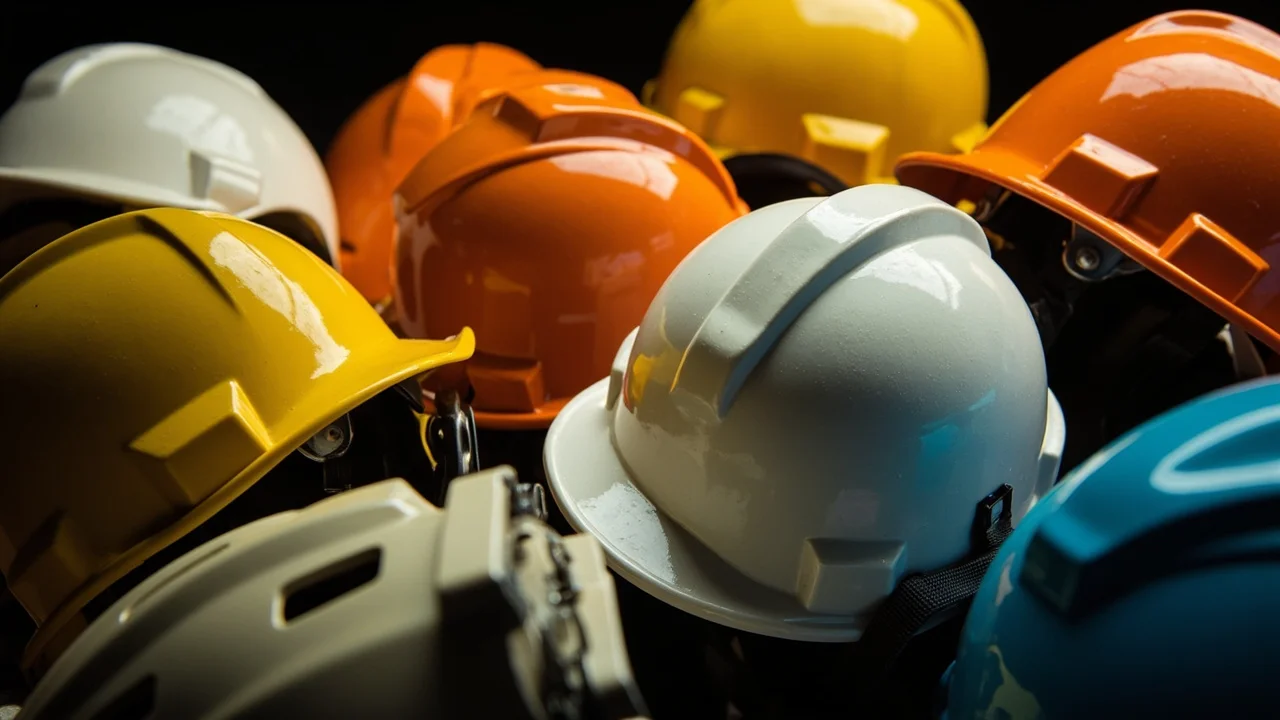
Key market segments and growth drivers in the Safety Helmet Types Guide sector.
2. Market Analysis
The industrial safety helmet market is expanding at a blistering 11.7% CAGR from 2026 to 2033, according to the latest segmentation analysis. Within that, the construction safety helmets segment alone was valued at $1.12 billion in 2026 and is forecast to reach $1.75 billion by 2035. Three drivers are fueling this growth. First, regulatory tightening: OSHA's updated general industry standard (1910.135) and construction standard (1926.100) increasingly reference performance-based criteria rather than design specifications, effectively pushing employers toward Type II helmets that pass lateral impact tests. Second, the global infrastructure boom — the US Infrastructure Investment and Jobs Act alone allocates $550 billion, much of it for roads and bridges where workers need heavy-duty head protection. Third, the rise of smart helmets equipped with sensors, communication systems, and real-time monitoring is creating a premium segment that commands 15–25% higher unit prices. For example, the integration of GPS and fall-detection tech into safety helmets is no longer a prototype; it is a commercial reality with a CAGR of 18% within the broader head protection market. Buyers should note that the shift is not uniform across regions. North America and Europe lead in adoption of Type II helmets, while Asia-Pacific remains price-sensitive but is catching up as local standards harmonize with ISO 3873. The total addressable market is now far larger than the classic 'hard hat' category, as safety helmets penetrate forestry, mining, and even renewable energy installations.
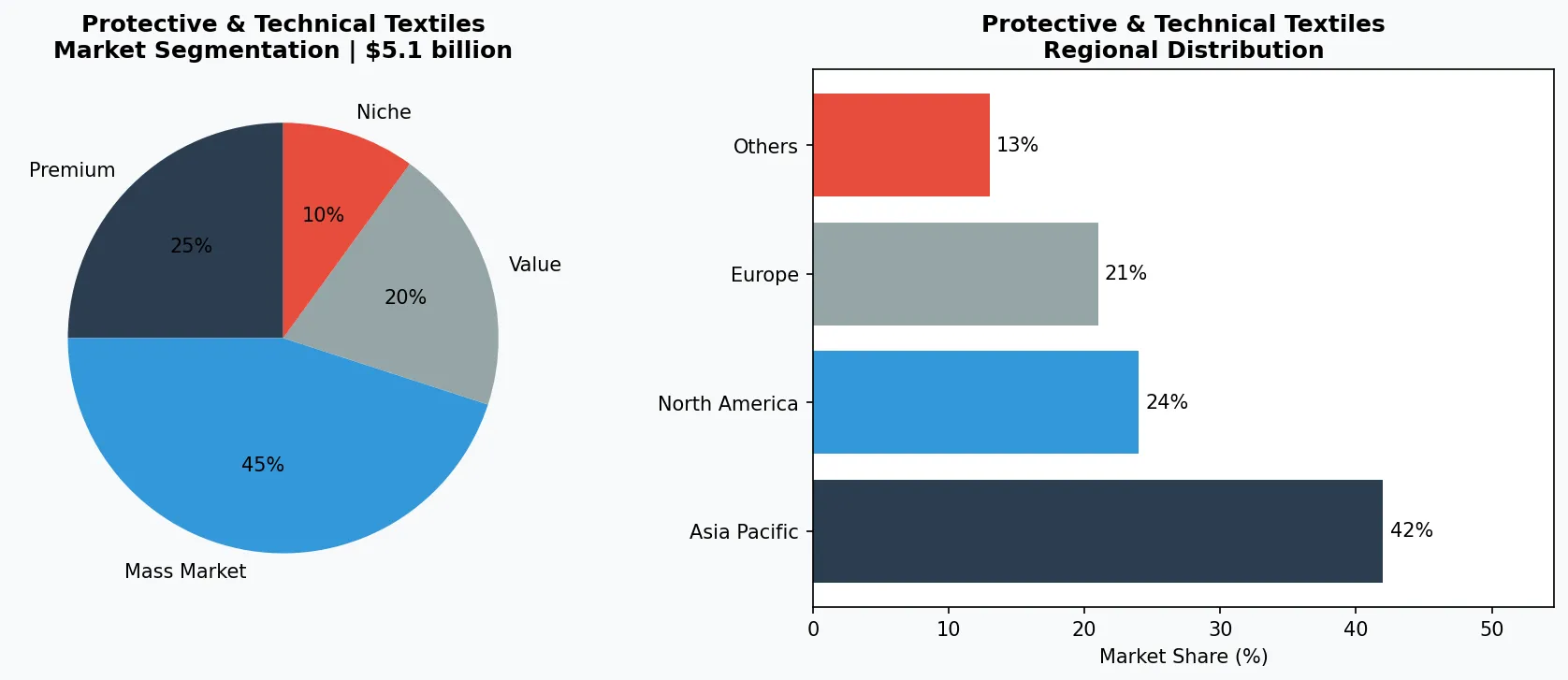
Market segmentation and regional distribution analysis for Safety Helmet Types Guide.
3. Product Categories
Type I Safety Helmets
Designed to protect against top-of-head impacts only. These are the most common in general industry where falling objects are the primary risk. Example: the classic MSA V-Gard (hard hat) and newer MSA V-Gard H2 with a chin strap retrofit. Many Type I models now offer lightweight high-density polyethylene (HDPE) shells and 6-point suspension for comfort.
Type II Safety Helmets
Protect against both top and lateral impacts. This is the fastest-growing segment, driven by construction and oil & gas where side blows from swinging loads or fall hazards exist. Honeywell's BW3 series and 3M's H-700 series are benchmarks, both featuring multi-impact foam liners and 4-point chin straps that meet ANSI/ISEA Z89.1-2014 Type II, Class E and G requirements.
Smart Helmets
Integrated with sensors, cameras, and communication modules. The DAQRI Smart Helmet (acquired by TeamViewer) and Guardhat's HC1 platform combine augmented reality with real-time environmental monitoring. Though still a niche (less than 5% of volume), smart helmets represent the highest growth by revenue, with 2026 adoption expected to double in sectors like mining and chemical processing where hazard detection is critical.
Accessory-Compatible Helmets
Modular designs that accept ear muffs, face shields, and welding visors without drilling holes. Bullard's SRS series and Uvex's pheos series exemplify this, offering a unified mounting system that reduces the risk of incompatible PPE — a key consideration for multi-hazard worksites.
Type II Construction Helmets
Designed for high-risk construction sites where lateral impacts from swinging loads or falls are common. Examples: MSA V-Gard H2 (120 g lateral impact, Class E) and Honeywell BW3 (with integrated face shield and earmuff mounts).
Smart Connected Helmets
Helmets with embedded microprocessors, GPS, and accelerometers. Example: Guardhat HC1 sends impact event data via LTE to a cloud dashboard. Used by Chevron and Dow in confined space entry.
Vented & Cooled Helmets
For hot environments like foundries and outdoor construction. Bullard SRS Vented Series uses passive airflow channels and a moisture-wicking sweatband to reduce heat stress, meeting ANSI Z89.1 Type II Class G.
4. Leading Players
MSA Safety
The dominant player in industrial head protection with over a century of innovation. MSA's V-Gard platform remains the most widely deployed hard hat globally, but the company is aggressively pivoting to the modern safety helmet category. Its 2024 launch of the V-Gard H2 with a 4-point chin strap and lateral impact foam liner directly addresses the market shift. MSA's strategy is to lead through compliance: every V-Gard H2 ships with ANSI Z89.1 Type II certification, reducing liability for safety managers.
3M
3M competes through breadth of ecosystem. Its H-700 series helmets integrate seamlessly with 3M's Peltor hearing protection and Speedglas welding shields, creating an 'all-in-one' head safety system. The company's advantage lies in cross-selling: a buyer sourcing multiple PPE categories from 3M often receives bundled pricing and simplified certification documentation. 3M also invests heavily in smart helmet R&D, partnering with Bosch on I4.0-compatible sensors.
Honeywell
Honeywell's Industrial Safety division (including the former Uvex brand) has carved out a strong position in Type II helmets for the energy sector. The BW3 series is designed for oil rigs and refineries where high thermal resistance and dielectric integrity are mandatory. Honeywell's key differentiator is its integrated safety software — the Honeywell Forge platform that tracks helmet usage and replacement cycles, appealing to large enterprises managing dozens of worksites.
Bullard
A family-owned company that invented the hard hat in 1919. Bullard now focuses on premium, Made-in-USA Type II helmets and custom branding for utility companies. Its SRS series is notable for compatibility with Bullard's thermal imagers and SCBA facepieces, making it a go-to for fire departments and hazmat teams. Bullard's strategy is specialization: it avoids the commodity price war and instead offers the highest impact ratings (Class E, 20 kV protection) for niche high-risk applications.
Full-Line Incumbent (MSA Safety)
Leverages decades of brand trust and the largest installed base of V-Gard hard hats to cross-sell the V-Gard H2 safety helmet. Competitive advantage: compliance-first design and global distribution network.
Ecosystem Integrator (3M)
Bundles safety helmets with hearing, eye, and respiratory protection from a single catalog. Advantage: simplified procurement and certification for multi-hazard worksites. Dominant in automotive assembly and chemical plants.
Niche Premium Specialist (Bullard)
Focuses on ultra-high voltage protection (Class E, 20 kV+) and Made-in-USA manufacturing. Advantage: dominates utility and firefighter markets where regulatory compliance is strictest and price sensitivity lowest.
5. Market Trends
1. SMART HELMET INTEGRATION
What it is: Safety helmets embedded with IoT sensors, cameras, and connectivity modules that monitor worker location, impact events, and environmental hazards (gas, temperature). Why it matters: Reduces incident reporting time and provides verifiable data for OSHA compliance. For example, Guardhat's HC1 sends an automated alert when a worker is struck or falls, and records the G-force for investigation. Named example: 3M's Connected Safety Helmet pilot with Shell in 2025 showed a 22% reduction in near-miss reporting time.
2. What it is: Regulatory bodies (OSHA, ANSI, CSA) increasingly requiring chin straps on all safety helmets used at height or on uneven terrain. Why it matters: A helmet without chin straps can fly off upon impact — a 2023 NIOSH study found that 89% of fatal head injuries in construction involved the helmet being displaced. Named example: MSA's V-Gard H2 now ships with an integrated chin strap as standard, not as an accessory. SUSTAINABLE MATERIALS
What it is: Manufacturers using recycled plastics, bioplastics, and modular designs that allow shell replacement instead of full helmet disposal. Why it matters: Large contractors like Skanska and Turner Construction are mandating 30% recycled content in PPE by 2028. Named example: Honeywell's Bio-Frame series uses 40% post-consumer recycled polypropylene in the suspension system without compromising impact performance.
3. What it is: Type II (lateral impact) helmets overtaking Type I in new...
What it is: Type II (lateral impact) helmets overtaking Type I in new purchases. Why it matters: Lateral impact protection reduces traumatic brain injuries from side blows. In 2025, Type II sales grew 18% versus 4% for Type I. Named example: Bullard's SRS Type II is now the default helmet for 7 of the top 10 US electrical utilities.
6. Regional Markets
North America – Type II Adoption Leader
Driven by OSHA's reinterpretation of construction standards in 2024, Type II helmet sales now account for 62% of new purchases. Utilities and oil & gas are the primary adopters.
Europe – EN 397 to EN 14052 Upgrade
The European standard for high-performance helmets (EN 14052) is gaining traction, especially in German and Scandinavian markets. Buyers are shifting from basic EN 397 to EN 14052 Type 2 for heavy industry.
Asia-Pacific – Price-Sensitive but Harmonizing
China and India are adopting ISO 3873 and updating national standards to align with ANSI/EN. Domestic producers like JSP (India) and Yaxing (China) offer Type I helmets at 40% lower cost than imports, but Type II penetration remains under 20%.
7. Investment Outlook
Two opportunities stand out for B2B buyers. First, the smart helmet segment offers a path to reduce total cost of ownership through predictive maintenance and incident documentation; companies like 3M and Guardhat are offering leasing models that lower upfront costs. Second, the regulatory push toward Type II helmets creates a window to standardize one SKU across all sites, simplifying inventory and training. The concrete risk is supply chain concentration: over 70% of helmet shells are injection-molded in China or Taiwan. Tariff escalation (e.g., US Section 301 duties) could raise prices 15–20% in 2026, forcing buyers to qualify alternative suppliers in Mexico or Eastern Europe. Procurement teams should begin dual-sourcing audits now to avoid disruption.
Strategic Considerations:
- Smart Helmet Leasing Models: Instead of upfront purchase, buyers can lease Guardhat or 3M connected helmets for $5–$8 per month per unit, including software and maintenance. This lowers adoption barriers for mid-size contractors.
- Tariff Risk on Shell Imports: Over 70% of helmet shells are sourced from China and Taiwan. US tariffs could increase landed costs by 18–22% in 2026. Procurement teams should pre-qualify suppliers in Mexico (Honeywell's plant in Nogales) or Portugal (local injection molders).
- Standardization to Single SKU: Adopting a universal Type II, Class E helmet across all sites reduces inventory complexity and training costs. Early adopters like Turner Construction report 15% savings in PPE management.
- Retrofit vs. Replace Decision: Current hard hat users can retrofit chin straps and foam liners using kits from MSA and 3M, but these may not achieve Type II performance. For full compliance, replacing aged hard hats with certified safety helmets is the recommended path.
Frequently Asked Questions
Make Informed Decisions in the Safety Helmet Types Guide Market
Product quality and sourcing integrity directly impact business outcomes. Discover how Verity Rank's verification platform helps industry participants source with greater confidence.
Contact Verity Rank TodayFurther Reading: Explore additional market intelligence from Grand View Research and Mordor Intelligence.
This article is for informational purposes only, based on publicly available industry data and market reports as of 2026-07-17. All market figures are estimates and may vary from actual results.