


Siemens AG
With €78.9 billion in FY2025 revenue and roughly 318,000 employees across more than 170 production bases, Siemens AG stands as the defining force in industrial automation, electrification, and power electronics, headquartered in Munich, Germany. Founded in 1847, the company fuses heavy machinery with industry-leading control software (SIMATIC PLCs, SINAMICS drives, digital twins), operating over 170 production bases worldwide with ~318,000 employees. Reporting revenue of approximately €78.9 billion in FY2025
Brand
Siemens
Founded
1847
Workforce
~318,000
Presence
190+ countries
Facilities
170+ Production Base
Headquarters
Germany
Market
XETRA: SIE
Schneider Electric SE
Schneider Electric SE is a global leader in the digital transformation of energy management and industrial automation, headquartered in Rueil-Malmaison, France. Founded in 1836, the company has evolved from a steel and armaments manufacturer into a Fortune Global 500 powerhouse delivering end-to-end electrification and automation solutions across 115 countries. With record revenue of €40.152 billion in FY2025 (8.9% organic growth), an adjusted EBITA margin of 18.7%, and a workforce of approximately …
Brand
Schneider Electric
Founded
1836
Workforce
~163,000
Presence
115+ Countries
Facilities
200+ Production Base
Headquarters
France
Market
Euronext Paris : SU
ABB Ltd
ABB Ltd is the global engine of electrification and industrial automation, headquartered in Zurich, Switzerland. Founded in 1988 from the merger of Sweden's ASEA and Switzerland's Brown Boveri, ABB provides foundational power conversion, motion control, and energy distribution equipment across 160+ manufacturing bases with ~111,900 employees in 100+ countries. The company achieved record orders of $36.77 billion in FY2025 with $33.22 billion in revenue and a 19.0% operational EBITA margin, and generated $4.57 billion in free cash flow. ABB …
Brand
ABB
Founded
1988
Workforce
~111,900
Presence
100+ countries
Facilities
More than 160 manufacturing sites worldwide
Headquarters
Switzerland
Market
SIX: ABBN
Emerson Electric Co.
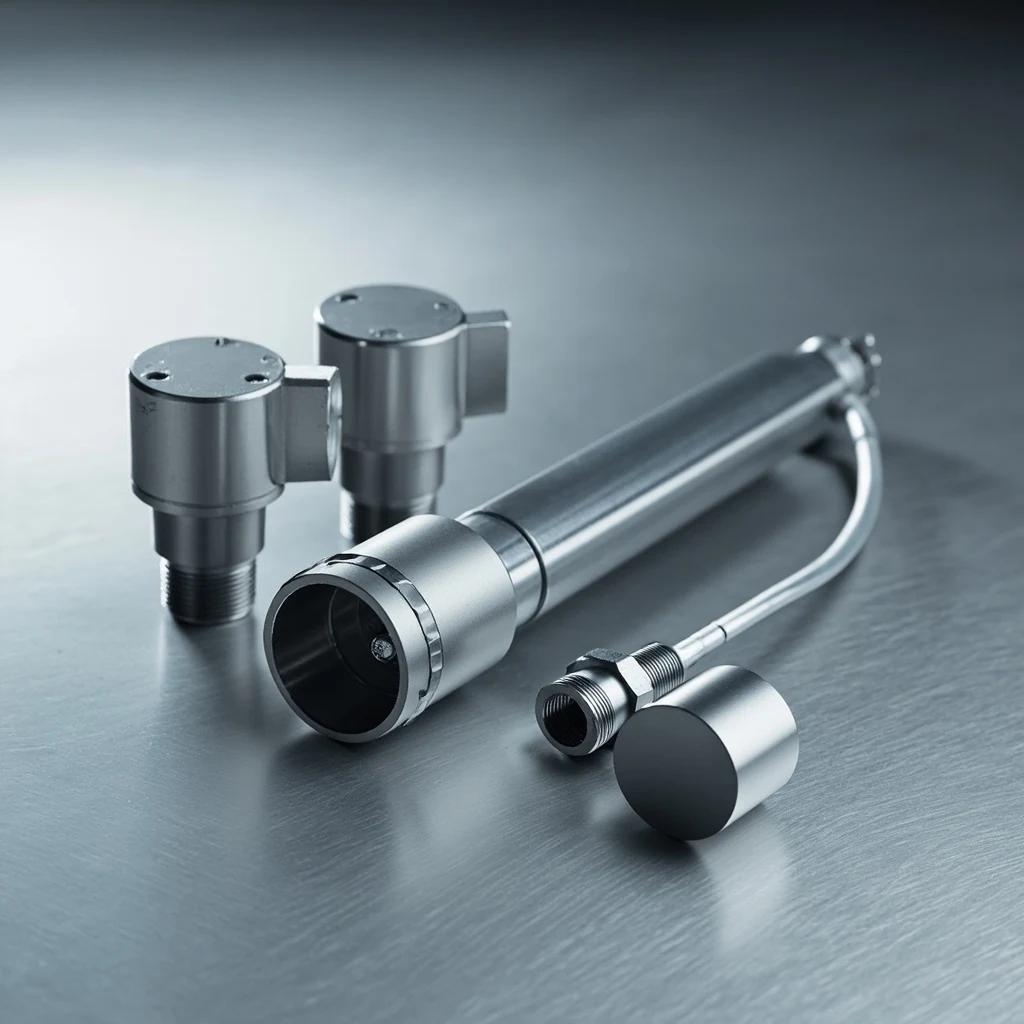
Emerson Electric Co. is a global leader in industrial automation technology and fluid control components, founded in 1890 and headquartered in St. Louis, Missouri, United States. With annual revenue of $18.02 billion in fiscal 2025 and an adjusted EBITA margin of 27.6%, the company employs approximately 71,000 people across about 130 manufacturing plants worldwide, including 45 core facilities in the European Union. Emerson sets the global benchmark in process fluid control…
Brand
Emerson
Founded
1890
Workforce
~71,000
Presence
150+ Countries
Facilities
Approximately 130 manufacturing locations worldwide
Headquarters
United States
Market
NYSE: EMR
Honeywell International Inc.
Honeywell International Inc. is a US-headquartered diversified industrial technology conglomerate, founded in 1906 and now a Dow Jones Industrial Average component, with corporate headquarters in Charlotte, North Carolina. The company operates across aerospace, building automation, safety and productivity solutions, and process control, generating USD 37.44 billion in net sales in 2025 with approximately 101,000 employees worldwide. In the instrumentation space, Honeywell is a dominant supplier of industrial safety and process control equipment, including g…
Brand
Honeywell
Founded
1906
Workforce
~101,000
Presence
79 countries
Facilities
100+ Production Base
Headquarters
United States
Market
Nasdaq : HON
Yokogawa Electric Corporation
Yokogawa Electric Corporation is a global leader in industrial automation and measurement, headquartered in Musashino, Tokyo, and founded in 1915. As the pioneer of distributed control systems (DCS), Yokogawa supplies process control, field instrumentation, and analytics solutions to the oil and gas, chemical, power, and pharmaceutical industries, generating JPY 604.83 billion in FY2025 revenue with 18,313 employees across more than 60 countries.
Yokogawa's instrument estate is unusually concentrated for a company of its size. The CEN…
Brand
Yokogawa
Founded
1915
Workforce
18,313
Presence
Operations in more than 60 countries worldwide
Facilities
Production, engineering and service bases in more than 60 countries
Headquarters
Japan
Market
TSE: 6841
Endress+Hauser Group
Endress+Hauser Group is a Swiss family-owned enterprise and one of the world's leading suppliers of industrial process instrumentation, headquartered in Reinach, Switzerland. Founded in 1953, the group specializes in level, flow, pressure, and temperature measurement, along with analytical and digital communication solutions for the process industry, generating EUR 4.01 billion in net sales with 18,306 employees worldwide.
The portfolio covers the four physical measurement categories that define the field layer of a process plant, plu…
Brand
Endress+Hauser
Founded
1953
Workforce
18,306
Presence
54 countries
Facilities
20+ Production Base
Headquarters
Switzerland
Market
Unlisted ( Family Business )

WIKA Alexander Wiegand SE & Co. KG
WIKA occupies a narrow but nearly unassailable position in process measurement: it is the reference supplier for the pressure and temperature instruments that sit closest to the fluid. Founded in 1946 and still wholly owned by the Wiegand family, the group produces more than 50 million instruments a year across 45 production and engineering sites, employs 11,200 people, and reaches customers in more than 75 countries through its own subsidiaries rather than through distributors. Group turnover runs at appro…
Brand
WIKA
Founded
1946
Workforce
11,200
Presence
Own subsidiaries in more than 75 countries
Facilities
45 production and engineering sites worldwide
Headquarters
Germany
Market
Unlisted (family-owned SE & Co. KG)

Zhejiang SUPCON Technology Co., Ltd.
SUPCON broke the Western duopoly on distributed control systems in the world's largest process manufacturing market. Founded in 1999 in Hangzhou by automation researchers, it has held the largest DCS market share in China for fifteen consecutive years, reaching 45.1% in 2025, and leads Chinese safety instrumented systems at 31.4% for a fourth year. Its position is deepest in chemicals and petrochemicals, where DCS share runs at 68.5% and 59.4% respectively. Revenue for 2025 was RMB 8.073 billion
Brand
SUPCON
Founded
1999
Workforce
~5,300
Presence
Sales and engineering network across Asia-Pacific, Africa, Central Asia, Latin America, North America and Europe
Facilities
Core manufacturing bases in Hangzhou and Fuyang, China
Headquarters
China

KROHNE Messtechnik GmbH
KROHNE has spent more than a century solving a single problem to a standard few competitors attempt: measuring what moves through a pipe without obstructing it, and measuring accurately enough for the result to settle commercial transactions. Founded in 1921 in Duisburg and still entirely owned by the Rademacher-Dubbick family, the group reported EUR 756.4 million in FY2025 sales including joint ventures, with 4,128 employees. It operates 15 design and manufacturing centres across 11 countries and reaches projects in
Brand
KROHNE
Founded
1921
Workforce
4,128
Presence
Operations in more than 100 countries through 43 subsidiaries and joint ventures
Facilities
15 design and manufacturing centres in 11 countries
Headquarters
Germany
Market
Unlisted (family-owned; Ludwig Krohne GmbH & Co. KG)
Frequently Asked Questions
Why Does a Sensor Specialist Rank Alongside Siemens and Schneider Electric?
What the scoring actually rewards
• Installed Base and Process Coverage (30%) counts measurement loops in service across industries and regions, because instrument selection is driven by reference density and by how fast a vendor can deliver a replacement to a specific plant.
• Measurement Accuracy and Certification (25%) counts functional safety qualification, hazardous-area approvals and calibration traceability. A vendor that cannot certify a device for a safety instrumented loop is excluded from entire categories of process plant regardless of how large it is.
• Field Manufacturing Depth (25%) counts whether the brand machines its own wetted parts and sensing elements. WIKA manufactures Bourdon tubes, diaphragms and thermowells in-house; KROHNE controls its own Coriolis tube geometry. Several much larger vendors buy these components from specialists and integrate them.
• Digital and Lifecycle Service Layer (20%) counts wireless capability, diagnostics and the calibration and retrofit services that determine total cost of ownership over thirty years.
The practical consequence is that a specialist can outscore a conglomerate on dimensions worth 55% of the total while losing badly on the two dimensions where scale helps. That is why WIKA appears at all: it is the acknowledged global leader in pressure and temperature measurement, and it manufactures more instruments each year than several companies ranked above it. It is also why KROHNE qualifies on a turnover below EUR 800 million — SIL 2 certification on a metal tube variable-area flow meter is a qualification most competitors do not hold. Conversely, scale does not rescue a brand that cannot certify. The ranking is a specification aid, not a size league table.
Disclaimer: Every company in this list manufactures the instruments it sells or integrates them into its own systems. Distributors, rebadgers and pure software vendors are excluded. Where a listed company reports results for a fiscal year ending on a date other than 31 December, the most recent completed fiscal year is used and labelled accordingly.
How Much of a Control Instrument Is the Brand's Own Technology?
Sensing elements
• In pressure measurement, the silicon piezoresistive or capacitive sensor die is frequently purchased from a small group of specialist foundries. WIKA machines its own mechanical sensing elements, Bourdon tubes and diaphragms, which is why it can offer both a EUR 30 mechanical gauge and a SIL-rated transmitter from the same industrial base.
• In flow measurement, the situation is reversed. KROHNE builds its own Coriolis tubes and electromagnetic flow tubes and controls the geometry that determines accuracy, which is why it can hold custody-transfer approvals without licensing a third-party sensor.
• In temperature measurement, thermocouple and resistance element manufacture is a metallurgical process, and Endress+Hauser and WIKA both run their own element production rather than buying finished sensors.
Electronics and firmware are where platform vendors have an advantage. Emerson writes its own signal processing for Rosemount and Micro Motion devices and owns the DeltaV control platform the data flows into; Yokogawa does the same with its CENTUM system and field instruments; Honeywell integrates its own control valves, transmitters and gas detection into Process Automation and Technology, which generated USD 6.44 billion of the group's USD 37.44 billion of 2025 net sales.
Why this matters commercially is spare parts, calibration intervals and obsolescence. A vendor that controls its own sensor element can extend a calibration interval through firmware, replace a sensing capsule without replacing the housing, or keep a discontinued model supported with a drop-in successor. A vendor that buys its sensor has to follow its supplier's lifecycle, and when that supplier discontinues a die, the instrument is obsolete regardless of how strong the brand is. Ask for the manufacturing depth of the specific device, not of the brand.
The certification question follows directly. Functional safety qualification to SIL levels, hazardous-area approval under ATEX or IECEx, and custody-transfer type approval each require evidence of controlled manufacturing. A brand that assembles purchased components must obtain that evidence from its suppliers, and the traceability chain lengthens accordingly.
Which Certifications Decide Whether an Instrument Can Be Installed?
Functional safety governs instruments used inside safety instrumented systems rather than in monitoring service. Devices are qualified to Safety Integrity Levels, and the common thresholds are SIL 2 and SIL 3. KROHNE's H250 metal tube variable-area flow meter carries SIL 2 certification, which moves it from indication duty into protective loops. SUPCON's safety instrumented systems business holds 31.4% of the Chinese market, and Yokogawa's ProSafe platform competes in the same segment. Without this qualification an instrument cannot be credited in a safety loop calculation at all.
Hazardous-area approval is required wherever flammable gas, vapour or dust may be present: ATEX in the European Union, IECEx internationally, and local regimes elsewhere. The approval covers the entire instrument, not just the electronics, so flamepaths, encapsulation and surface temperature limits all become design constraints. It is also the reason instrument count in a refinery is inflated by intrinsic safety barriers and isolation devices that are themselves certified.
Custody transfer and fiscal metering approvals matter wherever measurement settles a commercial transaction. Flow instruments used for natural gas, crude oil or refined product transfer must meet national metrology requirements, and the accuracy claim is verified by an authorised body rather than self-declared. This is the certification that keeps high-accuracy Coriolis and ultrasonic meters in a small group of qualified suppliers.
Calibration traceability underpins the other three. A plant must be able to demonstrate an unbroken chain from the instrument to a national metrology institute, which means the vendor's calibration laboratory must itself be accredited, commonly to ISO/IEC 17025. WIKA operates accredited laboratories of this kind; Endress+Hauser provides flow verification and diagnostic services that reduce the need to remove instruments from line.
Pharmaceutical and food applications add a fifth layer in practice: hygienic design standards covering surface finish, cleanability and materials of construction. A transmitter that is perfectly adequate in a refinery may be disqualified in a bioprocess vessel. The practical rule is that certification is per-device and per-application, and it must be confirmed against the specific installation, not the product family.
Why Is Process Instrumentation Revenue Moving Toward Software Subscriptions?
The numbers are already visible in the results of the platform vendors. Schneider Electric reported that digital products, software and services reached EUR 25 billion, or 62% of group revenue, growing organically at about 15%, with recurring revenue from its AVEVA industrial software business growing at a rate well above the group average. That is a company that historically sold switchgear and now books most of its revenue from digital layers. Emerson deliberately divested its Copeland compressor business and reinvested the proceeds into AspenTech and into test and measurement, then reported an adjusted segment EBITA margin of 27.6% — a margin that hardware-only instrumentation vendors rarely approach.
The shift takes three concrete forms.
• Recurring software licences attached to installed instruments, covering diagnostics, asset management and compliance reporting. Once a plant standardises on a platform, the software becomes the reason not to switch instrument brands.
• Model-based and outcome-based contracts, where the vendor is paid for measured plant performance rather than for devices. SUPCON's Autonomous Operating Plant programme is the clearest example: after 2025 revenue fell 11.66% and net profit dropped 60.48% on hardware cyclicality, the company invested RMB 951 million, 11.79% of revenue, in a time-series industrial model intended to convert one-off project sales into subscription revenue.
• Service and calibration contracts, which are genuinely recurring because regulatory calibration intervals never disappear.
The risk for buyers is lock-in. When the instrument, the control system and the analytics layer come from one vendor, switching costs rise sharply, and the open protocol that was supposed to preserve interoperability becomes a compliance checkbox. The specialists are responding by supporting multiple fieldbus standards and by pushing wireless retrofit devices that work alongside an incumbent control system rather than replacing it. The rational response is to keep the measurement layer open and competitive, whatever the platform decision is.
Where Are Industrial Control Instruments Actually Manufactured?
The German and Swiss specialists have built deliberately distributed networks. WIKA operates 45 production and engineering sites and manufactures in China, India, South Africa and the United States as well as Germany. KROHNE runs 15 design and manufacturing centres across 11 countries with 80% of its employees outside Germany. Endress+Hauser has more than 134 branches in 54 countries and reported that sales in the Americas grew 10.1% and in Europe 11.6% in 2025 while Asia-Pacific fell 1.4% on weakness in China — a regional split that argues for manufacturing near each demand centre rather than one global plant.
The platform vendors have moved in the same direction for a different reason. ABB spent USD 1 billion on capital expenditure in 2025 and operates more than 160 manufacturing sites, explicitly describing its strategy as local-for-local. Yokogawa positions production and service bases in more than 60 countries, directly at the locations of the LNG and refining projects it serves in the Middle East and Asia. Honeywell runs manufacturing across more than 70 countries.
China has become a manufacturing base rather than only a market. SUPCON's core production is concentrated in Hangzhou and Fuyang, and its instruments are now specified into Air Liquide, ADNOC, Petronas and Petrobras projects after entering the supply chains of global energy majors in 2025. Multinational specialists have built heavy manufacturing in China for the domestic market and for export to neighbouring regions.
Two forces are accelerating the shift. Tariffs and trade restrictions raise the cost of long supply chains for instruments that cross borders several times during assembly. Public infrastructure procurement increasingly applies local content requirements, particularly in water and energy projects. The practical consequence for buyers is that country of origin is becoming a weaker indicator of quality than the identity of the plant that actually built the device — and vendors are being asked to disclose that. Specification should therefore name the manufacturing site, not the brand.