


Siemens AG
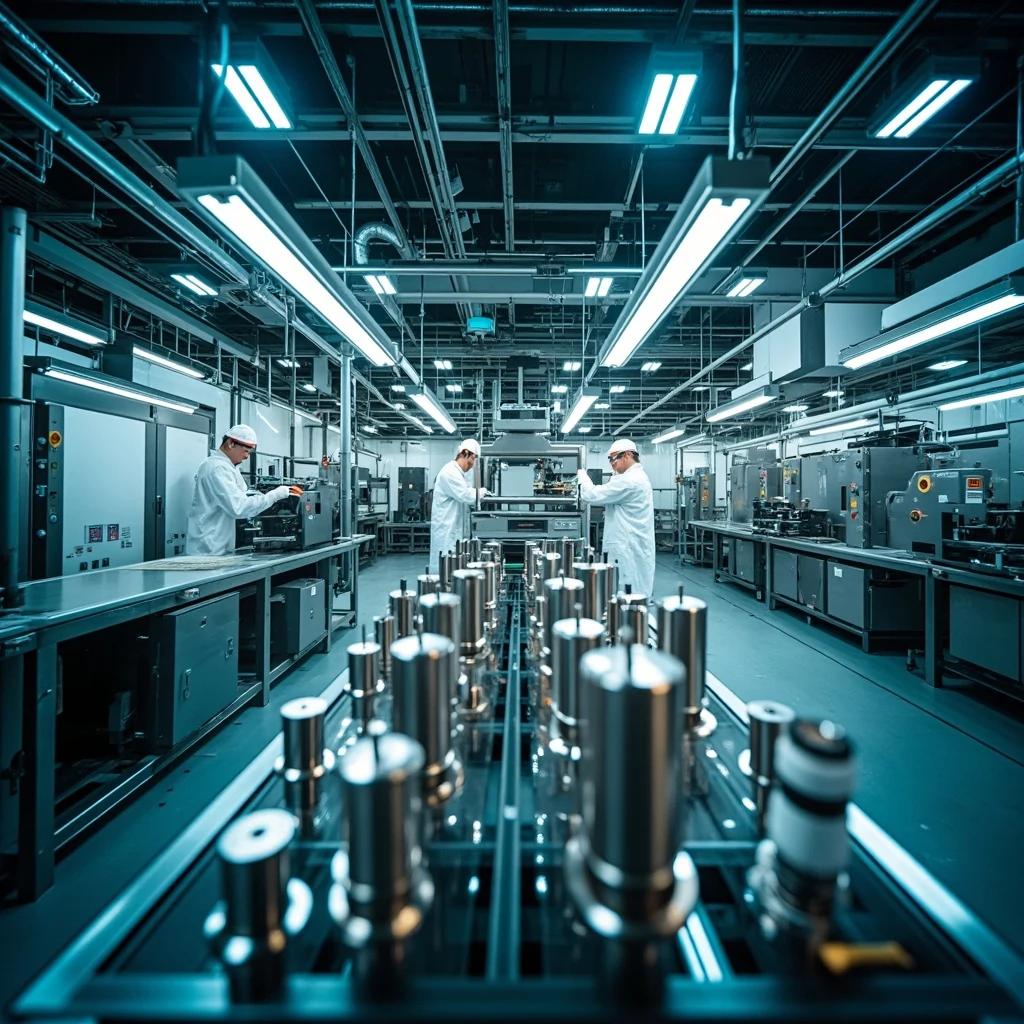
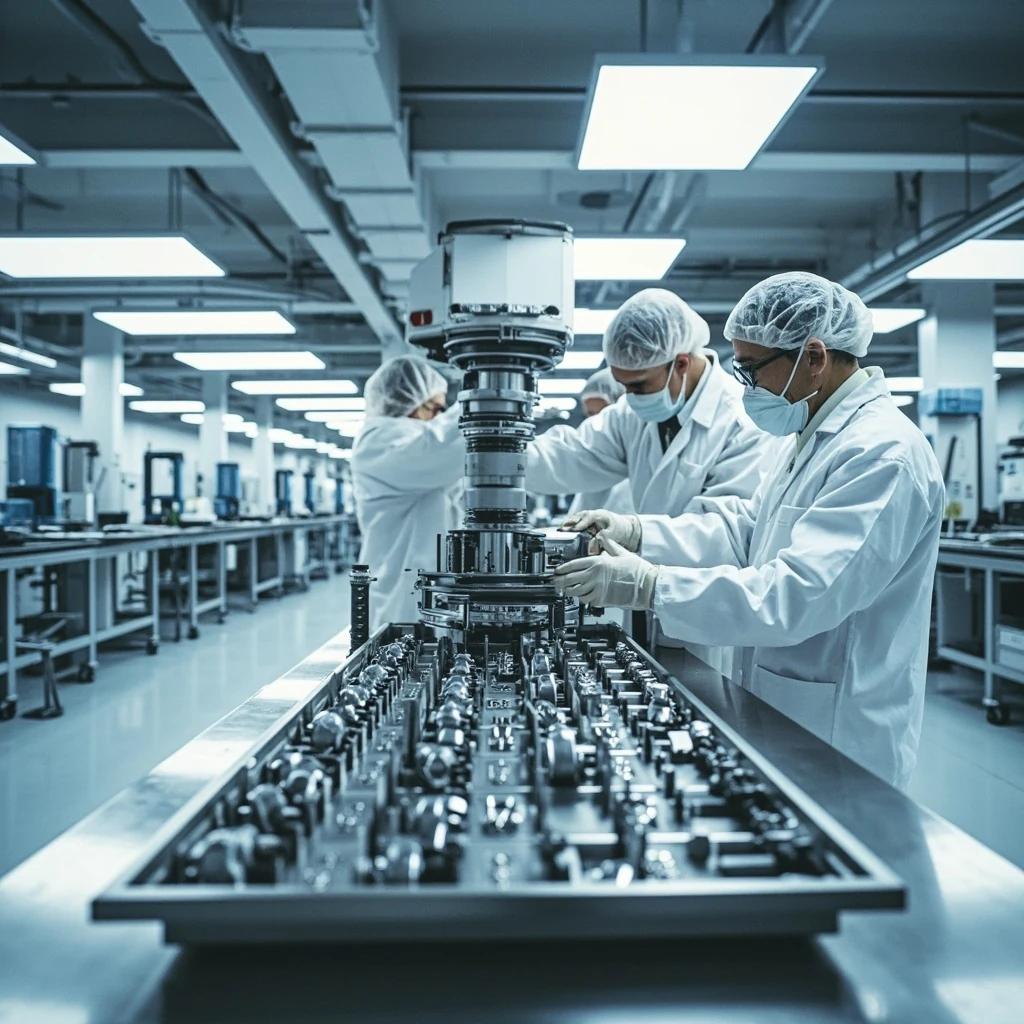
With €78.9 billion in FY2025 revenue and roughly 318,000 employees across more than 170 production bases, Siemens AG stands as the defining force in industrial automation, electrification, and power electronics, headquartered in Munich, Germany. Founded in 1847, the company fuses heavy machinery with industry-leading control software (SIMATIC PLCs, SINAMICS drives, digital twins), operating over 170 production bases worldwide with ~318,000 employees. Reporting revenue of approximately €78.9 billion in FY2025
Brand
Siemens
Founded
1847
Workforce
~318,000
Presence
190+ countries
Facilities
170+ Production Base
Headquarters
Germany
Market
XETRA: SIE
ABB Ltd
ABB Ltd is the global engine of electrification and industrial automation, headquartered in Zurich, Switzerland. Founded in 1988 from the merger of Sweden's ASEA and Switzerland's Brown Boveri, ABB provides foundational power conversion, motion control, and energy distribution equipment across 160+ manufacturing bases with ~111,900 employees in 100+ countries. The company achieved record orders of $36.77 billion in FY2025 with $33.22 billion in revenue and a 19.0% operational EBITA margin, and generated $4.57 billion in free cash flow. ABB …
Brand
ABB
Founded
1988
Workforce
~111,900
Presence
100+ countries
Facilities
More than 160 manufacturing sites worldwide
Headquarters
Switzerland
Market
SIX: ABBN
Schneider Electric SE
Schneider Electric SE is a global leader in the digital transformation of energy management and industrial automation, headquartered in Rueil-Malmaison, France. Founded in 1836, the company has evolved from a steel and armaments manufacturer into a Fortune Global 500 powerhouse delivering end-to-end electrification and automation solutions across 115 countries. With record revenue of €40.152 billion in FY2025 (8.9% organic growth), an adjusted EBITA margin of 18.7%, and a workforce of approximately …
Brand
Schneider Electric
Founded
1836
Workforce
~163,000
Presence
115+ Countries
Facilities
200+ Production Base
Headquarters
France
Market
Euronext Paris : SU
Emerson Electric Co.
Emerson Electric Co. is a global leader in industrial automation technology and fluid control components, founded in 1890 and headquartered in St. Louis, Missouri, United States. With annual revenue of $18.02 billion in fiscal 2025 and an adjusted EBITA margin of 27.6%, the company employs approximately 71,000 people across about 130 manufacturing plants worldwide, including 45 core facilities in the European Union. Emerson sets the global benchmark in process fluid control…
Brand
Emerson
Founded
1890
Workforce
~71,000
Presence
150+ Countries
Facilities
Approximately 130 manufacturing locations worldwide
Headquarters
United States
Market
NYSE: EMR
Rockwell Automation, Inc.
Rockwell Automation is the undisputed leader in discrete industrial automation across North America, headquartered in Milwaukee, Wisconsin. Founded in 1903, the company commands over 50% of the North American PLC market through its iconic Allen-Bradley hardware brand and FactoryTalk software ecosystem. With annual revenue of $8.342 billion in FY2025, approximately 26,000 employees, and a gross margin that surged to 48% driven by high-margin software and lifecycle services, Rockwell operates…
Brand
Rockwell Automation
Founded
1903
Workforce
~26,000
Presence
100+ countries
Facilities
20 primary manufacturing plants across 15 countries
Headquarters
United States
Market
NYSE: ROK
Yokogawa Electric Corporation
Yokogawa Electric Corporation is a global leader in industrial automation and measurement, headquartered in Musashino, Tokyo, and founded in 1915. As the pioneer of distributed control systems (DCS), Yokogawa supplies process control, field instrumentation, and analytics solutions to the oil and gas, chemical, power, and pharmaceutical industries, generating JPY 604.83 billion in FY2025 revenue with 18,313 employees across more than 60 countries.
Yokogawa's instrument estate is unusually concentrated for a company of its size. The CEN…
Brand
Yokogawa
Founded
1915
Workforce
18,313
Presence
Operations in more than 60 countries worldwide
Facilities
Production, engineering and service bases in more than 60 countries
Headquarters
Japan
Market
TSE: 6841
Endress+Hauser Group
Endress+Hauser Group is a Swiss family-owned enterprise and one of the world's leading suppliers of industrial process instrumentation, headquartered in Reinach, Switzerland. Founded in 1953, the group specializes in level, flow, pressure, and temperature measurement, along with analytical and digital communication solutions for the process industry, generating EUR 4.01 billion in net sales with 18,306 employees worldwide.
The portfolio covers the four physical measurement categories that define the field layer of a process plant, plu…
Brand
Endress+Hauser
Founded
1953
Workforce
18,306
Presence
54 countries
Facilities
20+ Production Base
Headquarters
Switzerland
Market
Unlisted ( Family Business )

Honeywell International Inc.
Honeywell International Inc. is a US-headquartered diversified industrial technology conglomerate, founded in 1906 and now a Dow Jones Industrial Average component, with corporate headquarters in Charlotte, North Carolina. The company operates across aerospace, building automation, safety and productivity solutions, and process control, generating USD 37.44 billion in net sales in 2025 with approximately 101,000 employees worldwide. In the instrumentation space, Honeywell is a dominant supplier of industrial safety and process control equipment, including g…
Brand
Honeywell
Founded
1906
Workforce
~101,000
Presence
79 countries
Facilities
100+ Production Base
Headquarters
United States
Market
Nasdaq : HON
Shenzhen Inovance Technology Co., Ltd.
Shenzhen Inovance Technology Co., Ltd. is the only Chinese company to break into the global top 10 of industrial automation, representing the vanguard of China's high-end manufacturing ascent. Founded in 2003 by former Huawei engineers and headquartered in Shenzhen, Inovance has executed a powerful dual-engine strategy combining industrial automation with new energy vehicle (NEV) electric drive systems. In FY2025, the company achieved ¥45.105 billion (~$6.25 billion) in revenue — a 21.77% year-over-year surge — with net pro…
Brand
Inovance
Founded
2003
Workforce
27,292
Presence
60+ countries with focus on China, Southeast Asia, and Europe
Facilities
Manufacturing bases in Shenzhen, Suzhou, Changzhou, and Hungary
Headquarters
China
Market
SZSE: 300124
Zhejiang SUPCON Technology Co., Ltd.
SUPCON broke the Western duopoly on distributed control systems in the world's largest process manufacturing market. Founded in 1999 in Hangzhou by automation researchers, it has held the largest DCS market share in China for fifteen consecutive years, reaching 45.1% in 2025, and leads Chinese safety instrumented systems at 31.4% for a fourth year. Its position is deepest in chemicals and petrochemicals, where DCS share runs at 68.5% and 59.4% respectively. Revenue for 2025 was RMB 8.073 billion
Brand
SUPCON
Founded
1999
Workforce
~5,300
Presence
Sales and engineering network across Asia-Pacific, Africa, Central Asia, Latin America, North America and Europe
Facilities
Core manufacturing bases in Hangzhou and Fuyang, China
Headquarters
China
Frequently Asked Questions
Why Does This Ranking Exclude Brand-Licensed and Contract-Manufactured Vendors?
The practical screening test used here has three parts
• Ownership of the sensing element. Companies that machine their own diaphragms, grow or bond their own piezoresistive elements, or wind their own Coriolis tubes are included. WIKA machines Bourdon tubes and diaphragms; KROHNE controls its own Coriolis tube geometry; Endress+Hauser manufactures its own ASICs and sensors; Emerson machines the pressure diaphragms that sit inside Rosemount transmitters.
• Ownership of the electronics line. Surface mount lines, conformal coating and functional test are performed in-house by Siemens, ABB, Schneider Electric, Rockwell and Honeywell. A vendor that outsources board assembly cannot validate firmware against process data it does not physically generate.
• Ownership of calibration. Flow calibration requires large, expensive, permanently installed rigs. A company without accredited flow calibration capacity cannot hold custody-transfer approvals, which removes it from fiscal metering regardless of its brand strength.
What exclusion does not mean. Contract manufacturing is a rational strategy forconsumer electronics, where designs turn over in months. Process instruments run for fifteen to twenty years in hazardous areas, and the manufacturer must be able to supply a drop-in replacement, extend a calibration interval through firmware, or support a legacy communication protocol long after the original design team has dispersed. These are all engineering decisions that require control of the production line. That is why the screen is applied before any financial metric: a company with excellent margins but no factory has nothing to sustain a twenty-year service obligation.
The screen also explains the composition of the list. Four of the ten manufacturers are family-owned or closely held European businesses — Endress+Hauser, WIKA, KROHNE and the Siemens legacy — a structure that survives precisely because it funds long-horizon manufacturing investment rather than quarterly returns.
What Does Self-Manufacture Actually Mean at the Sensor Level?
Layer one: the primary sensing element. In pressure measurement this is a silicon diaphragm, a piezoresistive bridge or a capacitive cell. Very few companies fabricate the die itself; more machine and bond the diaphragm assembly. WIKA produces its own mechanical sensing elements and Bourdon tubes, which is why it can supply both a low-cost mechanical gauge and a SIL-rated transmitter from the same industrial base. Emerson machines the diaphragms used in its Rosemount transmitter families and operates cleanroom production for its most demanding analyser products.
Layer two: the measurement physics. In flow measurement the element is not a chip but a geometry. Coriolis mass flow meters depend on tube wall thickness, bend radius and vibration behaviour; electromagnetic meters depend on liner material and electrode placement. KROHNE builds its own tubes and liners rather than licensing a third-party sensor, which is what allows it to hold custody-transfer approvals. Endress+Hauser manufactures its own application-specific integrated circuits, printed circuit boards and sensors, giving it control over the signal chain from the electrode to the digital output.
Layer three: electronics and firmware. This is where platform vendors have a structural advantage. Yokogawa is one of the few instrumentation manufacturers that develops its own sensing elements and semiconductor processes and also writes the CENTUM control software the measurements feed into. Rockwell builds controllers, drives, input and output modules and safety hardware in its own plants; its Intelligent Devices segment generated USD 3.756 billion of fiscal 2025 sales at an 18.0 percent operating margin. Inovance employs 7,670 research and development staff, 28.10 percent of its 27,292 employees, and spent RMB 4.256 billion, 9.44 percent of revenue, on research in 2025.
Layer four: calibration and traceability. A manufacturer must be able to demonstrate an unbroken chain from the shipped instrument to a national metrology institute, which generally means an accredited laboratory, ISO/IEC 17025. Endress+Hauser delivers more than three million instruments a year from around two thousand base products generating over a billion design variants, which is only possible with flexible automated assembly and permanently installed high-precision flow calibration rigs. The operational test for a buyer is simple: ask which of the four layers are produced at the site named on the certificate.
Why Are Chinese Manufacturers Entering a List Built Around Heavy Assets?
SUPCON holds 45.1% of the Chinese distributed control system market and 31.4% of the safety instrumented systems market; in chemicals and petrochemicals those shares rise to 68.5% and 59.4%. Its manufacturing base assembles control system cabinets, generates and populates circuit boards, and produces explosion-proof pressure and temperature transmitters from plants in Hangzhou and Fuyang. Revenue in 2025 was RMB 8.073 billion with research spending of RMB 951 million, 11.79% of sales. The company holds 853 patents including 711 invention patents, has presided over ten international standards, and its control systems, integrated control and safety products and pressure transmitters have entered the supply chains of Air Liquide, ADNOC, Petronas and Petrobras.
Inovance operates at a different scale. Revenue reached RMB 45.105 billion in 2025, up 21.77%, with operating profit of RMB 5.436 billion and 27,292 employees. General-purpose servo systems hold roughly 31% of the Chinese market, the largest position in the country, and Frost and Sullivan identifies the company as the largest Chinese manufacturer in industrial automation by 2025 revenue. Production is concentrated at large-scale servo, drive and controller facilities in Suzhou, with manufacturing and research operations added in Hungary and Germany and a localisation programme in India.
What has actually changed is vertical integration inside China. Servo drives require encoders, power semiconductors, precision bearings and rare-earth magnets; the ability to source all four domestically at production quality is what turned a cost advantage into a manufacturing capability. The constraint that remains is certification and reference, not production. Chinese control hardware now meets international functional safety and hazardous-area standards, but plant specifications in Europe and North America still favour suppliers with decades of installed base in the specific process the buyer operates. That is why the two Chinese entrants appear at the lower end of this list despite manufacturing scale that in some categories exceeds the Western specialists ranked above them.
The strategic consequence for buyers is a genuine second source. Ten years ago a European refinery had no credible non-Western option for a large distributed control system. Today it does, and the procurement question has shifted from whether the alternative can deliver to whether the buyer's engineering organisation can qualify it.
How Does Local-for-Local Production Change the Economics of Instrument Manufacturing?
The capital numbers show the shift. ABB spent USD 1 billion on capital expenditure in 2025 and operates more than 160 manufacturing sites, explicitly describing its model as local-for-local; it also reports that its Indian operations achieve more than ninety percent local manufacturing content. Siemens runs more than 170 production and processing sites across more than 190 countries. Endress+Hauser operates manufacturing centres in Switzerland, Germany, the United States, China and India and reported that sales in the Americas grew 10.1% while Asia-Pacific fell 1.4% in 2025, a divergence that favours production sited near each demand centre rather than one export hub. Inovance has established manufacturing and research operations in Hungary and Germany after building its base in Suzhou.
Three effects follow.
• Unit economics worsen and total economics improve. Duplicating a production line across continents raises unit cost. It also eliminates the exposure that cost Rockwell more than USD 125 million in tariff impact and Schneider Electric over EUR 400 million in first-half 2026 cost headwinds.
• Qualification becomes the bottleneck, not capacity. A transmitter produced in a second plant must be re-qualified for every hazardous-area and functional safety approval it holds, which is slow and expensive. Manufacturers with global engineering organisations absorb this more easily than specialists.
• Local content rules become a competitive weapon. Public water, power and energy procurement increasingly requires domestic manufacturing. Companies that built regional plants years ago win contracts that are now closed to exporters.
The counter-argument deserves weight. Distributed manufacturing fragments the process knowledge that makes high-precision instruments reliable; a calibration rig in a new plant is not equivalent to one refined over thirty years. The manufacturers that manage this well are those that standardise the process and localise only the execution — shipping tooling, fixtures and process recipes rather than redeveloping them. That capability, more than factory count, is what distinguishes a genuinely global manufacturer from one with international offices.
What Happens to a Control System Manufacturer When Construction Spending Falls?
The mechanism. Instrument and control system revenue splits into two streams with very different behaviour. New-build project revenue is booked against construction schedules and stops when a customer defers a plant. Aftermarket revenue — spare parts, calibration, upgrades, service contracts — is tied to equipment already running, and a plant that exists must be maintained regardless of the capital cycle. The mix determines how badly a manufacturer is hurt. Yokogawa reported record orders of JPY 617.8 billion and record sales of JPY 604.8 billion in fiscal 2025, but operating income of JPY 82.6 billion was slightly below the prior year, reflecting exactly this split: volume held while project mix and cost pressure compressed margin. SUPCON illustrates the sharper version, with 2025 revenue down 11.66% to RMB 8.073 billion and net profit attributable to shareholders down 60.48% to RMB 441 million as Chinese chemical customers deferred capital projects.
What manufacturers do about it.
• Shift capital toward aftermarket. Every major manufacturer on this list reports growing service, calibration and software revenue. It is lower-growth but far less cyclical, and it compounds with the installed base.
• Diversify end markets. Emerson moved toward life sciences and semiconductor customers; Schneider Electric and Endress+Hauser both reported that data centre cooling and power systems became a material source of instrument demand in 2025, offsetting weakness in European chemicals.
• Use the downturn to restructure. Rockwell agreed with SLB to dissolve the Sensia joint venture, taking back the process automation business it originally contributed and accepting a USD 110 million non-cash impairment to simplify its supply chain. Honeywell moved to divest its Productivity Solutions and Services and Warehouse Workflow Solutions businesses, absorbing goodwill impairments of which USD 436 million fell on industrial automation.
• Invest counter-cyclically in automation. Inovance increased revenue 21.77% in 2025 while expanding research headcount to 7,670, or 28.10% of employees, and SUPCON raised research spending to 11.79% of revenue in its weakest year.
The practical implication for buyers is timing. Downturns are when manufacturers are most willing to negotiate multi-year framework agreements and to discount service contracts. They are also when weak suppliers cut engineering and support staff, which shows up five years later as unavailability of spares and firmware updates. Assessment of a supplier should therefore include its balance sheet strength and its ownership structure, not only its product range — family-owned and heavily capitalised manufacturers survive these cycles without the divestments that disrupt support continuity.