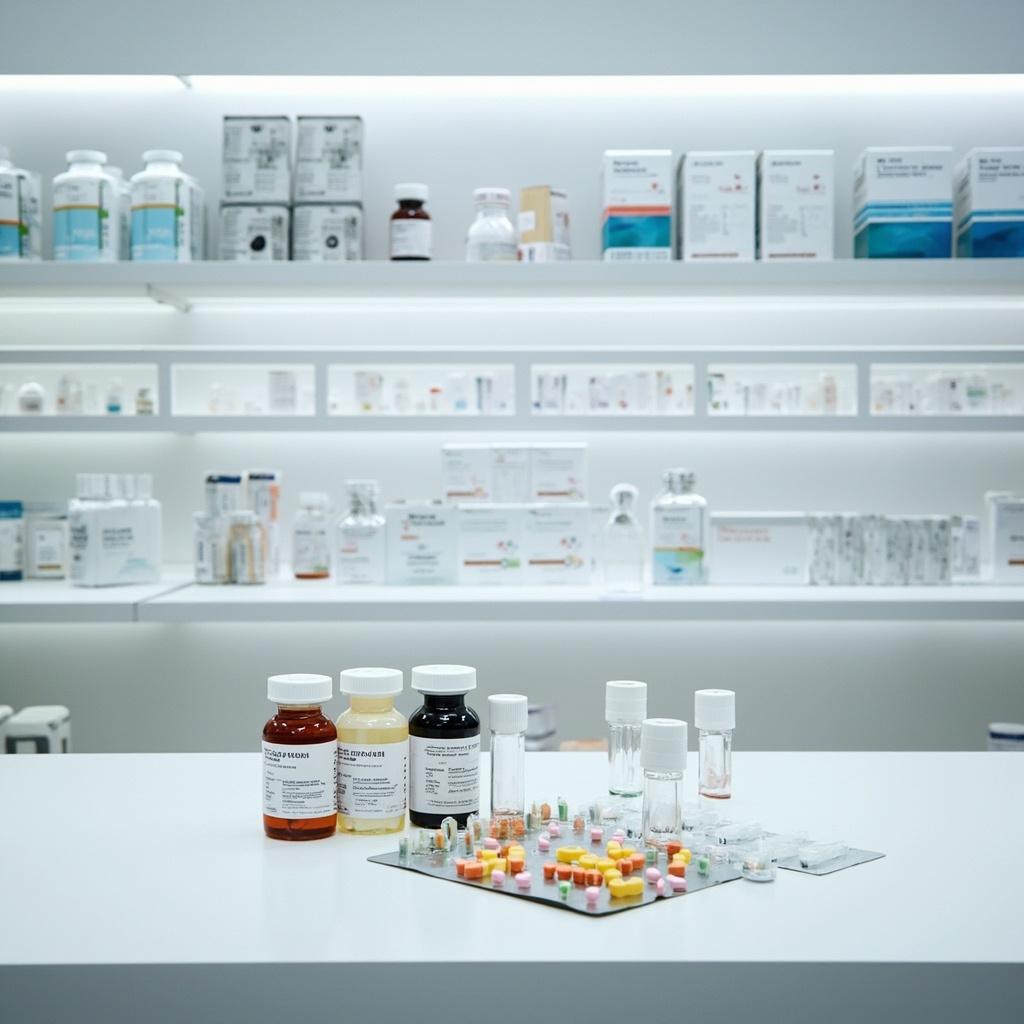
Top 10 Medical Consumables & Diagnostic Reagents Brands

HomeBiopharmaceuticalTop 10 Medical Consumables & Diagnostic Reagents Brands

The global medical consumables and diagnostic reagents industry has undergone a profound structural transformation. In 2025, the in-vitro diagnostics (IVD) market alone exceeded 00 billion, driven by aging demographics, chronic disease prevalence, and the relentless rise of precision medicine. From core laboratory immunoassay reagents to point-of-care rapid tests, the sector now touches every facet of modern healthcare delivery, with leading companies delivering over 31 billion diagnostic tests annually.

The competitive landscape is defined by scale, automation, and supply chain resilience. Industry titans like Roche (615 billion CHF revenue with 31 billion tests delivered), Abbott (4.3 billion with 11.7% growth in diabetes care), and BD (34 billion medical devices produced yearly) dominate through proprietary closed-system architectures that lock in recurring reagent revenue. The razor-blade business model — selling analyzers at cost to drive high-margin consumables — remains the industry standard, making installed base the ultimate competitive moat.

Our Ranking Methodology
VerityRank evaluates companies across four equally weighted dimensions:
Market Influence (25%): Global revenue and revenue share within medical consumables and diagnostic reagents
Brand Reputation (25%): Search volume, clinical adoption rates, and institutional trust
Innovation & R&D (25%): Investment in next-gen diagnostics, lab automation, and advanced materials
Sustainability & Ethics (25%): Supply chain resilience, regulatory compliance, and ESG performance

Disclaimer: The data in this ranking is compiled from third-party authoritative sources including annual financial reports, industry analysis from Grand View Research and Evaluate Pharma, and verified corporate disclosures. While every effort has been made to ensure accuracy, rankings should be considered directional rather than absolute.


Top 10 Rankings

2026.06 Edition
1
F. Hoffmann-La Roche AG

F. Hoffmann-La Roche AG

Roche is the world's largest biotechnology company and the undisputed leader in integrated pharmaceutical-diagnostics manufacturing, operating 15 pharmaceutical factories and 20 diagnostic production sites globally. The company's unique dual-engine business model—generating CHF 47.7 billion from pharmaceuticals and CHF 13.8 billion from diagnostics in FY2025, for a combined CHF 61.5 billion (~$74 billion)—creates manufacturing synergies in personalized healthcare that no pure-play pharmaceutical company can replicate. Roche/Genentech's biologics manufacturing prowess is anchored in large-scale mammalian cell culture for monoclonal antibodies (including oncology franchises Perjeta, Tecentriq, and Hemlibra), supported by $50 billion in committed US manufacturing investment over the next five years—the largest single capital commitment in pharmaceutical manufacturing history. In August 2025, Genentech broke ground on a $700+ million, 65,000-square-meter sterile fill-finish facility in Holly Springs, North Carolina, purpose-built for GLP-1 and next-generation peptide manufacturing. The company is simultaneously investing $550 million to transform its Indianapolis campus into a continuous glucose monitoring (CGM) device manufacturing and distribution hub, demonstrating its commitment to maintaining in-house production across both therapeutics and diagnostics.

Strengths: Pharma-diagnostics manufacturing synergy: Roche's ability to co-develop companion diagnostics alongside biologic therapeutics creates an integrated production quality loop—diagnostic manufacturing quality directly enables therapeutic efficacy through precise patient stratification. Capital commitment scale: The $50 billion US manufacturing investment program represents a generational bet on autonomous production capacity that will create durable competitive advantages in biologics, peptides, and diagnostics manufacturing for decades. Technology platform depth: Roche operates across monoclonal antibodies, bispecific antibodies, small molecules, tissue diagnostics, molecular diagnostics, and CGM devices—a manufacturing technology portfolio that provides resilience against single-platform disruption.

Weaknesses: Biosimilar exposure: Legacy oncology biologics (Herceptin, Avastin, Rituxan) face established biosimilar competition that has eroded manufacturing volumes and will require facility repurposing. Currency sensitivity: With the majority of manufacturing based in Switzerland and significant CHF-denominated costs, the strong Swiss franc creates structural margin pressure on exported products. Pipeline-to-manufacturing translation risk: The shift towards GLP-1/peptide manufacturing (Holly Springs facility) and CGM devices (Indianapolis campus) requires building entirely new manufacturing competencies outside Roche's traditional monoclonal antibody core.

Brand

Roche

Founded

1896

Workforce

100K+

Presence

150+ Countries

Facilities

15 Pharma + 20 Diagnostics

Headquarters

Switzerland

Market

SIX: ROG
Key Product Categories
Biopharmaceutical CompaniesBiological Products & Vaccines CompaniesCancer Immunotherapy IndustryInfluenza Vaccines IndustryGrowth & Rare Disease Biologics IndustryAutoimmune & Inflammatory Disease Biologics IndustryBiopharmaceutical ManufacturersBiological Products & Vaccines CompaniesCancer Immunotherapy IndustryInfluenza Vaccines IndustryBiopharmaceutical CompaniesBiological Products & Vaccines CompaniesCancer Immunotherapy IndustryInfluenza Vaccines IndustryGrowth & Rare Disease Biologics IndustryAutoimmune & Inflammatory Disease Biologics IndustryBiopharmaceutical ManufacturersBiological Products & Vaccines CompaniesCancer Immunotherapy IndustryInfluenza Vaccines Industry
2
Abbott Laboratories

Abbott Laboratories

Abbott Laboratories is the global leader in continuous glucose monitoring (CGM) technology through its revolutionary FreeStyle Libre system, headquartered in Abbott Park, Illinois, USA since 1888. With annual revenue of $44.3 billion in 2025, the company operates 100+ manufacturing and R&D facilities worldwide, employing 114,000+ people across 160+ countries. Abbott's Diabetes Care division alone generated $7.6 billion in 2025, driven by the FreeStyle Libre CGM franchise — the dominant platform in home-based glucose monitoring. The company's landmark $23 billion acquisition of Exact Sciences in 2025 signals its strategic expansion into at-home cancer screening and precision oncology diagnostics.

Strengths: Unrivaled CGM technology with FreeStyle Libre achieving near-monopoly status in home diabetes monitoring; massive R&D investment exceeding $2.5 billion annually across diagnostics, medical devices, and nutrition; vertically integrated global manufacturing network spanning 100+ facilities worldwide; diversified revenue base reducing single-market dependency; and transformative $23 billion Exact Sciences acquisition positioning Abbott as the future leader in home-based cancer screening and diagnostics.

Weaknesses: Heavy dependence on the Diabetes Care segment for growth momentum; significant execution and integration risks associated with the $23 billion Exact Sciences acquisition; and intensifying competition from Dexcom's next-generation G7 CGM system in the rapidly expanding glucose monitoring market.

Brand

Abbott Laboratories

Founded

1888

Workforce

110K+

Presence

160+ Countries

Headquarters

United States

Market

NYSE:ABT

Key Product Categories
Nutritional Fortified Foods BrandsFortified Food Products IndustryProtein Powders IndustryMeal Replacements IndustryMedical Nutrition IndustryBeverages & Mixes IndustryNutritional Fortified Foods ManufacturersFortified Food Products IndustryProtein Powders IndustryMeal Replacements IndustryNutritional Fortified Foods BrandsFortified Food Products IndustryProtein Powders IndustryMeal Replacements IndustryMedical Nutrition IndustryBeverages & Mixes IndustryNutritional Fortified Foods ManufacturersFortified Food Products IndustryProtein Powders IndustryMeal Replacements Industry
3
BD

Becton, Dickinson and Company

Global leader in medical consumables including syringes, IV consumables, blood collection tubes, and microbial diagnostic reagents. BD produces over 34 billion medical devices annually, serving virtually every hospital worldwide.

Brand

BD

Founded

1897

Workforce

70000+

Presence

190+ countries

Facilities

Manufacturing facilities in Nebraska (US), Mexico, Japan, France, UK, Hungary, and more

Headquarters

United States

Market

NYSE: BDX
Key Product Categories
Medical Consumables & Diagnostic Reagents BrandsChemical Pharmaceutical Preparations IndustryBiological Products & Vaccines CompaniesLaboratory Equipment IndustryMedical Diagnostic Equipment IndustryIn-Vitro Diagnostics Equipment IndustryPharmaceutical Drug Manufacturers & SuppliersMedical Consumables & Diagnostic Reagents BrandsChemical Pharmaceutical Preparations IndustryBiological Products & Vaccines CompaniesMedical Consumables & Diagnostic Reagents BrandsChemical Pharmaceutical Preparations IndustryBiological Products & Vaccines CompaniesLaboratory Equipment IndustryMedical Diagnostic Equipment IndustryIn-Vitro Diagnostics Equipment IndustryPharmaceutical Drug Manufacturers & SuppliersMedical Consumables & Diagnostic Reagents BrandsChemical Pharmaceutical Preparations IndustryBiological Products & Vaccines Companies
4
Danaher Corporation

Danaher Corporation

Danaher Corporation is a globally leading provider of scientific and technological products and services, headquartered in Washington, D.C., USA. The company focuses on three segments: Life Sciences, Diagnostics, and Environmental & Applied Solutions. Through a series of strategic acquisitions and integrations, it has built a diversified portfolio spanning high-end analytical instruments, clinical diagnostic systems, and industrial measurement devices. Reporting revenue of approximately US$32 billion in FY2025, Danaher stands as a paradigm of creating value through systematized operations. This is achieved by leveraging its renowned "Danaher Business System" (DBS)—a unique lean management and continuous improvement operating model that drives exceptional post-acquisition integration capabilities and operational efficiency—and its precise positioning in high-growth, high-margin niche markets.

Strengths: Danaher's core strength is its industry-famous "Danaher Business System" (DBS), a unique operating system centered on lean management and continuous improvement, which provides unparalleled efficiency gains and value-creation capabilities for both acquisition integration and organic operations.

Weaknesses: The company's main weaknesses are the high dependency of its growth strategy on a continuous stream of successful acquisitions, which carries inherent risks related to deal execution, integration failures, and overvaluation; and the intense technological competition and market pressure it faces in numerous segments from larger rivals like Thermo Fisher Scientific and many specialized competitors.

Brand

Danaher

Founded

1969

Workforce

63K+

Presence

60+ Countries

Facilities

90+ Production Base

Headquarters

United States

Market

NYSE:DHR

Key Product Categories
Instruments & Meters CompaniesMeasurement & Inspection Instruments IndustryEnergy & Chemical Equipment IndustryLaboratory Equipment IndustryMedical Diagnostic Equipment IndustryIn-Vitro Diagnostics Equipment IndustryInstruments & Meters ManufacturersMeasurement & Inspection Instruments IndustryEnergy & Chemical Equipment IndustryLaboratory Equipment IndustryInstruments & Meters CompaniesMeasurement & Inspection Instruments IndustryEnergy & Chemical Equipment IndustryLaboratory Equipment IndustryMedical Diagnostic Equipment IndustryIn-Vitro Diagnostics Equipment IndustryInstruments & Meters ManufacturersMeasurement & Inspection Instruments IndustryEnergy & Chemical Equipment IndustryLaboratory Equipment Industry
5
Siemens Healthineers

Siemens Healthineers AG

A leading MedTech pioneer offering in-vitro diagnostic reagents, immunoassay panels, and fully automated lab automation systems. Its Atellica series analyzers run millions of patient samples daily in thousands of clinical laboratories worldwide.

Brand

Siemens Healthineers

Founded

1847

Workforce

71000

Presence

70+ countries

Facilities

Manufacturing facilities in Germany, US, UK, China, and more

Headquarters

Germany

Market

FSE: SHL

Key Product Categories
Medical Consumables & Diagnostic Reagents BrandsMedical Consumables & Diagnostic Reagents BrandsMedical Diagnostic Equipment IndustryIn-Vitro Diagnostics Equipment IndustryTraditional Chinese Medicine & Health Products BrandsHome Medical Devices BrandsBiological Products & Vaccines CompaniesPharmaceutical Drug CompaniesBiopharmaceutical CompaniesMedical Consumables & Diagnostic Reagents CompaniesMedical Consumables & Diagnostic Reagents BrandsMedical Consumables & Diagnostic Reagents BrandsMedical Diagnostic Equipment IndustryIn-Vitro Diagnostics Equipment IndustryTraditional Chinese Medicine & Health Products BrandsHome Medical Devices BrandsBiological Products & Vaccines CompaniesPharmaceutical Drug CompaniesBiopharmaceutical CompaniesMedical Consumables & Diagnostic Reagents Companies
6
Thermo Fisher Scientific Inc.

Thermo Fisher Scientific Inc.

Thermo Fisher Scientific Inc. is the world's leading provider of scientific services, headquartered in Waltham, Massachusetts, USA. Through its four business segments—Life Sciences, Analytical Instruments, Specialty Diagnostics, and Laboratory Products & Services—it delivers comprehensive workflow solutions from basic research to clinical application for global pharmaceutical and biotech companies, research institutions, and clinical labs. With revenue of approximately US$50 billion in FY2025, Thermo Fisher has become an infrastructural partner underpinning innovation in the global life sciences and healthcare sectors. This is achieved by leveraging the strong customer stickiness derived from its end-to-end "sample to insight" product and service portfolio, its long-established technological leadership in high-end analytical instruments and life science tools, and its deep understanding of research funding trends and global health priorities.

Strengths: Thermo Fisher's core strengths are the high customer switching costs and synergistic value created by its "one-stop-shop" product and service ecosystem, formed through continuous strategic acquisitions, which nearly covers the entire biopharma R&D and manufacturing workflow; and its strong technological leadership and channel control in key niche markets such as mass spectrometry, electron microscopy, and bioprocessing consumables.

Weaknesses: The company's main weaknesses are the high correlation of its performance with R&D expenditure budgets and capital investment cycles of governments and private sectors globally (particularly in the US and Europe), making it susceptible to macroeconomic and policy volatility; the ongoing challenges its operations face from stringent worldwide regulatory environments for medical devices and diagnostic products; and the persistent competitive pressure from specialized players in certain market segments.

Brand

Thermo Fisher

Founded

1956

Workforce

130K+

Presence

50+ Countries

Facilities

100+ Production Base

Headquarters

United States

Market

NYSE:TMO

Key Product Categories
Instruments & Meters CompaniesMeasurement & Inspection Instruments IndustryEnergy & Chemical Equipment IndustryLaboratory Equipment IndustryMedical Diagnostic Equipment IndustryIn-Vitro Diagnostics Equipment IndustryInstruments & Meters ManufacturersMeasurement & Inspection Instruments IndustryEnergy & Chemical Equipment IndustryLaboratory Equipment IndustryInstruments & Meters CompaniesMeasurement & Inspection Instruments IndustryEnergy & Chemical Equipment IndustryLaboratory Equipment IndustryMedical Diagnostic Equipment IndustryIn-Vitro Diagnostics Equipment IndustryInstruments & Meters ManufacturersMeasurement & Inspection Instruments IndustryEnergy & Chemical Equipment IndustryLaboratory Equipment Industry
7
B. Braun

B. Braun SE

A leading global medical device manufacturer specializing in IV infusion consumables, clinical nutrition, regional anesthesia supplies, and surgical sutures. Known for German precision in hospital care consumables.

Brand

B. Braun

Founded

1839

Workforce

66821

Presence

64 countries with 300+ subsidiaries

Facilities

Multiple high-sterility production sites globally, including new fully automated factory in Melsungen

Headquarters

Germany

Market

Private (Family-owned SE)

Key Product Categories
Medical Consumables & Diagnostic Reagents BrandsChemical Pharmaceutical Preparations IndustrySkin Medications (Topical) IndustryBiological Products & Vaccines CompaniesMedical Diagnostic Equipment IndustryPharmaceutical Drug CompaniesPharmaceutical Drug Manufacturers & SuppliersBiopharmaceutical CompaniesMedical Consumables & Diagnostic Reagents CompaniesBiopharmaceuticalMedical Consumables & Diagnostic Reagents BrandsChemical Pharmaceutical Preparations IndustrySkin Medications (Topical) IndustryBiological Products & Vaccines CompaniesMedical Diagnostic Equipment IndustryPharmaceutical Drug CompaniesPharmaceutical Drug Manufacturers & SuppliersBiopharmaceutical CompaniesMedical Consumables & Diagnostic Reagents CompaniesBiopharmaceutical
8
Solventum

Solventum Corporation

A newly independent healthcare company spun off from 3M in 2024. Global leader in advanced wound care (Tegaderm), infection prevention, IV fixation, and dental consumables with 70+ years of material science heritage.

Brand

Solventum

Founded

2024

Workforce

20000

Presence

90+ countries

Facilities

Inherited 3M global medical consumables manufacturing network

Headquarters

United States

Key Product Categories
Medical Consumables & Diagnostic Reagents BrandsSkin Medications (Topical) IndustryMedical Diagnostic Equipment IndustryPharmaceutical Drug CompaniesTraditional Chinese Medicine & Health Products BrandsHome Medical Devices BrandsHome Medical Devices Manufacturers & SuppliersBiopharmaceutical CompaniesMedical Consumables & Diagnostic Reagents CompaniesBiopharmaceuticalMedical Consumables & Diagnostic Reagents BrandsSkin Medications (Topical) IndustryMedical Diagnostic Equipment IndustryPharmaceutical Drug CompaniesTraditional Chinese Medicine & Health Products BrandsHome Medical Devices BrandsHome Medical Devices Manufacturers & SuppliersBiopharmaceutical CompaniesMedical Consumables & Diagnostic Reagents CompaniesBiopharmaceutical
9
Mindray

Shenzhen Mindray Bio-Medical Electronics Co., Ltd.

China's largest and globally competitive medical device and IVD solutions provider. In-vitro diagnostics revenue exceeds 12.2 billion RMB, with fully automated MT8000 lab systems deployed worldwide.

Brand

Mindray

Founded

1991

Workforce

21288

Presence

190+ countries

Facilities

Manufacturing bases in Shenzhen, Nanjing, Wuhan, Xi'an, Chengdu, and Anhui (China)

Headquarters

China

Key Product Categories
Medical Consumables & Diagnostic Reagents BrandsBiological Products & Vaccines CompaniesMedical Diagnostic Equipment IndustryIn-Vitro Diagnostics Equipment IndustryTraditional Chinese Medicine & Health Products BrandsHome Medical Devices BrandsMedical Consumables & Diagnostic Reagents BrandsBiopharmaceutical CompaniesMedical Consumables & Diagnostic Reagents CompaniesBiopharmaceuticalMedical Consumables & Diagnostic Reagents BrandsBiological Products & Vaccines CompaniesMedical Diagnostic Equipment IndustryIn-Vitro Diagnostics Equipment IndustryTraditional Chinese Medicine & Health Products BrandsHome Medical Devices BrandsMedical Consumables & Diagnostic Reagents BrandsBiopharmaceutical CompaniesMedical Consumables & Diagnostic Reagents CompaniesBiopharmaceutical
10
Winner Medical Co., Ltd.

Winner Medical Co., Ltd.

Winner Medical Co., Ltd., headquartered in Shenzhen, China, is a world-leading manufacturer of medical consumables and health-focused consumer goods. Listed on the Shenzhen Stock Exchange Growth Enterprise Market (GEM) with stock code 300888, the company centers on cotton, specializing in Personal Protective Equipment (PPE) under its flagship "Winner Medical" brand, offering medical protective gowns, N95 respirators, surgical wear, and advanced wound care. Holding patented spunlace non-woven fabric technology, the company achieves vertical integration from raw cotton to finished products. With estimated 2025 revenue of RMB 11 billion, it serves over 110 countries and employs 15,600+ people. Through acquisitions (GRI in the U.S.) and new facilities in Vietnam, Winner Medical builds a global supply chain, setting high technical barriers with its medical-grade quality in PPE.

Strengths: Winner Medical's core strengths lie in its patented cotton spunlace non-woven fabric technology, ensuring superior PPE material control and cost efficiency; its acquisition of GRI and expansion into Vietnam create a resilient global production network; leveraging its medical heritage, it successfully extends into consumer markets (Purcotton), forming a unique dual-driver model integrating healthcare and lifestyle products.

Weaknesses: Winner Medical's main weaknesses include short-term losses from domestic retail channel optimization and margin sensitivity to cotton price fluctuations; its overseas operations face geopolitical and tariff risks, requiring diversified bases like Vietnam; in consumer segments, it confronts fierce competition with less fashion appeal and narrower product variety compared to dedicated lifestyle brands.

Brand

Winner Medical

Founded

1991

Workforce

15.6K+

Presence

110+ Countries

Headquarters

China

Key Product Categories
Personal Protective Equipment(PPE)CompaniesMen's Clothing IndustryMen's Tops IndustryMen's Outerwear IndustryMen's Bottoms IndustryMen's Sportswear IndustryPersonal Protective Equipment(PPE)ManufacturersMen's Clothing IndustryMen's Tops IndustryMen's Outerwear IndustryPersonal Protective Equipment(PPE)CompaniesMen's Clothing IndustryMen's Tops IndustryMen's Outerwear IndustryMen's Bottoms IndustryMen's Sportswear IndustryPersonal Protective Equipment(PPE)ManufacturersMen's Clothing IndustryMen's Tops IndustryMen's Outerwear Industry

Frequently Asked Questions

<b>How Do We Generate Our Rankings?</b><br><br>VerityRank rankings are built on a rigorous, multi-source methodology. We analyze annual financial reports (SEC 10-K, annual reports from company investor relations pages), independent market research from Grand View Research, Evaluate Pharma, and IQVIA, and verified corporate disclosures. Each company is scored on four dimensions: market influence (25%), brand reputation (25%), innovation and R&D (25%), and sustainability and ethics (25%). Our rankings are updated annually to reflect the most current fiscal year data. For questions about our methodology, please <b>contact us</b>.
How Do We Generate Our Rankings?

VerityRank rankings are built on a rigorous, multi-source methodology. We analyze annual financial reports (SEC 10-K, annual reports from company investor relations pages), independent market research from Grand View Research, Evaluate Pharma, and IQVIA, and verified corporate disclosures. Each company is scored on four dimensions: market influence (25%), brand reputation (25%), innovation and R&D (25%), and sustainability and ethics (25%). Our rankings are updated annually to reflect the most current fiscal year data. For questions about our methodology, please contact us.
<b>What Defines the Medical Consumables & Diagnostic Reagents Industry?</b><br><br>The medical consumables and diagnostic reagents industry encompasses a broad range of products essential for clinical diagnosis, patient care, and hospital operations. This includes <b>in-vitro diagnostic (IVD) reagents</b> for clinical chemistry, immunoassay, molecular diagnostics, and microbiology; <b>injection and infusion consumables</b> like syringes, IV catheters, and infusion sets; <b>wound care dressings</b>; <b>surgical consumables</b>; and <b>specialty testing supplies</b>. The IVD segment alone — covering clinical chemistry (30% market share), immunoassays (25%), molecular diagnostics (20%), and hematology/coagulation — serves as the largest and most technologically dynamic portion of the market, driven by the shift toward automated, high-throughput laboratory systems.
What Defines the Medical Consumables & Diagnostic Reagents Industry?

The medical consumables and diagnostic reagents industry encompasses a broad range of products essential for clinical diagnosis, patient care, and hospital operations. This includes in-vitro diagnostic (IVD) reagents for clinical chemistry, immunoassay, molecular diagnostics, and microbiology; injection and infusion consumables like syringes, IV catheters, and infusion sets; wound care dressings; surgical consumables; and specialty testing supplies. The IVD segment alone — covering clinical chemistry (30% market share), immunoassays (25%), molecular diagnostics (20%), and hematology/coagulation — serves as the largest and most technologically dynamic portion of the market, driven by the shift toward automated, high-throughput laboratory systems.
<b>What Are the Key Technologies Shaping This Industry?</b><br><br>Several transformative technologies are reshaping medical consumables and diagnostics. <b>Total laboratory automation (TLA)</b> systems, like Roche's cobas pro integrated solutions and Mindray's MT8000, are consolidating multiple analyzers into single automated workflows, dramatically increasing throughput while reducing human error. <b>Point-of-care testing (POCT)</b> continues expanding, with devices enabling rapid diagnostics at the bedside, in physician offices, and even at home — Abbott's continuous glucose monitoring sensors representing one of the fastest-growing segments. <b>Molecular diagnostics</b> are advancing with multiplex PCR panels enabling simultaneous detection of dozens of pathogens from a single sample. <b>Digital pathology and AI-assisted diagnostics</b> are transforming laboratory workflows, while <b>advanced wound care materials</b>, including antimicrobial dressings and negative pressure wound therapy, are elevating traditional consumables into high-value therapeutic products.
What Are the Key Technologies Shaping This Industry?

Several transformative technologies are reshaping medical consumables and diagnostics. Total laboratory automation (TLA) systems, like Roche's cobas pro integrated solutions and Mindray's MT8000, are consolidating multiple analyzers into single automated workflows, dramatically increasing throughput while reducing human error. Point-of-care testing (POCT) continues expanding, with devices enabling rapid diagnostics at the bedside, in physician offices, and even at home — Abbott's continuous glucose monitoring sensors representing one of the fastest-growing segments. Molecular diagnostics are advancing with multiplex PCR panels enabling simultaneous detection of dozens of pathogens from a single sample. Digital pathology and AI-assisted diagnostics are transforming laboratory workflows, while advanced wound care materials, including antimicrobial dressings and negative pressure wound therapy, are elevating traditional consumables into high-value therapeutic products.
<b>How Should Hospitals and Laboratories Choose Between Brands?</b><br><br>When selecting medical consumable and diagnostic reagent suppliers, healthcare institutions should evaluate several critical factors beyond initial purchase price. <b>Total cost of ownership (TCO)</b> — including reagent pricing, instrument maintenance, calibration frequency, and reagent waste — often reveals significant differences between competing systems. <b>Assay menu breadth</b> matters: the broader the test menu on a single platform, the less the laboratory needs to maintain multiple instruments. <b>Integration capabilities</b> with existing laboratory information systems (LIS) and hospital IT infrastructure can substantially impact workflow efficiency. <b>Supply chain reliability</b> has become paramount, particularly after global disruptions exposed vulnerabilities in single-source supply chains. Leading vendors now offer multi-region manufacturing and buffer inventory programs. Finally, <b>regulatory certifications</b> (FDA clearance, CE-IVDR marking, ISO 13485) and local service support availability should be verified before commitment.
How Should Hospitals and Laboratories Choose Between Brands?

When selecting medical consumable and diagnostic reagent suppliers, healthcare institutions should evaluate several critical factors beyond initial purchase price. Total cost of ownership (TCO) — including reagent pricing, instrument maintenance, calibration frequency, and reagent waste — often reveals significant differences between competing systems. Assay menu breadth matters: the broader the test menu on a single platform, the less the laboratory needs to maintain multiple instruments. Integration capabilities with existing laboratory information systems (LIS) and hospital IT infrastructure can substantially impact workflow efficiency. Supply chain reliability has become paramount, particularly after global disruptions exposed vulnerabilities in single-source supply chains. Leading vendors now offer multi-region manufacturing and buffer inventory programs. Finally, regulatory certifications (FDA clearance, CE-IVDR marking, ISO 13485) and local service support availability should be verified before commitment.
<b>What Is the Regional Market Landscape for Medical Consumables?</b><br><br>The global medical consumables and diagnostics market shows distinct regional dynamics in 2025. <b>North America</b> remains the largest market, accounting for approximately 42% of global IVD revenue, driven by advanced healthcare infrastructure, high reimbursement rates, and rapid adoption of novel diagnostics. <b>Europe</b> represents about 25% of the market with Germany, France, and the UK as key hubs, though the new IVDR regulations are reshaping market access requirements. <b>Asia-Pacific</b> is the fastest-growing region at 8-10% CAGR, led by China's expanding hospital network and India's growing middle-class healthcare demand. Chinese companies like Mindray and Winner Medical are increasingly competitive globally, with Mindray's international revenue surpassing domestic for the first time in 2025. Meanwhile, <b>glocalization</b> — global companies establishing local manufacturing — is accelerating, driven by tariff concerns and supply chain resilience imperatives.
What Is the Regional Market Landscape for Medical Consumables?

The global medical consumables and diagnostics market shows distinct regional dynamics in 2025. North America remains the largest market, accounting for approximately 42% of global IVD revenue, driven by advanced healthcare infrastructure, high reimbursement rates, and rapid adoption of novel diagnostics. Europe represents about 25% of the market with Germany, France, and the UK as key hubs, though the new IVDR regulations are reshaping market access requirements. Asia-Pacific is the fastest-growing region at 8-10% CAGR, led by China's expanding hospital network and India's growing middle-class healthcare demand. Chinese companies like Mindray and Winner Medical are increasingly competitive globally, with Mindray's international revenue surpassing domestic for the first time in 2025. Meanwhile, glocalization — global companies establishing local manufacturing — is accelerating, driven by tariff concerns and supply chain resilience imperatives.